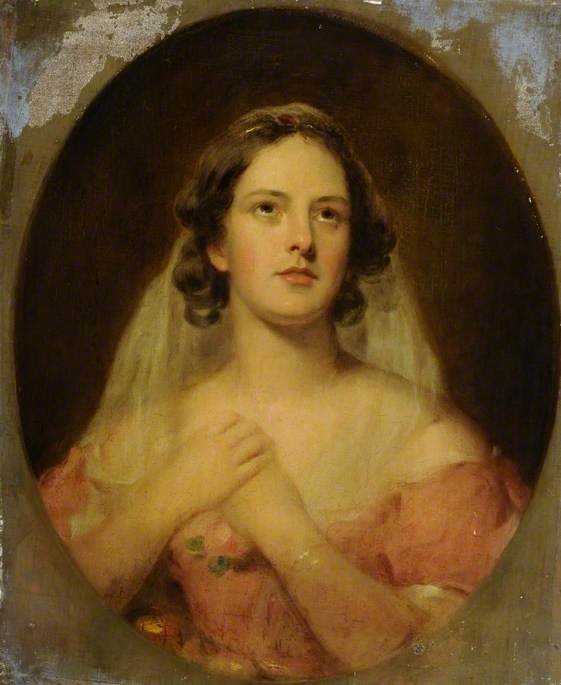
The anonymous author of this novel (so careful of her anonymity that she negotiated with a publisher through newspaper advertisements) apparently wrote only one other novel, Poor Nellie, which appeared four years later. This one combines a relentless, despairing commentary on human nature with a tireless sense of fun.
“This singular book deals with that religion and morality of mediocrity which were adopted, like other fashions, by the last generation of London society at its most fashionable, most vacuous, most profoundly vulgar epoch. . . . Never before has this degraded phase of life been so powerfully and minutely analysed, because never before with such bitter experience or in a spirit so forgiving and so charitable. . . . This genuine, if not faultess, book introduces us to a writer who has keenness, observation, good sense, real sentiment, and singular pathos—one who can both feel and think and write.” Academy, March 24, 1883
“It is . . . a work of great ability, by one who observes keenly and at the same time sees deeply into character. She has the power of presenting real people. Description and analysis have not made them inert bundles of qualities and defects—the lay figures which often stand for human nature in the work of even the better sort of novelists. . . . . The trivial life is passed chiefy at a dull country house. So dull is the house, and so lively is the author’s picture of it, that the reader feels oppressed by it himself, and is therefore ready to give to the heroine that warm sympathy which a skilful writer must always try to get.” Athenaeum, March 31, 1883
“The story is anything but ‘trivial,’ and the writer is gifted with an unusual share of wit and perspicacity. The deep melancholy that pervades the book is relieved here and there by keen flashes of satire on the foibles and follies of modern English society. The picture is cleverly drawn, and not overcharged.” Westminster Review, July 1883
“If the reader is inclined to doubt the proposition that novel writing is becoming every day more difficult and less interesting, let him consult his own mind, and see how many novels proper among the hundreds that have been published within the last five years, and which deal in any way with every day contemporary life, have excited his profound interest. The present writer can at the moment recall but two—one was called ‘My Trivial Life and Misfortunes,’ by an unknown author, and the other, ‘The Story of a South African Farm,’ by Ralph Iron. But then neither of these books if examined into would be found to be a novel such as the ordinary writer produces once or twice a year. Both of them are written from within, and not from without; both convey the impression of being the outward and visible result of inward personal suffering on the part of the writer, for in each the key-note is a note of pain. Differing widely from the ordinary run of manufactured books, they owe their chief interest to a certain atmosphere of spiritual intensity, which could not in all probability be even approximately reproduced.” H. Rider Haggard, “About Fiction,” in Contemporary Review, February 1887
Download this fortnight’s novel here:
v.1 https://access.bl.uk/item/viewer/ark:/81055/vdc_00000004ADD2#?c=0&m=0&s=0&cv=6&xywh=-429%2C0%2C3425%2C2062
v.2 https://access.bl.uk/item/viewer/ark:/81055/vdc_00000004A46C#?c=0&m=0&s=0&cv=0&xywh=-1368%2C-127%2C4191%2C2523
v.3 https://access.bl.uk/item/viewer/ark:/81055/vdc_00000004A472#?c=0&m=0&s=0&cv=6&xywh=-396%2C-1%2C3408%2C2052
Or, while the British Library remains offline, here:
v.1 https://archive.org/details/61103260.5559.emory.edu
v.2 https://archive.org/details/61103260.5560.emory.edu
v.3 https://archive.org/details/61103260.5561.emory.edu