David Alfred Bywaters's Crossword Cavalcade & Fortnightly Victorian Novel Recommender. Every Saturday! Either a new language-torturing puzzle or an old novel by an unjustly neglected Victorian author. Why waste time on other amusements?

Novels

Novel 134: Eliza Lynn Linton, My Love! (1881)
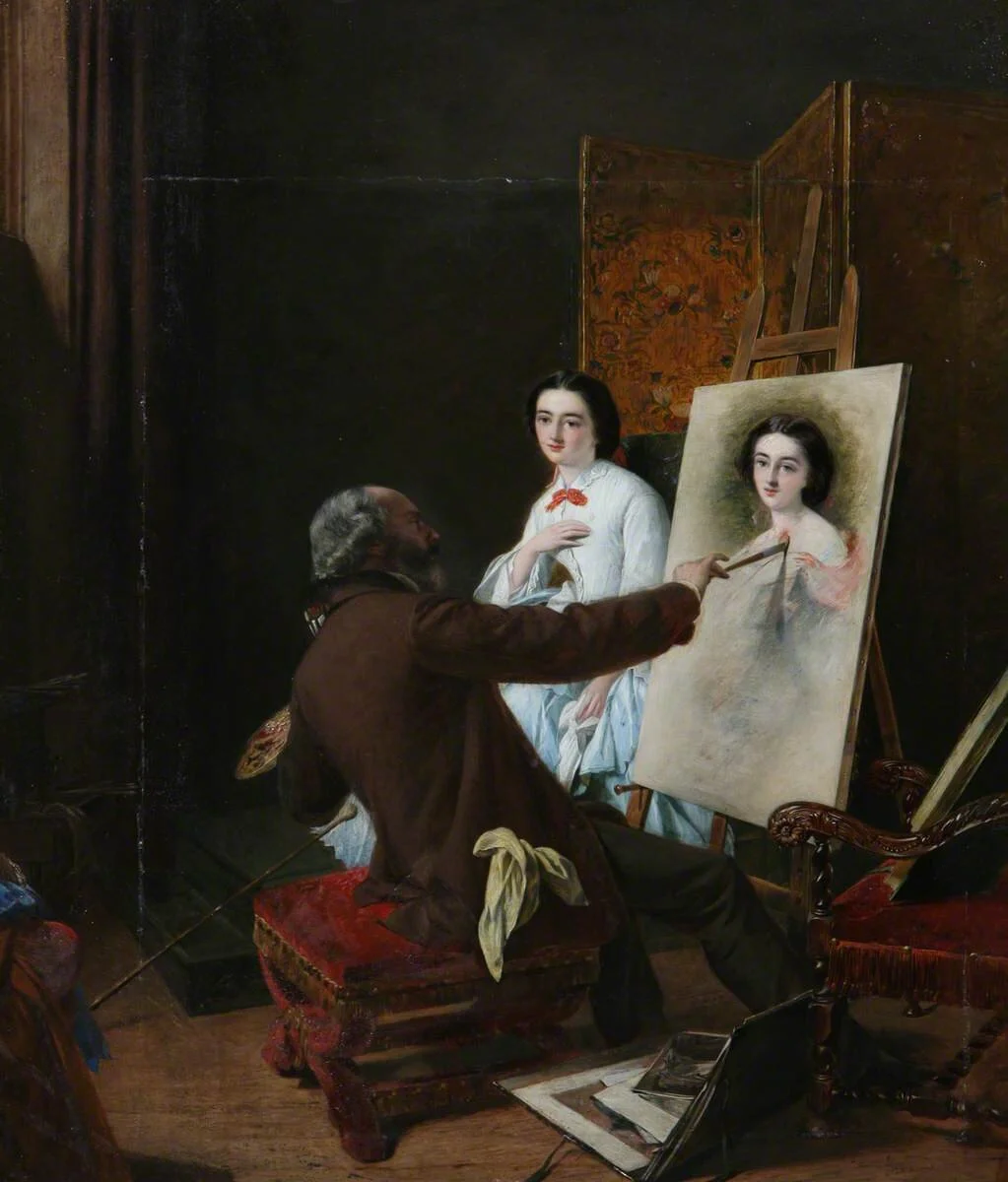
Henry Nelson O’Neil, Painting con Amore

A vain amateur artist-poet and an ill-tempered old lady oppress their young adult children.


Here is another novel by Linton (see Novel 044), with some especially entertaining minor characters, such as the thoroughly modern girl twins Gip and Pip.

“In ‘My Love!’ Mrs. Lynn Linton has devoted herself with much success to the portraiture of some of the baser passions, such as selfishness, meanness, hypocrisy, and ill temper.”  She “is brilliantly clever from first to last, and . . . there is not a dull page in her novel, though there are many that are disagreeable.  She writes brightly, vigorously, and eloquently; she is uncommonly painstaking and earnest; her dialogue is always apt and pointed; and many of her personages . . . are of singular merit and interest.  ‘My Love!’ in fact, is an unusually able and impressive book, its unattractive purpose notwithstanding.”  Athenaeum, July 9, 1881

“My Love is a readable and amusing love story. . . .  It is a tale of love, pure and simple, although the three or more love affairs which run parallel to each other are illustrated or encumbered by a multiplicity of episodes; while a great variety of characters, vigorously sketched, are brought together into active and energetic collaboration.  Mrs. Lynn Linton generally inclines to the grave; but in this novel she is often humorous, and sometimes sprightly, or even comic. . . . Altogether Mrs. Lynn Linton has written an agreeable story; and it is agreeable chiefly because . . . she has always taken some pains to show the more amiable side of her least amiable characters.”  Saturday Review, August 13, 1881

Download this week’s novel:

v.1 https://archive.org/details/mylove__01lint/
v.2 https://archive.org/details/mylove__02lint/

v.3 https://archive.org/details/mylove__03lint/

Novel 133: F.F. Montrésor, The Alien (1901)

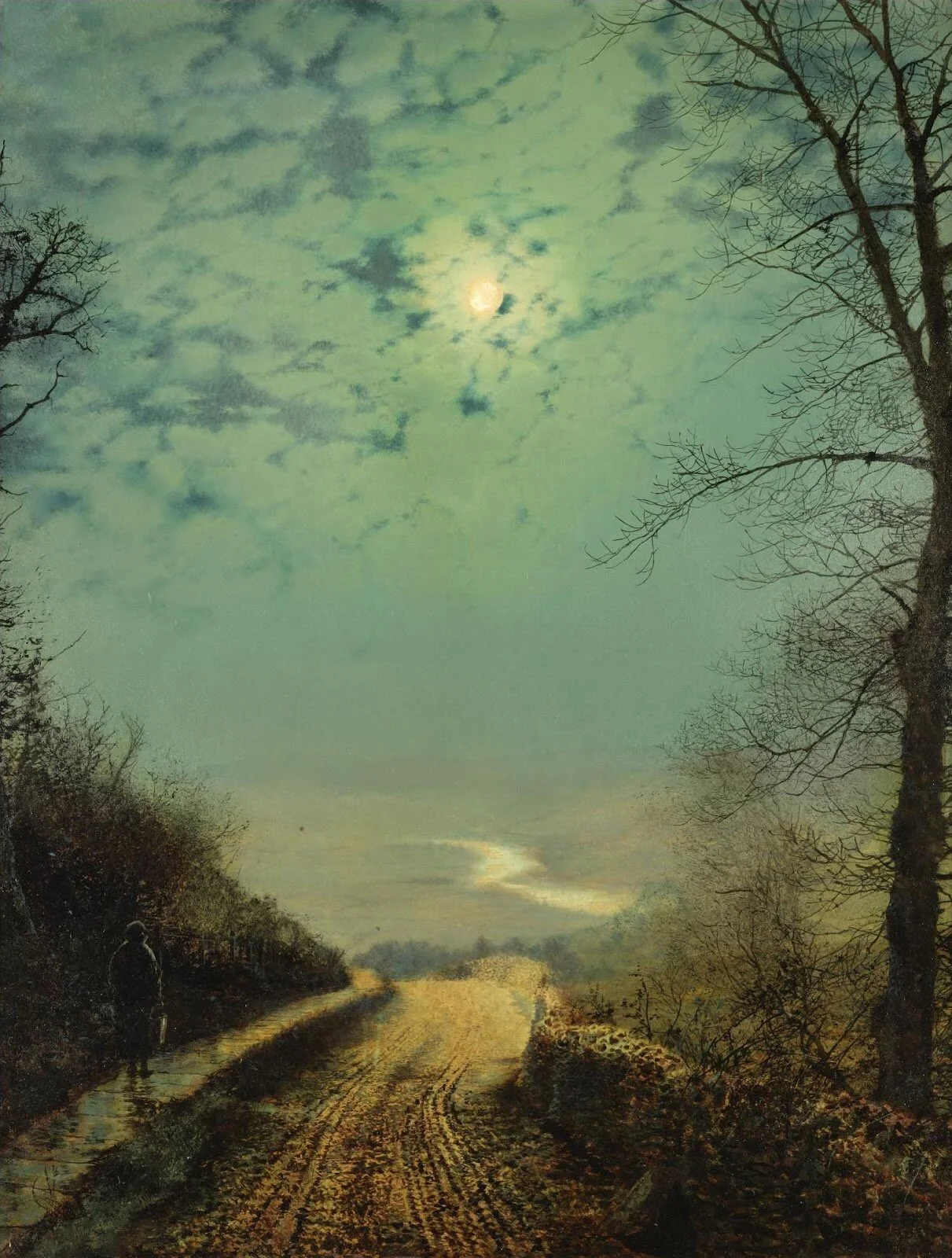
John Atkinson Grimshaw, A Wet Road by Moonlight, Wharfedale

A mysterious man is claimed by an old woman as the son and heir who died thirty years before.


Frances Frederica Montrésor (1862-1934) wrote a dozen or so novels between 1895 and 1907.  This one has interestingly conflicted characters and (except for an incongruous South American episode) a good plot.

“Cleverly thought out, and full of sympathy and observance, it is a book suited to all kinds and sorts of people.  The interest . . . is never allowed to flag, while the quality of its character drawing gives it a delicate atmospheric beauty by no means common.” Academy, November 9, 1901

This “adds to the sincerity, simplicity, and insight marking her other stories a larger motive and a stronger grasp. . . .  There is a touch of Mrs. Oliphant in the quiet humor, in the detached view and appraisement of ‘the human,’ and in the enduring consciousness of eternal goodness.” New York Times, December 7, 1901

Download this week’s novel:

https://books.google.com/books?id=tZEOAAAAIAAJ&newbks=1&newbks_redir=0&dq=editions%3ASuMAqlVMJGIC&pg=PR3#v=onepage&q&f=false

Novel 132: Alice Price, A Wilful Young Woman (1886)

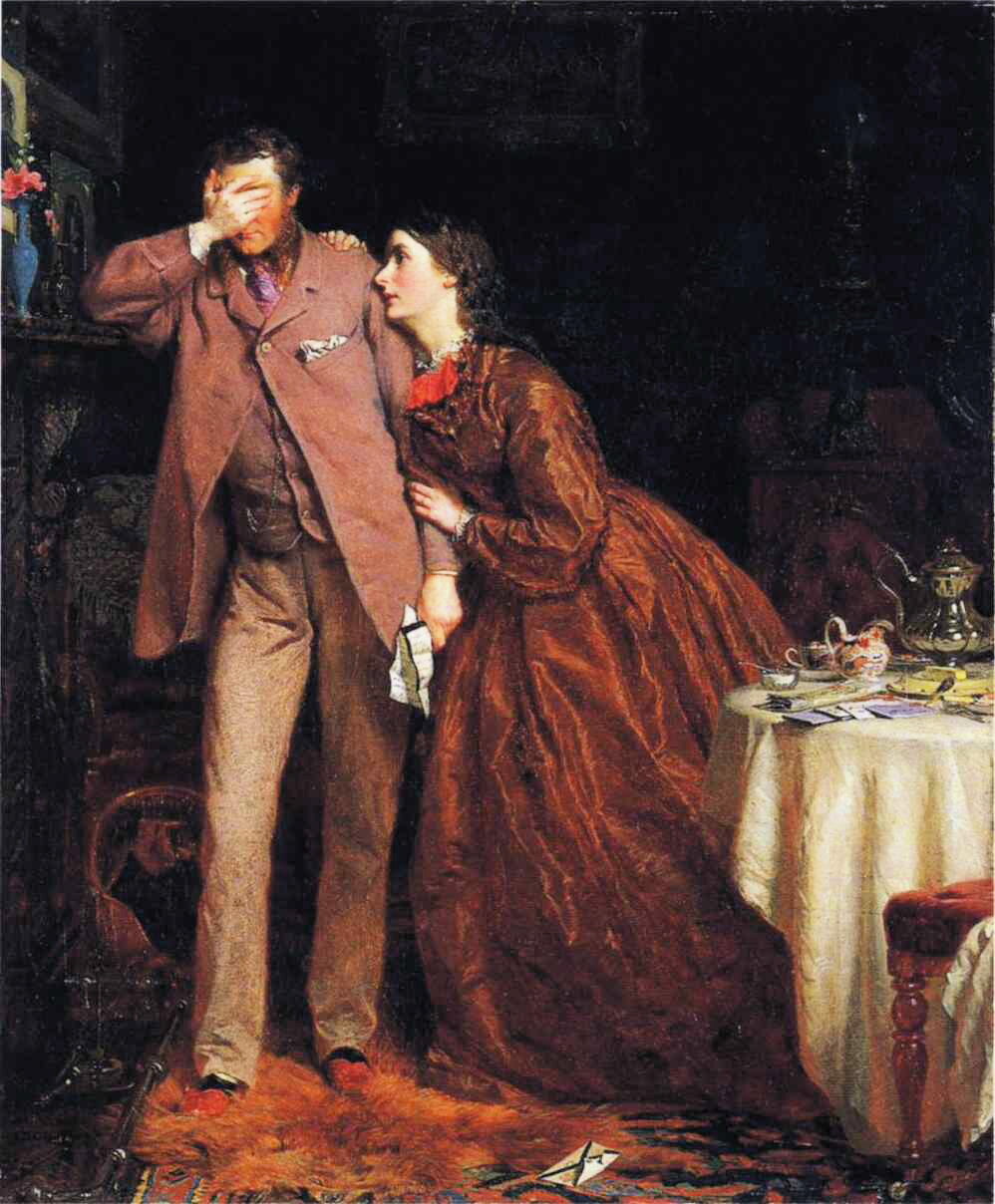
George Elgar Hicks, Woman’s Mission - Companion of Manhood

The virtuous daughter of a country lawyer is scorned by her selfish, worldly mother.


Here is another novel by Alice Price (see Novel 021), much like its predecessor in its engrossing but implausible plot and its well-defined characters.

“A very readable story. . . .  Mrs. Price has drawn her dramatis personae with some power and vigour, and nobody could possibly find this novel tedious.”  Academy, November 20, 1886

“This is an excellent tale, and shows by a conspicuous example, which some of our lady-novelists might profitably note, that it is quite possible to rouse a strong interest in a love-story without even an allusion to unlawful passion. . . .  There are, we think, defects in the plot. . . .   But, on the whole, for sound sense, good feeling and taste, and a style which can be both pathetic and humorous on occasion, this is a book which cannot easily be surpassed.”  Spectator, January 29, 1887

Download this week’s novel:

v.1 https://archive.org/details/wilfulyoungwoman01pric/

v.2 https://archive.org/details/wilfulyoungwoman02pric/

v.3 https://archive.org/details/wilfulyoungwoman03pric/

Novel 131: Anonymous, Hanworth (1858)

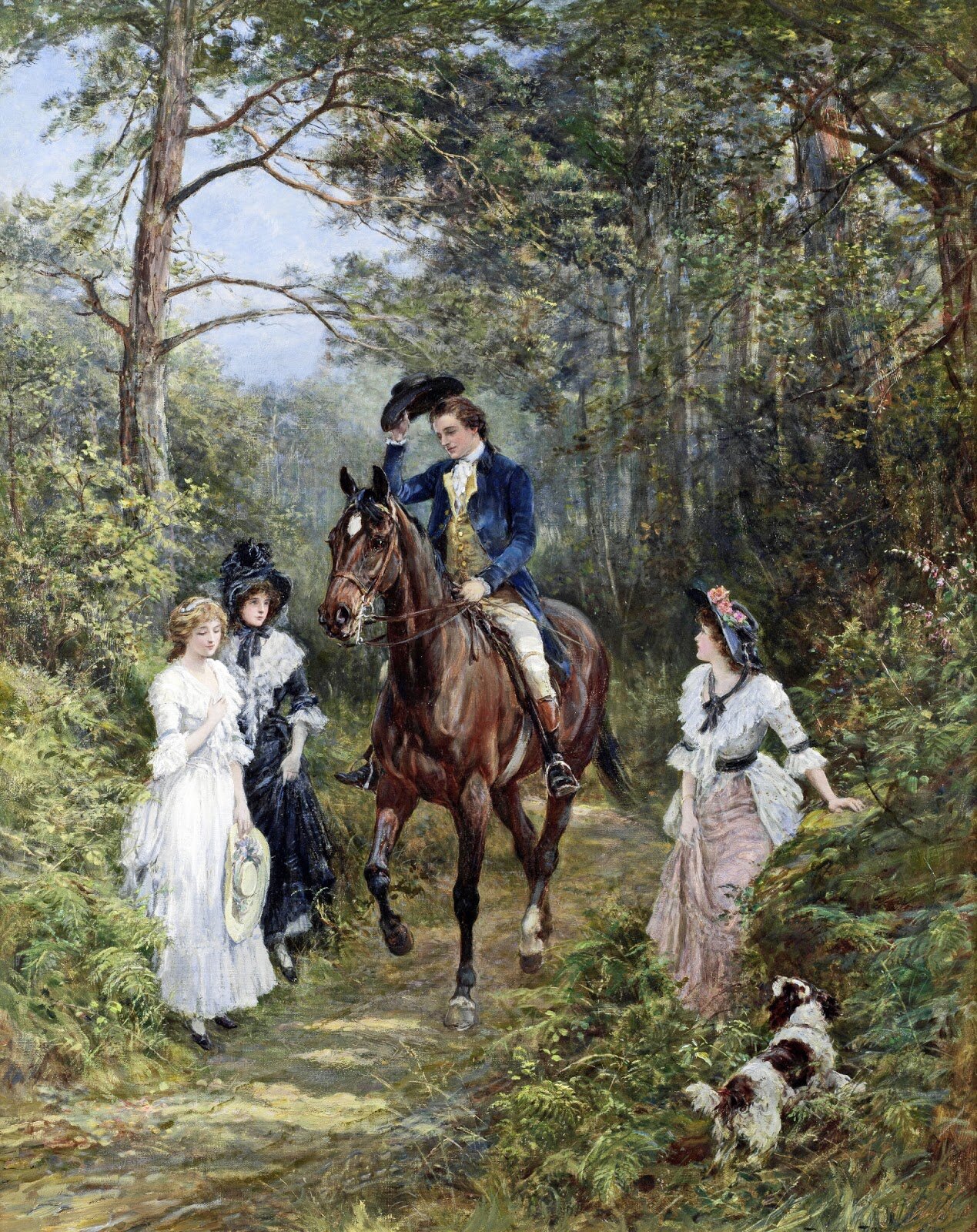
Heywood Hardy, The Meeting in the Forest

A young lady loves a nobleman, whose interest in her friend she misinterprets.


The author of this forgotten novel is identified neither in Fraser’s Magazine, where it was serialized, nor in its separate publication as a book—a pity, because it’s a good one.

“One of the best photographs of English society as it now exists.”  Illustrated Times, October 9, 1858

“It is a pleasant story of society, written with good taste and unquestionable skill.”  Examiner, December 25, 1858

“Unobjectionable pleasantness is a quality which carries books, as it does human beings, quietly and happily through the world, but it does not give room for much discussion. . . .  The girls are like real girls, but there is nothing marked about them.  The nobleman, who is a high-minded love-creating coquet, is not an impossibility.  There is no clever writing, no description of scenery, no boring of any sort. . . .  From beginning to end the story goes on quietly, evenly, and agreeably, showing a considerable power of observing family life, a subdued sense of the ludicrous, and an unusual turn for writing intelligible and consecutive English.”  Saturday Review, January 1, 1859

Download this week’s novel:

https://archive.org/details/hanworthorigpub00hanwgoog/

Novel 130: Robert Buchanan, Foxglove Manor (1884)

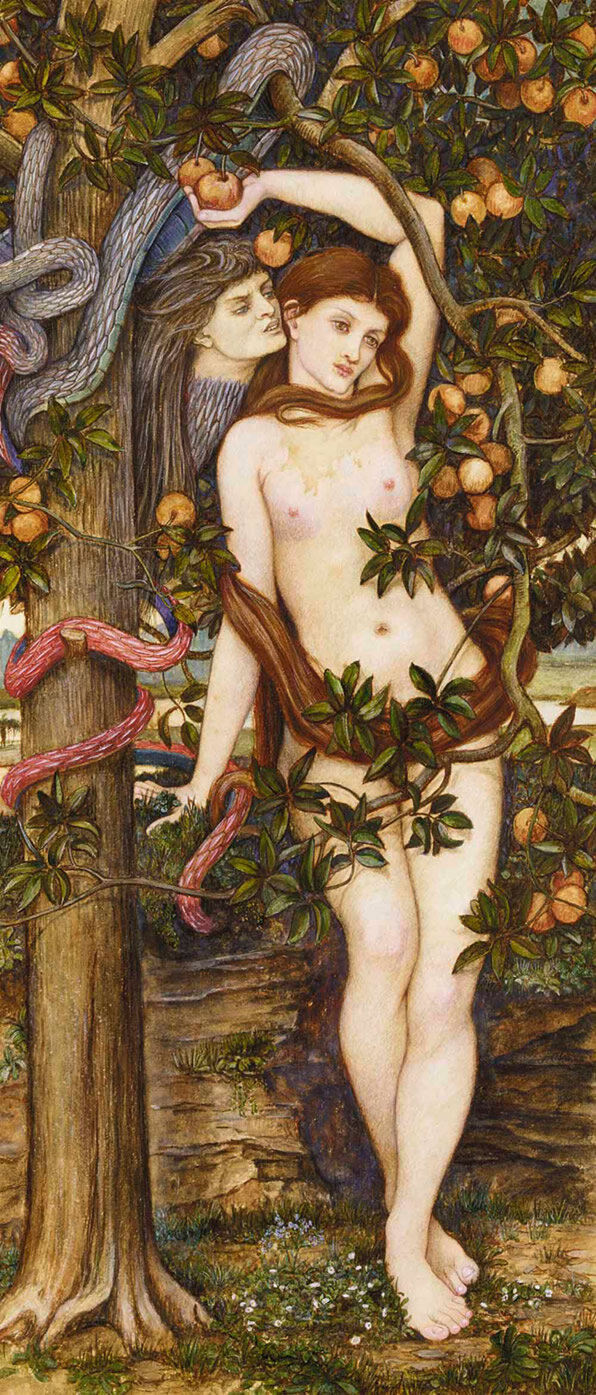
John Roddam Spencer Stanhope, The Temptation of Eve

A charismatic clergyman loves an agnostic squire’s wife.


Well known also as a poet, playwright, and critic, Robert Buchanan (1841-1901) published nearly 30 works of fiction, mostly in the last twenty years of the century. Despite some very silly plot twists at the end, this one provides a convincing portrait of self-deception and depravity.

“A very powerful study.  Mr. Buchanan has firmly grasped the character of a man of a sensuous and even refined imagination, but without moral fibre. . . .  He has drawn the central figure with consummate skill, and told his story with great vigour, directness, and rapidity of narration.” Athenaeum, September 13, 1884

“As a study of morbid anatomy it reaches the highest level to which work of that kind can possibly attain.  From a dramatic point of view there is genius” in the handling of our reaction to the main character.  Graphic, October 4, 1884

“It touches on that mysterious region in which the love of men to God is seen to have a deep and hidden connection with the mutual love of man and woman; and if we cannot pay it what would be the immense tribute of saying that it deals adequately with such a subject, we may at least declare that the attempt is marked by power and by a profound pathos, and associated with nothing unworthy.”  Contemporary Review, 1884

Download this week’s novel:

v.1 https://archive.org/details/foxglovemanornov01buchuoft/

v.2 https://archive.org/details/foxglovemanornov02buchuoft

v.3 https://archive.org/details/foxglovemanornov03buchuoft

Novel 129: Bithia Mary Croker, A Family Likeness (1892)

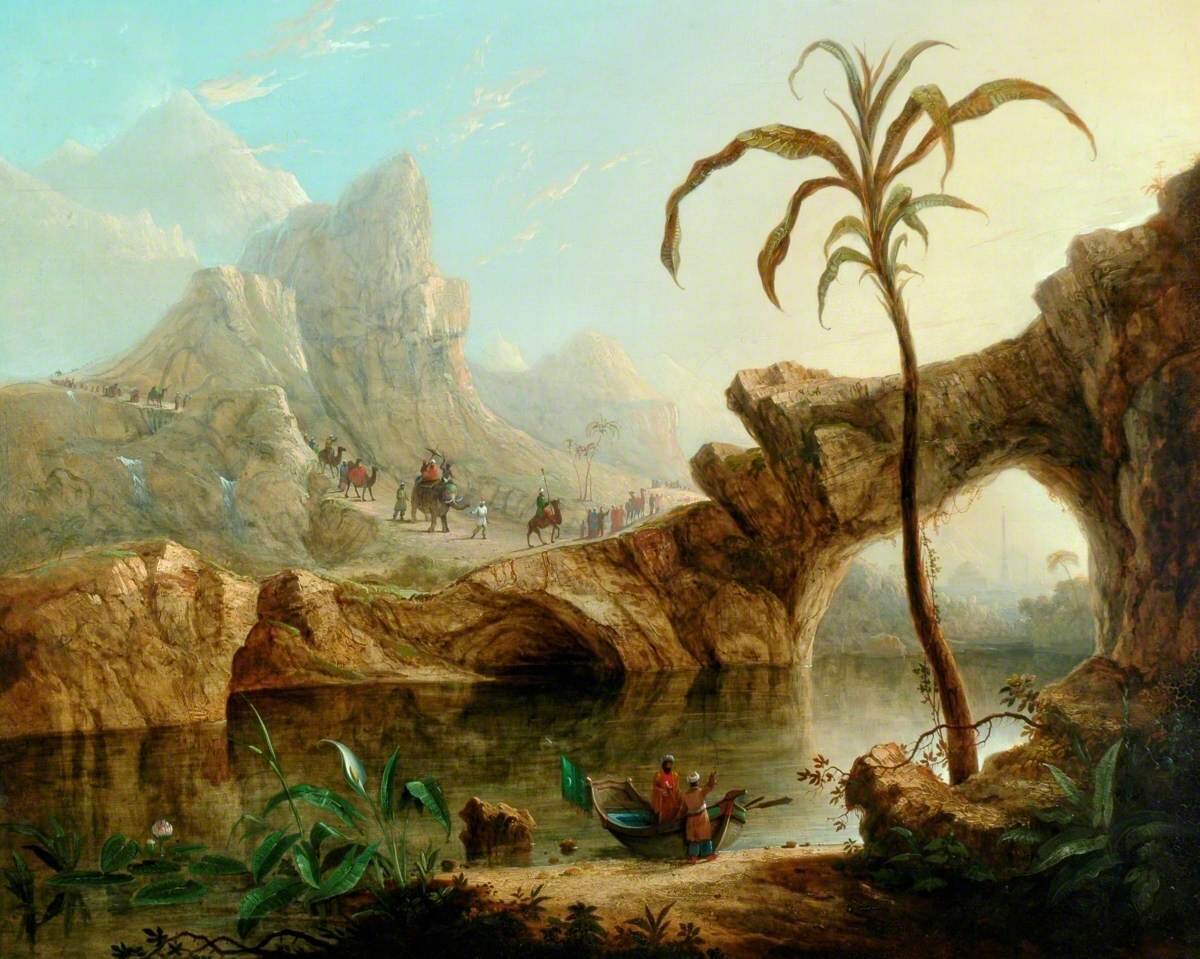
William Daniell, Scene in the Himalayas

In England, a man falls in love with a girl in an old picture, then meets her likeness in an obscure Indian town.


For Croker, see Novel 013 and Novel 073.  Like the latter, this has a vivid Indian setting (“A Sketch in the Himalayas” is its subtitle).

“A cheerful temper is better than much gold, and it is far more contagious.  Such is the thought suggested by the perusal of A Family Likeness. . . .  Mrs. Croker has a style all her own, and has studied her India with map and compass.”  The plot “is as clever in its entanglements as is the prose which narrates it in breezy grace.”  Lippincott’s Monthly Magazine, December 1892

“As a chronicler of Anglo-Indian life, Mrs. Croker occupies a position by herself.  She has her limits, but within these limits rarely fails to achieve success. . . .  It is not that she seeks to extenuate the shortcomings of Anglo-Indian society, but rather that she seems to be constitutionally impelled to look on its brighter side. . . .  Furthermore, she writes most sympathetically of the natives, and with a keen sense of the glories of the Indian landscape.”  Spectator, December 10, 1892

“A Family Likeness is in every way a likeable book, strong in character and incident, brisk in narrative, and not lacking in pleasant humour.”  Academy, December 24, 1892

Download this week’s novel:

v.1 http://access.bl.uk/item/viewer/ark:/81055/vdc_00000004CA82#?c=0&m=0&s=0&cv=8&xywh=-397%2C0%2C3258%2C1960

v.2 http://access.bl.uk/item/viewer/ark:/81055/vdc_00000004CA88#?c=0&m=0&s=0&cv=8&xywh=-613%2C-115%2C3493%2C2102

v.3 https://books.google.com/books?id=whk3AQAAMAAJ&pg=PP9#v=onepage&q&f=false

Novel 128: Jean Ingelow, Allerton and Dreux (1851)

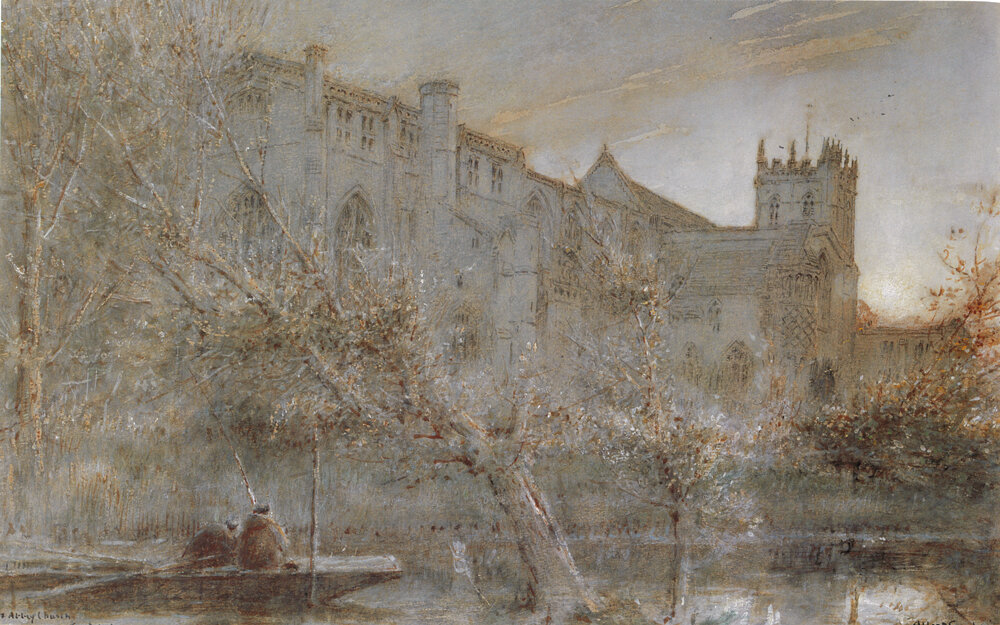
Albert Goodwin, The Abbey Church, Christchurch

Two clergymen, differing in doctrine, become friends.


Jean Ingelow (1820-1897), best known as a poet, wrote a number of short stories and some half a dozen novels.  This, her first, makes up for its rambling, impossible plot with subtle characterization and a polished style.

“Allerton and Dreux . . . has not a little surprised us by the ability manifested in the conception and in the delineation of character.  The author possesses also a considerable fund of humour, which flows from him [sic: the novel was published anonymously] without an effort.” Critic, February 2, 1852

“The story . . . is delightfully told; and, as a religious tale, we have seldom met with one which is throughout more ably written and well sustained.  The dialogue is pointed and lively, and the descriptive parts are extremely good.” English Review, July 1852

Download this week’s novel:

http://solo.bodleian.ox.ac.uk/permalink/f/89vilt/oxfaleph014103993

Novel 127: David Christie Murray, Val Strange (1882)

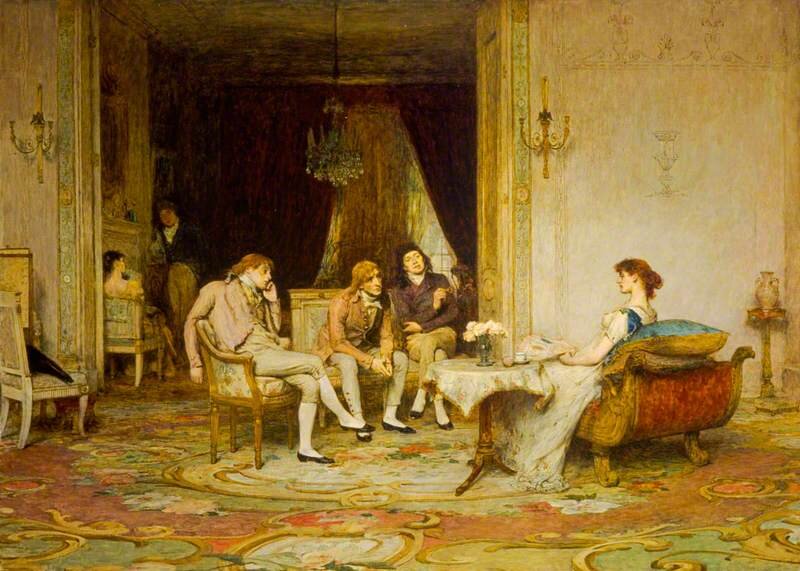
Sir William Quiller Orchardson, The Rivals

A man and his best friend love the same woman.


Here is another extravagantly-plotted novel by David Christie Murray (see Novels 009, 068). In addition to the title character, his rival, and his beloved, it features a poor American seeking work in England.  An English critic finds in this character “that great and increasingly rare charm of freshness”; he “would suffice to redeem from insignificance even a book otherwise not noteworthy” (Academy, December 2, 1882).   An American critic condemns him as “the exaggerated Yankee of the stage.” (Independent, March 1, 1883).  You decide.

“A novel of rare merit, showing very considerable mastery of character, with unusual care of construction. . . .  Without ever stooping to be grotesquely sensational,” the author “freely rings all the changes in the passions of love and jealousy, cupidity, despair, and revenge.”  Times, February 8, 1883

“No one who reads the first hundred pages of this novel can for a moment doubt that their writer is a man of strong powers of observation and considerable grasp of character.” British Quarterly, March, 1883

Download this week’s novel:

https://books.google.com/books?id=1XDoxQEACAAJ&dq=1889+christie+murray&hl=en&newbks=1&newbks_redir=0&sa=X&ved=2ahUKEwiJtPuynf_mAhWRl-AKHeouDLIQ6AEwAXoECAkQAQ

Novel 126: Ellen Pickering, The Quiet Husband (1840)

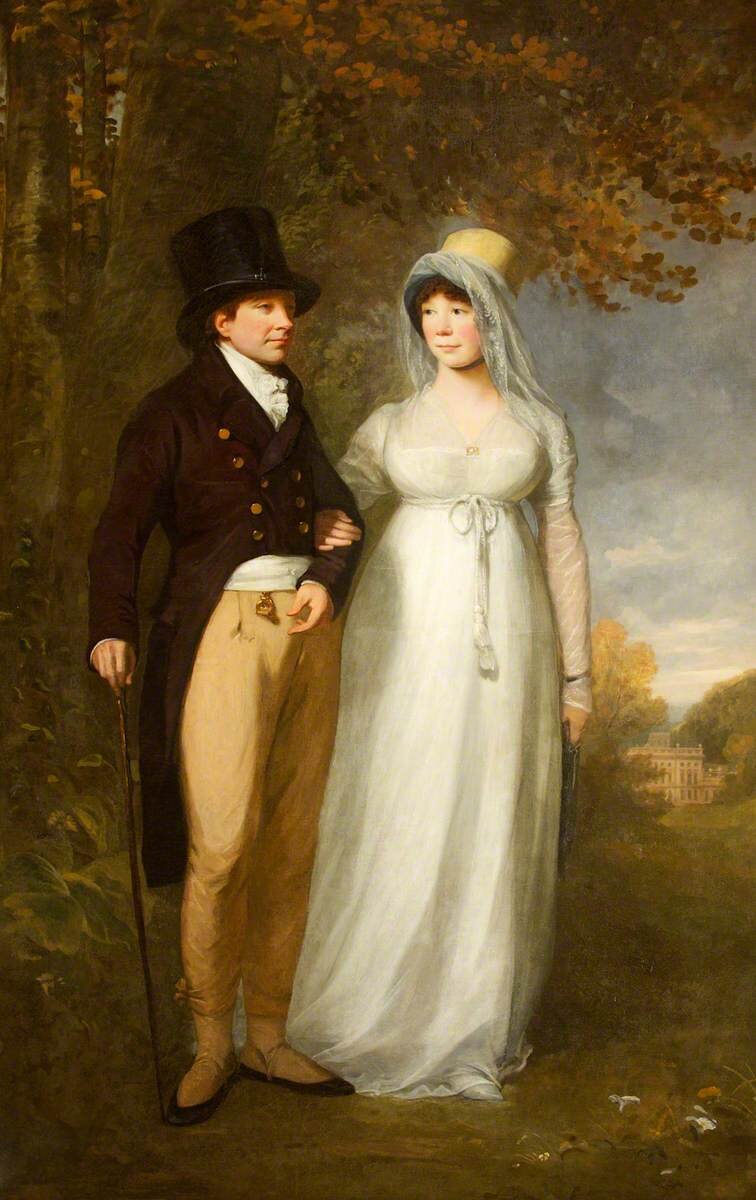
Thomas Phillips, William Blathwayt IV and His Wife, Frances Scott

A virtuous young lady, raised in luxury but suddenly orphaned and poor, is taken in by her mother’s former lover.


Ellen Pickering (1802-1843) wrote some sixteen novels before her early death.  If you don’t allow yourself to be annoyed by the plot here (especially the tediously mysterious lovers’ misunderstanding), you’ll enjoy the various carefully developed characters placed in striking situations.

“The quick eye and clear intellect to observe, and the ready pen to convey to others in a pleasant manner the impressions received, are the gifts of which Miss Pickering makes such good use.” Literary Gazette, June 6, 1840

“While we object to the story as being rather too improbable, to the dénouement as occurring merely at the author’s arbitrary pleasure, . . . we . . . pronounce the story . . . to be one that rivets the attention; serving also as the vehicle of numberless happy sketches as well as pointed and telling truths.  The lady has an admirable knack at dove-tailing just reflections in the progress of the narrative, and perhaps still more artlessly, to appearance, in the course of close and rapid dialogue.  With what a keen eye does she mark, if not a very wide world of life, at least distinct and important segments in its circle! with what a delicate hand does she delineate character!”  Monthly Review, July, 1840

Download this week’s novel:

http://solo.bodleian.ox.ac.uk/permalink/f/89vilt/oxfaleph014559115

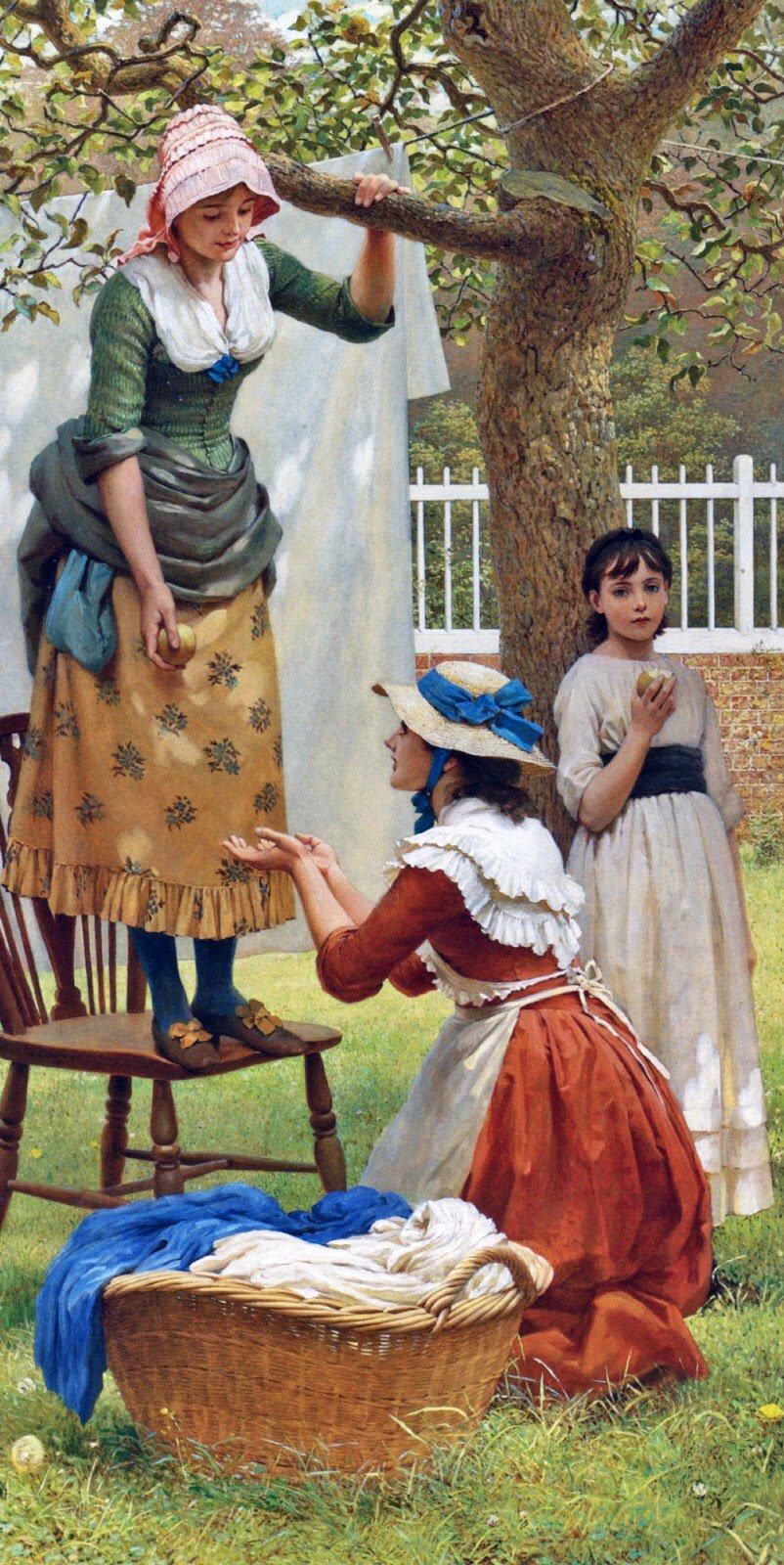
Novel 125: Theo Gift, An Innocent Maiden (1883)

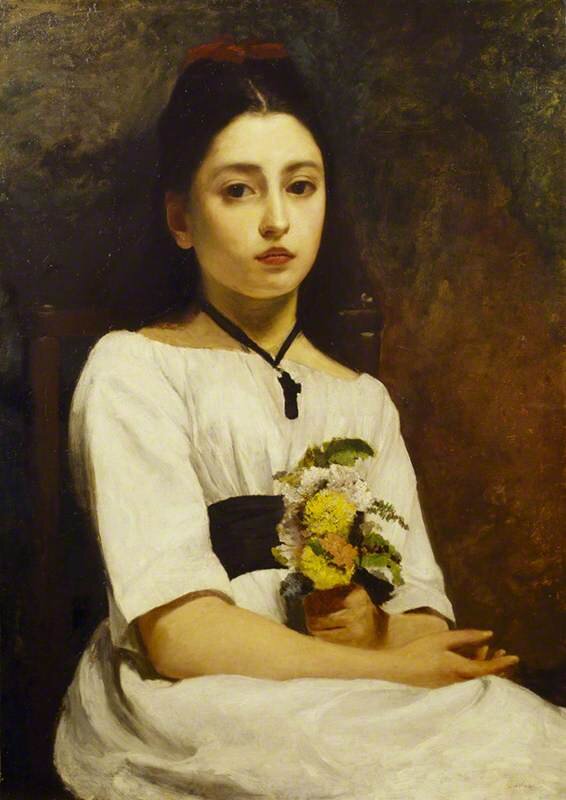
James Charles, Study of a Girl in White

A murder places an innocent girl in a difficult dilemma.


For Theo Gift, see Novel 015.  In this brief novel, the characters, though mostly types, are compelling, and the plot is deftly handled.

Gift’s “idea of an innocent English girl is much more complex and natural than the mere selfish, silly chit who plays the ingénue in most novels. . . .  Both the men are very well drawn. . . .  There is nothing depressing in this very pretty, refined, and carefully written book.”  Academy, March 1, 1884

“Theo Gift’s last heroine is a very charming little maiden indeed, whose story may be recommended for its purity of tone and unaffected style.  Nor does it want a fairly constructed plot. . . .  Theo Gift always seems in kindly sympathy with the people of whom she writes.”  Morning Post, March 13, 1884.


Download this week’s novel:

https://archive.org/details/aninnocentmaide00boulgoog


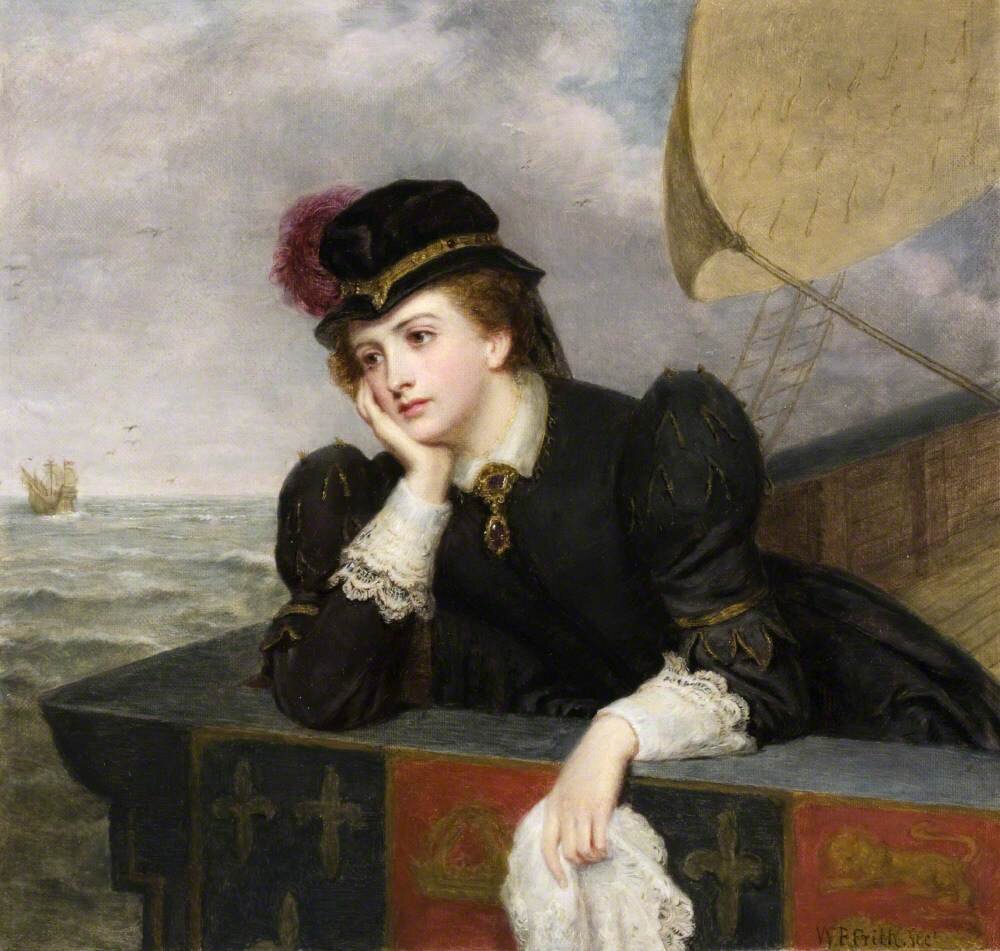
Novel 124: Anthony Hope, Mr. Witt's Widow (1892)

William Powell Frith, Mary, Queen of Scots Bidding Farewell to France

A man suspects that his cousin’s fiancée, a rich young widow, might once have been a thief.


Anthony Hope (Sir Anthony Hope Hawkins, 1863-1933), best remembered for The Prisoner of Zenda (1894), wrote thirty-some other novels, beginning in 1890; this is a delightful social comedy, well paced and smartly phrased.

“All the characters are neatly sketched, and Mr. Hope’s dialogue is crisp and pointed.  Altogether, this lively and piquant story is good reading.”  Saturday Review, May 7, 1892

“The story is good both in conception and in execution.  The style is just suited to the subject.”  Spectator, June 11, 1892

“The development and denouement afford rich material for a first-class society comedy, and at the same time the story is clever and exceedingly enjoyable.”  San Francisco Chronicle, October 30, 1892

Download this week’s novel:

https://archive.org/details/mrwittswidowfriv00hopeuoft

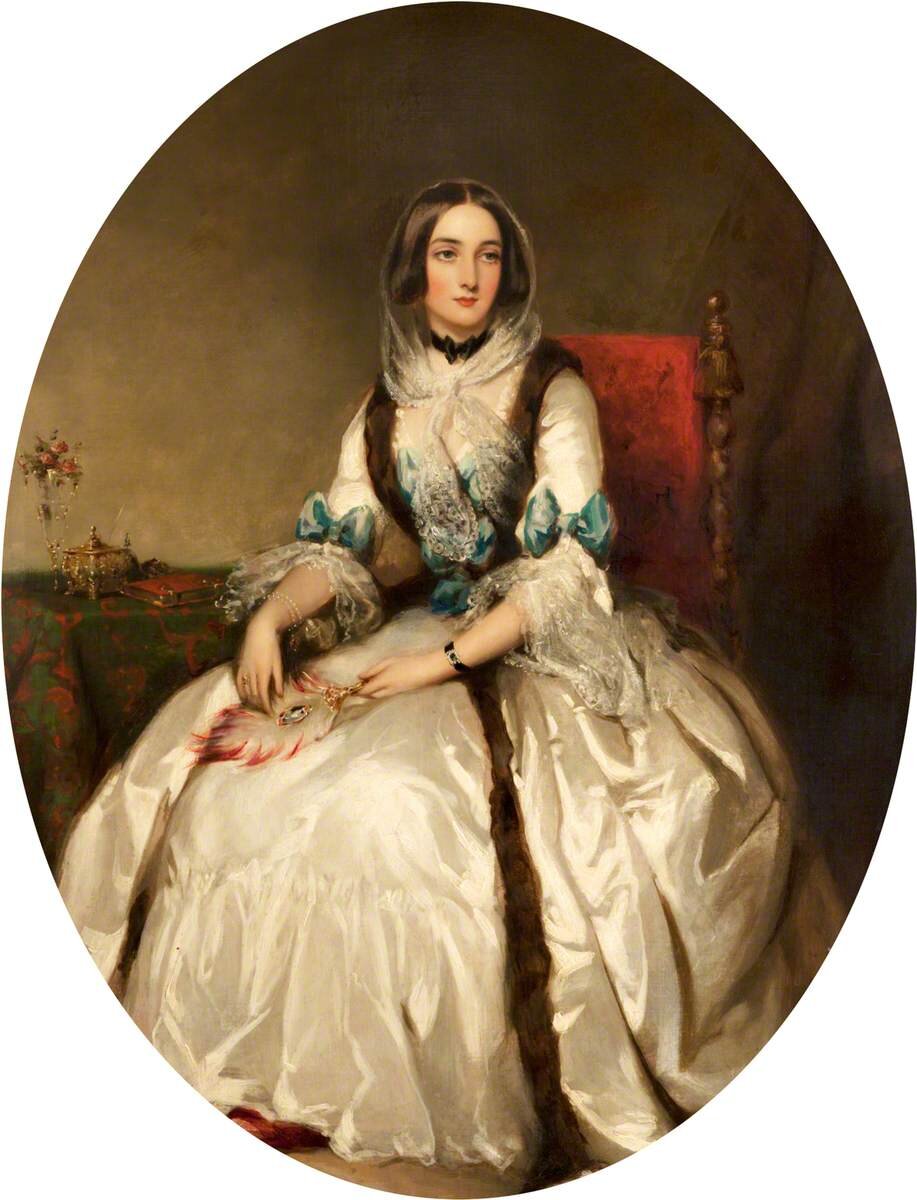
Novel 123: Isabella Neil Harwood, Raymond's Heroine (1867)

George Hayter, The Honourable Mrs. William Ashley

After her father is ruined by an absconding financier, a girl is adopted by her rich aunt.


Isabella Neil Harwood (1837-1888) wrote five novels in six years (1864-1870) before turning to drama.  This, her third novel, has a good plot with surprising turns and some complex characters.

“Domestic life has its depths, as well as its shallows; and the dreadful significance and mystery of life is that none of us know how noble or how vile we may be.  To detect this secret strength of mere humanity is a great merit, and one possessed in a high degree by the book now before us.”  Saturday Review, April 13, 1867

A “substantially good novel.  Home and the world are its theme, but they are treated in no threadbare sentimental fashion. . . .   The story . . . is original and well-constructed. . . .  The development of character . . . is natural although artistic. . . .  The dialogue is natural, and its narrative always well written.”  Examiner, April 13, 1867

Download this week’s novel:

v.1 http://access.bl.uk/item/viewer/ark:/81055/vdc_000000044C46#?c=0&m=0&s=0&cv=0&xywh=-2046%2C-126%2C5523%2C2501

v.2 http://access.bl.uk/item/viewer/ark:/81055/vdc_000000044C4C#?c=0&m=0&s=0&cv=0&xywh=-2023%2C-125%2C5479%2C2481

v.3 http://access.bl.uk/item/viewer/ark:/81055/vdc_000000044C52#?c=0&m=0&s=0&cv=0&xywh=-2047%2C-126%2C5523%2C2501


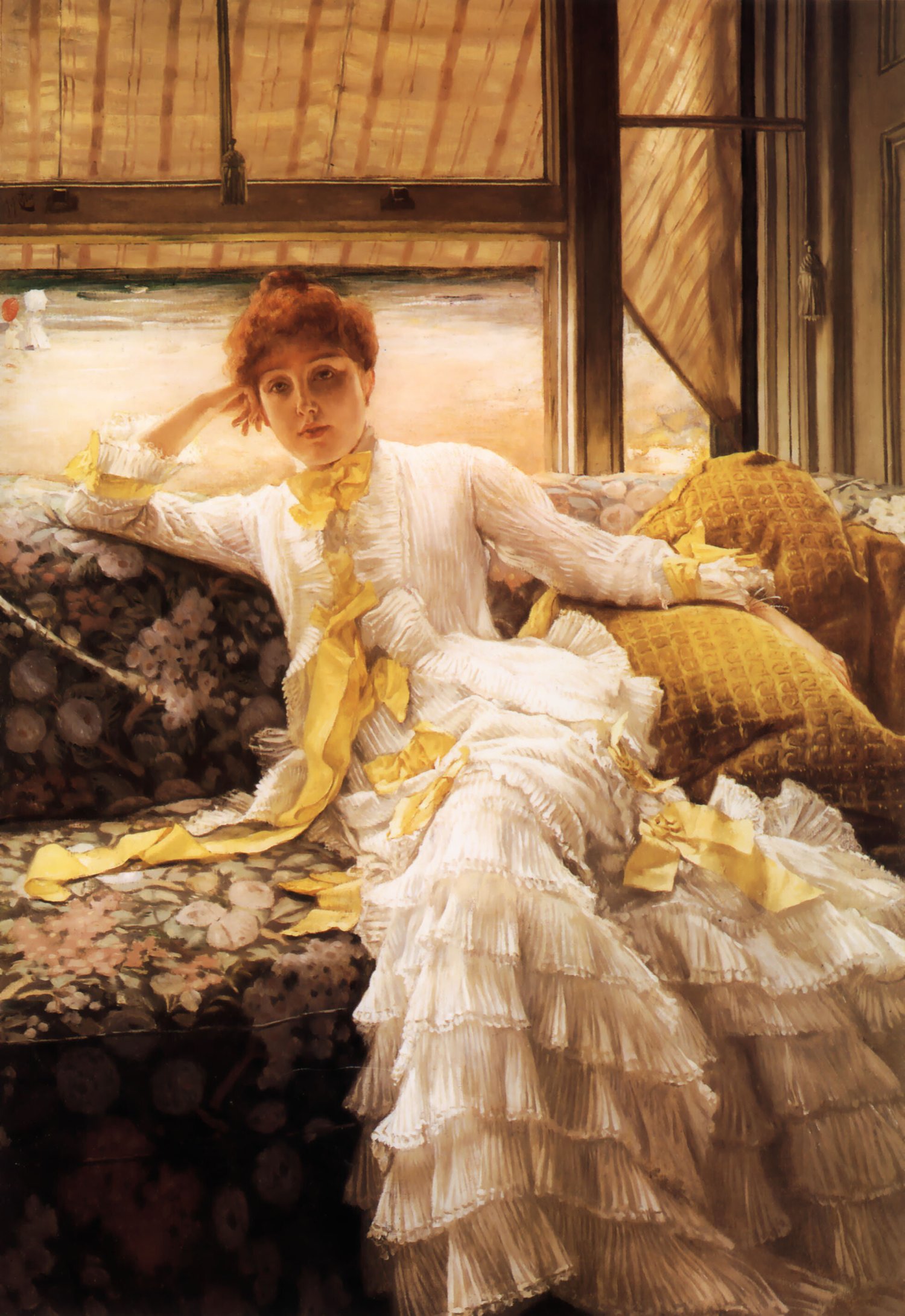
Novel 122: Richard Pryce, The Quiet Mrs. Fleming (1890)

James Jacques Joseph Tissot, Seaside

A beautiful and mysterious woman takes winter lodgings in a seaside resort town.


Richard Pryce (1864-1942) wrote 21 novels between 1887 and 1911; this one is a quiet mystery story with carefully developed characters and setting.

The story is “ingeniously told from the outside.  The reader is led round about the centre of interest, but never holds any intercourse with the principal actors.” Manchester Guardian, February 17, 1891

“The story is not too long to be read at a sitting, and it is too interesting to be laid down by any one who gets beyond the first page.”  Academy, March 28, 1891

“Mr. Richard Pryce’s story is told with much quiet humour, and with admirable self-restraint”; unlike the plot, the characters are  “far from commonplace” and there is “not one line of padding or a dull page in the book.”  Murray’s Magazine, May, 1891

Download this week’s novel:

https://archive.org/details/183709227.2465.emory.edu

Novel 121: L.B. Walford, Troublesome Daughters (1880)

George Dunlop Leslie, The Daughters of Eve

A man falls in love with a mysterious girl on a Scottish farm.


Here is another fine novel by Walford (see Novels 018 and 066):  the particularly amusing characters counterbalance the particularly implausible plot (based on an impossible psycho-medical catastrophe and an outrageously idiotic lovers’ misunderstanding).

“If the story of ‘Troublesome Daughters’ were at all equal in merit to the author’s delineation of character, the book would be one of the best as well as one of the most charming published of late.”  Athenaeum, July 24, 1880

“A fresher, prettier, more unpretentious little story than ‘Troublesome Daughters’ is not to be found, and Mrs. Walford deserves cordial recognition of the growing strength of her hand.”  New York Tribune, August 1, 1880

“There is plenty of incident and bright conversation in Troublesome Daughters, and the story is interesting enough to bear reading aloud, which in itself is no slight praise.” Literary World, August 28, 1880

Download this week’s novel:

v.1 https://archive.org/details/troublesomedaugh01walf/

v.2 https://archive.org/details/troublesomedaugh02walf/

v.3 https://archive.org/details/troublesomedaugh03walf/

Novel 120: Mrs. Stirling, Sedgely Court (1865)

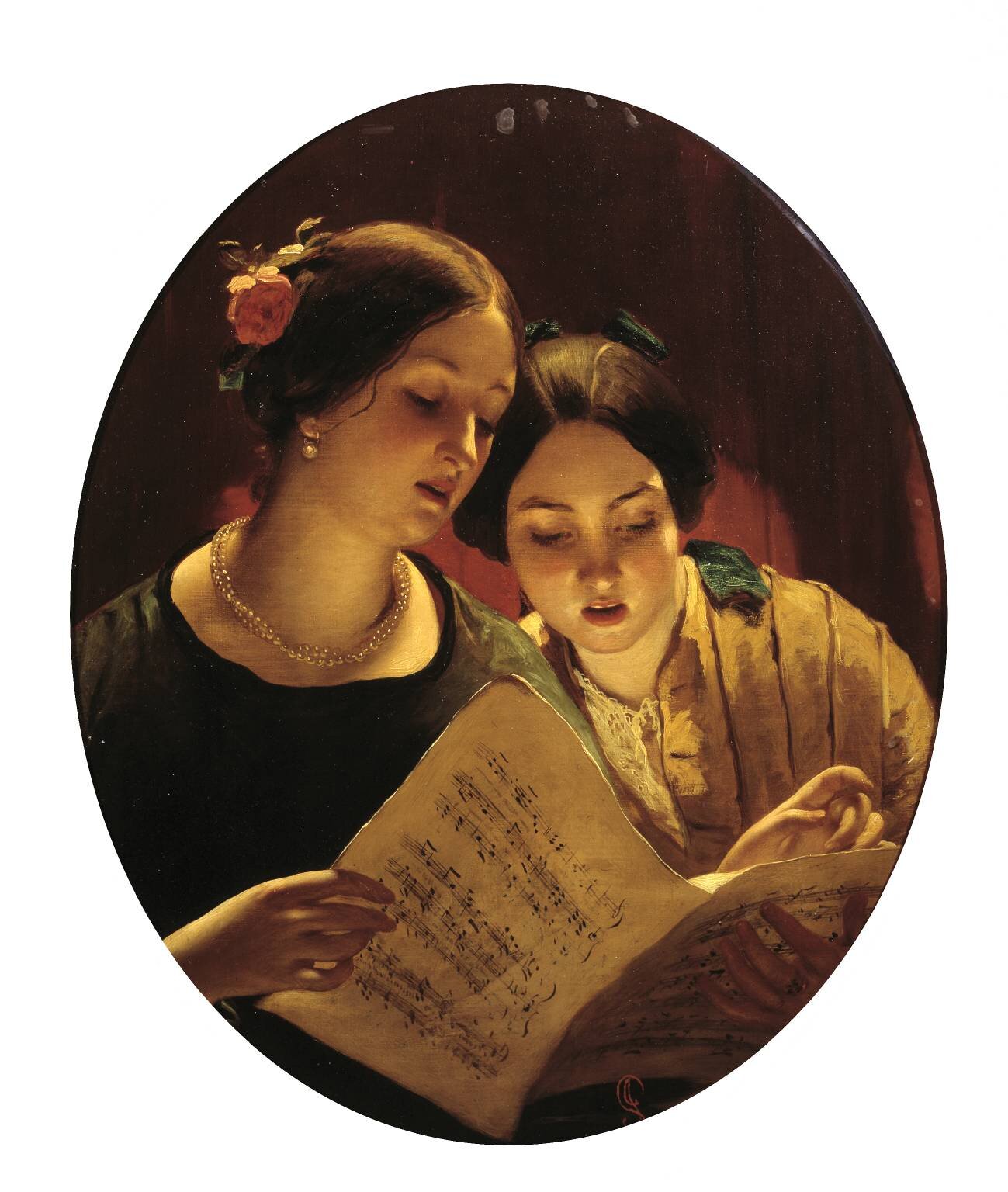
James Sant, The Duet

Despite a sad childhood, a virtuous young lady brightens the world around her.


In a pleasant and unassuming style, Stirling (about whom nothing whatever is known except that she wrote two novels) presents us with a typical set of Victorian characters:  the virtuous young heroine with whom everyone falls in love, the maneuvering mother, the handsome spendthrift.  But she enlivens them, and some other less standard characters (a painfully shy clergyman, a socially phobic matron) with original touches, and, in a somewhat rambling plot, avoids entirely those two most tiresome of Victorian clichés—the lovers' misunderstanding, and the brain fever—while inventing interesting variations on such old standards as the arranged marriage and the jilted fiancée.

“Without introducing any startling incident, without depicting the workings of any deep passion, without any romance, mystery, or pretence to a plot, without even the aid of a single villain, the authoress of these volumes manages to throw round the loves and heart-burnings, the fears and hopes of Sedgely Court, a quiet continuous interest. . . .  To make, in this way, the uneventful life of a country mansion not only bearable, but pleasant to the reader, and its inmates not passing acquaintances, but almost familiar friends, indicates that faculty in story-telling which, when ripened into artistic fulness, we often call genius.”  Reader, March 25, 1865

“For a long time, we have read no tale that has so charmed us.”  Dublin University Magazine, March, 1865

Download this week’s novel:

v.1 https://archive.org/details/sedgelycourttale01stir

v.2 https://archive.org/details/sedgelycourttale02stir

v.3 https://archive.org/details/sedgelycourttale03stir

Novel 119: Thomas Adolphus Trollope, Lindisfarn Chase (1864)

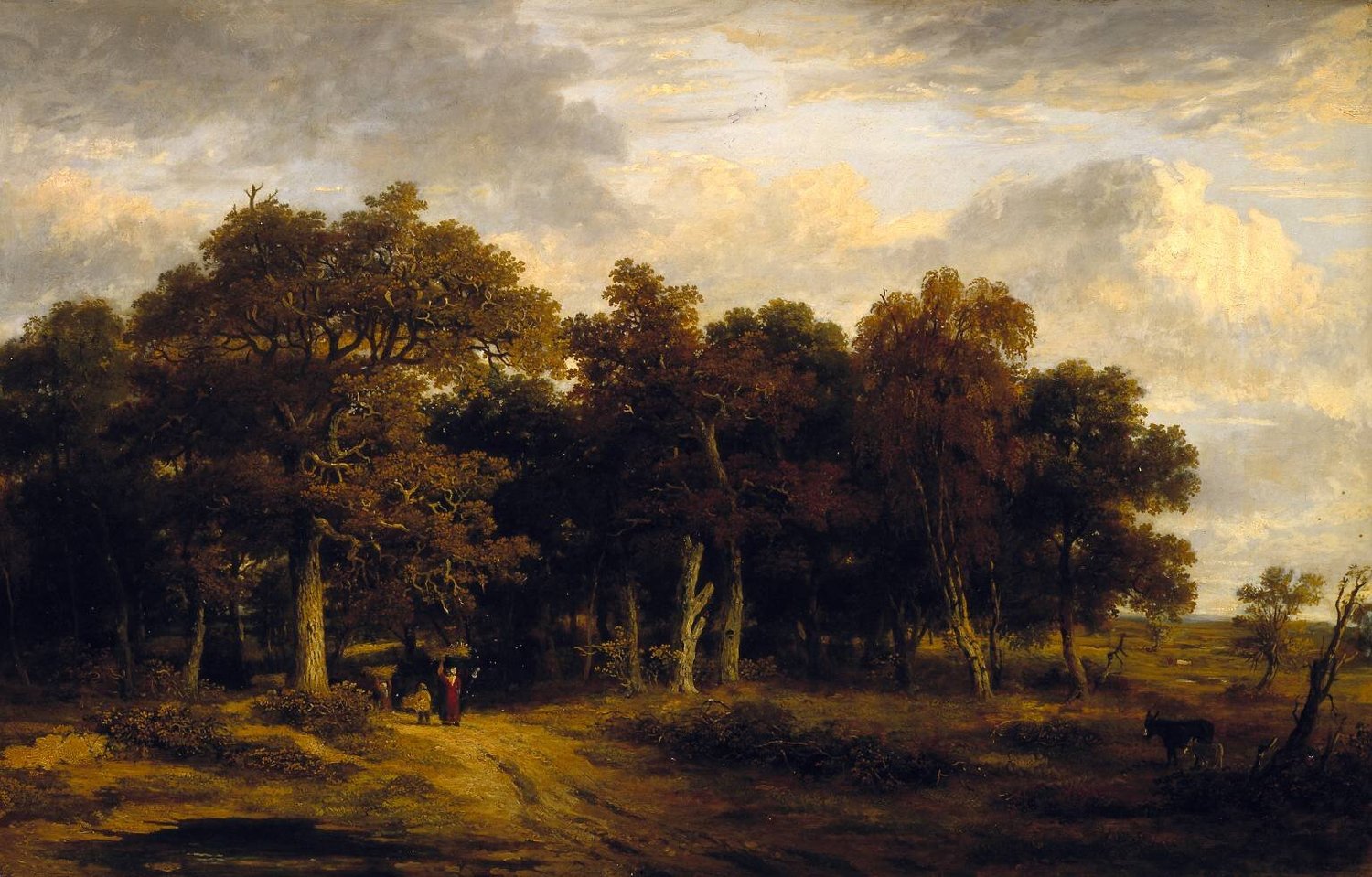
James Stark, Woody Landscape

Two sisters, one raised by an English country squire, the other by a Parisian merchant, react differently to adversity.


Here is another novel by Anthony Trollope's brother, Frances Milton Trollope's son, and Frances Eleanor Trollope's husband.  After a  cumbersome exposition (the author seems to imagine you'll want to draw yourself an accurate map of his setting) Trollope gives us vivid characters and (if you don’t mind some Victorian over-scrupulosity) a good plot.

“The plot is well developed. . . .  The dialogue is spirited and vivacious.” New York Times, October 27, 1864

“The descriptive passages are admirably written, the characters are for the most part natural and animated, and the interest of the story is well sustained.”  London Review, November 12, 1864

Download this week’s novel:

http://solo.bodleian.ox.ac.uk/permalink/f/89vilt/oxfaleph014719611

Novel 118: Catherine Gore, Preferment (1839)

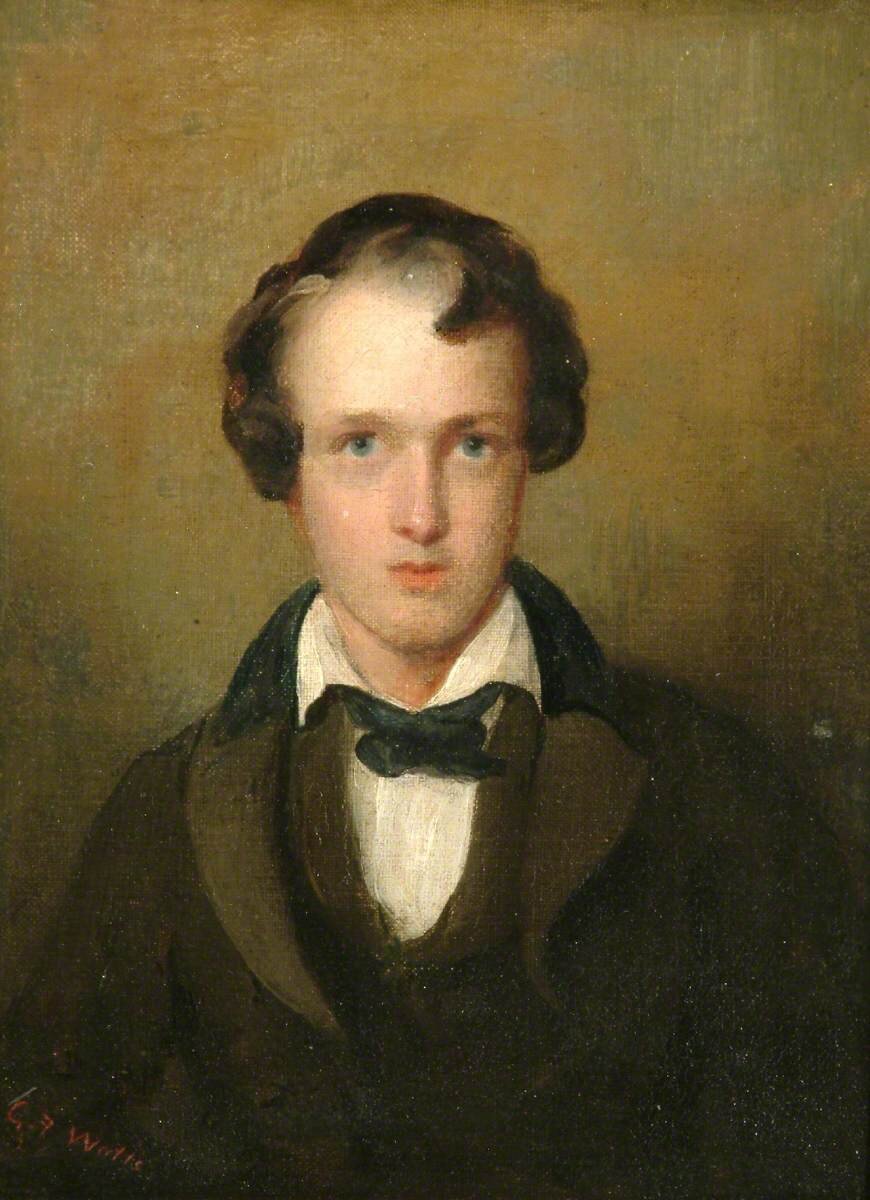
George Frederick Watts, Reverend A. Wellsted

The ambitious younger son of an earl’s younger son struggles to make his way in the world.


Here is another novel by Gore (see Novels 012, 072), in which that great writer deploys her witty style to develop another well constructed plot and another set of memorably vivid characters.

“Mrs. Gore is an expert and long practised delineator of aristocratic and courtly life. . . .  aristocratic manners, political intrigues, roués, cold-hearted, eccentric, vain, and silly personages of title, are sure to engage her pencil, which is often keen and satirical.”  Monthly Review, December, 1839

“We might point to at least a dozen entire scenes of this novel which are equal in the terseness of their satiric wit, the rich play of their humour, and the characteristic truth of their personal delineations, to those of . . . the best modern comedies.”  New Monthly Magazine, December, 1839

“We could bet against odds that Mrs. Gore could not write a dull book if she got the Bank of England for her trouble. . . .  Wit, satire which tickles rather than wounds, and a charming facility in depicting a foible, a peculiarity, or an individualizing quality, by a single trait—one stroke of the pen, one happy epithet.” Tait’s Edinburgh Magazine, January, 1840

Download this week’s novel:

v.1 https://archive.org/details/prefermentormyun01gore
v.2 https://archive.org/details/prefermentormyun02gore
v.3 https://archive.org/details/prefermentormyun03gore

Novel 117: James Maclaren Cobban, The Golden Tooth (1901)

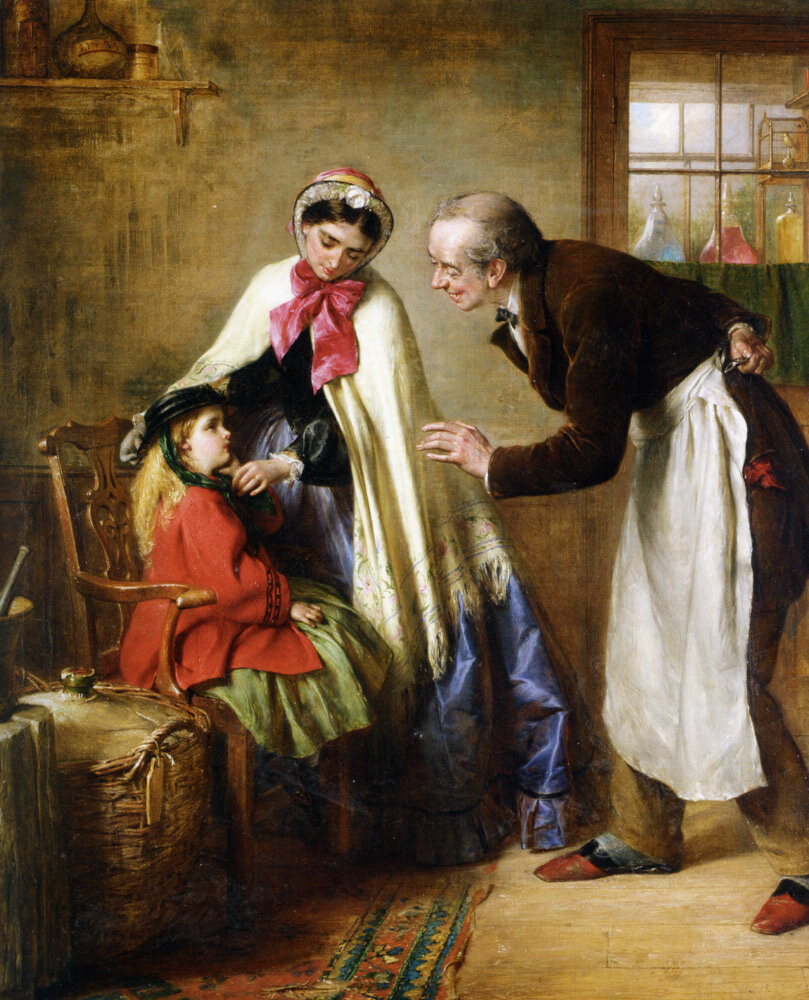
Edward Robert Hughes - A First Visit to the Dentist

A young farmer is wrongly accused of murdering the local squire; a mysterious man steps in to help.


James Maclaren Cobban (1849-1903) wrote some 25 novels in various genres, beginning in 1879.  This is one of at least three murder mysteries featuring a mustachioed amateur sleuth named Townshend.  The plot is excellent, the style good, the characters vivid if simple.

Cobban’s “qualities of literary art and insight into human nature give a relieving touch to the ordinary mechanism of this class of novel.”  Manchester Guardian, February 27, 1901

“An excellent and ingeniously constructed tale” treated with “briskness, humour, and unconventionality.”  Spectator, April 27, 1901

A “detective story with all the usual impossible incidents, hairbreadth escapes, and wonderful dovetailings.”  New York Times, August 19, 1901

Download this week’s novel:

Cobban, The Golden Tooth (1901)

Novel 116: Frederick Wicks, The Veiled Hand (1892)

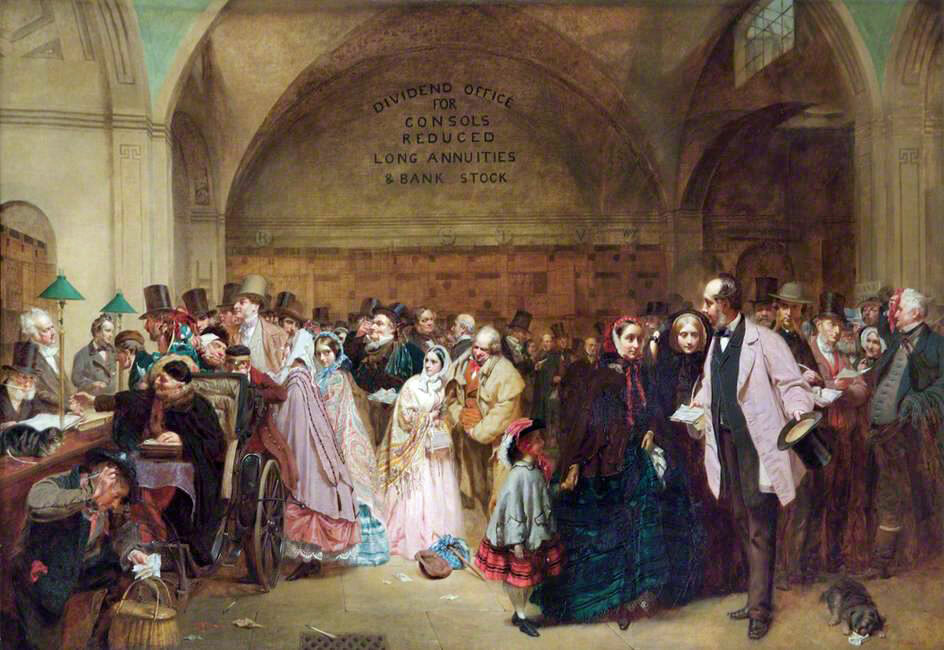
George Elgar Hicks, Dividend Day at the Bank of England

A needy aristocrat enters into various fraudulent schemes.


In addition to writing novels, Frederick Wicks (1840-1910) owned the Glasgow Daily News and invented a printing machine.  Here he involves a number of Dickensian caricatures in an unconventional plot concerned mainly with financial chicanery.  The illustrations, by Romanian artist Jean de Paleologue, are excellent.

“The plot of it is ingenious and engaging; the characters and the incidents are well under control; the writing . . . is almost brilliant.  Many of the chapters are humorous . . . the pages sparkle with epigrams.”  National Review, November, 1892

“There is a completeness and rotundity in the delineation of the characters which gives them the air of being types of humanity . . . though . . . their dramatic individuality is not sacrificed. . . .   It would be difficult to praise the style too highly.”  Athenaeum, December 17, 1892

Download this week’s novel:

http://access.bl.uk/item/viewer/ark:/81055/vdc_0000000332E8#?c=0&m=0&s=0&cv=0&xywh=-577%2C-130%2C2665%2C2584

Novel 115: M.E. Braddon, Aurora Floyd (1863)

George Frederick Watts, Ellen Terry

A passionate woman with a dubious past marries a rough, honest squire.


Here’s another by the great Braddon (see Novels 004, 061).  Like most of her novels it is engrossingly plotted and cleverly phrased—and was dismissively reviewed.

“As good a specimen of the marketable ladies’ novel as could be found.  Further than that it does not go.  There is no genius, or poetry, or high feeling, or delicate painting, or subtle observation in it.  But for a professional work, as a piece of composition, to be sold by a woman for a certain sum of money, it is masterly; and we invite all that great army of female stragglers in the battle of life who wish to carry the literary flag triumphantly, to read the book carefully, and observe how much a woman must bring with her to the ball if she wants to write like Miss Braddon.  In the first place, the English . . . is wonderfully good. . . .  The make of the sentences and the choice of words, the easiness with which the sense is conveyed which the author wishes to convey, and the absence of all that is awkward and ponderous, are sufficient to satisfy the exigencies of the most rigid criticism.  Then the plot . . . of the book is most exciting.  We are kept at the topmost pitch for as long as possible. . . .  Then Miss Braddon . . . knows all about men and their ways. . . .  The book . . . impresses us, before we have finished it, not only with a sense of the great powers of the authoress . . . but also with a conviction that she has a vein of feeling higher than the world of . . . tobacco, and brandy-and-water and that this feeling is perfectly genuine and unaffected.”  Saturday Review, January 31, 1863

“There are touches of humour and pathos which we look for in vain in Miss Braddon’s former work, and often an elevation of thought which would have accorded better with a loftier subject”; “If we have failed to convey a very favourable impression of her last effort, it is not because we deny Miss Braddon’s talent as a writer, but because we regret to see it employed on so unlovely a theme,” one which may have “an insidious effect” on the minds of readers.  London Review, February 14, 1863

Download this week’s novel:

v.1 https://archive.org/details/aurorafloyd01brad/

v.2 https://archive.org/details/aurorafloyd02brad/

v.3 https://archive.org/details/aurorafloyd03brad/