A newly rich young middle-class Scotswoman pays a friend’s aristocratic cousin to introduce her into society
Sarah MacNaughtan (1864-1916) wrote about a dozen novels, beginning in 1898, mostly clever social comedies like this one.
“This is a quite admirable story”; the author “relieves his [sic] fun with a delicate touch of pathos.” Spectator, November 16, 1901.
“The story has both shrewdness and humour”; it is based on “direct observation. . . . Some of the character sketches . . . are excellent.” Academy, November 23, 1901
“A really readable and lively story.” Detroit Free Press, November 30, 1901
A poor, illegitimate child, by dint of endless determination and uncompromising virtue, gains fame and glory.
Emma Dorothy Eliza Nevitte Southworth (1819-1899), was a popular and prolific American novelist largely ignored by contemporary critics. This novel, serialized in 1863-1864 and published (in two volumes, separately titled Ishmael, or In the Depths and Self-Raised, or From the Depths) in 1876, was, according to a publisher’s note, the author’s favorite. In many obvious ways, it’s just plain bad. The plot is impossible. The characters are unreal—some of them racial stereotypes, affectionate but hard to bear nonetheless. The style is often trite. The author’s didactic purpose intrudes at every turn, sometimes painfully. And yet it’s completely engrossing. Despite its length, the pacing is excellent; the dramatic conflicts are reliably thrilling. And the story, however silly, has the charm of a fairy tale.
“A fervid story of honest, earnest and successful struggles issuing in a noble and generous character and life. The author may be considered a fair critic in estimating it to be chef d’oeuvre.” Zion’s Herald, June 1, 1876.
“There is a curious blending of realism and romance in this work. . . . The leading female characters . . . are drawn with . . . delicate and accurate touches.” Ohio Farmer, June 24, 1876
“Among the more readable novels of the month” by “a well known, half-sensational, half-sentimental author, occupying a prominent, if not very high, situation among American writers.” Saturday Review, August 26, 1876.
A girl of gentle birth is raised as a foundling in London by a selfish lady and a loving nurse.
Anna Maria Fielding (1800-1881), born and raised in Dublin, moved to London as a teenager and in 1824 married journalist and editor S.C. Hall. She wrote stories, plays, and half a dozen novels. The Irish nurse here, though something of an ethnic caricature, is justly praised by the critics.
“Her sketches of character are lifelike; her events probable; and the dramatis personae, necessary to the progress and dénoûement of the plot, brought together with perfect ease.” Literary Gazette, January 18, 1840
“The Irish Nurse, who may be said to be the real heroine” has “a depth both of humour and of sentiment, a richness of colouring, a truth and purity of design, which will command for it a place among the very highest conceptions of this kind that our literature boasts.” New Monthly Magazine, February, 1840
“This is a simple story, yet it affords room for amusing, touching, and striking incidents; and among the persons of the drama there are several characters drawn with a firm and powerful hand. . . . The gem of the novel is Katty Macane, the poor Irish nurse,—a character than which, whether considered in its conception or execution, we know nothing more admirable of its kind in Scott or Edgeworth. We cannot praise it too highly, for we have hardly ever received greater delight from a creation of fancy.” Spectator, February 1, 1840
An officer returning from India is involved in a murder mystery.
Albany de Grenier de Fonblanque (1830-1924) wrote a dozen novels between 1859 and 1892. This one has a clever, lively narrator (not averse to straining for a joke now and then), a suspenseful (if absurd) plot that lives up to the title, and several amusingly annoying characters.
“The ‘Tangled Skein’ is no unfitting title for a story which even the author himself is at a loss to unravel. It is a sensation novel of the most approved type. There is a murder, of which a baronet, a peer, and a tinker are suspected in turn. There are secret marriages and illegitimate children, and hidden papers, and haunted rooms, and intelligent detectives, and all the regular apparatus of excitement and horror. However, the novel is well written and sparkling, and those who like this class of literature might spend their time worse than in exercising their wits over Mr. Fonblanque’s puzzle.” Reader, January 10, 1863
“A modern tale of mystery, with detective police, telegraphic messages and express trains. Withal, it is well written, and there is nothing forced in the descriptions or in the manner in which the incidents are related. . . . There are no highly-wrought passages, wherein any appeal is made to the reader’s feelings, but the interest is so well sustained, and the various incidents so ingeniously and mysteriously interwoven, that ‘A Tangled Skein’ bids fair to become a popular work.” Athenaeum, February 21, 1863
A promising young civil engineer falls in love with his suburban next-door neighbor.
Jessie Fothergill (1851-1891) wrote over a dozen novels, many set, like this one, in the the suburbs of an industrial city (she herself lived outside Manchester). The villainess here is particularly entertaining.
“Those who are acquainted with Miss Fothergill’s previous novels will know that they possess considerable charm both of style and incident. Made or Marred . . . exhibits the same characteristics. It is a pleasant book with which to while away an afternoon. . . . Some of the characters in this little volume are very attractive.” Academy, August 20, 1881
It shows “the author’s power of observation and description and her genuine, right-minded, and delicate sentiment. . . . It is not a very common pleasure to read a love story in which the sentiment is fresh and not insipid. . . . The studies of the town life and aspects as well as those of the landscape are made with Miss Fothergill’s well-known quickness of perception. The essentials are seized upon with the skill of the accomplished sketcher.” Athenaeum, August 27, 1881
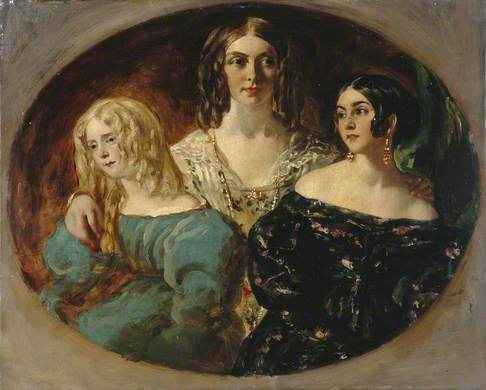
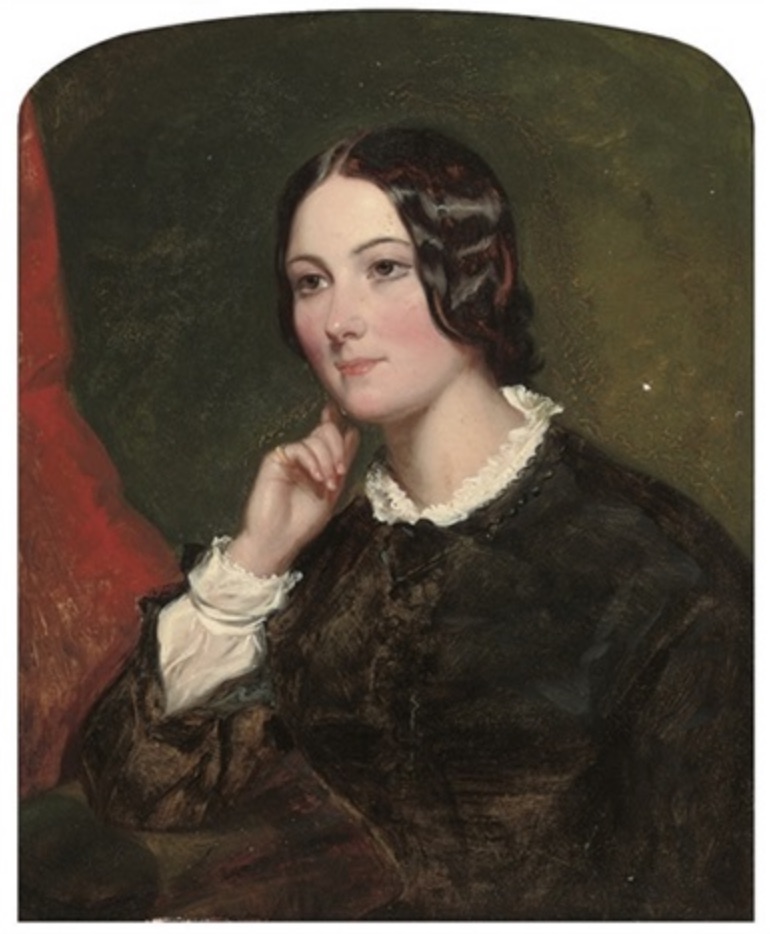
William Etty, The Hon. Mrs. Caroline Norton and Her Sisters (Caroline is probably the one on the right)
A beautiful and virtuous young lady’s trust in the man she loves has unhappy consequences.
Caroline Norton (1808-1877), granddaughter of playwright Richard Brinsley Sheridan, was a poet, editor, and social leader as well as a novelist. She was notorious also as the victim of a bad marriage; her experience helped justify reform of the laws governing marital property and child custody. It also no doubt informs the plot of this novel; however Norton is at least as interested in plot, character, and social setting as she is in political change. (Warning: If her views on women were progressive, her views on race were not; the misdeeds of two minor characters are repeatedly attributed here to their Indian origin.)
“The gloom of the tale is relieved by a light, airy, racy humour”; it has “an abundance of plot, counterplot, and episode, and even a superabundance of character. . . . ‘Lost and Saved’ is a work of such rare excellence, that it would create a stir amongst novel-readers even if it had not Mrs. Norton’s name on the title-page.” Athenaeum, May 16, 1863
“A novel of rare excellence, accurate in its English, fresh in its thought, artistic in its grouping and its balancing of lights and shades, and with a brave soul speaking through it.” Examiner, May 23, 1863
“There are two points in which we maintain Mrs. Norton’s unquestionable superiority to most novelists of the day”: She can sketch “aristocratic character in all its variations . . . with a rare and remarkable excellence” and she shows the same “excellence in her poetic power. The pathos of some scenes rises quite to the rank of poetry.” Dublin University Magazine, July 1863
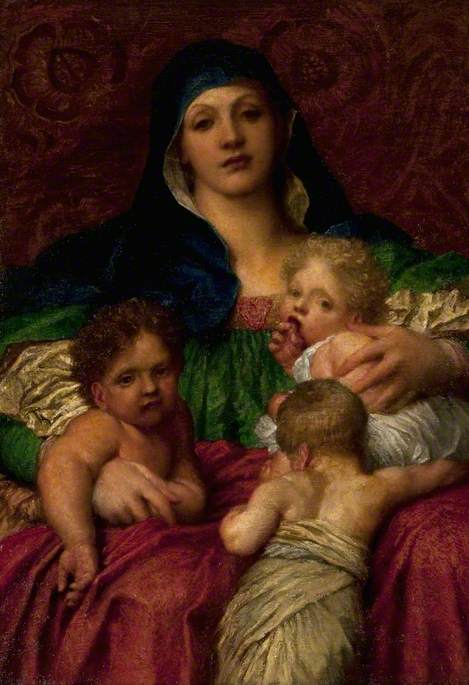
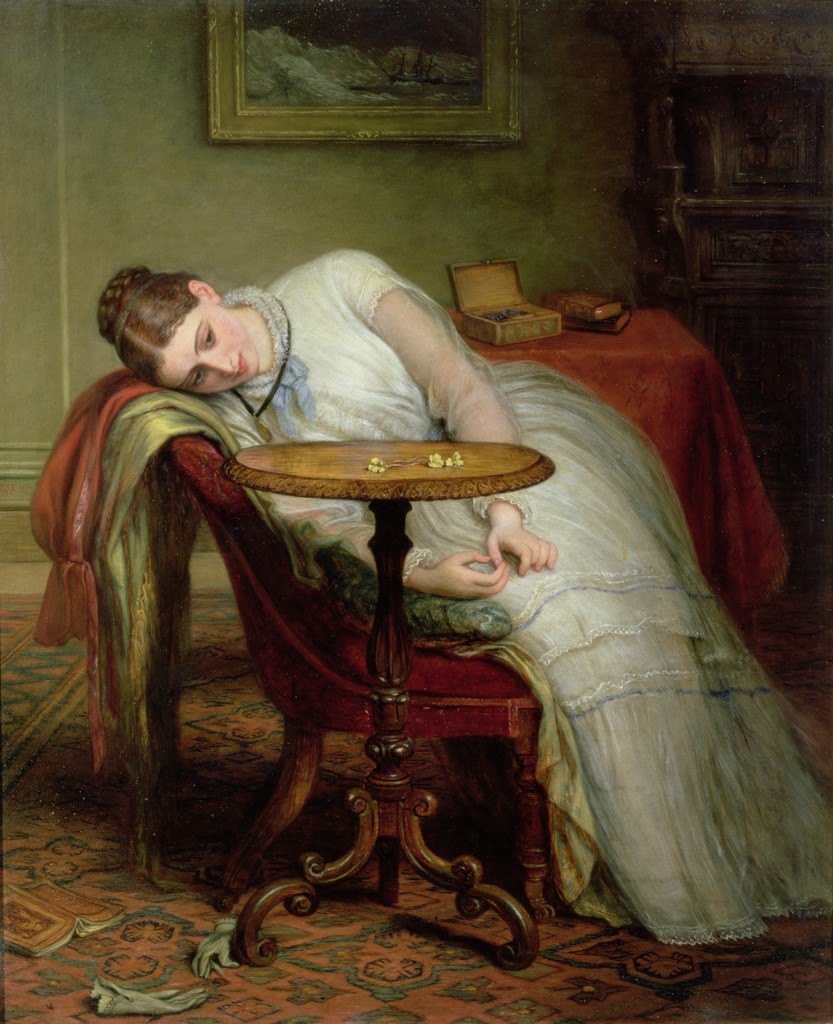
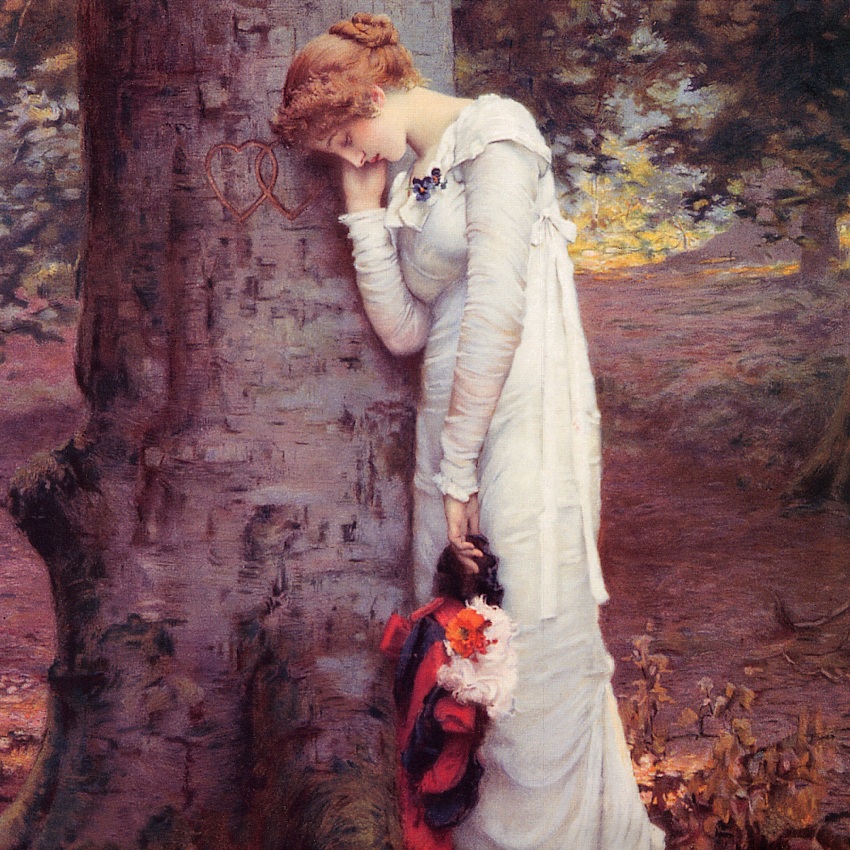
Charles West Cope, Hope Deferred, and Hopes and Fears that Kindle Hope
An heiress is discovered among fisherfolk; meanwhile, a virtuous young lady is entrapped by a bad man.
Florence Marryat (1833-1899), daughter of Frederick Marryat (the most successful 19th-century novelist of nautical adventures), wrote some eighty works of fiction, beginning with this one, which vividly represents various kinds of emotional torment.
“Without the aid of any very ingenious plot, Miss Marryat has succeeded in producing an exceedingly good novel. We give no slight praise when we say that it possesses the rare combination of unflagging interest . . . great descriptive power, and an influence . . . altogether good. . . . The very simple secret of the interest that pervades ‘Love’s Conflict’ consists in a very difficult achievement—in the delineation of men and women who really are men and women, and do not pretend to be angels or devils.” Athenaeum, February 11, 1865
Marryat’s “forte is a hard, almost coarse, realism both of style and topic. . . . She can paint and paint strangely well the ways and attitudes, and sometimes even the emotions, of thoroughly low natures.” Spectator, February 25, 1865
The novel “has considerable merit. Miss Marryat paints the successive emotional phases through which her chief characters pass with subtlety and force.” Saturday Review, May 6, 1865
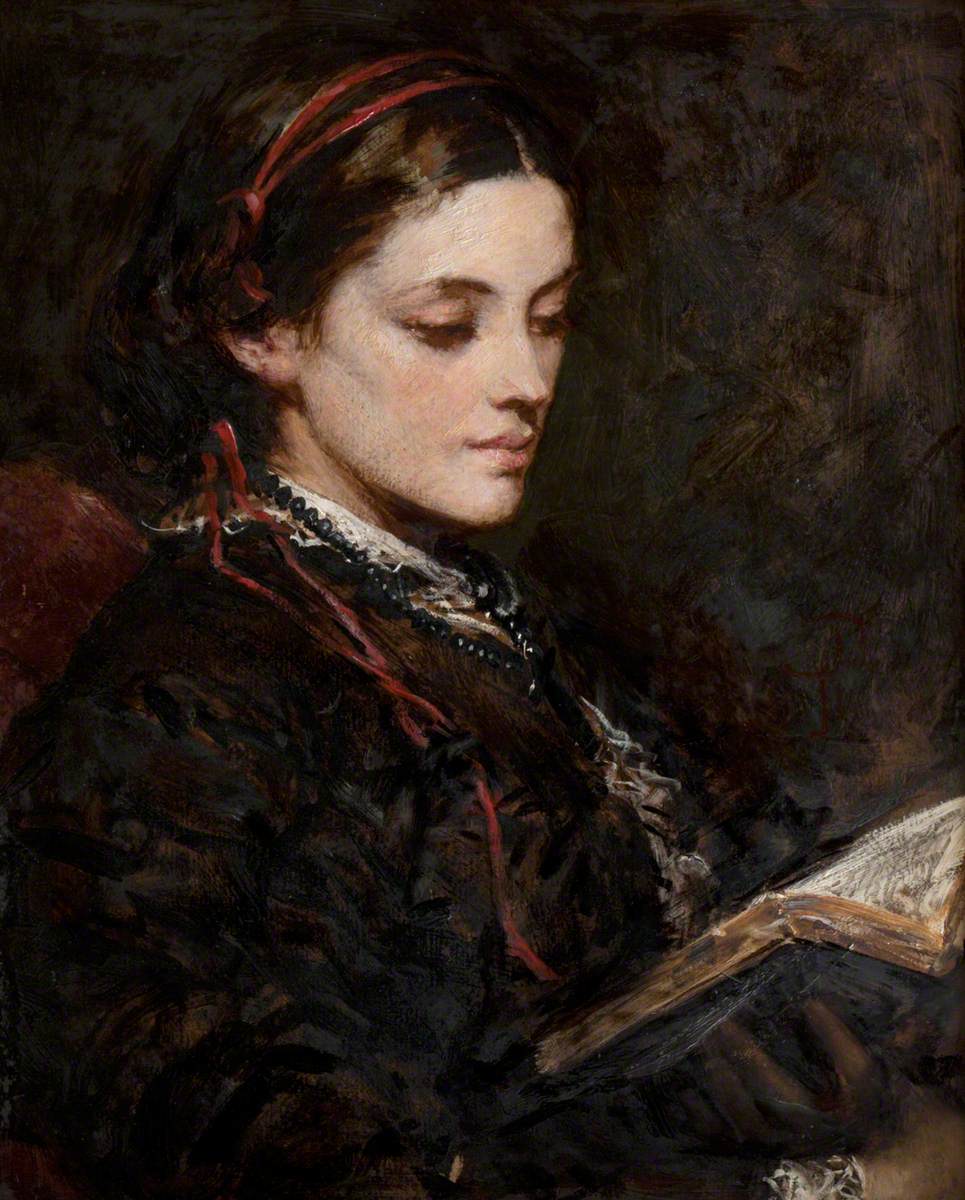
Sir Francis Grant, Portrait of Miss Grant, the Artist’s Daughter
A motherless girl adores her demanding older brother.
Grace L. Keith Johnston (1843-1929) wrote over forty works of fiction between 1878 and 1907 under the name Leslie Keith. This novel, published by the Religious Tract Society after serialization in The Girls’ Own Paper, and therefore, one assumes, morally and spiritually unobjectionable, is also quite good on the purely literary grounds of style, plot, and characterization.
“‘Leslie Keith’ give us some really good and subtle studies of character in this story. . . . The last chapter, in particular, is an excellent bit of work.” Referring to didactic novels for the youth market, the reviewer continues, “There is a great amount of literary ability expended in the production of these books. The good ones among them—and these are far more numerous than most people would think—are really more pleasant to read than any but the very best of the novels of the day. They are more wholesome; they do not worry us with the insoluble problems of life; they are not bound by the convention that a good end is bad art. But they must often fail to find their fitting audience. We hope that Cynthia’s Brother—a title which somehow smacks of the nursery—may be more fortunate.” Spectator, November 2, 1901
(I found no online version of this work, so I made one, using my own copy and my own inexpensive scanner. It’s not as pretty as it might be, but it’s readable.)
An aspiring novelist marries the daughter of a stock-jobber.
Leonard Merrick (1864-1939) wrote some twenty novels between 1891 and 1921. This one has complex characters whose marital troubles arise in part from their differing backgrounds; it implies also a strong protest against the publishing industry’s poor treatment of brilliant novelists.
“There is a difficulty in writing about the ways of literature and literary men without a slight touch of cynicism. But Mr. Merrick blends it so well with humour that no sting remains.” Morning Post, December 14, 1896
“In spite of flaws there is vigour and freshness in much of it. The atmosphere is distinctly middle-class and is well sustained” and the characters “form an amusing gallery of portraits.” Athenaeum, January 23, 1897
“The happy phrases and brilliant ideas scattered about ought to make a name for the author. . . . He has humour, a sense of style, and, while brimming over with things to say, he is neither diffuse nor ponderous.” Saturday Review, March 20, 1897
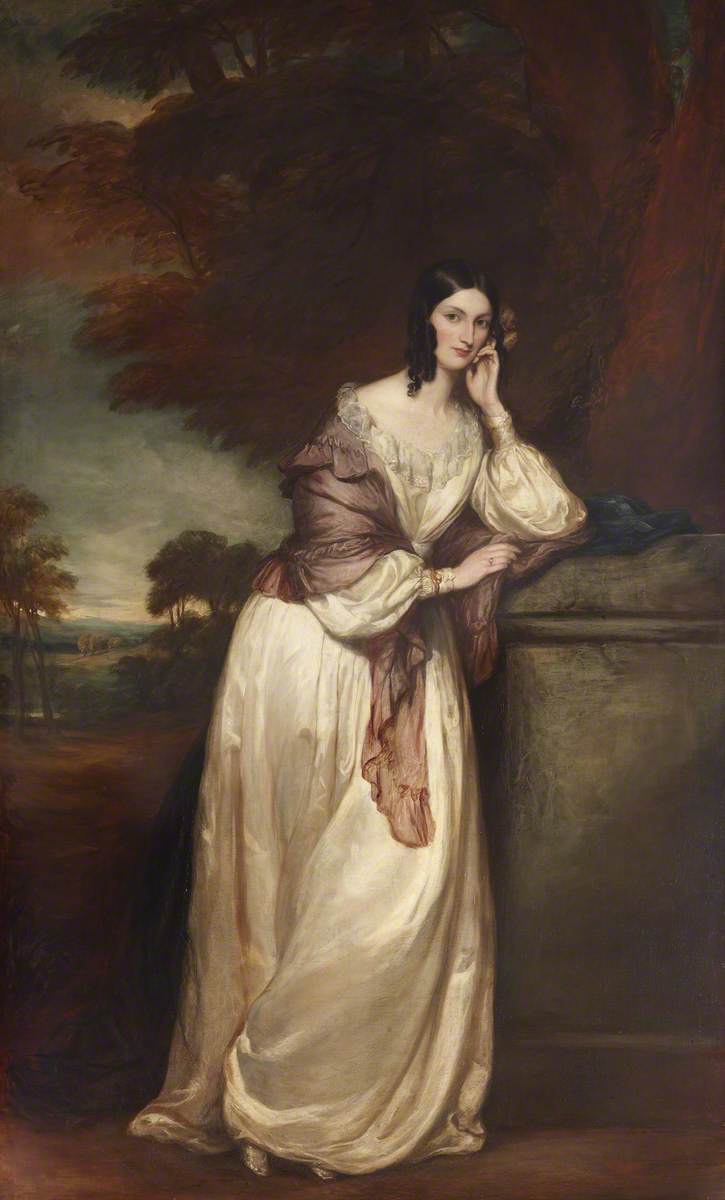
Sir Francis Grant, Lady Katherine Isabella Manners, Countess Jermyn
A young lady is displaced at her father’s death by a vulgar ship-chandler.
Emma Robinson (1814-1890) wrote fifteen novels between 1843 and 1867, most of them historical; this, however, is contemporary, an odd combination of farce and ghost story, written in a sometimes tortured but always lively style.
“The plot is dramatic enough, and would make an excellent farce. As a story it is very entertaining.” Caledonian Mercury, July 26, 1862
“Unlikely scenes...described with dash and spirit.” Athenaeum, September 13, 1862
A rich Englishwoman, bored with offers of marriage, takes a job as a governess in Germany.
Mrs. Alfred Sidgwick (née Cecily Ullman) (1852-1934), born into a German-Jewish family, married an English philosophy professor and wrote some 46 novels beginning in 1889. This one finds humor in the cultural differences between the English protagonist and the German family for which she works.
“A pleasant story of modern life—a welcome story, for youth and happiness sparkle through its pages.” Academy, November 9, 1901
“Mrs. Sidgwick, with rare keenness of vision, has seen below the surface ugliness of German existence, and has understood many things which the prejudiced refuse to acknowledge.” Bookman, December, 1901
“The charm of the book is to be found in the descriptions of German home life, and particularly in the doings and sayings of the children, who are real living youngsters. This makes it wholesome, charming, and entertaining.”San Francisco Chronicle, February 15, 1902
A young lady’s secret is used to her disadvantage by an unscrupulous young man.
Here is another novel by James Payn (see Novel011), with an excellent plot featuring some delightfully scoundrelly scoundrels.
“Mr. Payn has here made a capital and original study of a villain…. the construction is excellent, strong situations abounding, and . . . nevertheless, the characters are developed with the utmost truthfulness. The novel abounds with clever remark and sub-ironical reflection; but Mr. Payn, though sometimes he indulges in very smart sentences, is never really cynical or cruel: there is a genial light shining over it all.” British Quarterly Review, April, 1884
“The actors in it are, for the most part, really pleasant and agreeable; the scenes are, with important exceptions, natural and homelike; there is a domestic tone about the book, and family affection has full play.” Spectator, April 12, 1884
It “does not amount to much as a story, although the interest does not flag; but it is full of the quiet wit which has been so enjoyable in all his other stories, and the terse characterization which gives us the man or the woman in a single sentence.” The Critic and Good Literature, May 10, 1884
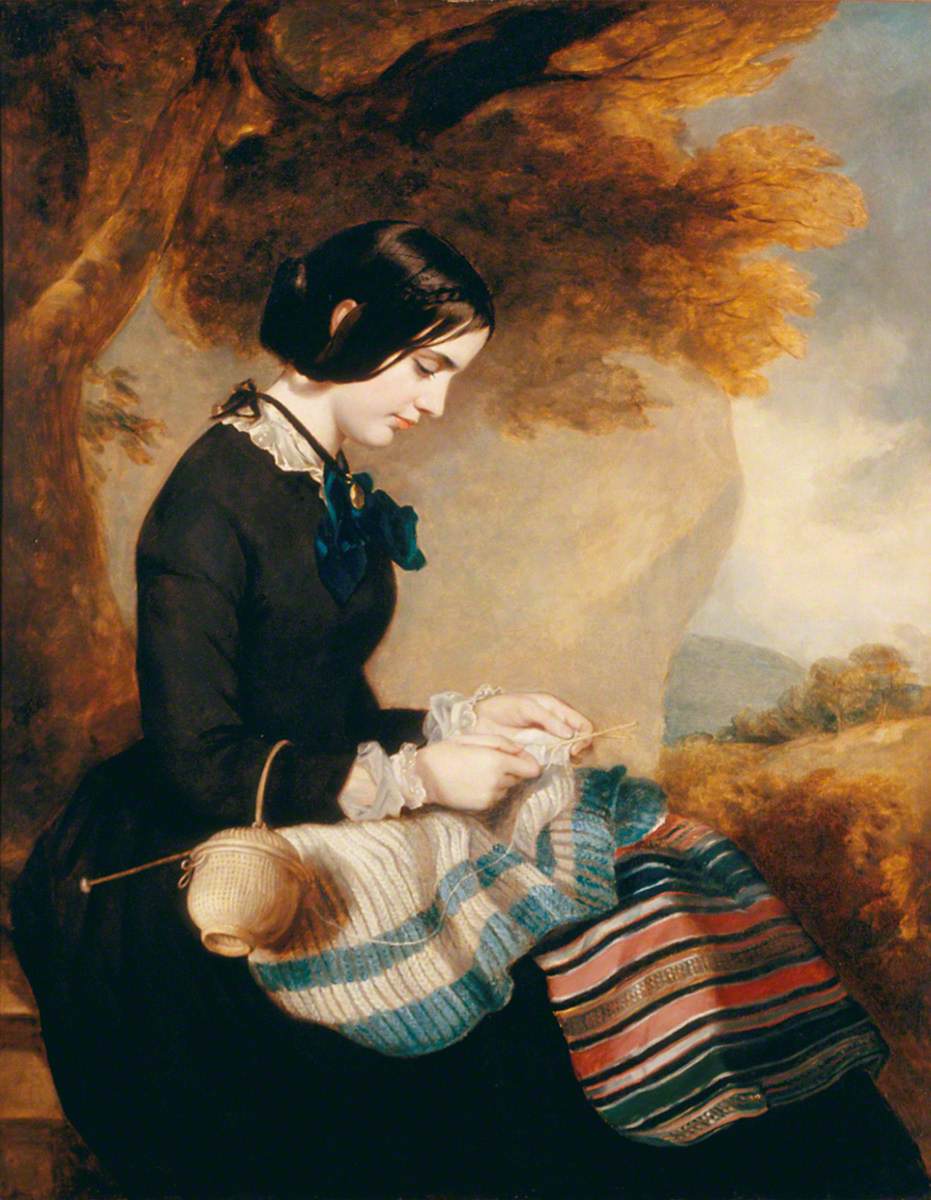
Sir Francis Grant, Mary Isabella Grant Knitting a Shawl
A young couple, raised in luxury, tries to live on a limited income; then other things happen.
Mrs. Henry Chetwynd (née Julie Bosville Davidson) (1828–1901) wrote over a dozen novels, of which this was the first. The title applies only to the opening situation, after which the plot takes some weirdly abrupt turns. Several of the characters are striking creations.
“This is a well-sustained and pleasant story, and the latter part of it abounds in humorous scenes and sketches of character”; the author “has a natural way of relating her story, and she is clever in contriving those little complications which prevent a love-tale from sinking into maudlin sentimentality.” Athenaeum, May 26, 1866.
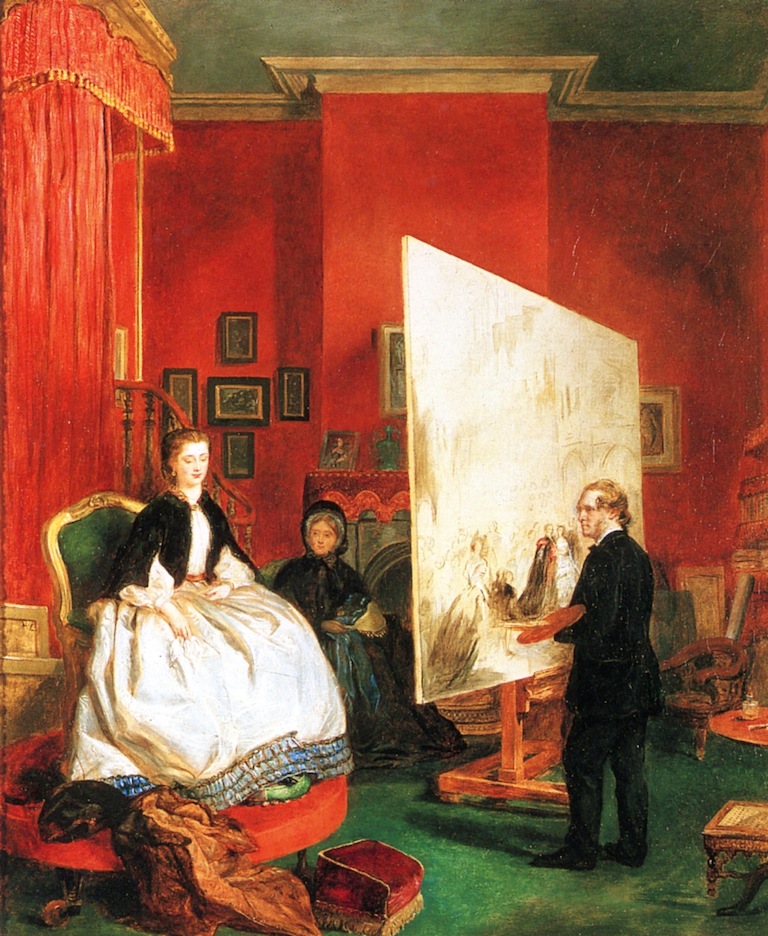
John Ballantyne, William Powell Frith Painting the Princess of Wales
Two maiden aunts compete for the guardianship of their orphaned niece.
The title is misleading: the book has nothing to do with women’s political ambitions. Rather, it’s another example (see Novel029), from rather late in her career, of the bright and vivid social comedy at which Frances Milton Trollope excelled.
“This is a novel rich in all the attractions” that novels provide: “First, character skilfully painted and boldly relieved . . . Next . . . abundance of incident, much varied, and always catching attention. In the third place, a story progressively engaging our sympathies . . . and at last wound up in to a very ingeniously complicated plot.” Standard, August 9, 1850
“Mrs. Trollope appears in this novel to have recalled the most vigorous days of her genius.” Critic, August 15, 1850.
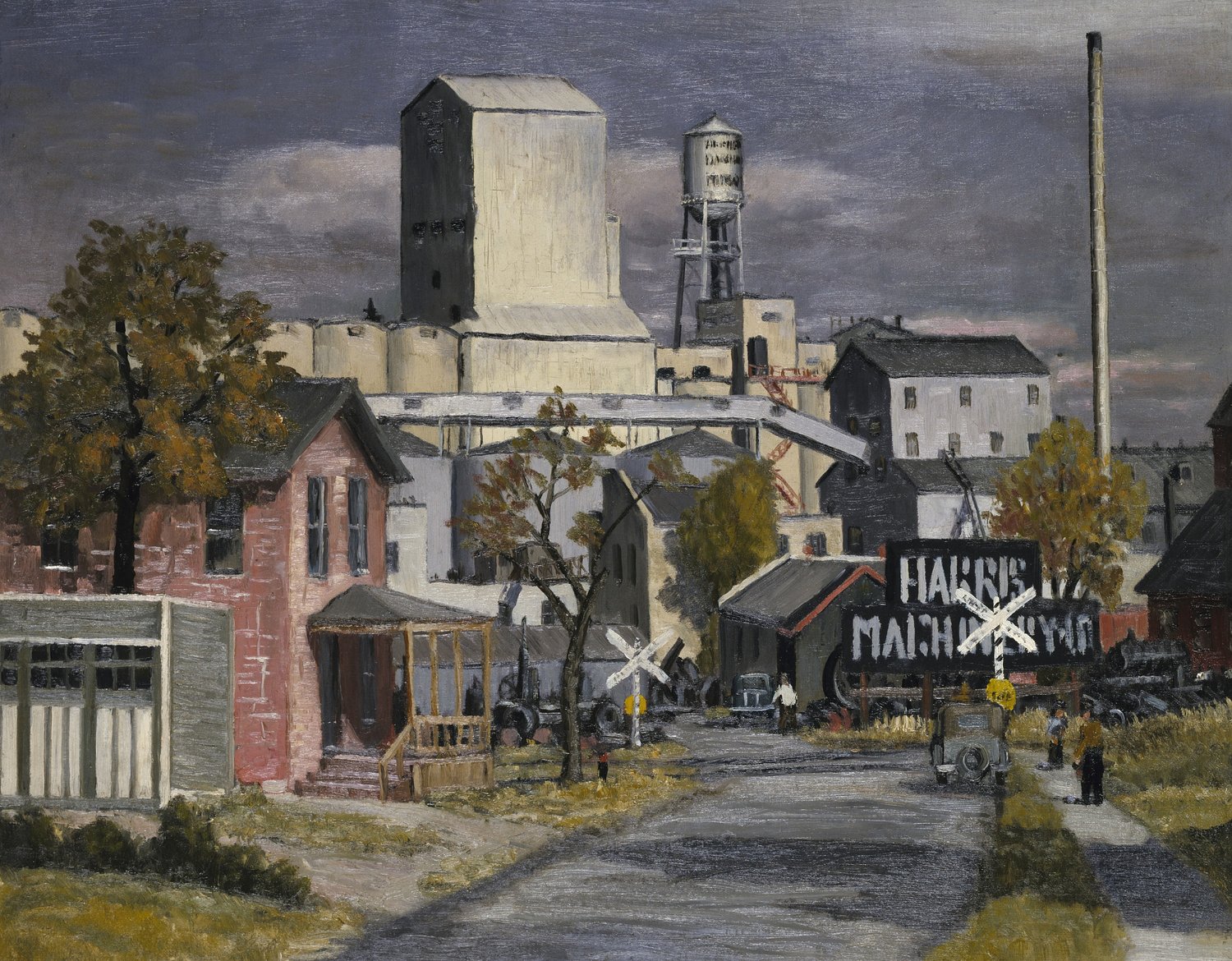
Arnold Ness Klagstad, Archer Daniels Midland Elevator
A man oversees the construction of a grain elevator.
Samuel Merwin (1874-1936) and Henry Kitchell Webster (1875-1932), both from Evanston, Illinois, collaborated on a number of novels. This one makes the building of a grain elevator outside Chicago the occasion of a gripping tale of entrepreneurial good and evil.
“Not even Kipling could put more life into the story or give one a better idea of the obstacles which the man met and conquered.” San Francisco Chronicle, November 30, 1901
“As good a story of the romance of modern enterprise as can be found. . . . The way in which the young constructor triumphs over all odds forms the substance of as thrilling a story as any tale of war or adventure.” Advance, December 5, 1901
“A brisk and characteristic example of the American novel,—the romance of Labour. . . . The material of the book is absolutely prosaic . . . but the story will delight readers who combine mechanical tastes with the spirit of practical enterprise. . . . The joint authors have the faculty of clear and brief description, which makes it easy to follow the intricacies of a ‘business’ plot.” Spectator, December 14, 1901
A successful lawyer’s aristocratic wife is tempted to stray.
The prolific and popular Mrs. Henry Wood (born Ellen Price) (1814-1887), though she did not begin writing until middle age, published over forty novels and story collections; in this novel, which established her fame, her moralistic and sentimental proclivities can’t overcome vivid characters and a gripping plot.
“The plot is interesting, intricate and well carried out; the characters are life-like, and the writing simple and natural.” Athenaeum, October 12, 1861
“The authoress treads the ground sacred to French novels with the honest and firm step of an Englishwoman.” Examiner, October 16, 1861
“There is no wit in it, nor any powerful play of passion, nor any subtle analysis of character. It merely flows on with a good plot carefully worked out, with clear, clever sketches of ordinary people, and in a pleasant, natural style.” Saturday Review, February 15, 1862
An Australian heiress pays a baronet for introduction into English society.
Charles Hamilton Aïdé (1826-1906) wrote some 17 novels between 1858 and 1901, most of them, like this one, social comedies in genteel settings.
“A bright, readable tale, written in excellent English, and containing plenty of clever dialogue.” Athenaeum, March 15, 1884
“In all Mr. Hamilton Aïdé’s novels, good-taste and moderation are as conspicuous as knowledge of the world, and a certain subdued romance which is a pleasant corrective of the pessimism that ‘Society’ novels must reveal unless they are utterly vulgar. . . . Some scenes in this too brief story have genuine beauty, others are humorous and caustic, and the whole story is good.” Spectator, April 5, 1884
A retired bookie feuds with an aristocratic colonel whose daughter attracts his genteelly educated son.
Percy White (1852-1938) wrote some 30 novels between 1893 and 1914, many, like this one, clever social comedies set in London.
White’s muse “is at her best when inspiring her author with lively scenes about social London, and providing him with scalpel and knife to dissect the heart of some worldly old sinner.” This is “a very clever study of a retired racing man . . . both amusing and brightly written. Perhaps on the whole the adjective ‘sparkling’ is the one that fits best.” Spectator, July 27, 1901
“Frivolous, amusing, and well written.” Academy, August 24, 1901
This is the second of Croker’s fifty-some novels (the other of her novels I’ve recommended, Novel013, was approximately her thirtieth). Its first volume, describing its narrator’s Irish childhood, is especially engaging.
“Altogether this is an attractive and brightly written story, above the average of its class not only by its conception and execution, but also, and particularly, by the graceful manner of its narration.” Athenaeum, May 12, 1883
“On the whole, we prefer the Irish scenes, to the Indian; but both are described with much liveliness, and make sufficiently good reading. . . . Some of her characters . . . are very pleasantly drawn.” Spectator, July 21, 1883
“The story embraces a considerable range of incident; . . . there is not a dull page . . . from the beginning to the end.” Saturday Review, September 29, 1883
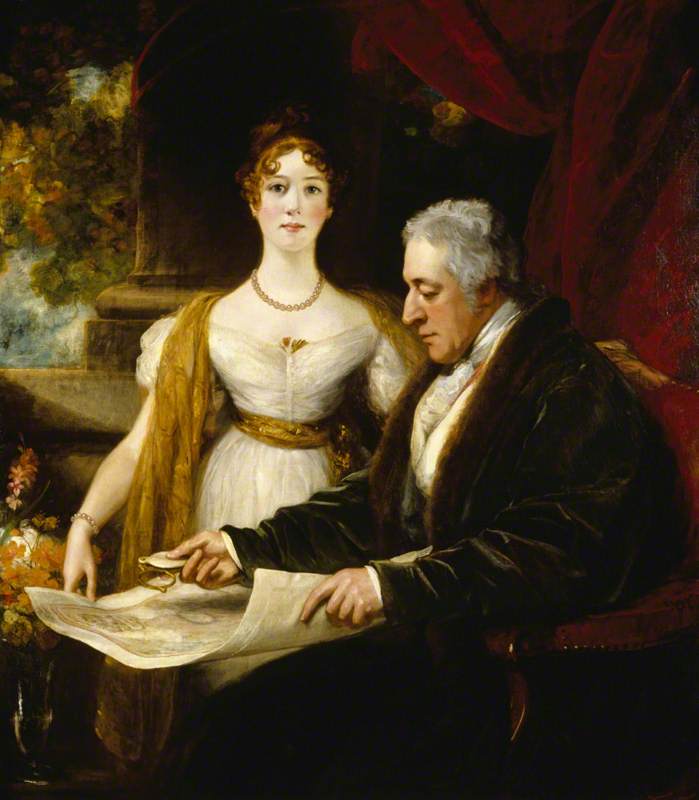
Thomas Phillips, George O'Brien Wyndham, 3rd Earl of Egremont, and His Daughter Mary Wyndham, Later Countess of Munster
A virtuous young lady is trapped in the conflict between her striving middle-class father and the aristocrats who envy his wealth as he does their status.
Here is another great novel by Gore (see Novel012), one of the most popular novelists of the early Victorian period, one of the best of any period. The titular “man of business” and the social setting in which he struggles are memorably delineated.
“No one possesses greater skill in taking up the thread, and unwinding it, till daylight breaks into the social labyrinth, than Mrs. Gore. . . . She has also the power of making her discoveries very amusing to her readers. . . . Years hence, we believe [her works] will be taken up as the most curious and accurate pictures ever drawn by a living writer of an actual time.” Literary Gazette, August 12, 1837
“In the case of a writer so long and deservedly popular as Mrs. Gore, our recommendation is scarcely needed, but yet we will recommend, candidly and without stint, these volumes to an attentive perusal. . . . Considering the author’s sex, her keen perceptions of the real and rough business of life occasionally excites our surprise. She has evidently studied mankind in other places and among other subjects than drawing-rooms and London coteries.” Metropolitan Magazine, October, 1837
This is “like all Mrs. Gore’s novels, skilfully constructed in point of plot, and cleverly as well as naturally detailed. She is a smart writer as well as a shrewd observer; and along with these requisites for one who would show up the frailties and follies of mankind or lash them effectively, she can, whenever she chooses, strike a deeper note and appeal to strong and tender affection.” Monthly Review, November 1837