Only after I gave this puzzle its title did I remember having already made a crossword called “A Minus” (Crossword 005). Someday soon I’ll construct a puzzle and find, to my horror, that it’s exactly the same puzzle—in theme, grid, fill, and clues—as the one I constructed last year, or month, or week. And when that happens I’ll put an end to this website at last and turn to my other lifelong dream—mastering the accordion.
Many advanced young crossword constructors pride themselves on making puzzles that, as they put it, “Look like me.” I’m going them one better this week, with a puzzle that not only looks like me, but has me in it! I’m putting me first, for a change! It’s me time! It’s all about me! Me! I’ll let you solve this one; but I’m thinking about moving towards a system where I make puzzles only about me, exclusively for me.
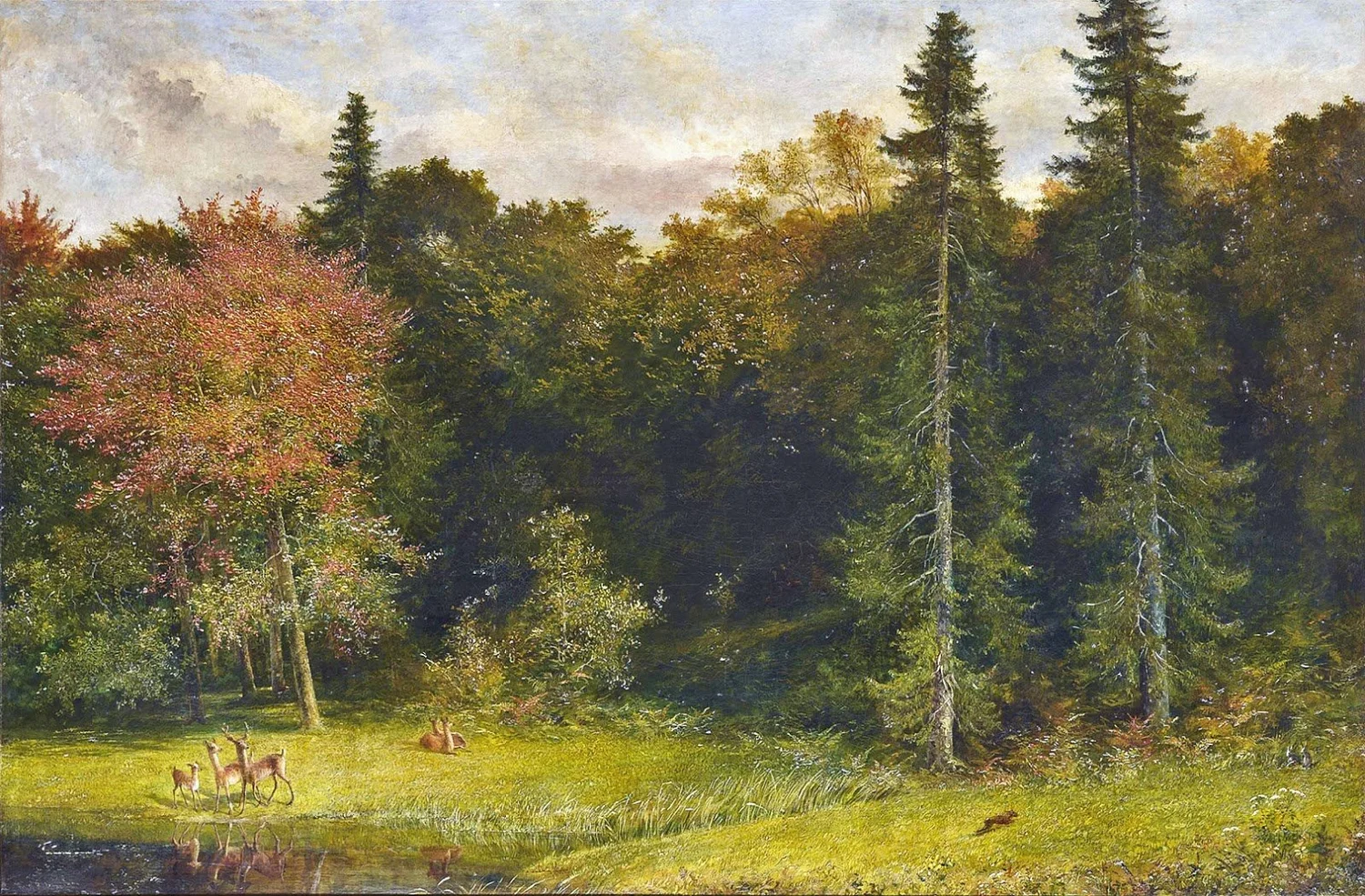
We tried to set up a wildlife refuge here at David Alfred Bywaters’s Crossword Cavalcade and Fortnightly Victorian Novel Recommender, out behind the smithy next to the organic garden. But the deer kept eating the arugula, and the lions kept eating the deer, so we had to give it up.
For more than five years I’ve been providing the world with a weekly Victorian novel recommendation and a weekly crossword puzzle. I thought that by now I’d be universally known and beloved. But I’m not, it seems. No one, on hearing my name at a retail outlet or on a customer-service line, has ever exclaimed, “What! No! Not the David Alfred Bywaters!” No street, however short or obscure, has been renamed in my honor. I haven’t been given a Nobel prize; I haven’t been given even a MacArthur “genius” grant, or an honorary degree.
I think that maybe I’ve been too generous, that I’ve made the world ungrateful by kinder treatment than it merits. So I’ve decided, with the new year, to post weekly not both a new crossword and a new Victorian novel recommendation, but either a new crossword or a new Victorian novel recommendation. Next Saturday, then, you’ll find on this site a novel recommendation, and the Saturday after that a new crossword, and so on and on, until my vanity is gratified, or until I grow tired of the whole business altogether.
Hey, lads and lasses, the old year passes! Deck those halls! See that blazing yule! Don that gay apparel! Troll that ancient carol! Maybe you struggle to remember that ancient carol? Well, I used to have that problem too. “Boughs of holly . . . what? what comes after ‘holly’? what’s the next line?,” I’d find myself wondering, again and again, while the merry measure went on without me. Then I hit on a mnemonic that has never failed me since. I enshrine it in this week’s crossword, as my gift to you.
Where did you go? You didn’t fall for the blandishments of those other crossword constructors, did you? Well, it wouldn’t be all that surprising if you did. Since this website’s inception many years ago (Obama was still president!) thousands of new constructors have appeared on the internet; in fact, every thirty seconds someone puts a new crossword online; and if current trends continue, by the year 2025 fully 50% of all internet words will originate in crossword puzzle clues or answers. Meanwhile, the number of crossword solvers has fallen precipitously: already constructors outnumber solvers by a ratio of three to one. So, if you didn’t go, don’t! I need you!
Today’s puzzle is a kind of sequel of my Los Angeles Times puzzle of November 18 (available for the time being in the LAT puzzle archive at www.cruciverb.com)—in case you were wondering how that came out. If you didn’t happen to see that puzzle, however, don’t worry; this one is sufficient unto itself.
I confess that when I applied the title “Teaser Rates” to this puzzle, I wasn’t sure exactly of the phrase’s meaning. Was it a sibling-behavior phenomenon studied by child psychologists? Was it a metric for hair salon workers whose compensation is based in part on the size of their tonsorial creations? It turns out that, like the title ofCrossword 144, it’s just another dubious financial practice. So it sounds more fun than it is—like so many things in life. But not like this puzzle!
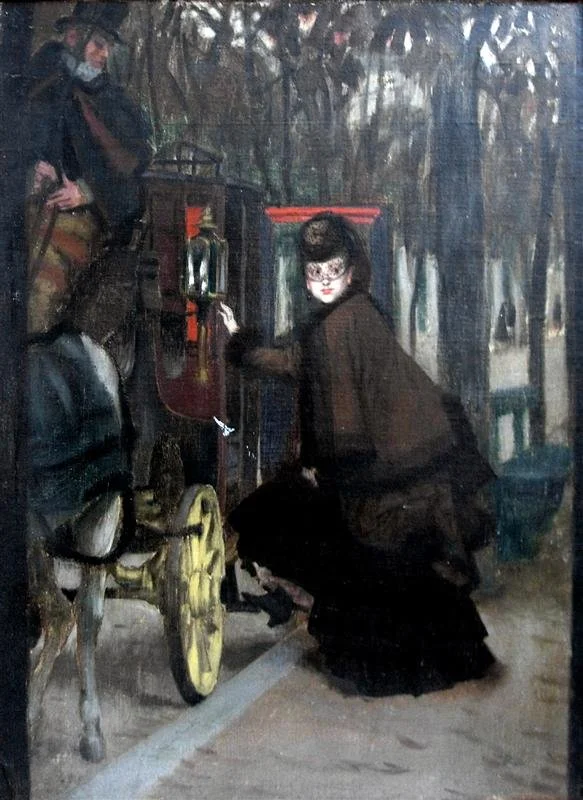
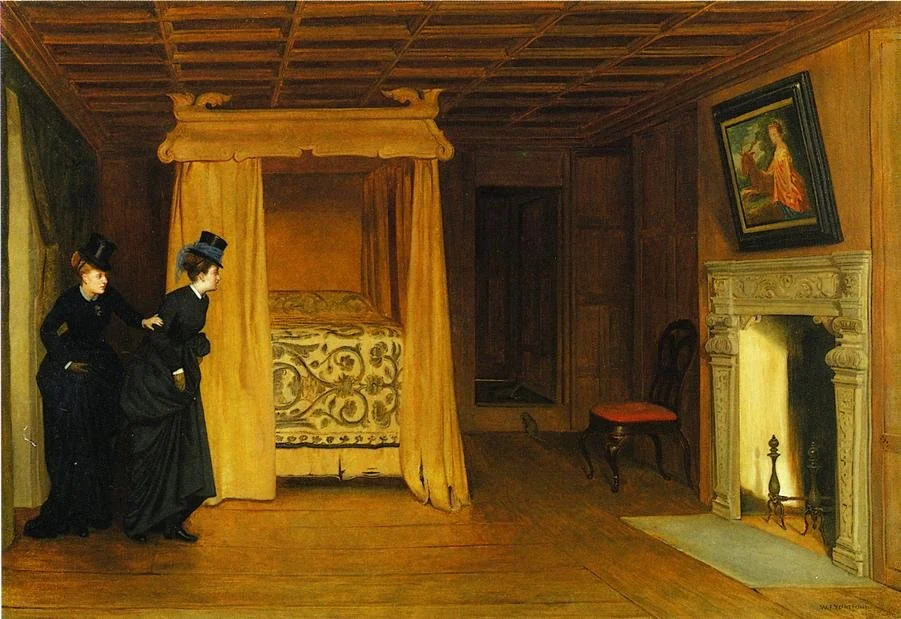
James Jacques Joseph Tissot, The Secret Rendez Vous
A bad man manipulates a weak, fearful woman.
Here is another novel by Fullerton (seeNovel 019), again featuring a woman helplessly enmeshed in impossible dilemmas.
“It is . . . finely natural, discriminating in tracing the movements of the human heart, affording admirable contrasts, and being touchingly pathetic. . . . The . . . author . . . passionately unfolds the wretchedness of a soul in mortal agony through doubt, uncertainty, crushing oppression, and irresistible despair. It is, indeed, a tale of woe, with little or no relief; and all who do not shun the luxury of tears over the pictures of fiction will hasten to their delineation here by a pencil of the deepest interest and potent effect. The finale is most affecting; and what precedes and makes it inevitable is yet more forcible.” Literary Gazette, May 11, 1844
Fullerton “has shown a depth of observation surprising in so young a writer; the power of sustaining a strong and simple interest; a taste for homely portraiture; and a wholesome contempt of the trival follies of what are called fashionable subjects.” Examiner, June 1, 1844
A contrasting view:
“This novel is the work of a clever and accomplished writer, possessed of considerable skill in the conduct of a story and the management of dialogue; and as such it cannot be read without some gratification. Its grand defect is the almost unmitigated monotony of wretchedness pervading the tale of misery. Its wearisome painfulness is not lessened by the purely constructive woes of its heroine; neither do the artful ingenuity and verisimilitude of the details hide the improbability of the main circumstances or the inconsistency of conduct in the principal persons. . . . The vein of religious sentiment running through the work is out of place in a fiction not involving matters of creed and opinion. . . . The pathos is of a morbid larmoyante kind—disagreeable without being exciting.” Spectator, May 18, 1844
We’ve mentioned before the benefits this website is designed to confer on elderly solvers, whose incipient dementia will be held at bay by the mental gymnastics it requires. We haven’t, however, dwelt as much on its benefits for very young solvers, whose struggles at reading will be eased by the insight it provides into the inner workings of language and meaning. In fact, every puzzle is subjected to intense review by two focus groups, one of 80-year-olds, one of 8-year-olds, and carefully shaped in response to their experience. And that’s why four out of five geriatricians and nine out of ten pediatricians recommend this website.
We conclude this website’s fifth year as we have concluded the other four—with a 21 x 21 “Cavalcade of Crosswordese” (see Crosswords052,104,156,208): a puzzle featuring words overused in crosswords because of their convenience to constructors, combined into hilariously unexpected phrases. As if this weren’t enough to satisfy the most demanding solver (and of course it is), this year we’ve alphabetized the words in each phrase, and the phrases overall in the puzzle, a service that we alone, of all crossword constructors, have ever, to our knowledge, provided.
Maybe, grateful as you are for yet another year of puzzles and Victorian novel recommendations, you feel a sort of an urge to do something, but you just don’t know what. Well, here’s an idea! Click the “Donate” button below and give us a trifling sum of money (you may also donate through PayPal or Venmo using our email address.): $12 will get you a bonus 15 x 15 “Victorian” puzzle filled only with words in use before 1901; $13.50, a bonus 21 x 21 puzzle; $15, both of these; and $10,000,000, your name on the website.
Now mind—whether you give us anything or not, we’ll just go right on making crosswords and Victorian novel recommendations till we feel we’ve made enough. It’s entirely a matter between you and your conscience, assuming you’re troubled by such a thing at all.
Duty is an important value with us here at David Alfred Bywaters’s Crossword Cavalcade and Weekly Victorian Novel Recommender, as it was with the Victorians themselves; so this week’s puzzle, which concludes the website’s fifth year, is a cruciverbal Ode to Duty, just like Wordsworth’s, except that it’s a puzzle made up of crossed words rather than a poem..
Are you feeling a dutiful inclination to help support this website? Now’s your chance! As at other years’ ends, along with giving you absolutely free two 21 x 21 puzzles (this week and next week), we are offering bonus puzzles to those who donate. You may click on the button below, or donate through PayPal or Venmo using the site’s email address. There are four donation levels. Donate $12 and receive a 15 x 15 crossword which employs only words current during the Victorian era (and, of course, still current today). Donate $13.50 and receive a large, themed 21 x 21 crossword. Donate $15 and receive both.
And again, for a donation of $10,000,000.00 the site will be renamed in your honor. So if your name is, say, Melon Usk, it will henceforth be known as Melon Usk Presents David Alfred Bywaters’s Crossword Cavalcade and Weekly Victorian Novel Recommender. Why do this? Well, say you’re a little remorseful about spending 44 billion dollars on a social media platform that’s good for little but abusing one’s enemies and congratulating oneself—wouldn’t you feel much better about things if, for a tiny fraction of the price, you purchased in addition the right to present the world’s premier source of crossword puzzles and Victorian novel recommendations?
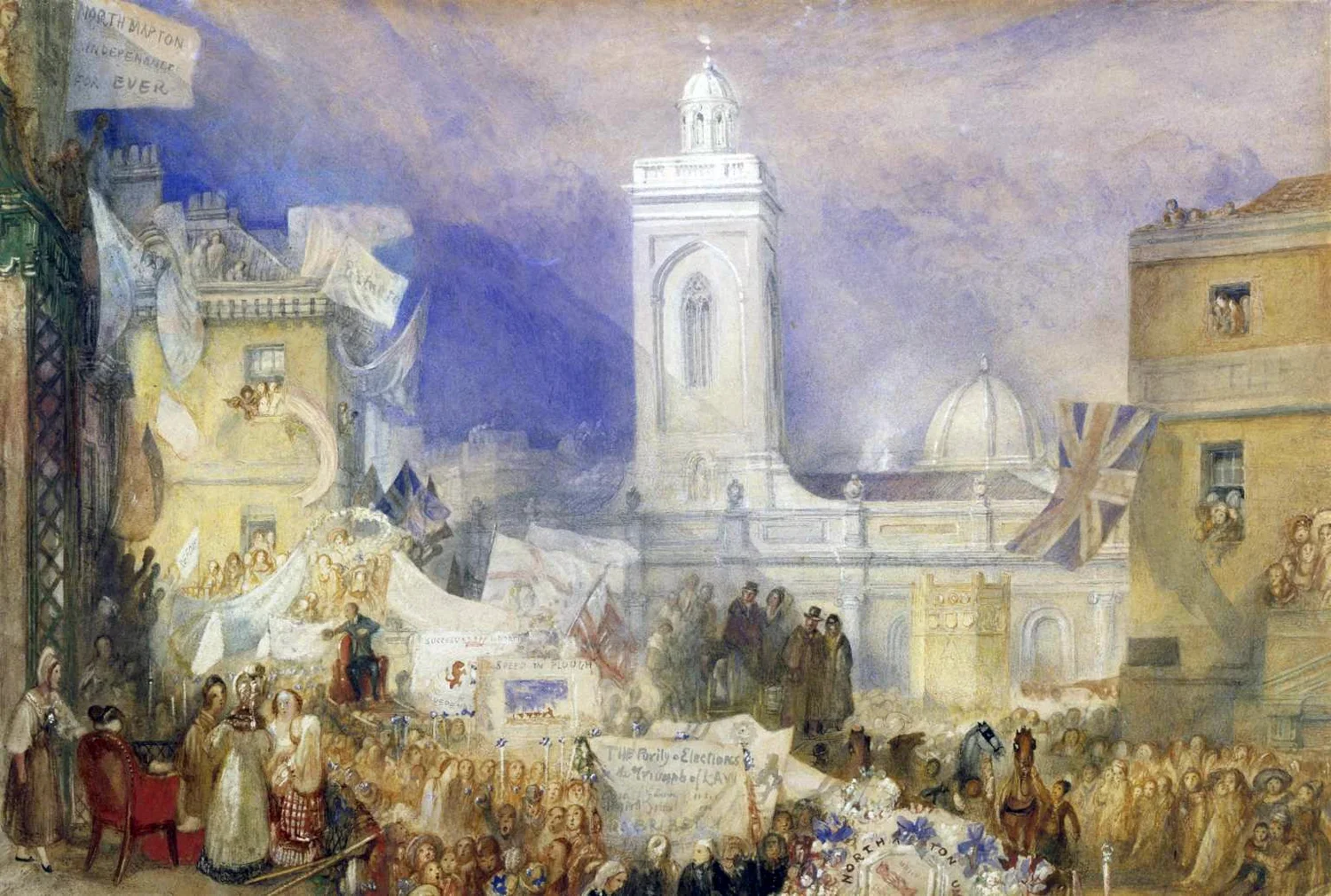
JMW Turner, The Northampton Election, 6 December 1830
Next Tuesday is Election Day here in the U.S.A.! So here’s a puzzle for the occasion, as the polls close, and this candidate leads by that margin while we await those precincts, and the television personalities holler in front of their multi-colored maps, and the pundits speculate and explain, and the portentous election-day music plays, and the garish election-day graphics swirl, until the wise voter unplugs everything and retires to bed with a Victorian novel, content to read the results in tomorrow’s paper.
William Frederick Yeames, A Visit to the Haunted Chamber
Why should ghosts be traditionally associated with aversion and fear? I’d love to encounter one, and thereby disprove to myself the seeming probability of personal annihilation. So if you know any ghosts, please send them my way; or at least try to gather and pass on to me any tips they might be willing to share as to posthumous survival.
We’ve been having more labor trouble here at David Alfred Bywaters’s Crossword Cavalcade and Weekly Victorian Novel Recommender. The new hires are sadly unqualified. One of them crossed the name of a little-known actor with the name of another little-known actor. We had to “let him go.” Another crossed a Star Wars character’s name with a Star Trek character’s name. We fired her too. But there’s only so much one scrappy little crossword maker can do. The same kind of thing is happening everywhere. Standards throughout the industry have grown ever more lax, degrading the entire crossword labor pool.
And meanwhile, what about the millions of desperate solvers who have turned to crosswords as a last resort—to stave off dementia, or addiction, or trauma, or boredom? We cannot fail them! We need national standards, a system of certification and licensure, and a well-trained enforcement arm, and we need them now!
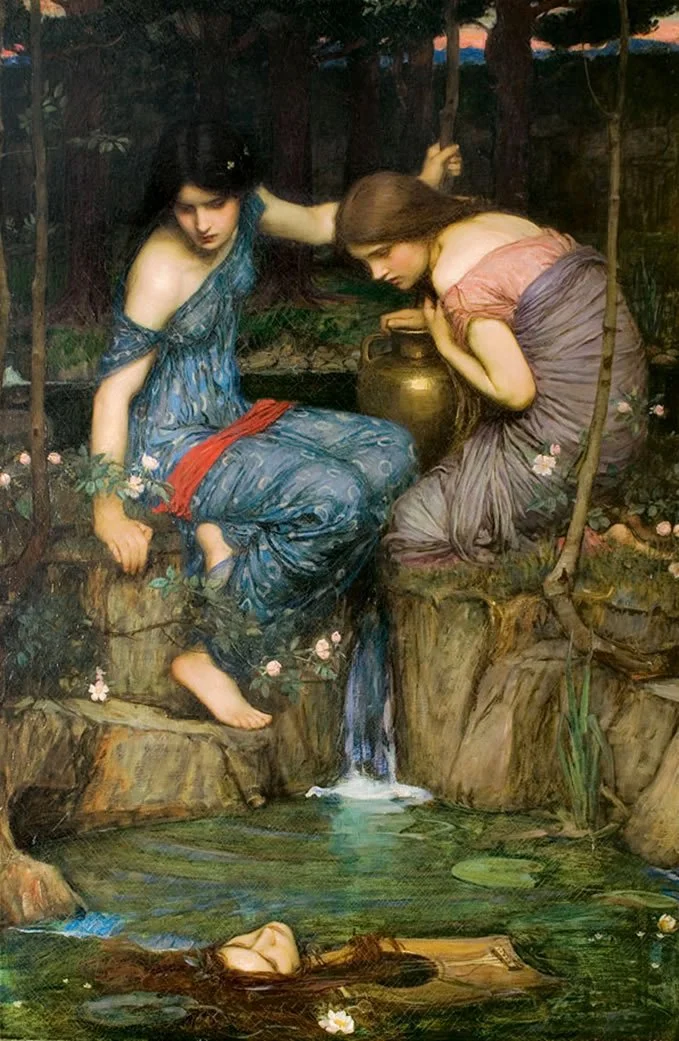
John William Waterhouse, Nymphs Finding the Head of Orpheus
Think ahead! Don’t be caught unawares—plan for every contingency! What about tomorrow, next year, ten years from now? In twenty years, you’ll be twenty years older. In seventy years, you’ll be seventy years older—or, probably, dead! In two hundred years you and everybody who remembers you will be dead! In five billion years the earth will be an empty cinder!
Well maybe, instead of thinking ahead, you should just do this crossword.
Does the phrase “new replacements” seem redundant to you? It doesn’t to us here at David Alfred Bywaters’s Crossword Cavalcade and Weekly Victorian Novel Recommender! A while ago some of our workers were threatening to form a union and bargain with us for a living wage. We tried to explain that the annual earnings of the average crossword constructor wouldn’t keep a small dog alive through a mild winter—to no avail. So of course we had to fire them all and hire replacements. One of this new group did some research and discovered that we’d mentioned the NRA in some crosswords—not favorably, of course, but still. They quit en masse, claiming they felt unsafe. So now we’ve hired some new replacements.
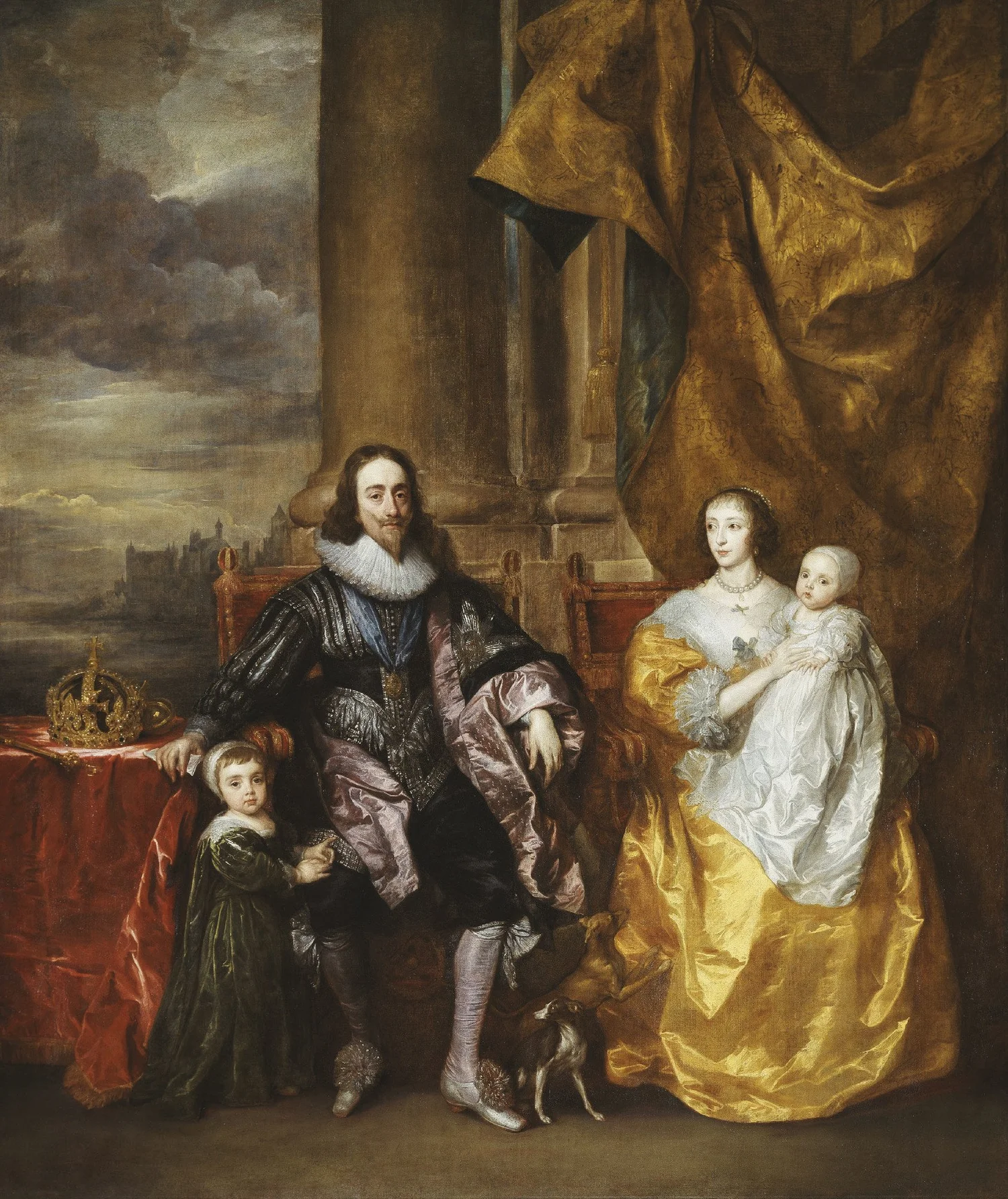
Sir Anthony Van Dyck, Charles I and Henrietta Maria with their Two Eldest Children, Prince Charles and Princess Mary
Are you seeking adventure, daring solver? You’ve come to the right place! You’ll find it in the attached puzzle!—that is, if you redefine the word “seeking” (dividing it into two parts and interpreting the first part as a homophone), and apply the result to common phrases so as to arrive at new phrases having to do with things like carpet installation and insurance. And if that doesn’t sound like adventure to you, well, maybe you haven’t come to the right place after all.
Speaking of C-kings, that’s the future Charles II at the knee of Charles I in this week’s painting; and here’s a timely bonus question for you:who is Charles II’s brother’s daughter’s cousin’s cousin’s second-cousin’s son’s grandson’s son’s brother’s niece’s son’s son’s son’s brother’s daughter’s eldest son?
(This week’s crossword, and the post introducing it, have been much improved by generous solver Charles Montpetit. Any genealogical miscalculations are, however, my own.)
Heart’s ease! It’s a purple flower! It’s an Elizabethan song! It’s a Victorian novel! (Novel 003) And now, at last, it’s a crossword puzzle! As Shakespeare puts it:
When griping grief the heart doth toss,
And doleful dumps the mind oppress,
Then puzzles made of words that cross
With speedy help do lend redress.
That’s right! I recycle! I separate cans, bottles, and paper. I break down the boxes and I tear the labels off the cans. I even tear the little plastic windows off the business envelopes and the pasta boxes. And, like other people who use yard signs, bumper stickers, banners, tee shirts, and other such means to announce their possession of basic virtues, I thought everybody would be glad to know this about me. You are glad, aren’t you? Of course. So here’s a crossword for you, in my honor.
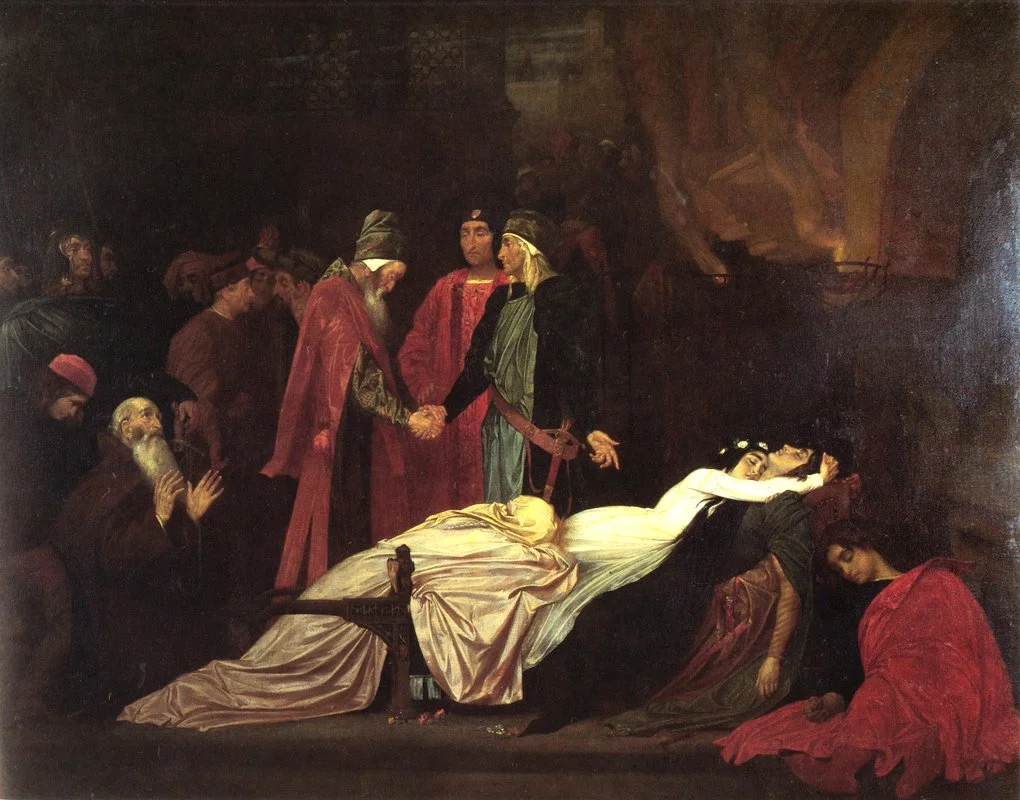
Lord Frederic Leighton, The Reconciliation of the Montagues and Capulets over the Bodies of Romeo and Juliet
Many people enjoy belonging to a group bound by a sense of grievance so that they can rage happily together, usually against some other similarly bound group that can rage in turn back at them. This is fun in itself; it can also lead to solid personal gain, as one’s route to success is eased by one’s fellow enragees, who form a sort of mutually-supportive grievance collective, or ring of ire. We here at David Alfred Bywaters’s Crossword Cavalcade and Weekly Victorian Novel Recommender belong to no such ring; we’re happy with everybody and everything in this fortunate world, including other people and their rage, to which we here pay a small tribute.