David Alfred Bywaters's Crossword Cavalcade & Fortnightly Victorian Novel Recommender. Every Saturday! Either a new language-torturing puzzle or an old novel by an unjustly neglected Victorian author. Why waste time on other amusements?

Novels

Novel 219: Edmund Hodgson Yates, Broken to Harness (1864)
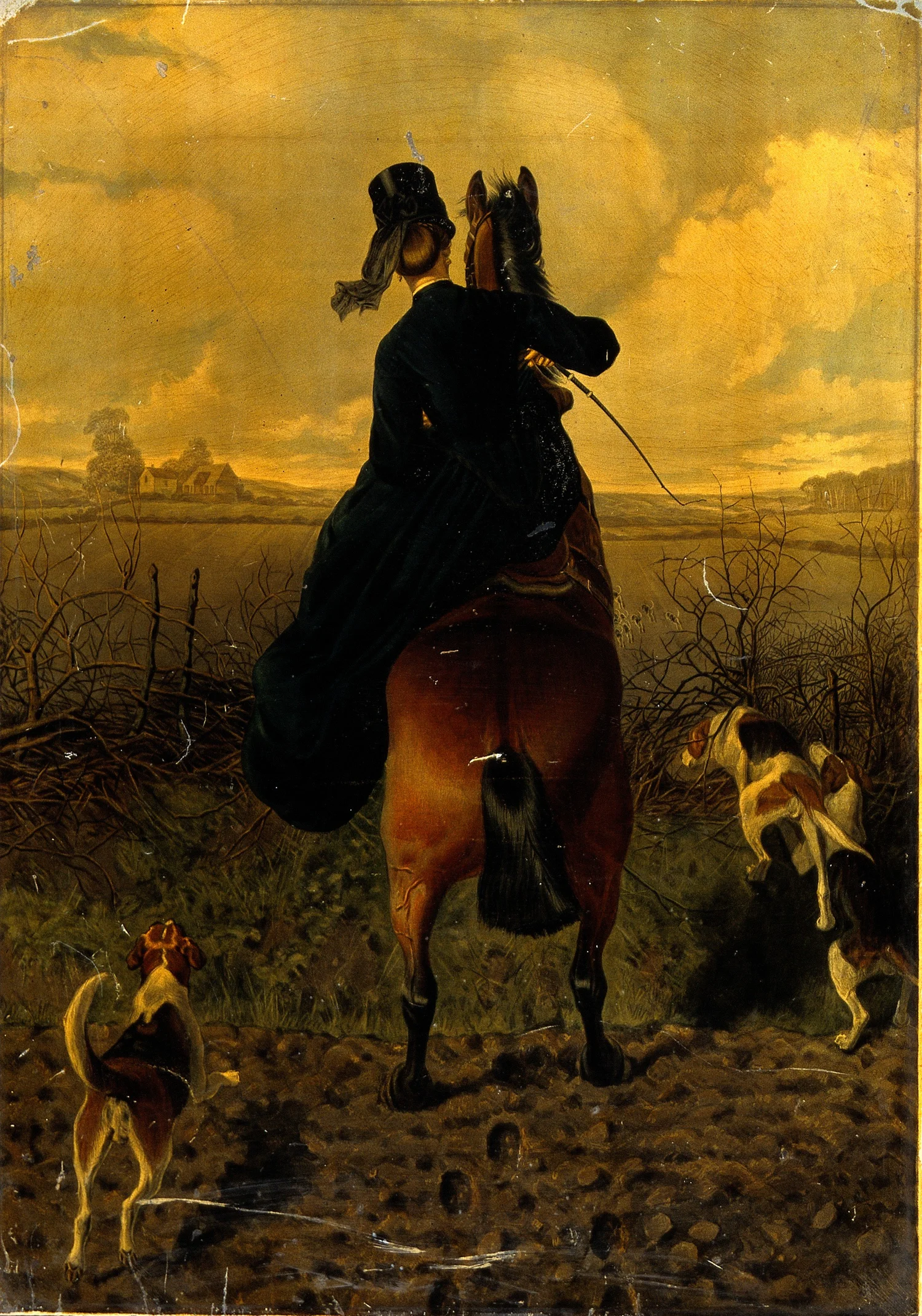
Charles Burton Barber, An Elegantly Dressed Horsewoman Approaching a Fence, Seen from Behind

A fashionable girl marries a journalist; a female horse trainer has love troubles.


Edmund Hodgson Yates (1831-1894) managed to offend seriously both William Makepeace Thackeray and Anthony Trollope in his work as a gossip journalist.  He wrote some nineteen novels, of which this, his first, was perhaps the most popularly successful.  Its most distinctive feature is its representation—sometimes fascinating but sometimes tediously knowing—of contemporary society.

“We have read it with lively interest, and we lay it aside with an agreeable sense of refreshment.”  Athenaeum, November 26, 1864

“We cannot do more than state the almost unexceptionable excellence of all these volumes contain, and add our impression of the value of the many moral lessons the author has conveyed in Broken to Harness.”  Manchester Guardian, January 17, 1865

A (slightly) contrasting view:

“A spirited, effective tale of to-day, full of people one understands, who do things they are likely to do . . . with incidents which excite without being improbable”; but while the “subordinate characters” are “alive . . .  the higher characters are not.”  Spectator, November 26, 1864

Download this week’s novel:

v.1 https://archive.org/details/brokentoharnesss01yate
v.2 https://archive.org/details/brokentoharnesss02yate

v.3 https://archive.org/details/brokentoharnesss03yate

Novel 218: S. Vere, Lady Helena (1877)


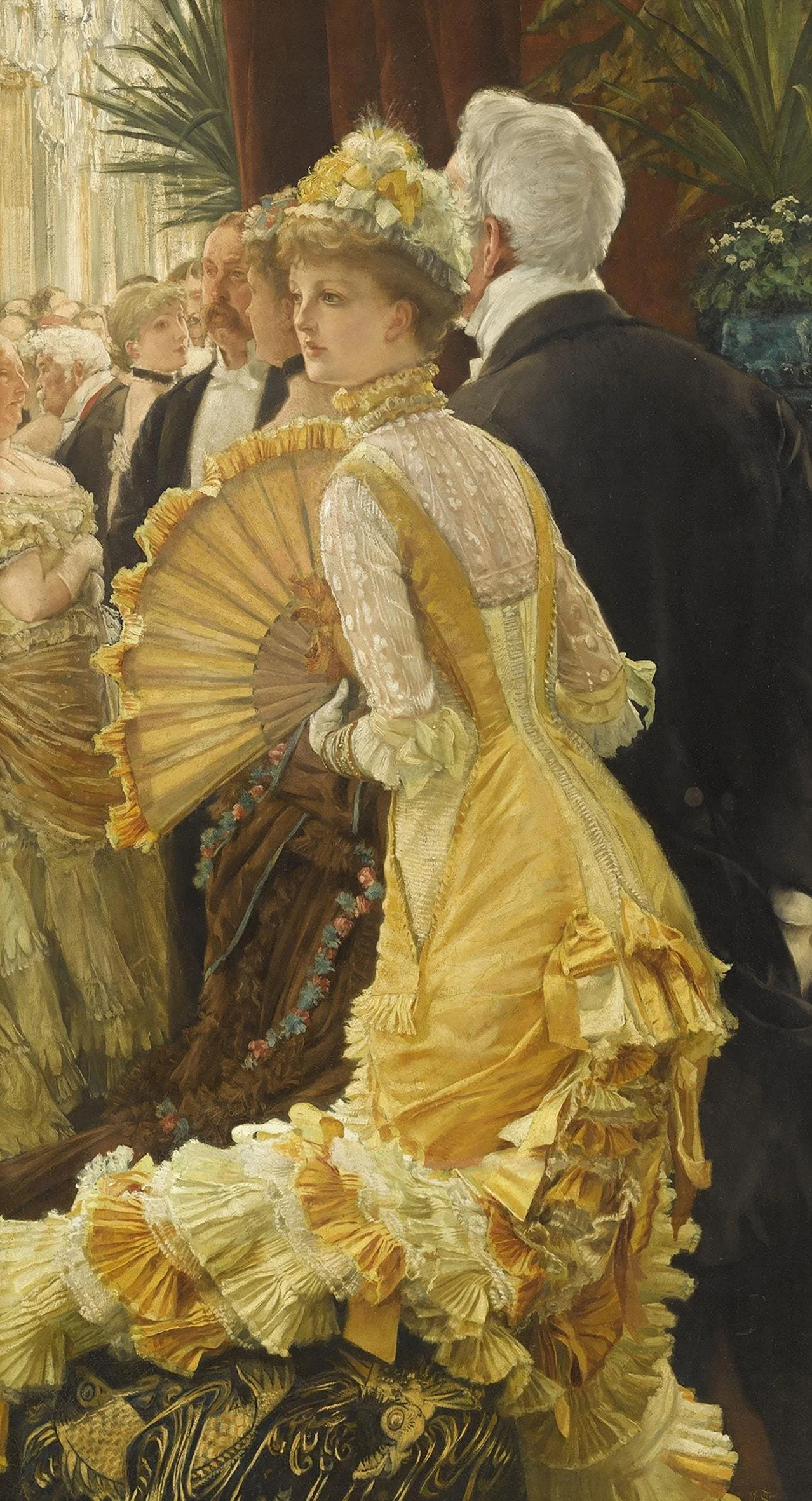
James Jacques Joseph Tissot, The Ball


A millionaire falls in love unwisely.

If anybody knows anything about S. Vere, aside from her (?) authorship of this one short novel, I have been unable to discover it.  In fact, I have found only two reviews, excerpted below.  The novel’s characters are well delineated, even if its plot is clumsily didactic.

“The story is carefully and tastefully written, and the character of the proud, wayward, but noble-hearted Lady Helena is well drawn.”  Academy, August 18, 1877

A contrasting view:

"It is not clever, nor original, nor vulgar, nor anything.  It is toneless and colourless.” Athenaeum, July 7, 1877

Download this week’s novel:

https://solo.bodleian.ox.ac.uk/permalink/f/89vilt/oxfaleph013880008

Novel 217: Katharine S. Macquoid, Patty (1871)

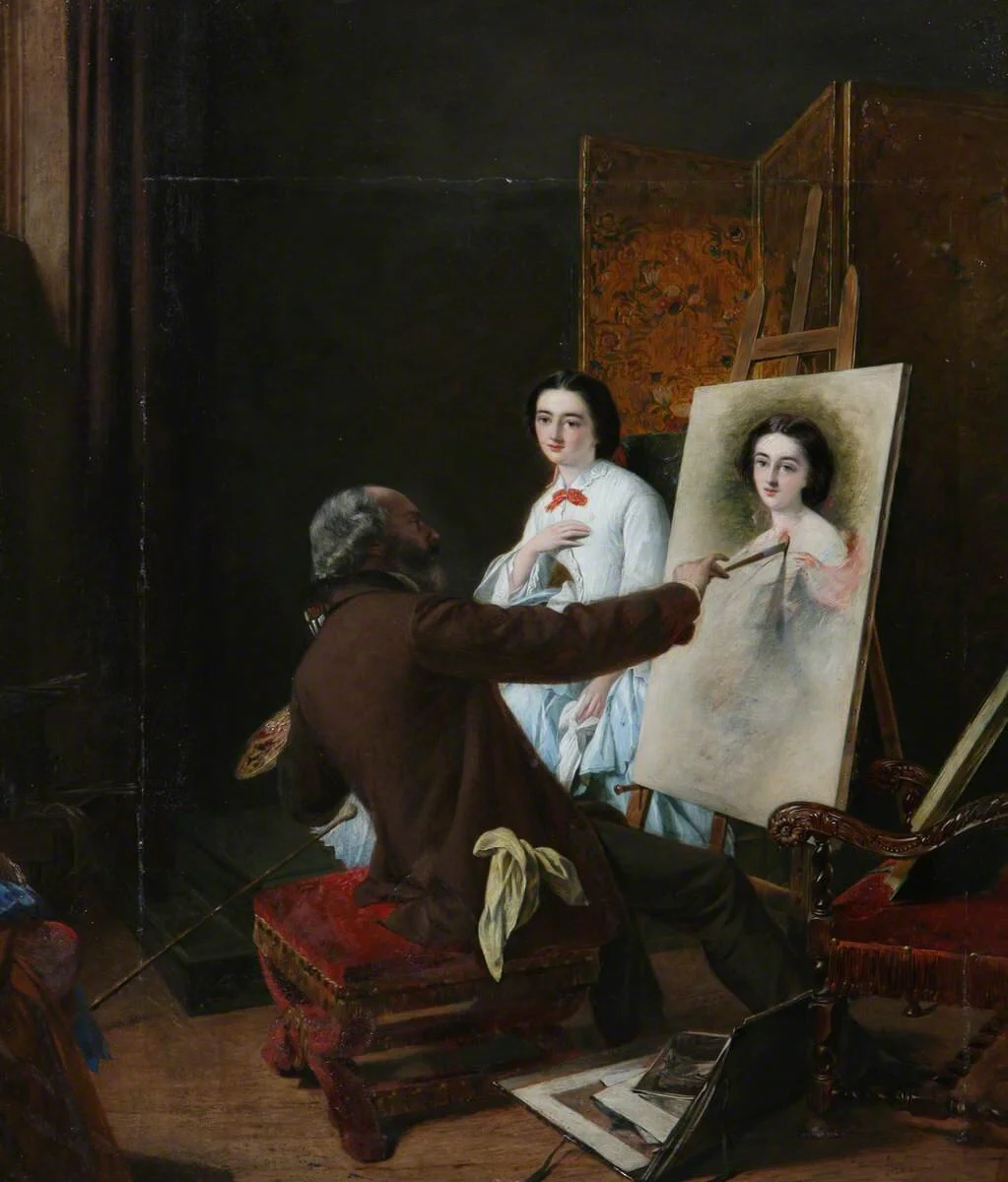
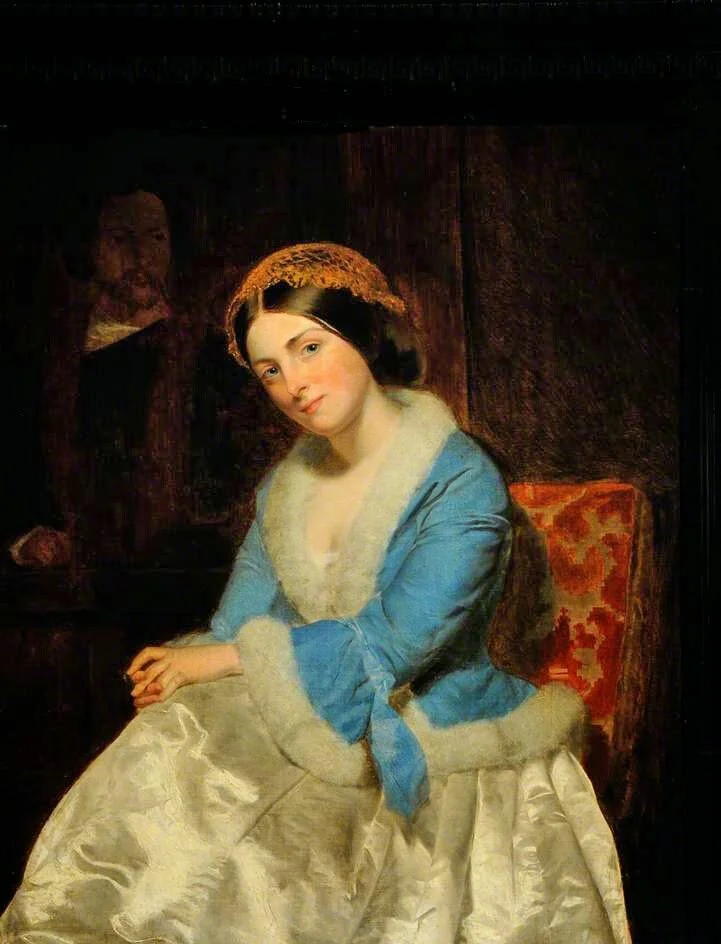
Henry Nelson O’Neil, Painting con Amore

The beautiful daughter of a miserly gardener craves money and social position.


Katharine S. Macquoid (1824-1917) wrote some fifty novels between 1862 and 1898; of this one she was particularly proud:  in 1898 she was still identifying herself on her title pages as “Author of ‘Patty.’”

“A pleasant novel; not, perhaps, of the highest class, but, on the whole, well imagined, and satisfactorily worked out.”  Athenaeum, December 2, 1871

“The authoress of this novel combines several very unusual excellencies.  The materials of the story and of the plot are derived from the commonplaces of fiction, and from the events of ordinary life. . . .  A group of imperfect, abnormally defective humanities, all distinguished by strong impulses, lack of ballast, and subtle selfishness are brought into contact. . . .  There are many admirably drawn portraits, there is in it a high moral tone blended with a fine appreciation of natural and artistic beauty, and a blessed absence of cant.”  British Quarterly Review, January, 1872

A contrasting view:

“All the characters in it, all the interests which it involves, are small. . . .  It is impossible to care very much about the human beings in the story”; however, it “stands considerably above the level of the average novel.  The literary skill which the writer displays throughout is of no common kind, and there are fine things in the narrative.” Spectator, February 24, 1872

Download this week’s novel:

v.1 https://books.google.com/books?id=TLUxAQAAMAAJ&newbks=1&newbks_redir=0&dq=macquoid%20patty&pg=PP5#v=onepage&q=macquoid%20patty&f=false

v.2 https://books.google.com/books?id=wtRTAAAAcAAJ&newbks=1&newbks_redir=0&dq=editions%3ALVryvbxfYesC&pg=PA3#v=onepage&q&f=false

Novel 216: Thomas Cobb, Mrs. Latham's Extravagance (1915)

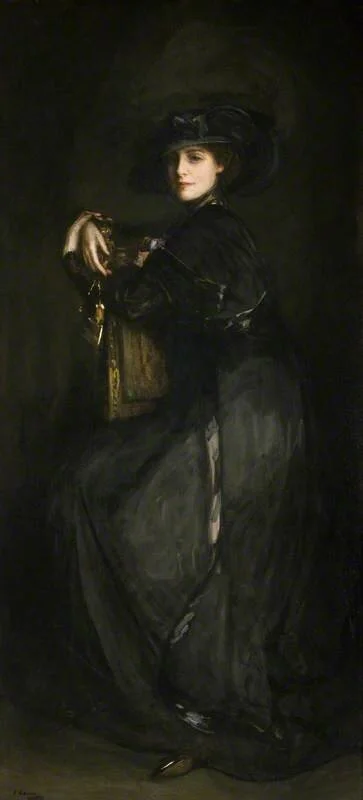
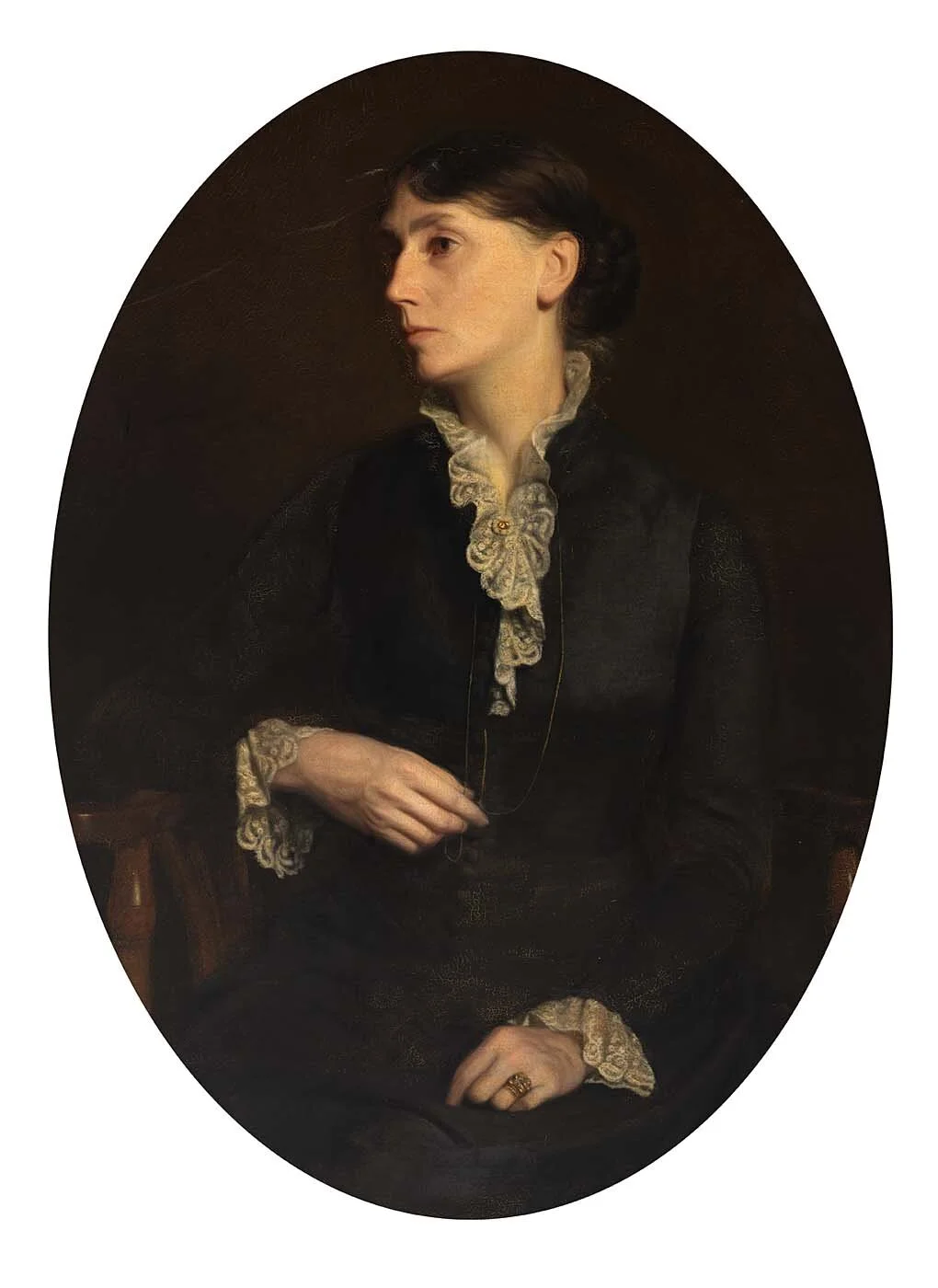
John Lavery, The Lady in Black (Mrs Trevor)

One woman is betrayed by her lover; another repents having betrayed hers.


Here is another unassuming novel by the unsung Thomas Cobb (see Novels 043, 146).

“Mr. Cobb’s books . . . bear the stamp of a scholarly mind, and are not concerned with intrigues and plots and harrowing scenes.  They concern, on the contrary, delightful groups of people of the aristocratic and upper middle class, with a quite probable plot that in no way strains the imagination. . . . ‘Mrs. Latham’ is every bit as good as any of her predecessors.”  Aberdeen Daily Journal, January 18, 1915

“The story . . . is sure to please a host of readers, who will, moreover, be agreeably tickled by not a few of Mr. Cobb’s favourite little problems.”  Academy, February 13, 1915

A contrasting view:

“A readable, if somewhat slight story.”  Athenaeum, March 27, 1915

Download this week’s novel:

Thomas Cobb, Mrs. Latham's Extravagance (1915) A

Thomas Cobb, Mrs. Latham's Extravagance (1915) B

Novel 215: H. Bouverie Pigott, Grace Clifford (1865)

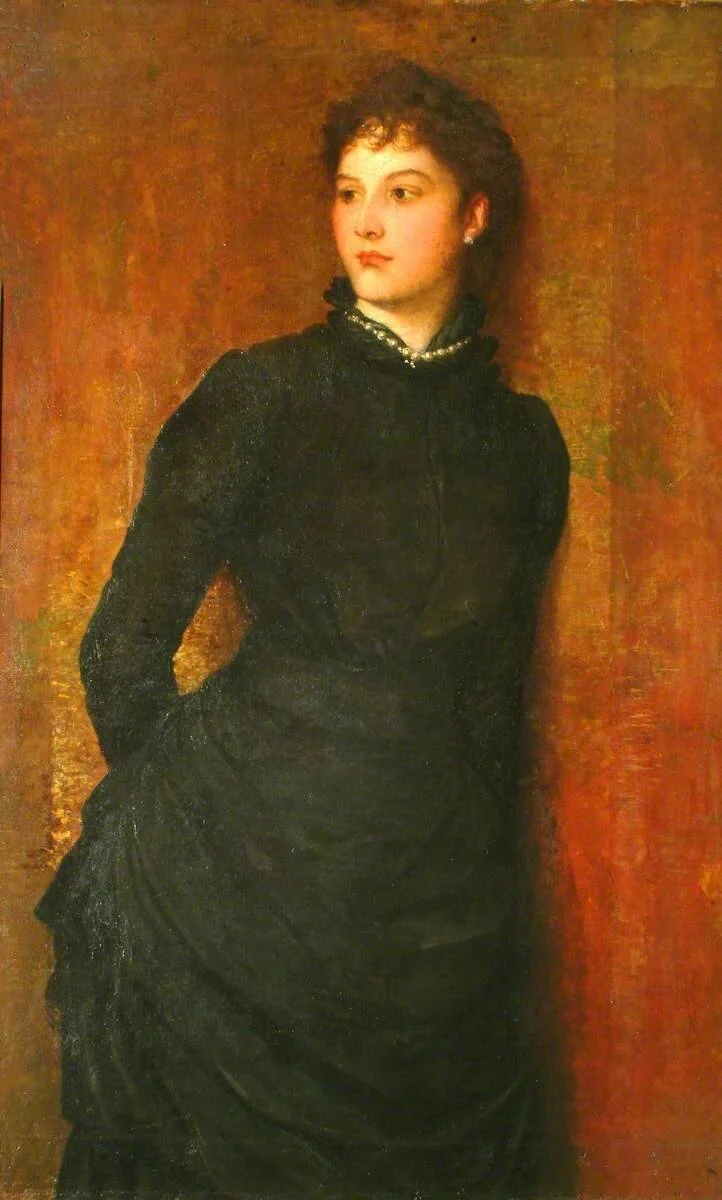
George Frederick Watts, Rachel Gurney

A stubborn squire mishandles his children and tenants.


Nothing is known of H. Bouverie Pigott except that she wrote three novels between 1862 and 1873, of which this was the second.  Its plot is a standard affair of parental ambition crossed by filial willfulness, but the characters are consistent and well defined.

“An easy, natural story made up principally of incidents of family history such as any of us may have met with. . . .  The characters, too, are for the most part, fashioned after ordinary types.”  Athenaeum, April 15, 1865

“A domestic story of considerable ability and promise, without any particle of sensational or villanous intermixture of any kind or description whatever.  This is something new in modern novel writing, and yet the interest of the story never flags.  The reader’s sympathies run strongly with the hero and heroine to the very end.  The characters are naturally drawn, and are precisely such as may not unfrequently be met with in ordinary life.”  Caledonian Mercury, April 29, 1865

A contrasting view:

“It is so painfully harmless that it is the kind of book suited for a good-conduct prize at a young ladies’ boarding school. . . .  Taken in judicious doses” it “will probably act as a wholesome soporific during the very hot summer we are threatened with.”  Morning Post, April 15, 1865

Download this week’s novel:

https://solo.bodleian.ox.ac.uk/permalink/f/89vilt/oxfaleph014000718
(Right-click (or control-click, if you have a Mac) on the “view digitized copy” links to download the novel’s three volumes in pdf form)

Novel 213: Julia Rattray Waddington, Newstoke Priors (1842)

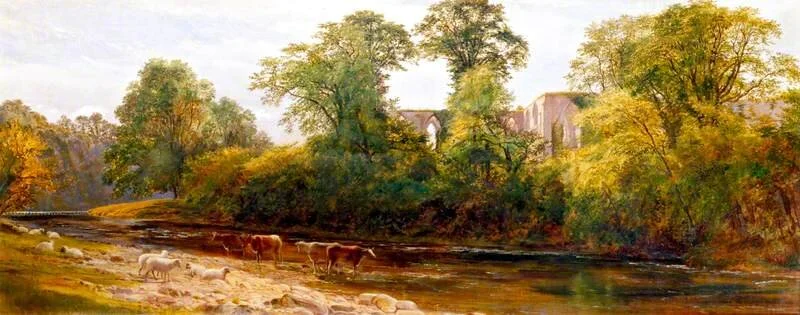
Richard Redgrave, Bolton Abbey, Morning

A virtuous young lady misunderstands, and is misunderstood by, the man she loves, who is troubled also by issues of inheritance.


Here is another novel by Waddington (see Novel 014), with characterization so good as to make up for a lovers’-misunderstanding / stolen-inheritance plot of greater-than-average idiocy.  At one point, for example, a character shoots himself—and misses!

“A number of the characters . . . are sketched with great ability and truthfulness, and the story altogether reads well.  If there is no great profundity or consistency in the plot, there is abundant variety in the characters, and vivacity in the dialogues.”  Caledonian Mercury, March 19, 1842

“Time was, when a book containing such shrewd insights into human character, and so many kindly sympathies . . . would have made a sensation.”  Athenaeum, March 26, 1842

“Miss Waddington’s characters are for the most part drawn with great ability. . . .—they are distinct portraits, and . . ., supposing them to be placed in the position she gives them, they perform their parts with spirit and truthfulness. . . .  Many incongruities, and much of that tiresome twaddle meant for dialogue, which ladies who write are so fond of filling their books with, disfigure the ensemble of ‘Newstoke Priors;’ but, notwithstanding these defects . . . it is a novel in parts powerfully written, and on the whole as full of interest as any of its contemporaries.”  Morning Post, May 3, 1842

A contrasting view:

“There is enough good stuff in this novel to have formed one interesting volume, but from being diluted into three it is absolutely attenuated into inanity.”  The Era, March 13, 1842

Download this week’s novel:

https://solo.bodleian.ox.ac.uk/permalink/f/89vilt/oxfaleph013983897

Novel 212: Annie Edwardes, A Vagabond Heroine (1873)

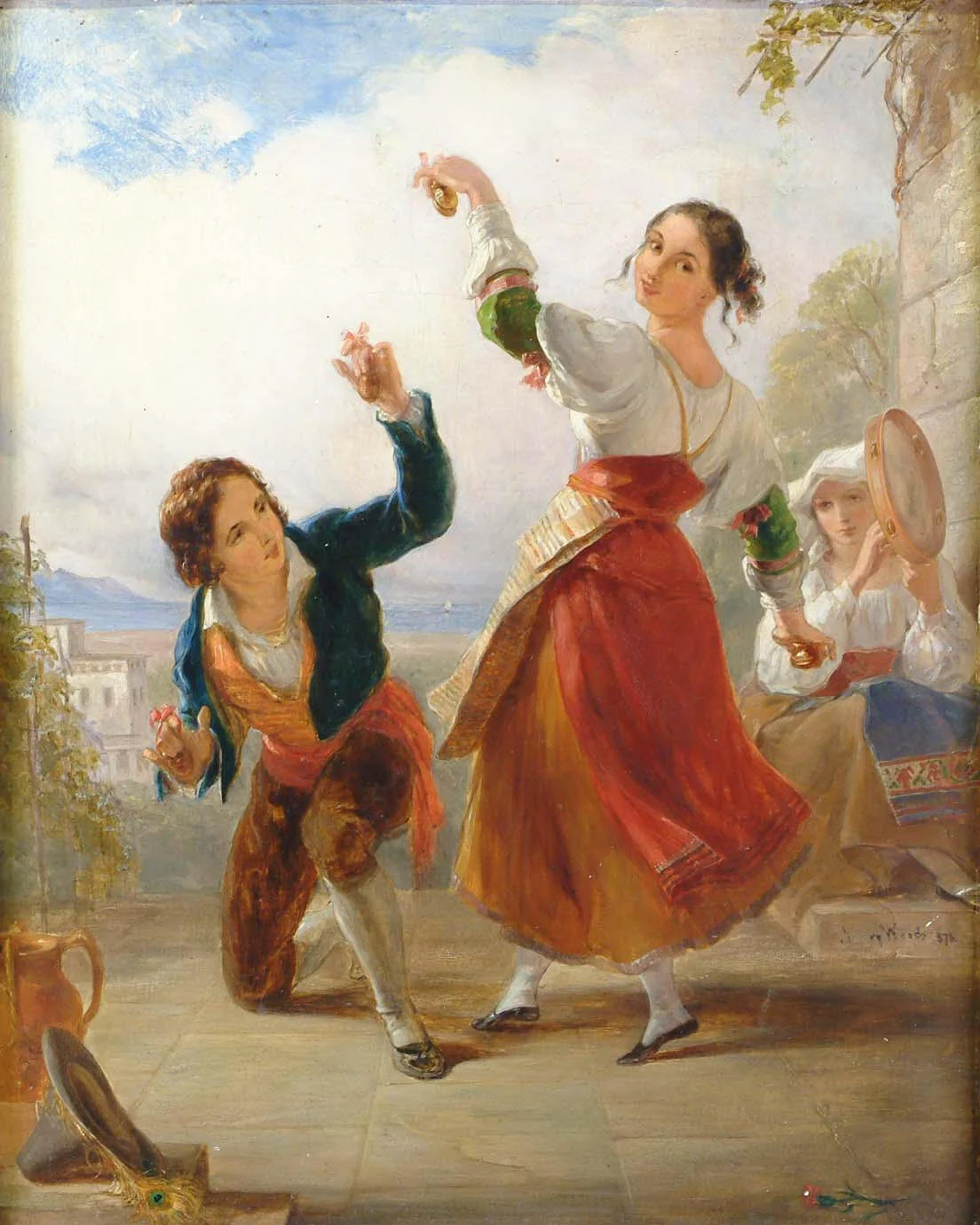
Henry Woods, Young Couple Dancing With Castanets

In a remote French seaside town, a neglected girl resists her vain stepmother’s control.


Here is another novel by Edwardes (see Novel 158), featuring another attractively rebellious heroine.

“A most amusing tale.”  Athenaeum, April 19, 1873

“It is humorous, vivid, rapid, lavish, and yet brief; unconventional almost to dash, and yet in no sense immoral in its tendency. . . .  There is a flavour of something like true genius about A Vagabond Heroine.” Spectator, July 5, 1873

A contrasting view:

“We wish our lady writers would leave off drawing these queer, unlikely, and unlovable heroines.  Murderesses and gamins, idiots and adventuresses, seraphs bred in the mire and angels fashioned out of the dirtiest clay—we are tired of them all.  They are fantastic caricatures of human nature rather than sober and life-like portraits. . . .  All these unnatural and impossible heroines are as little like the women of real life as are the six-handed and three-headed goddesses who may serve as emblems, but are absurd as artistic representations.”  Saturday Review, September 27, 1873

Download this week’s novel:

https://books.google.com/books?id=6j4tLQ0fFXAC&newbks=1&newbks_redir=0&dq=edwardes%20vagabond%20heroine&pg=PA3#v=onepage&q=edwardes%20vagabond%20heroine&f=false

Novel 211: James Payn, What He Cost Her (1877)

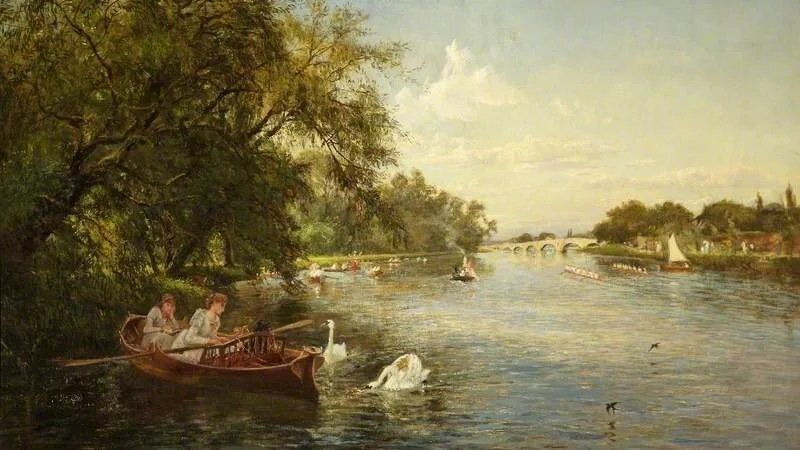
Charles James Lewis, On the Thames

A strong-willed young lady marries a charming officer-in-training.


Here is another of Payn’s 60-some works of fiction (see Novels 011, 081), with an excellent portrait of a genial character drifting carelessly into evil.

“Though the subject is unpleasant, Mr. Payn has made a readable book. . . .  There is plenty of vivacity in the narrative throughout.”  Athenaeum, May 19, 1877

The novel “deals with a painful subject in a way which other novelists might emulate with advantage.” Spectator, January 26, 1878

A contrasting view:

“It is nothingness, like its lighter brethren, but it is heavy nothingness, the very ponderosity of Nihilism.  It is not interesting, it is not amusing, it is not appealing, it is not instructive, . . . it is hopeless to go on saying what it is not. . . .  There ought to be no difficulty in turning off such books as this once a month, or even sooner; anyone of average capacity might spin them off as fast as he could hold the pen.”  Examiner, May 5, 1877

Download this week’s novel:

v.1 https://archive.org/details/whathecosther01payn

v.2 https://archive.org/details/whathecosther02payn

v.3 https://archive.org/details/whathecosther03payn

Novel 210: Charlotte Yonge, That Stick (1892)

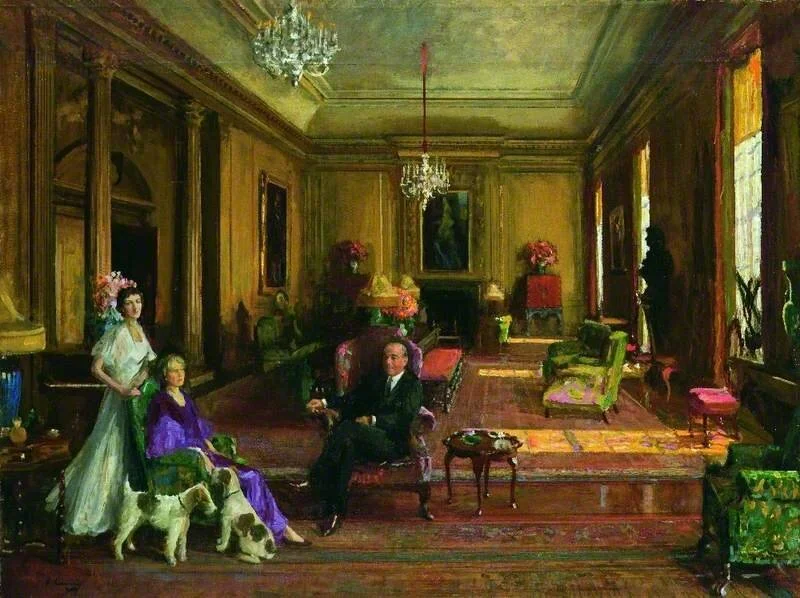
John Lavery, The Family of Lord Duveen

A meek solicitor’s clerk is unexpectedly elevated to the peerage.


Here is a late work by the great Yonge, for whom see Novels 003, 053, 103, 155.

“That Stick is not only a pleasant, well-told, healthy story, but it is a careful study of a number of characters. . . .  Altogether this is one of the best of the . . . novels that Miss Yonge has published.”  Academy, April 4, 1892

“‘That Stick’ is an excellent story in its unpretending way. . . .  The materials seem unpromising, and the principal characters commonplace; but, though sensational incidents and titanic emotions are conspicuously absent, the book is full of quiet charm. . . .  The personages are excellently contrasted, and the portraiture is singularly natural and sympathetic.”  Athenaeum, April 16, 1892

A contrasting view:

“As a novel, this book will have more interest for women than for men, and in all probability more interest for school-girls than for women.” Speaker, February 13, 1892

Download this week’s novel:

v.1 https://archive.org/details/thatstick01yong

v.2 https://archive.org/details/thatstick02yong

Novel 209: W.E. Norris, Matrimony (1880)

Jerry Barrett, The Eve of the Wedding

The two children of an eccentric diplomat marry, with mixed results.


Here is another of the brilliant early novels of W.E. Norris—for whom see Novels 002, 054, 104, and 156.

“It is a pleasant story, cheerfully and cleverly told, and containing some really fresh and spirited studies of character and manners.”  Athenaeum, December 25, 1880

“A fine book to be read and enjoyed, as it was probably written, slowly and with intention. . . .  The author had already attracted attention . . . by his remarkable gift of presenting quite naturally, and without exaggeration, eccentric and unusual types.  But after all it is, we suspect, not so much happy instinct as deliberate continence which preserves Mr. Norris from the ensnaring example of Dickens and the deplorable influence of the American humorists. . . .  In his method, in his flashes of airy wisdom or grave playfulness relieving a style of old-fashioned dignity and fullness, he recalls” Henry Fielding.  Academy, January 22, 1881

“Readers of ‘Matrimony’ will find in it a novel of merit and interest much greater than average. . . .  It cannot be said that there is much plot in the story, but there is excellent delineation of character, an easy, flowing narrative and an abundance of kindly humor, which go far to make it a novel to be placed high on the roll in this branch of literature.”  New York Tribune, June 7, 1881

A contrasting view:

“A pleasant novel (one part excepted . . .) of the ‘agreeable rattle’ kind. . . .  Serious criticism would be out of place in reviewing this tale.”  Spectator, February 5, 1881

Download this week’s novel:

v.1 https://archive.org/details/matrimony01norr

v.2 https://archive.org/details/matrimony02norr

v.3 https://archive.org/details/matrimony03norr

Novel 208: Anne Beale, Fay Arlington (1875)

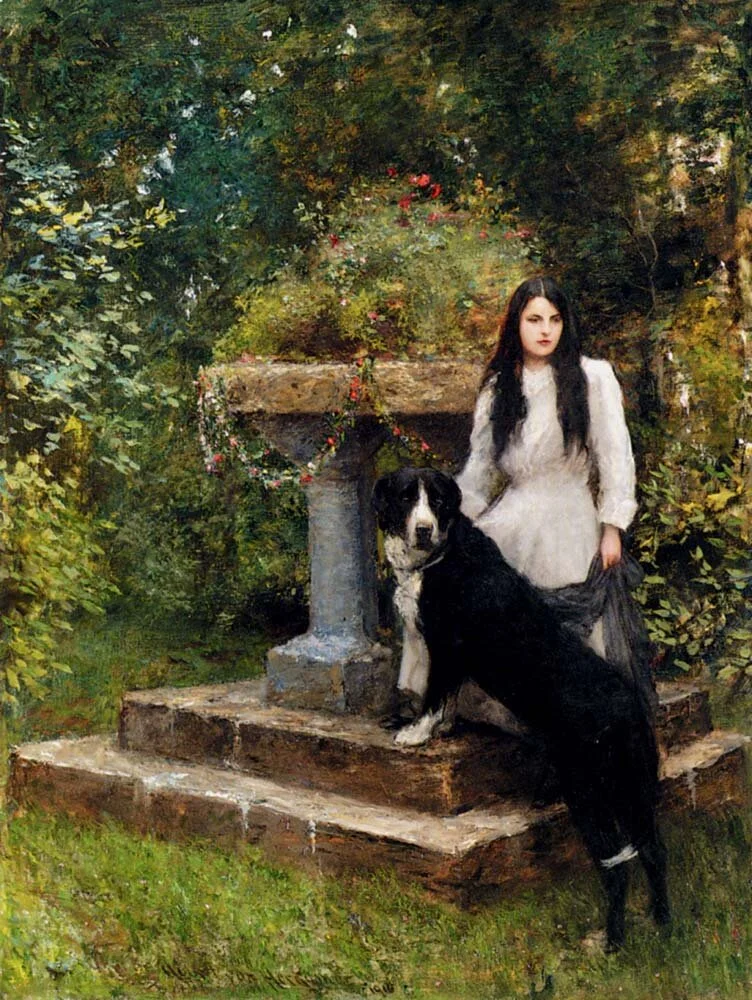
Hubert von Herkomer, A Young Girl and Her Dog

An impecunious baronet takes in a difficult French orphan girl reputed to be his hostile neighbor’s niece.


For Beale, see Novel 60.  The first two volumes of this novel are excellent, with striking characters, especially the French girl heroine, placed in dramatic situations—excellent enough to make up for the third, which loses itself in idiotic lovers’ misunderstandings and tedious sentimental fantasy.

“Fay is not an unattractive heroine . . . and her freaks as a child are amusing.”  Graphic, October 23, 1875

A novel with “really fine studies, drawn to the life, and from beginning to end full of vitality and individuality.”  Spectator, January 2, 1892 (the novel was then republished).

Download this week’s novel:

v.1 http://access.bl.uk/item/viewer/ark:/81055/vdc_00000004B8E8#?c=0&m=0&s=0&cv=6&xywh=-71%2C-1%2C2605%2C1996

v.2 http://access.bl.uk/item/viewer/ark:/81055/vdc_00000004B8EE#?c=0&m=0&s=0&cv=6&xywh=-85%2C-131%2C2806%2C2149

v.3 http://access.bl.uk/item/viewer/ark:/81055/vdc_00000004B2D6#?c=0&m=0&s=0&cv=6&xywh=-44%2C-1%2C2659%2C2037

Novel 207: Christiana Jane Davies, The Browns and the Smiths (1863)

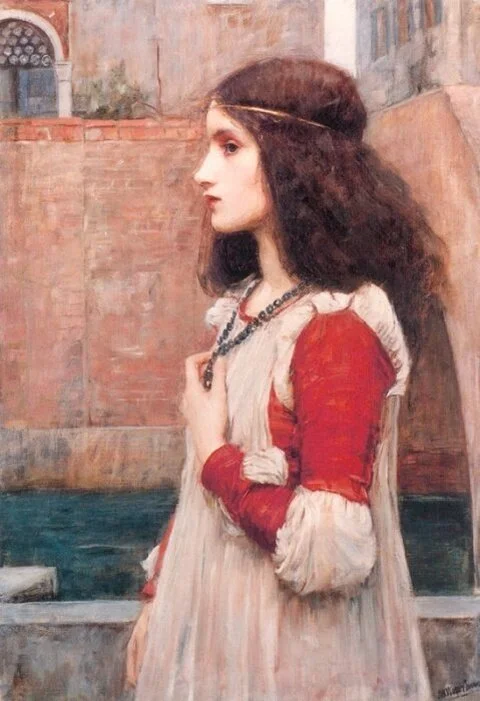
John William Waterhouse, Juliet

The children of rival attorneys fall in love.


For Davies, see Novel 094.  This novel includes perhaps a few too many intrusive authorial reflections, but otherwise provides a good, straightforward plot, a well developed social setting, and entertaining characters.

“There is an air of unexaggerated truth about The Browns and the Smiths  that is sure to find a fair number of readers who will appreciate its sterling merits.”  Observer, November 9, 1863

It is “harmless in its plot and gentle in its satire. . . .  a pleasant and instructive narrative.” Examiner, April 30, 1864

Download this week’s novel:

v.1 https://archive.org/details/brownssmithsintw01davi

v.2 https://archive.org/details/brownssmithsintw02davi

Novel 206: Margaret Oliphant, Lilliesleaf: Being a Concluding Series of Passages in the Life of Mrs. Margaret Maitland (1855)

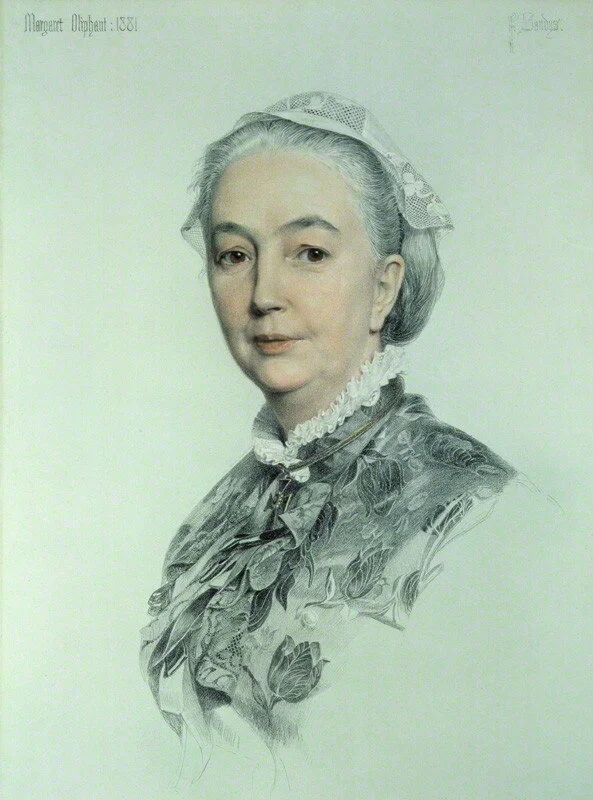
Frederick Augustus Sandys, Margaret Oliphant

A young wife is troubled by her husband’s thriftless pleasure-seeking.


Here is the sequel to last week’s novel, narrated by the same engaging middle-aged Scotswoman.

“In giving individuality and expression to the characters of the young people in the tale, the author has been very successful, and this, with the pen as with the pencil, is no easy achievement in art.  The other characters throughout the story are well drawn, and the novel will sustain the reputation gained by the former work, of which it is a companion and continuation.  Both contain good pictures of Scottish life.”  Literary Gazette, November 24, 1855

“The concluding series of ‘Some Passages’ is to our thinking superior to the beginning, and this we take to be about the most satisfactory compliment we can pay the authoress.  There is a vein of simple good sense and pious feeling running throughout, for which no reader can fail to be the better.” Athenaeum, December 8, 1855

Download this week’s novel:

v.1 https://archive.org/details/lilliesleafbeing01olip

v.2 https://archive.org/details/lilliesleafbeing02olip

v.3 https://archive.org/details/lilliesleafbeing03olip

Novel 204: Mary E. Mann, In Summer Shade (1893)

Daniel Maclise, Yes or No

A virtuous but self-willed young lady with a discreditable family attracts the love of both a faithful farmer and a haughty aristocrat.


Here is a another novel by Mann, for whom see Novels 016 and 154. A priggish clergyman character is especially well done.

“In very few recent novels will there be found anything approaching its grasp of character and firmness of touch.  The writer looks at life with a very straight eye.  She certainly does not err on the side of idealizing character, and is not at all averse to laughing at those with whom she is on friendly terms. . . .  Her characters are not made of ink and paper, but of flesh and blood, and her book has no flimsiness in either its thought or its workmanship.”  Bookman, February 1893

For the author it “has clearly been recreation as well as work, and it happens not unnaturally that the reader as well as the writer is recreated. . . .  It has impulse, movement, sprightliness, life.”  Academy, March 4, 1893

Download this week’s novel:

v.1 http://access.bl.uk/item/viewer/ark:/81055/vdc_00000004DED4#?c=0&m=0&s=0&cv=6&xywh=513%2C666%2C3426%2C2083

v.2 http://access.bl.uk/item/viewer/ark:/81055/vdc_00000004DEDA#?c=0&m=0&s=0&cv=6&xywh=-325%2C-1%2C3227%2C1963

v.3 http://access.bl.uk/item/viewer/ark:/81055/vdc_00000004DEE0#?c=0&m=0&s=0&cv=6&xywh=-362%2C-1%2C3162%2C1923


Novel 203: Harriet Waters Preston, Is That All? (1876)

Oliver Ingraham Lay, Fidelia Bridges

In a New England town, a society leader takes up a poor but talented widow.


Harriet Waters Preston (1836-1911) wrote five novels between 1871 and 1888, but she was better known as a translator.  The title here is a self-denigrating reference to the novel’s somewhat cursory plot; Preston’s interest is focused instead on the New England setting and on the protagonist, a married, middle-aged woman.

“A pleasant little story, with a rather ostentatious absence of completeness or definiteness in its plot.” Academy, February 3, 1877

“To be really entertaining in one volume is a great merit, and more especially is it a merit when an author is not only entertaining in small compass, but able to present us with a picture of manners and of a life which we but half know, and wish to know more thoroughly. . . .  The interest of the tale lies partly in its intrinsic vivacity, and partly in the bright glimpse it gives us of the higher social culture of the Northern States of the American Union. . . .  Short as it is, almost every figure in it is distinctly outlined and freshly painted.”  Spectator, February 24, 1877

Download this week’s novel:

https://archive.org/details/isthatall00presiala

Novel 202: Frances Eleanor Trollope, Aunt Margaret's Trouble (1866)

William Dyce, Omnia Vanitas

A virtuous young lady has a not-so-virtuous sister.


This was the first novel published by Frances Eleanor Trollope, for whom see Novels 033, 108; it is briefer and quieter than either of those.

“The characters are well drawn, and contrasted with satisfactory distinctness”; “the author never anticipates her catastrophes, but works up to a crisis with a cautious and self-denying reticence. . . .  She writes with that genuine feeling which is necessary to enlist the sympathies of the reader; and . . . she has the art of making revelations by a delicate touch.”  Athenaeum, August 25, 1866

“After wading through the ordinary novels of the season, after learning to what depths of dulness and folly the human intellect can descend, and wondering at the hideous pictures of vice or inanity which men and women can paint as representations of human life, it is positive mental refreshment to come across a such a book as Aunt Margaret's Trouble, which for pathos and idyllic tenderness may compete with even the best novels of the day. . . .  It is a charming book, and worth half a hundred fictions of the more ambitious and elaborate kind.”  Saturday Review, September 1, 1866

Download this week’s novel:

https://archive.org/details/auntmargaretstr00marggoog

Novel 201: Eliza Lynn Linton, Lizzie Lorton of Greyrigg (1866)

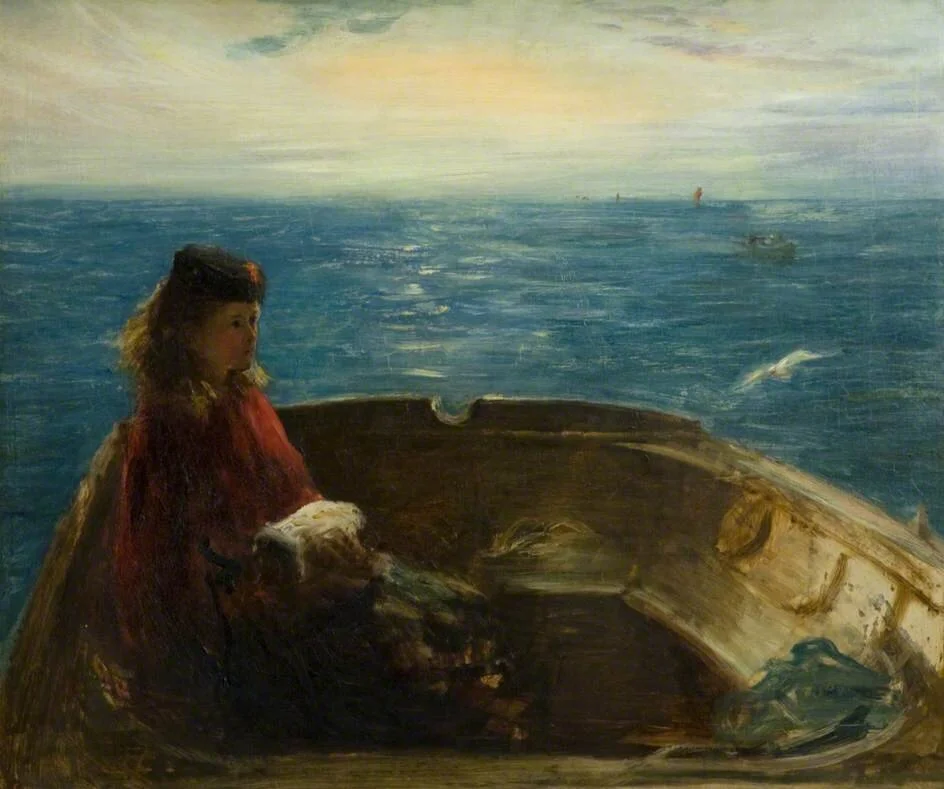
George Paul Chalmers, Girl in a Boat

In Cumberland, a lonely young lady, adored by a reforming clergyman, loves a swaggering mine supervisor.


For Linton, see Novels 044, 134.  Here she sets vivid characters at cross-purposes amid a carefully realized Cumberland setting.

“Mrs. Linton, thoroughly acquainted with the life of the Lake Country, paints an imaginary dale with its lake, its fells, its force and its Styebarrow, colours it in every detail with truth to nature, shuts it out from tourist life, and peoples its nooks and corners with characters of unsophisticated Cumberland life through which she weaves the action and passion of her story. . . .  As a true picture of forms of English life that are already vanishing, this novel . . . has an interest beyond the attraction of its tale of an unhappy girl’s life beating itself out in tragic passion.”  Examiner, May 12, 1866

Linton “has chosen a subject which she can handle well. . . .  The interest of her story is greatly enhanced by the fidelity with which the local colour is preserved.” Saturday Review, July 14, 1866

Linton “makes her really original plot natural with a thousand touches of explanation . . .. and has set her figures before a background which would make them seem natural were they far more bizarre.” This is “a novel . . .  indefinitely superior to the mass of those we are so often condemned to read.” Spectator, July 21, 1866

Download this week’s novel:

http://solo.bodleian.ox.ac.uk/permalink/f/89vilt/oxfaleph014559520
(Right-click (or control-click, if you have a Mac) on the “view digitized copy” links to download the novel’s three volumes in pdf form)

Novel 200: Mrs. Alfred Sidgwick, Victorian (1922)

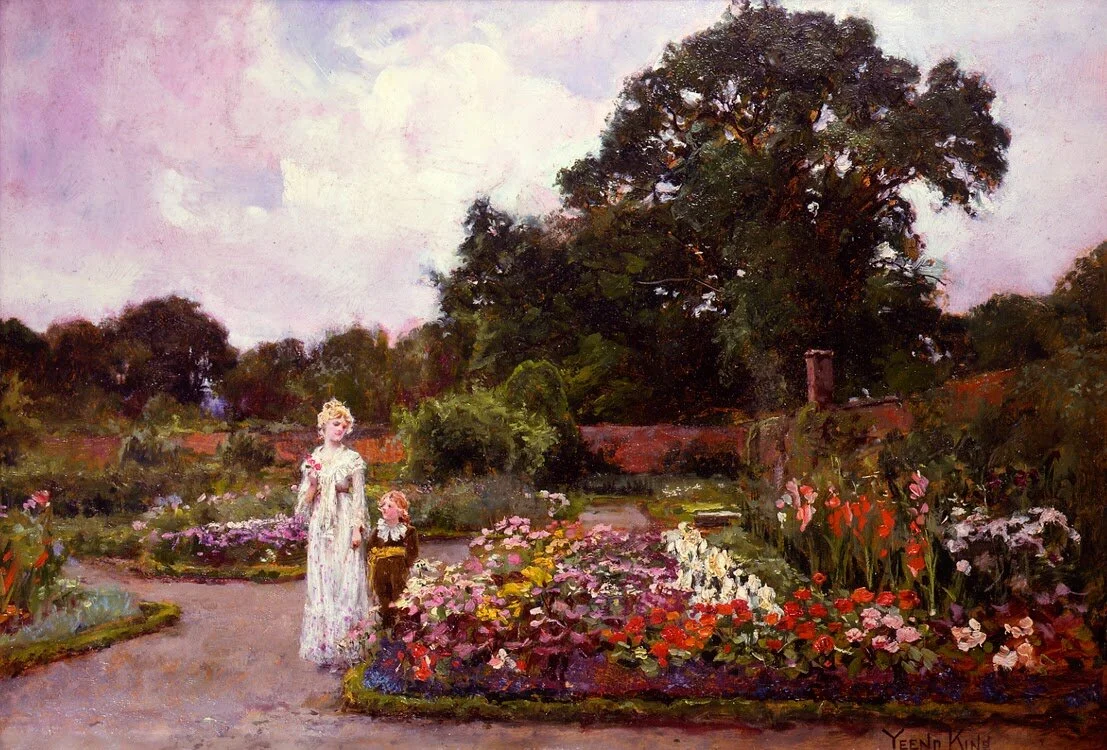
Henry John Yeend King, Victorian Garden

An old-fashioned young lady, living with her flirtatious half-sister, falls in love with a local landowner.


Here is another novel by Sidgwick (see Novels 082, 142). It was not actually published during the Victorian period, but it is named for it—and it looks back on it with a sort of ambivalent nostalgia.

“Mrs. Alfred Sidgwick introduces one to a world in which there are always a number of delightful people, and ‘Victorian’ . . . is no exception.”  The Queenslander, July 15, 1922

Download this week’s novel:

http://solo.bodleian.ox.ac.uk/permalink/f/89vilt/oxfaleph012694025

Novel 199: Constance Fenimore Woolson, For the Major (1883)

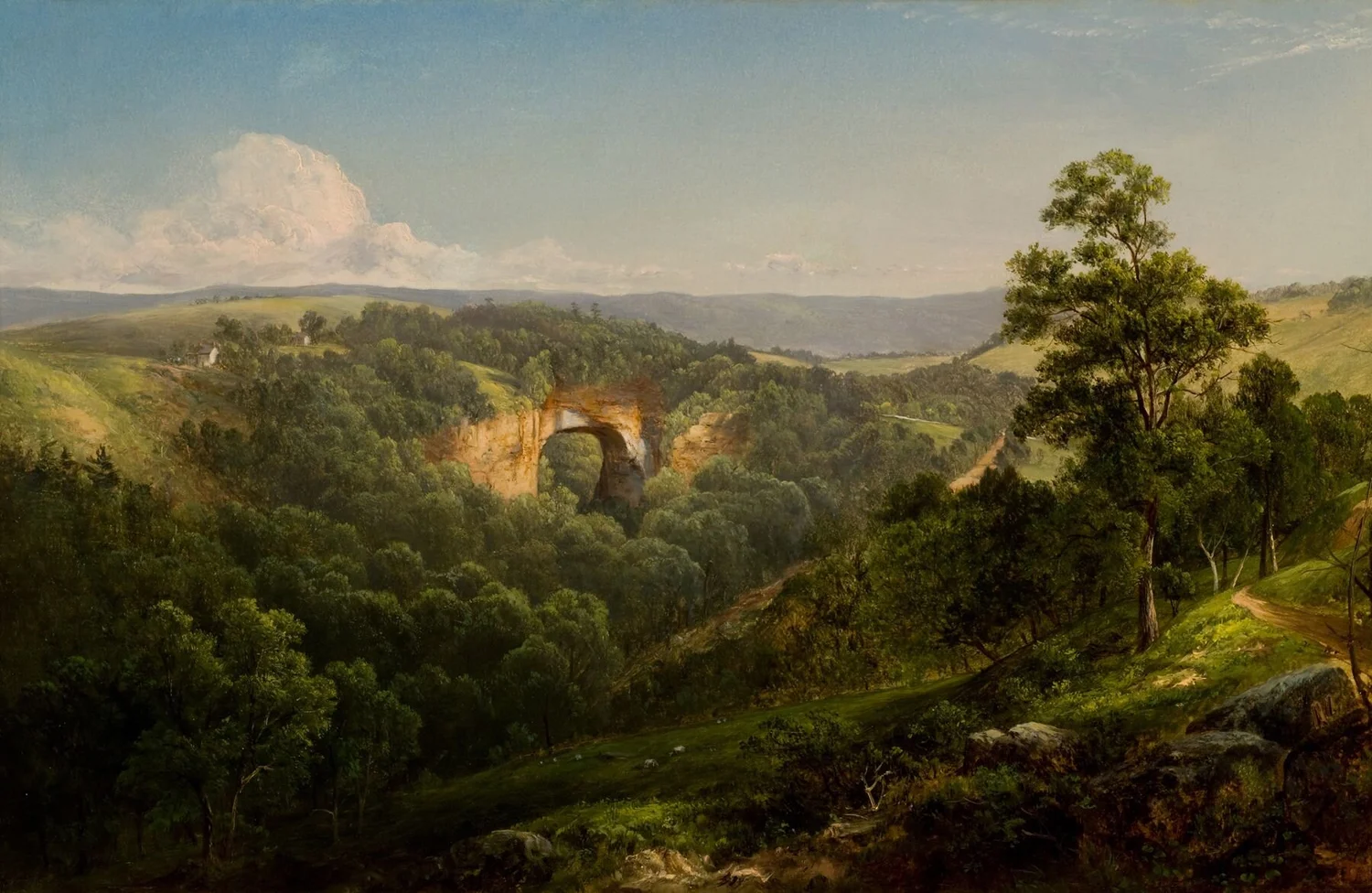
David Johnson, Natural Bridge, Virginia

A young lady returns home to a remote Appalachian village, where she finds her father and stepmother behaving mysteriously.


Here is another novel by Woolson, for whom see Novel 057.  This novel, however, is as focused as the other is diffuse.

“For the Major is a book few Europeans, if any, could have written, concentrating, as it does, such nervous power and earnest sentiment upon purely domestic incident. . . .  There are at least three creations in it of extreme merit” who “form a truly pathetic and truly beautiful group; very difficult to draw, but very well drawn indeed.” Academy, August 18, 1883

“The sketches of American life and character in a remote village in the south are quaint, interesting, and read life-like; and the whole slender edifice of the story, reminding us of the paper houses of Japan, holds well together.”  Spectator, August 25, 1883

Download this week’s novel:

https://archive.org/details/forthemajornovel00woolrich

Novel 198: Margaret Agnes Paul, Uncle Ralph (1858)

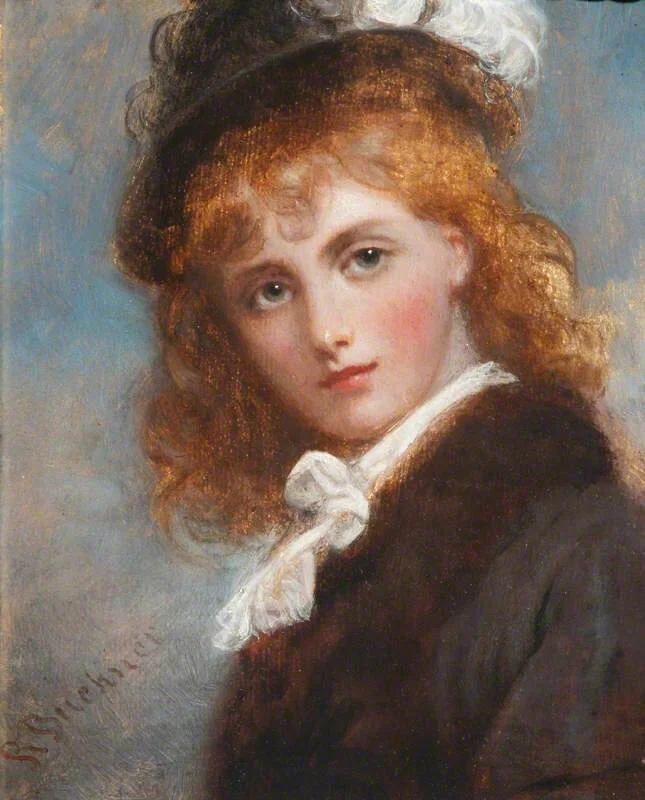
Richard Buckner, Bust Study of an Unknown Young Girl

An orphan girl’s unusual self-possession alienates the uncle who adopts her.


Here is another novel by Paul (see Novels 025, 136), with all its author’s usual merits.

“One of the most pleasing tales of domestic life that we have seen for many a day.” Literary Gazette, February 13, 1858

“A readable little story” with some “well drawn” characters.  Athenaeum, March 27, 1858

Download this week’s novel:

http://solo.bodleian.ox.ac.uk/permalink/f/89vilt/oxfaleph014181085
(Warning: text begins on page 23, after some black pages, and blurred pages, and pictures of a librarian’s pink-gloved hand)