“Neat workmanship and artistic reticence.” Spectator, May 20, 1899
A different view:
“The workmanlike skill and cleverness with which this story is put together, its smart and epigrammatic dialogue, and more than one excellent character outline, combine to increase the regret, which grows in reading it, that so much ability should have been bestowed upon such poor material. Thin, stagey, and well-worn are the devices and developments.” Athenaeum, July 22, 1899
Attentive solvers will recall that, 183 crosswords ago, I posted a puzzle called “Noels” (seeCrossword 161), so this puzzle is not, they will suppose, my first “noel.” In fact, however, this is the prequel to Crossword 161, the second part of a projected “noel” trilogy, which will in turn form the first part of a trilogy of trilogies all exploring my “noel” universe, and all of which should appear, if not by the end of the century, early in the next. So stay tuned!
It “has in its characters and its descriptions as much freshness and as much humour as we have observed in the author's former novels, combined with more than hints of a strength which he has not before exhibited”; it is “the best novel that we have read for a considerable time.” Saturday Review, December 13, 1879
“Mr. Justin McCarthy’s novels rank among the select few which deserve to be as popular a hundred years hence as they are now. Contemporaries welcome them chiefly for the sake of plots which, though slight, are always interesting, and heroes and heroines in whose fortunes even the most hardened novel reader cannot fail to sympathise. Posterity will turn to them for the social aspect of our time, illustrated by subordinate characters each of whom typifies some current whim or folly. And, notwithstanding Mr. McCarthy’s keen sense of humour, these types are portraits, not caricatures, their outlines being sharpened and their tints deepened only to such an extent as the true artist permits himself.” Academy, December 27, 1879
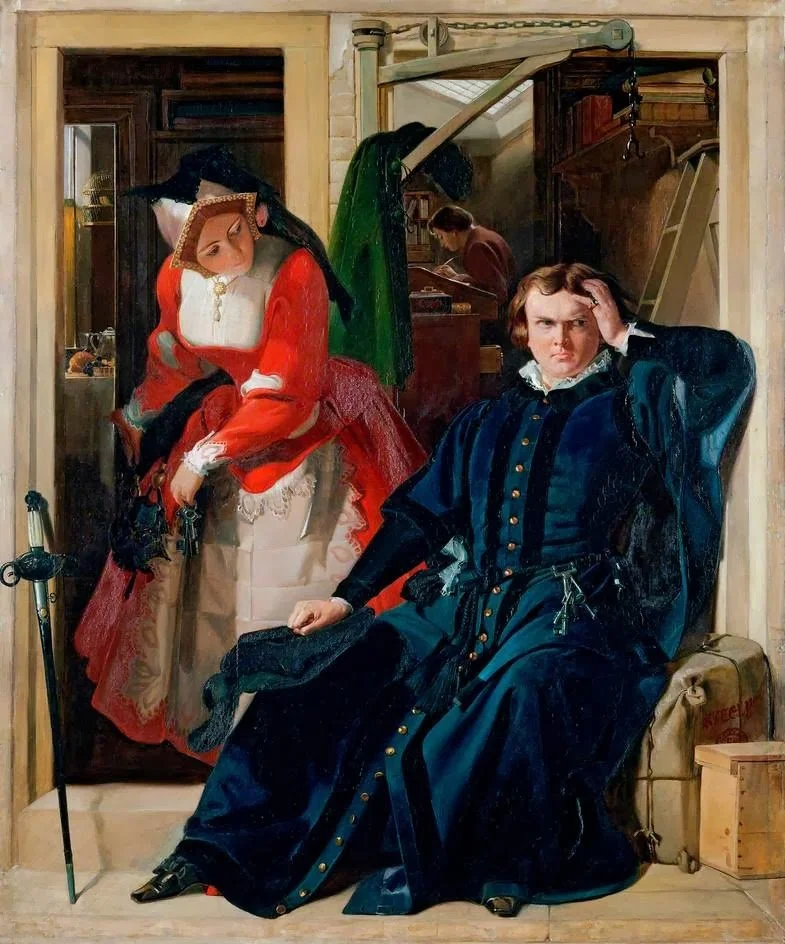
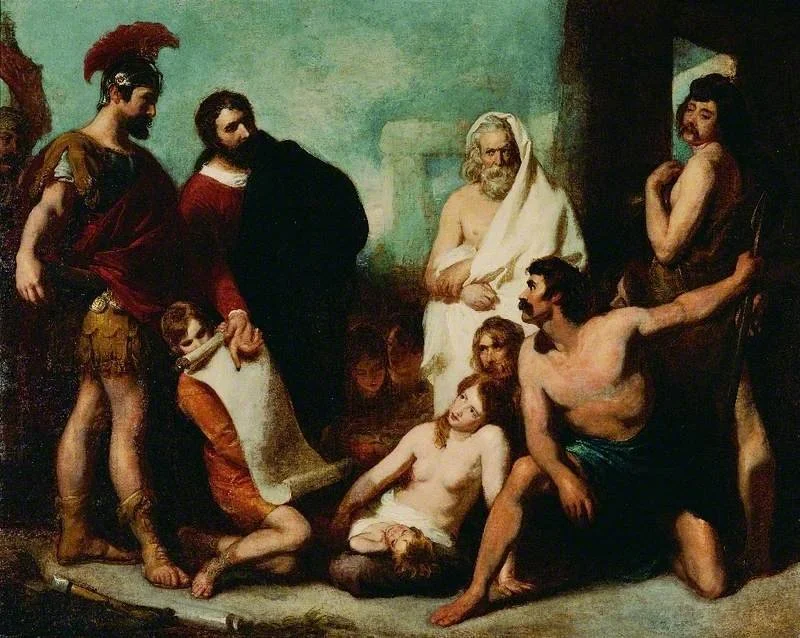
Daniel Maclise - Scene from Ben Jonson's 'Every Man in His Humour'
True happiness comes, I have found, not from riches or love or power, but simply from the ability to endure calmly the many affronts—to common sense, to simple morality, to good taste—that the world forces upon us every day. This puzzle is designed to give you practice in cultivating that invaluable skill.
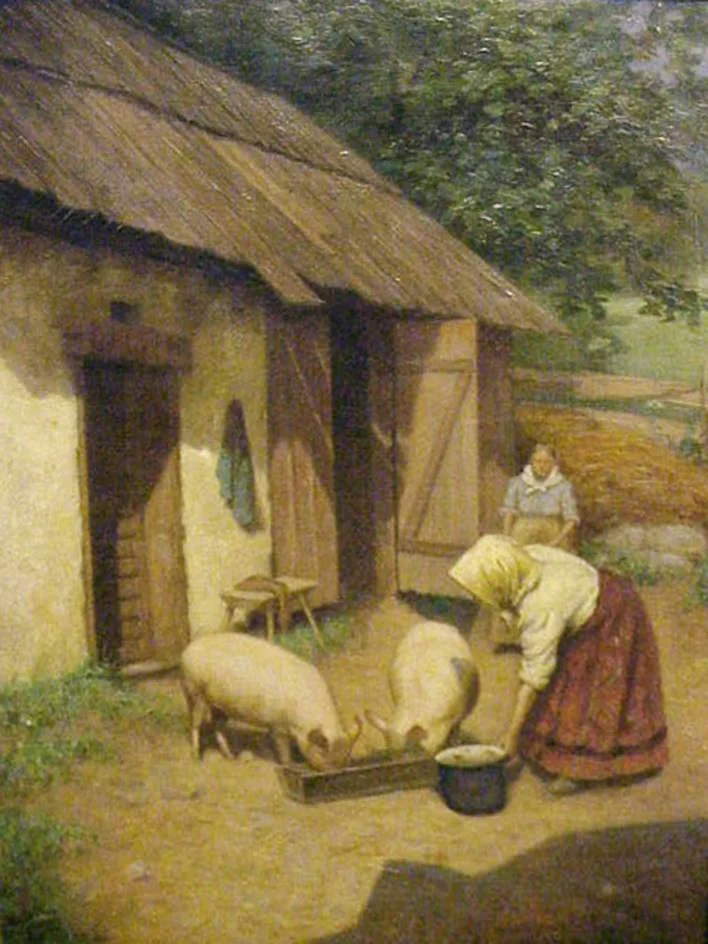
Nine sibling children save up to buy a poor neighbor a pig.
For Yonge, see Novels003,053,103,155,210, and261. This, a children’s novel, relatively brief and very charming, shows clearly her unique genius at characterization.
“There is something very natural and true in the picture of school-room life: the little naughtinesses, the petty teasings, the small vexations, will be familiar to every member of a large family party.” Athenaeum, November 2, 1861
This title is, of course, tautological. All puns are stupid. Words that sound the same have different meanings. So what? Who cares? Why fill a crossword with such stuff when you can fill it instead with actors, or athletes, or other celebrities who embody your tastes, or values, or identity, or whatever? Alas, having vowed to read every Victorian novel, I have no time for television, or movies, or social media; and so, not knowing the names of any celebrities, I’m left to embody my tastes, and values, and identity all by myself, and to fill my crosswords with stupid puns.
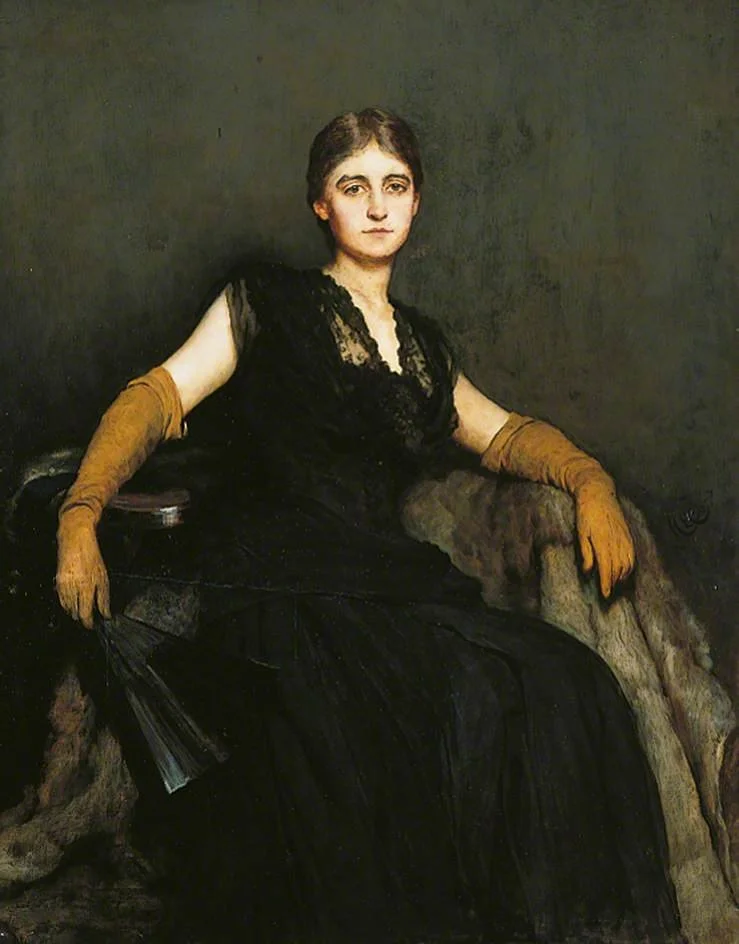
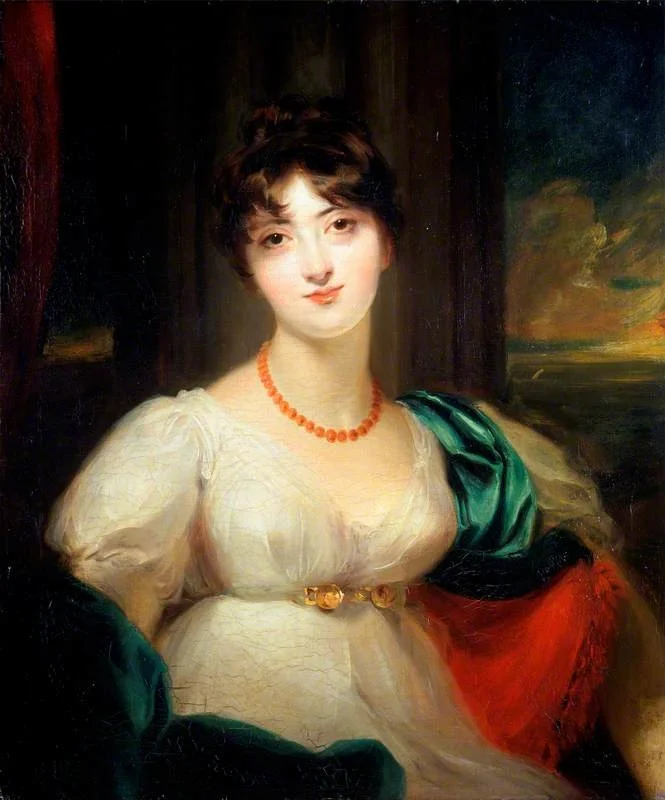
Sir Thomas Lawrence, Paulina, First Wife of Sir Codrington Edmund Carrington
A girl is led into a secret marriage with an army officer called to war.
About Katherine Biggar, nothing is known but her name (whichTroy J. Bassettfinds in her publisher's accounts), and that she wrote two novels, of which this was the first.
It has “no ordinary merit.” “The authoress . . . would seem to have reckoned throughout her labours more upon the reader’s appreciation of a quiet pen well informed of the petty vices and foibles of human nature, than upon his desire to be enthralled by harrowing descriptions and astounding situations, that form no part of the natural and every-day business of life.” However, much of it is “tedious if not unprofitable.” Literary Gazette, November 29, 1851
It has an “extremely interesting plot”; an “unusual number of characters” are “finished with the nicest and most discriminating skill”; “one of the pleasantest, most sensible, and best-written works of fiction we have lately had to report on.” Bentley’s Miscellany, January 1852
A contrasting view:
“We cannot recognize in the The Fair Carew any power of eloquence, nor any acuteness of observation. The story is not without interest, though made up of threadbare materials. The best quality in the book is the power of sketching character, which, though it does not go beyond sketching, has nevertheless a distinctiveness and freedom of touch which give hope of future excellence.” Leader and Saturday Analyst, November 22, 1851
“A very pretty story indeed, very well told, with incidents which are both plausible and natural”; for those who “like the true novel of comedy as it was before sensationalism triumphed.” Spectator, November 10, 1866
The heroine is “a bit of fresh and original painting.” Saturday Review, November 10, 1866
A somewhat contrasting view:
“A brisk, lively, and thoroughly readable tale, belonging to a low school of romantic art” marred by “false theory and Bohemian sentiment.” Athenaeum, November 17, 1866
Things are getting tense here at David Alfred Bywaters’s Crossword Cavalcade and Fortnightly Victorian Novel Recommender. The homophone faction is no longer on speaking terms with the homonym faction, while the parsing faction is threatening to break off and start its own site. Meanwhile, on the novel side, the female-novelist recommenders have made common cause against the male-novelist recommenders, each side rejecting out of hand my calls for mutual civility and reasoned debate, on the grounds that the bigotry motivating the other side deserves no consideration. We have, in short, devolved into a state of hopeless partisan rancor. How has this happened? I blame social media, artificial intelligence, online pornography, capitalism, forever chemicals, digital currency, and food dyes.
A worldly woman struggles to reject her Catholic upbringing.
Josephine Mary Ward (1864-1932), a granddaughter of the Duchess of Norfolk, wrote some eleven novels between 1899 and 1932, of which this was the first.
“The description of an old Romanist county family is excellent. . . . ; a distinctly able book.” Athenaeum, April 8, 1899
“Mrs. Wilfrid Ward is in a position to write of Catholic society from the inside, and she has done so in a remarkable novel with a candour that will render her work attractive to thoughtful persons beyond the pale. . . . it is excellently written and every character is well drawn. Notable too is its absolute fairness, which leaves the reader to weigh the heroine’s scruple for himself, aided but not biassed by the author. . . . as a whole . . . a book that should make its mark.” Saturday Review, April 8, 1899
I’d been wondering— Why is my every move being recorded by a network of hidden cameras? Why have all my writings, however private, been uploaded to secure online databases? Why are my innermost thoughts being monitored in underground laboratories? And then, the other day, while solving a crossword, and finding that, yet again, a word was clued exactly as I had clued it in an unposted crossword I had made not a week before, it struck me: an international cabal of crossword publishers, unwilling to give me proper credit either in money or in fame, was secretly tapping into my mind for crossword content. It all adds up! If you find yourself admiring a feature of somebody else’s crossword somewhere, you would do well to remind yourself that in fact it’s probably actually something I thought up already.
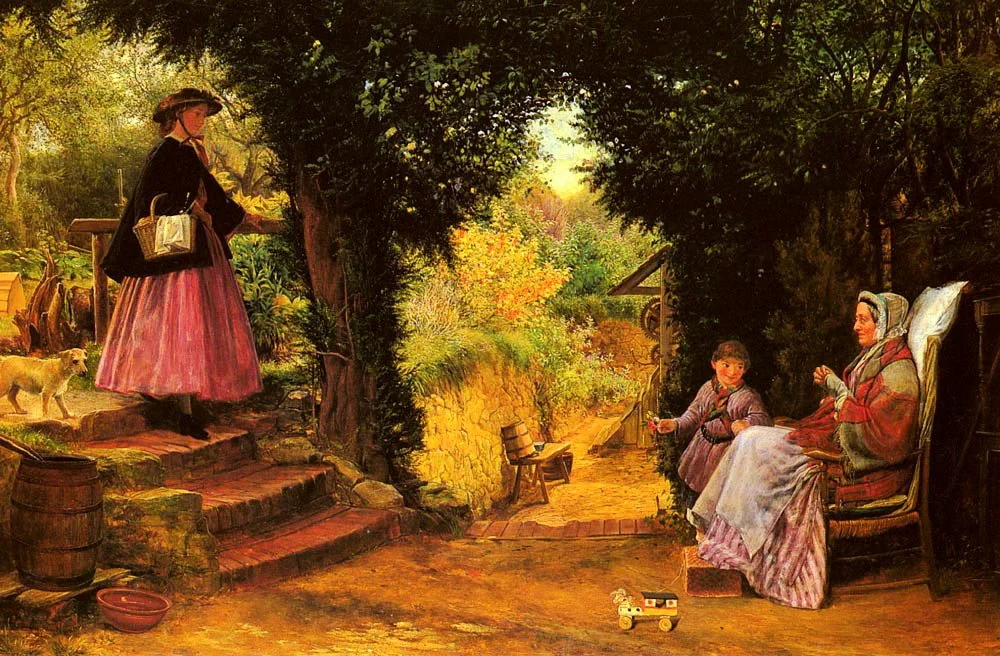
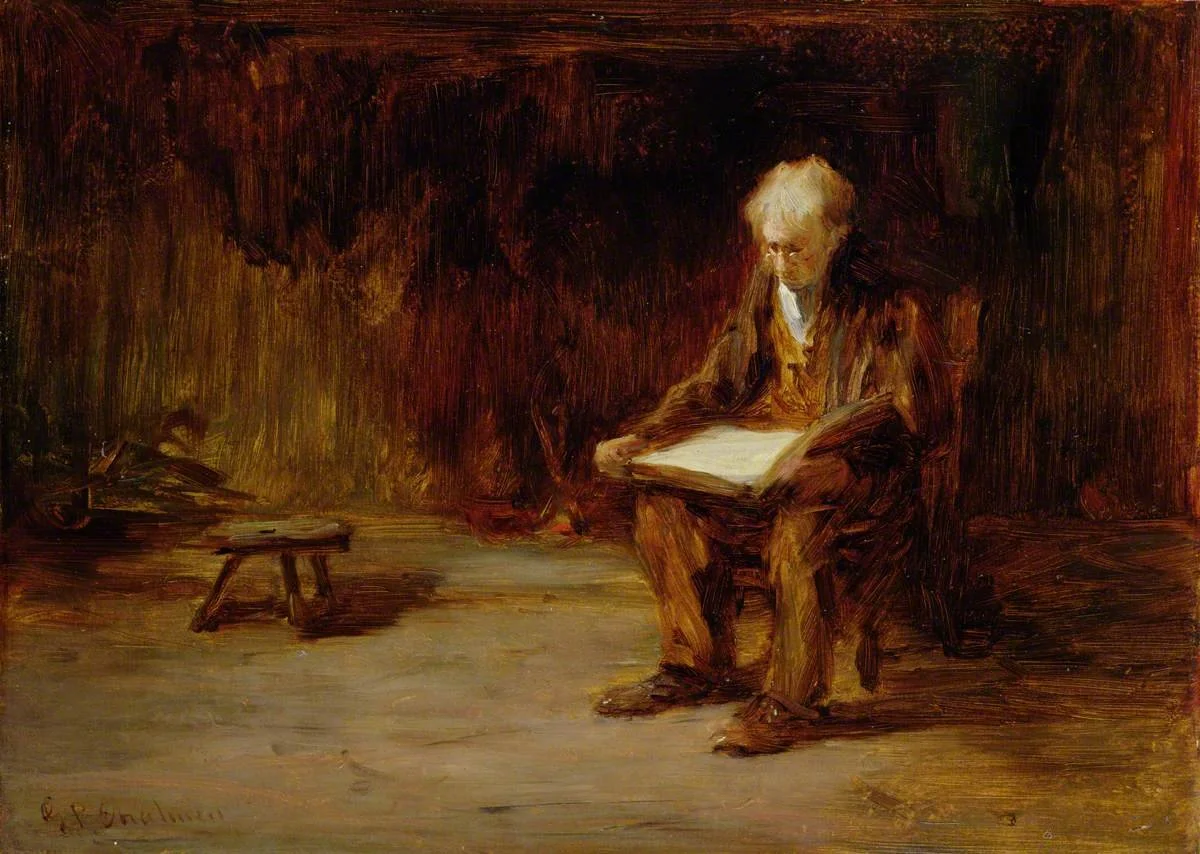
I’ve been so busy! Everybody wants me to do everything, because I’m so good at it! So, finding myself short of time for this fortnight’s crossword, I’ve had to settle for just some assorted answers, an untitled painting, and no more interesting introductory comment than this one.
The characters are “dashed off with spirit and coloured to the life. . . . This method . . . has a charm of its own. . . . The reader will find this style of storytelling as well and as cleverly executed as can reasonably be desired.” Athenaeum, December 5, 1863.
“Throughout amusing, the story is good, and is well and dramatically told. . . . It paints human nature fairly.” Westminster Review, January, 1864
I meant to have this ready in time for Charles III’s coronation, back in May, 2023, but I felt it needed a couple years’ more polishing. So now its dedication is up for grabs. Perhaps you, reader, are heir-apparent to a monarchy, or know somebody who is? If so, drop me a line, and we can make a deal; I’ll settle for any minor position at the court (except groom of the stole).
“The different actors are well placed upon the stage. There is much humanity” about them. Athenaeum, November 9, 1878
“The cheerfullest, springiest, oddest book conceivable; and it overflows with humour and rings with merriment”; the plot is “clever and new.” Spectator, November 30, 1878
“There is great brightness and freshness in the style. It is enlivened every here and there by happy turns of expression, and it sparkles with incidental and offhand observations that show genuine wit and humour. . . . A vein of comedy pervades the whole, giving its colour to more than one of the principal characters, and cropping up in some scenes that are excessively amusing.” Saturday Review, March 15, 1879
Have you ever noticed how certain words or phrases sound more or less the same—sometimes are even spelled the same—and yet have entirely different meanings? This phenomenon was recently brought to my attention, and I had a thought: what if one were to base a crossword on it?
A fastidious man and his sensitive daughter live uncomfortably with their wife/mother, a selfish, second-rate novelist.
Elizabeth Robins (1862-1952) was born in Louisville, Kentucky, and raised by her grandmother in Zanesville, Ohio. Her mother, an opera singer, went mad; her husband, an actor, drowned himself. She worked as an actress first in America, then moved to London and established herself as a leading lady in the plays of Ibsen. In the twentieth century she became a prominent supporter of women’s suffrage. Amid all this, she found time to write several novels, among them this tragi-comic portrait of selfish literary pretense.
“A most excellent and powerful piece of work.” Athenaeum, August 25, 1894
The author is “evidently a literary impressionist who can succeed brilliantly in throwing off a vivid and dramatic conception of a group that interests him.” Spectator, August 4, 1894
A contrasting view:
“Surprisingly clever in its way, being direct and simple” but “exaggerated”: “the tables are turned on the ‘new woman’ with a vengeance, and with a degree of hot-headed malice and a lack of logic worthy of the ‘new woman’ herself in her newest aspect.” New York Times, August 6, 1894
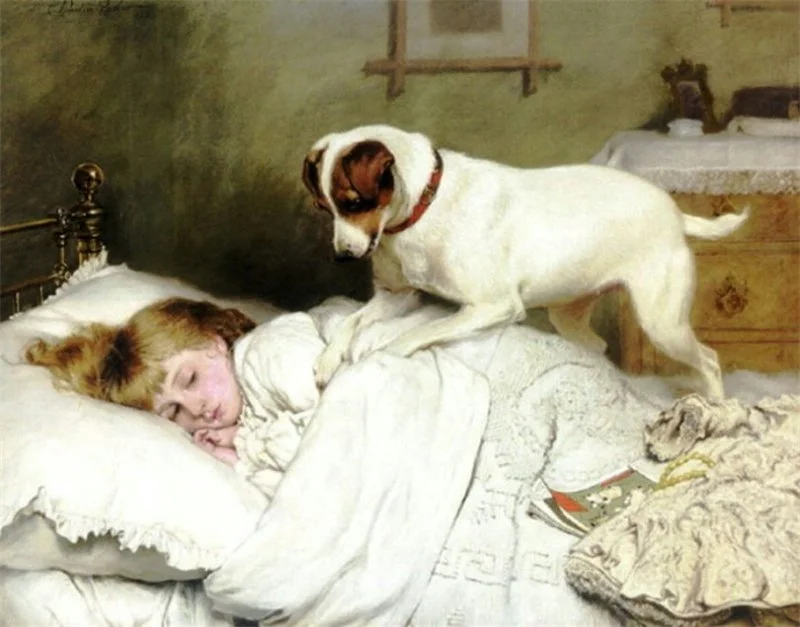
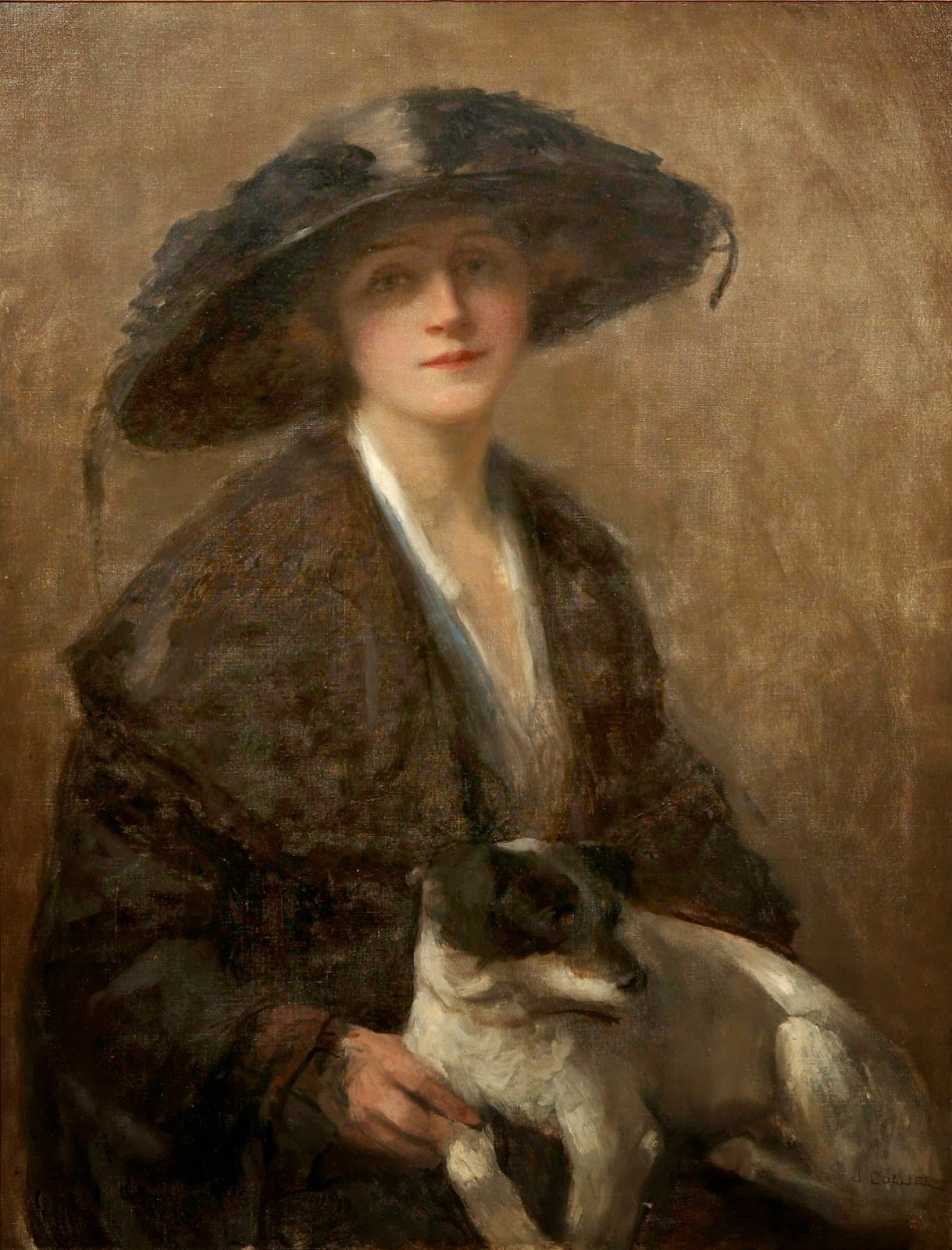
I used to have a dog. I loved him, and he loved me. But since he left this sad world, I’ve found dogs annoying: the little yappy dogs next door yapping their little yaps all the yappy day, the muscle-y dogs lunging at me on the sidewalks, the sweatered and bootee-ed stroller dogs that complicate my efforts to regard their owners with the respect I try to confer on all humankind—they annoy me. Now, my old dog had his bad habits. He would leave his scent everywhere. He would shed all the time. He would try to kill the plumber. But he had a deep, rich voice, respected pedestrians, would have scorned to wear bootees—was, in short, just a better dog than the dogs of other people nowadays. This puzzle is dedicated to his memory.