David Alfred Bywaters's Crossword Cavalcade & Fortnightly Victorian Novel Recommender. Every Saturday! Either a new language-torturing puzzle or an old novel by an unjustly neglected Victorian author. Why waste time on other amusements?

Novel 145: Eleanor Frances Poynter, My Little Lady (1870)

Sir Edward John Poynter, In a Garden

An impulsive French girl, raised by a gambler, is aided by an English doctor.


Eleanor Frances Poynter (1840-1929), the sister of the painter Sir Edward John Poynter and of the translator Clara Bell, wrote some seven novels between 1870 and 1892, of which the first is this poignant story of vulnerable innocence in a hard and confusing world.

“It is an agreeable task to record a book which can be read with genuine pleasure.  My Little Lady’s history” is “written in a simple graceful style.” Athenaeum, December 17, 1870

“The whole book is charming; quietly told, quietly thought, without glare or flutter, and interesting in both character and story.”  Saturday Review, December 17, 1870

“It is really pleasant to read a novel like ‘My Little Lady’—a simple story, so vividly potraying a few characters that we can imagine we have known them, felt all their troubles, and rejoiced in their happiness.”  Examiner, January 7, 1871

Download this week’s novel:
v.1 http://access.bl.uk/item/viewer/ark:/81055/vdc_00000004766A#?c=0&m=0&s=0&cv=6&xywh=-629%2C0%2C3742%2C1962

v.2 http://access.bl.uk/item/viewer/ark:/81055/vdc_00000003F32A#?c=0&m=0&s=0&cv=6&xywh=-652%2C0%2C3781%2C1982

v.3 http://access.bl.uk/item/viewer/ark:/81055/vdc_00000003F330#?c=0&m=0&s=0&cv=0&xywh=-1679%2C-126%2C4802%2C2518

Crossword 144: Last In, First Out

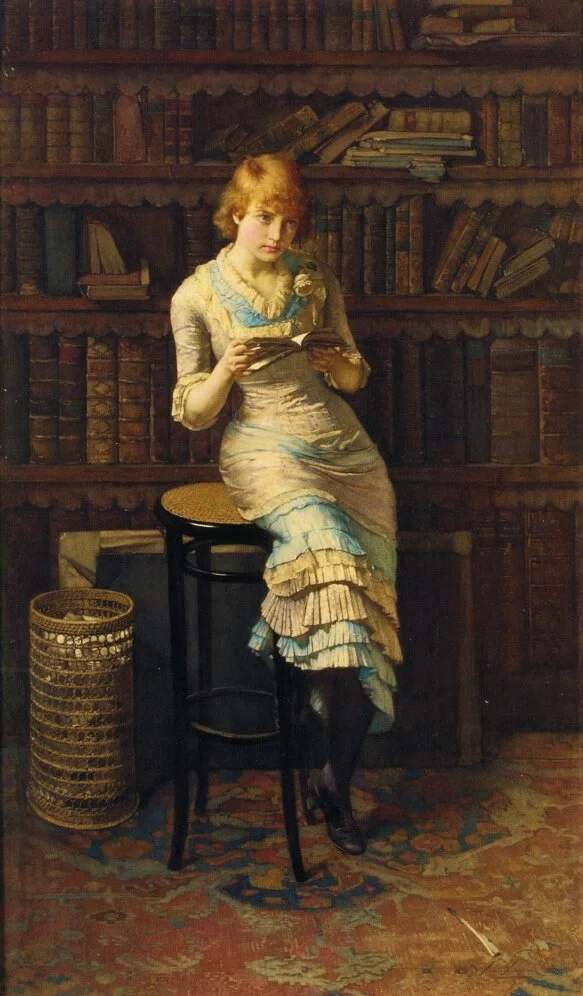
William Henry Knight, The Lost Change

I’m afraid I took up the catchy-sounding phrase that supplies today’s puzzle’s title without any clear idea of what it meant.  Something to do with airplane seating policies?  Corporate layoffs?  Is it a terse statement of the cultural truism that, when the worst things grow popular, the best are neglected?

According to Wikipedia, it is most commonly used to describe an accounting method designed to evade taxes in times of inflation.  Oh well.  It makes a good crossword title anyway.


Download this week’s crossword:

144-Last-In,-First-Out.puz

144-Last-In,-First-Out.pdf

Solve this week’s crossword online:

144 Last In, First Out

Novel 144, Ellen Wallace, Margaret Capel (1846)

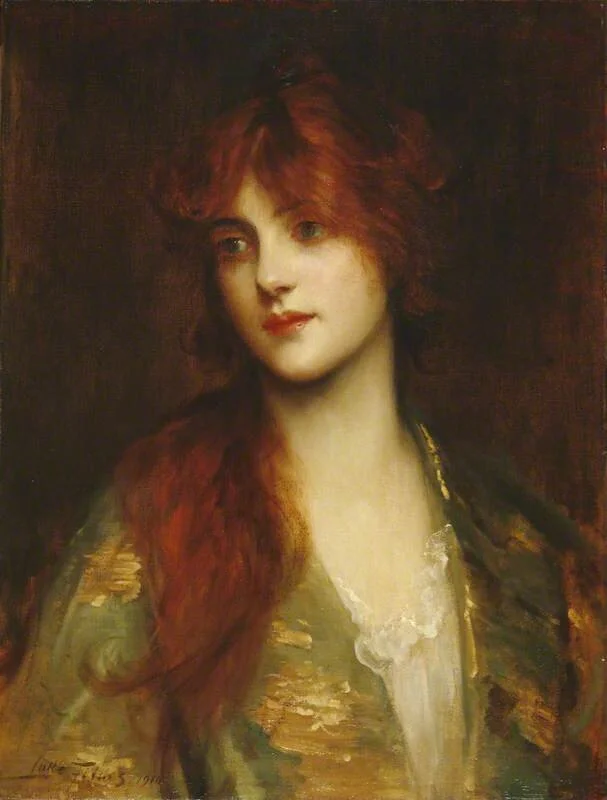
Sir Luke Fildes, Carina

An innocent and virtuous young lady falls in love with her uncle's ward.


Here is another novel by Wallace (see Novel 074), with the same merits (quiet, vivid characterization, a good style) and the same defect (a painfully hard-to-swallow lovers’ misunderstanding).

“This is one of the best kind of ‘fashionable novels’: it is not only free from the vulgar impertinences of the ‘silver-fork school,’ but has the tone of good society, and, better still, a vein of pure and healthful sentiment.  It gives an animated picture of country life among the upper class of gentry at the present day, sketched with the skill and tact of a nice observer; who possesses the art of indicating scenes and persons with a few graphic touches, and the power of making characters act and talk naturally.”  Spectator, January 17, 1846

“It is a very fairly drawn picture from the life.  It deals with the men and manners of our own time, and the author has been content to take the world as he finds it, without attempting to create imaginary persons or impossible events. . . .  Altogether this is one of the best fictions the season has produced.” Critic, January 24, 1846

“Here is the best novel of the Austen school we have ever seen, with real men and women, natural situations, brilliant dialogue; but there are no stage tricks in it, no startling effects, no murders, adulteries, or seductions, and only one death of any sort—consequently it has received very moderate praise in England, and no one in America seems aware of its existence. . . .  There have been very very few better novels written for the last six years.”  Literary World, March 27, 1847

Download this week’s novel:

v. 1 https://archive.org/details/margaretcapelnov01wall

v. 2 https://archive.org/details/margaretcapelnov02wall

v. 3 https://archive.org/details/margaretcapelnov03wall

Crossword 143: PR Issues

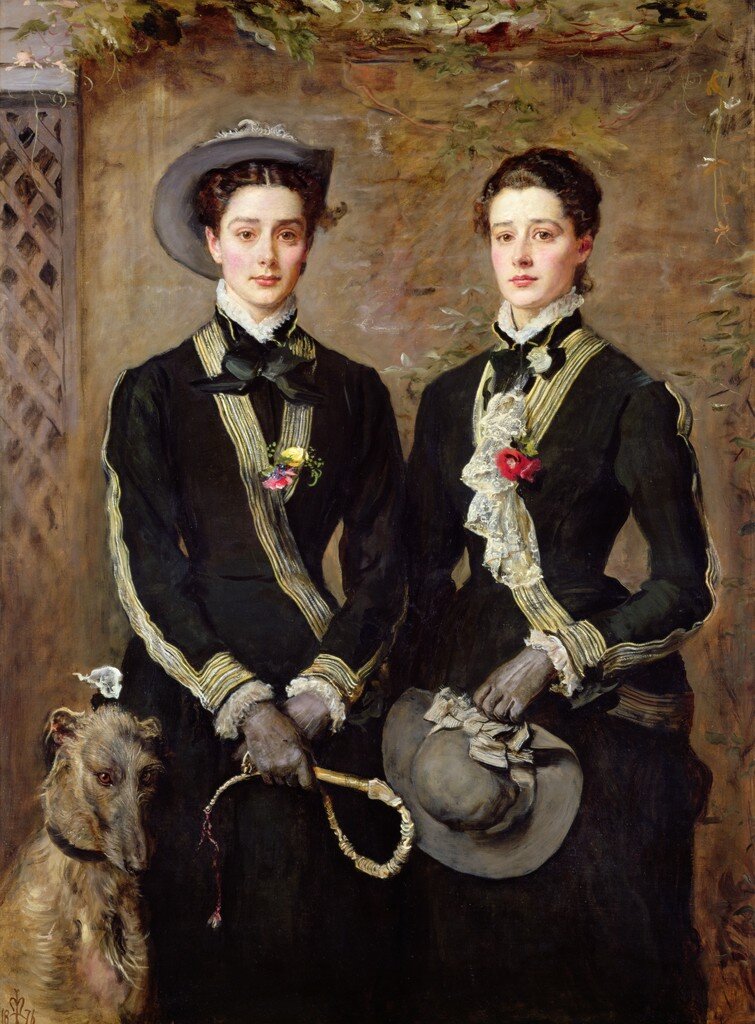
John Everett Millais, The Twins, Portrait of Kate Edith and Grace Maud Hoare

One theme per puzzle—that’s always been the rule of themed crosswords.  But I find myself asking—why? Why adhere blindly to the worn-out conventions of the past?  Why thwart human progress with hidebound rules of unity and order?  So what if a few reactionary members of the bourgeoisie are shocked or confused?  Did that keep Wagner from sonic discord and narrative incoherence? Picasso from crudity and distortion? The Bauhaus from faceless rectangularity?  Let the Philistines be shocked; let them be confused!  So much the better!  Let a crossword have not just one theme, but two!!


Download this week’s crossword:

143-PR-Issues.puz

143-PR-Issues.pdf

Solve this week’s crossword online:

143 PR Issues

Novel 143: Francis E. Paget, Lucretia; or, The Heroine of the Nineteenth Century (1868)

John Henry Henshall, Thoughts

A young lady tries to live like the heroine of a novel.


Francis Edward Paget (1806-1882), rector of Elford, wrote half a dozen novels promoting his High Church views, beginning in 1833.  This, a satire on the novels of M.E. Braddon and her kind (though it alludes also to Scott and Bronte), features an intriguing narrator, foolishly credulous and at the same time cleverly self-aware.

“This satire is quite just, because it exactly hits the great artistic fault of the sensational novel, the use of illegitimate means to produce an effect upon the reader.” Spectator, August 8, 1868

“A happier thought than the combination of a ludicrously sensational plot with a ludicrously sentimental heroine . . . could not have been devised.”  Athenaeum, October 17, 1868

Download this week’s novel:

http://explore.bl.uk/BLVU1:LSCOP-ALL:BLL01016843384

Crossword 142: Like Fine Wine

Chateau Lafite-Rothschild 1883

Those other, Brand-X constructors fill their crosswords with stuff—memes, actors, athletes, movie characters—that arose yesterday and will be forgotten tomorrow.  Mine are designed, as the title of this one implies, to grow more rich and satisfying as the years pass.

To be sure, if it’s 2050, and you’re savoring this crossword along with your well-aged 2020 bottle of Lafite-Rothschild, you may be mildly puzzled by 50 Across—but, when you review the historical context, you’ll be able to congratulate  yourself and your peers on the  advances in rationality and humanity your country has made in the last thirty years.


Download this week’s crossword:

142-Like-Fine-Wine.puz

142-Like-Fine-Wine.pdf

Solve this week’s crossword online:

142 Like Fine Wine

Novel 142: Mrs. Alfred Sidgwick, The Inner Shrine (1900)

Edward John Gregory, The Spoils Of Opportunity

A poor young lady, dislocated from her quiet home, is taken up by some distant (and dubious) relations with a taste for travel.


Here is another fine novel by Sidgwick (see Novel 082):  it features a virtuous heroine at the mercy of an amusingly selfish and self-deluded couple.

“A novel from the pen of Mrs. Alfred Sidgwick is always welcome, for while she steers a middle course between the rose-coloured optimism of the mid-Victorian novelists and the devotion to the doleful of their successors, the excellence of her matter is always enhanced by the alertness and vivacity of her style.”  Spectator, November 17, 1900

“As usual, Mrs. Sidgwick has written a good book.  She possesses, above the ordinary run of writers, the power to treat a comparatively slight plot in such a manner that it becomes absorbing, engrossing, a thing of paramount interest, till the last line is read; the power, too, to draw, with certain touch, a weak, or a false character, without a hint of cruelty or exaggeration.”  Bookman, December 1900

“Many poorer novelists seem more discussed than Mrs. Alfred Sidgwick . . . yet she has staunch admirers, and in the memories of discriminating readers lingers as a writer of pleasant and wholesome, yet not common, stories.  ‘The Inner Shrine’ is worthy to rank with these by virtue of an agreeable manner and good matter, a quiet thoughtfulness and a restful sense of humour.  The people in it are interesting, because the author has found a way of making them reveal themselves; they and the situations in which they are placed are at times arresting and even poignant, though the verge of caricature or sensationalism is never approached.” Athenaeum, January 12, 1901

Download this week’s novel:

https://books.google.com/books?id=jSU8AQAAMAAJ

Crossword 141: Middle Class

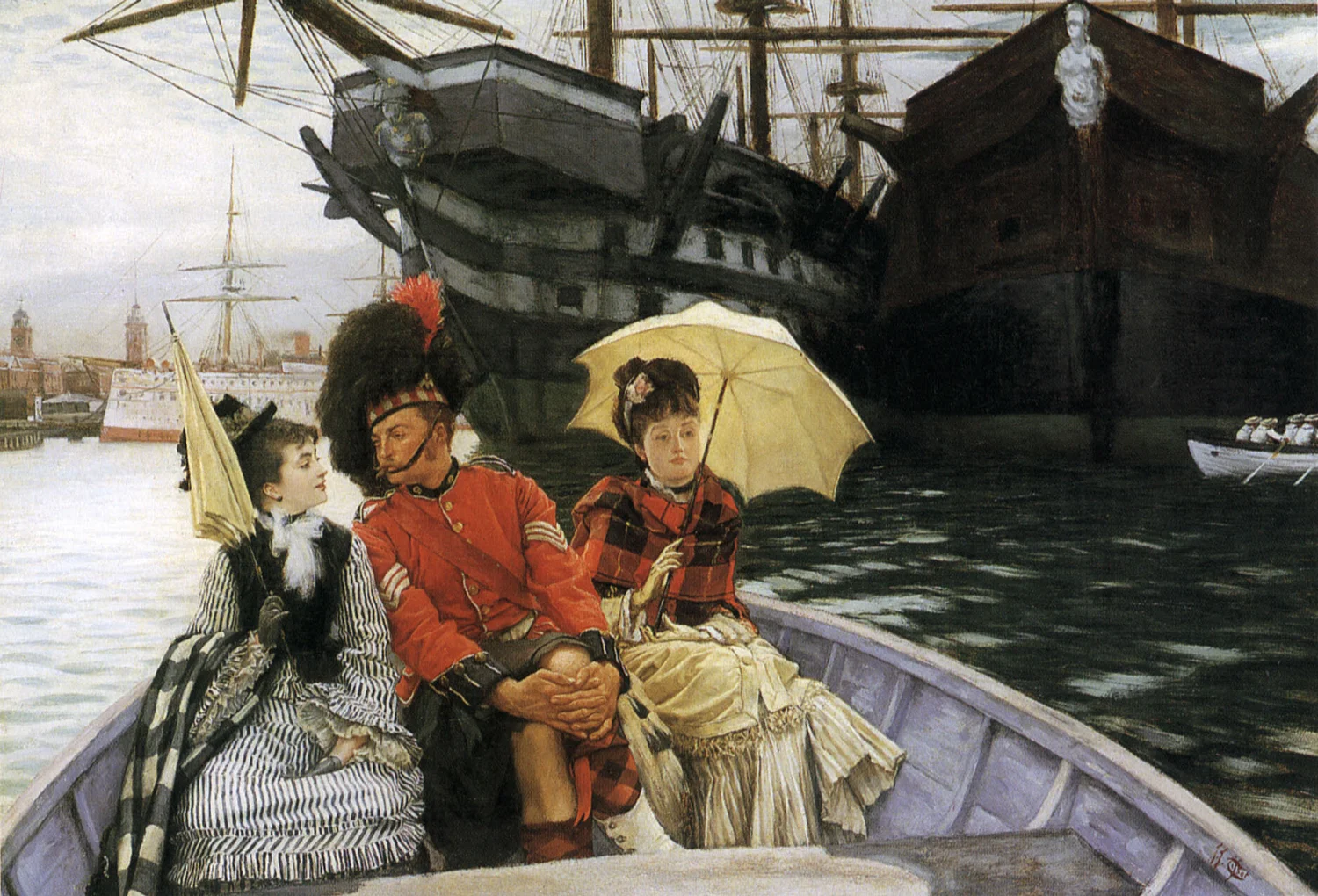
James Jacques Joseph Tissot, Portsmouth Dockyard, or How Happy Could He Be with Either

Oh the poor middle class!  Not only is its wealth increasingly appropriated by billionaires, but for well over a century it has been routinely derided in high culture.  Hipsters everywhere decry its foolish tastes, activists its mistaken values.  No matter the authenticity of your own non-bourgeois (proletarian? aristocratic?) credentials—pronounce a thing "bourgie" and your title to sophistication is assured.

Well, though I will here and now claim (why not?) to have myself no connection whatsoever with the middle class, I feel sorry for it sometimes.  I hope this crossword tribute will make it feel a little better.


Download this week’s crossword:

141-Middle-Class.puz

141-Middle-Class.pdf

Solve this week’s crossword online:

141 Middle Class

Novel 141: E.S. Maine, Among Strangers (1870)

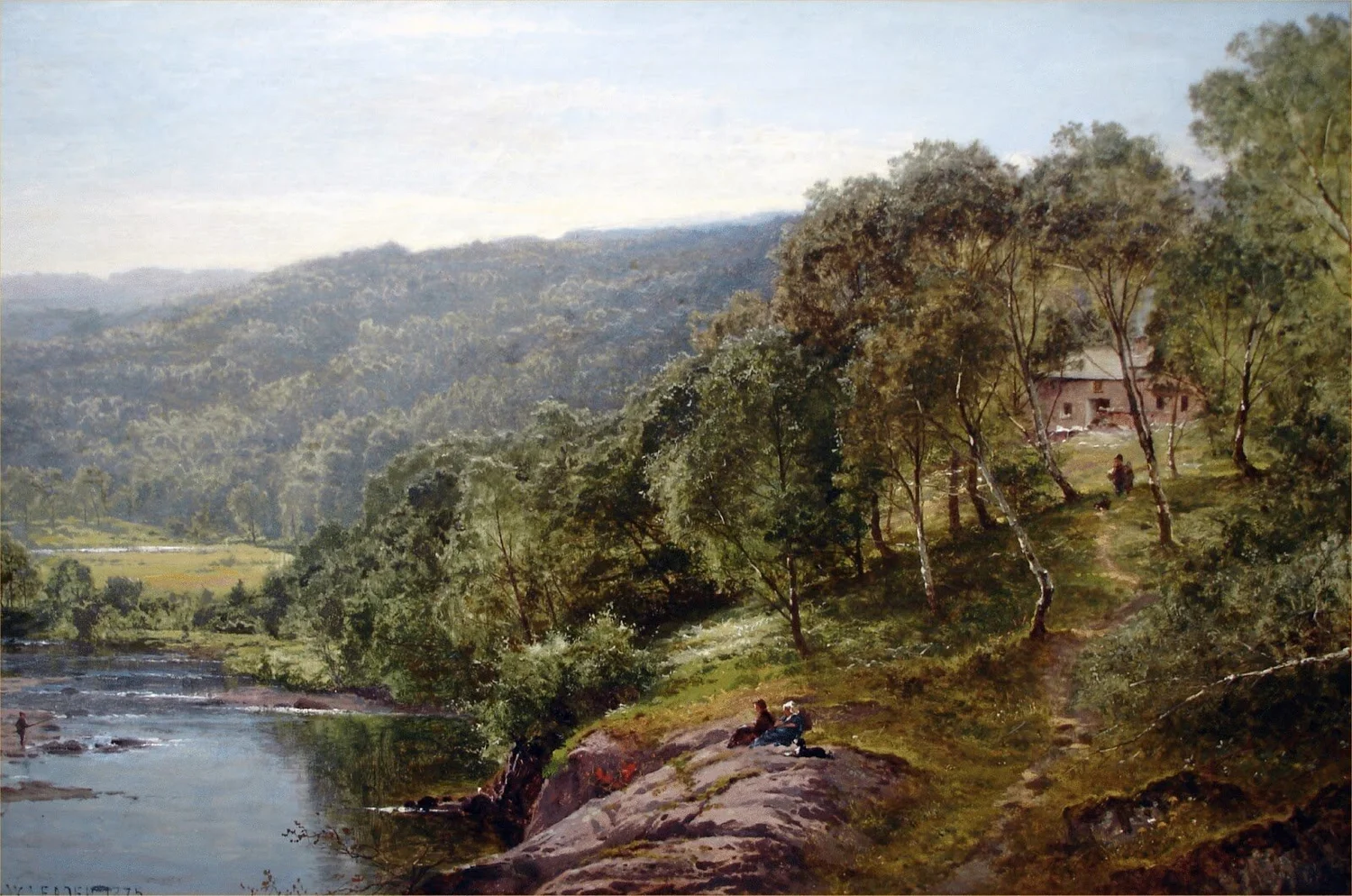
Benjamin Leader, A Woodland Path, North Wales

A young Scotswoman, living with her rector uncle in a Welsh village, is wooed by various men.


Eliza Sophia Maine (1838-1891) wrote five novels in the 1870s, of which this is the first.  Its ironically self-aware narrator and deftly-handled plot ought to have made its author better known than apparently she became.

A “pleasant little novel” that “deals with domestic life and never ventures beyond the natural limits of feminine knowledge.” Saturday Review, September 24, 1870

“The story is simple and unpretentious, but is told in so fresh and graceful a manner as to render it most acceptable.”  Athenaeum, October 8, 1870

“Life and character in the remote Welsh valley are well drawn, and the narrator tells her story with vivacity in a natural, unaffected tone.”  Spectator, January 28, 1871

Download this week’s novel:

https://books.google.com/books?id=XvUBAAAAQAAJ

Crossword 140: Beaten Down

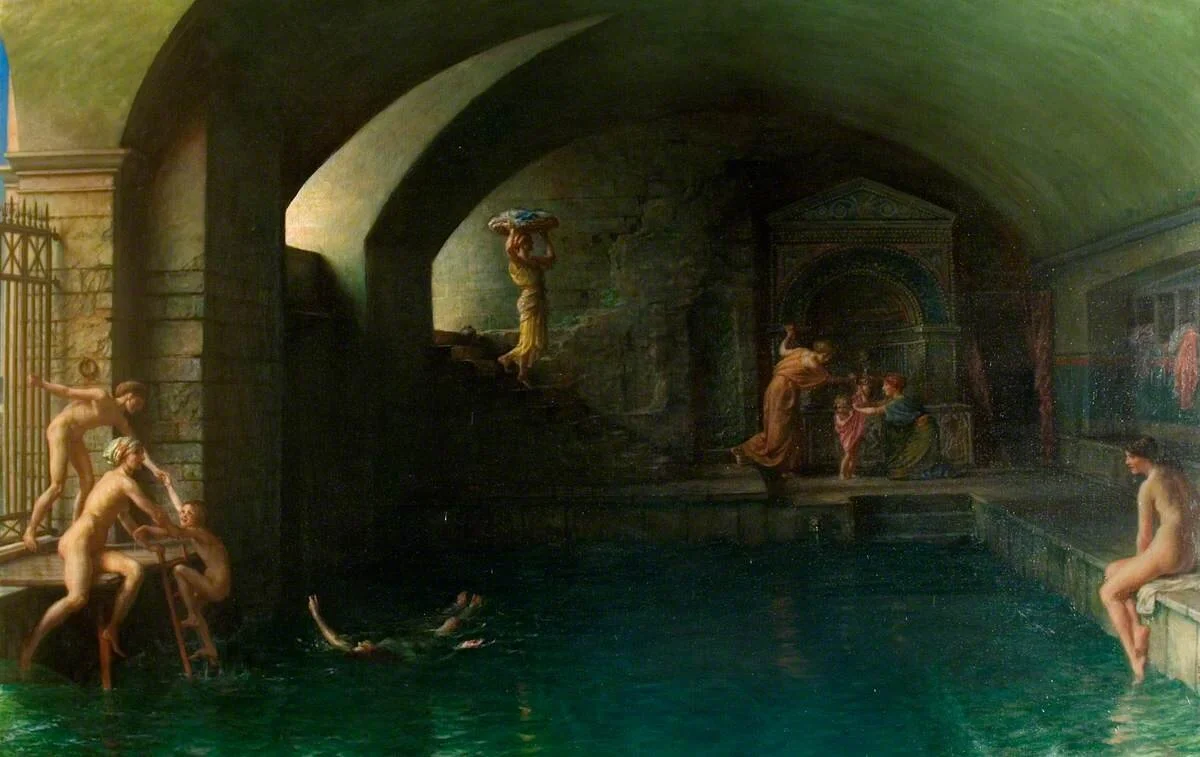
Edward John Poynter, The Champion Swimmer

If you wait till tomorrow, you’ll find the answer to 24 Down in the title of my crossword in the Los Angeles Times, to which this one serves as a sort of prequel.  Meanwhile, here’s a painting that—while not very clearly related to either puzzle—may at any rate provide a little imaginary relief from this summer’s weather, by which so many of us find ourselves mercilessly beaten down.


Download this week’s crossword:

140-Beaten-Down.puz

140-Beaten-Down.pdf

Solve this week’s crossword online:

140 Beaten Down

Novel 140: Elizabeth Anna Hart, A Very Young Couple (1873)

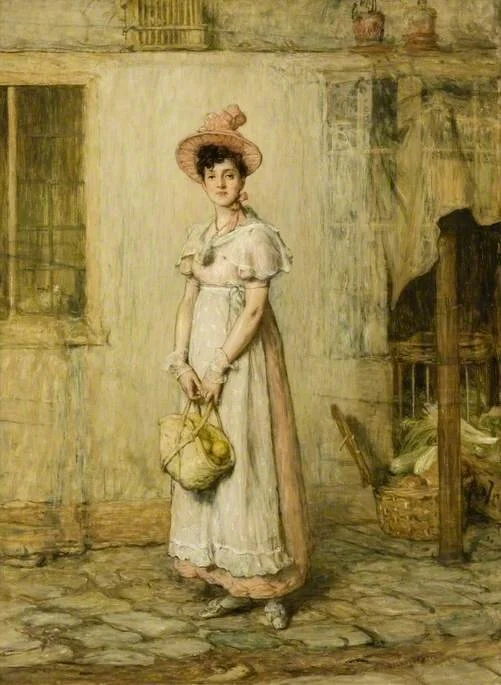
Sir William Quiller Orchardson, The Young Housewife

Newlyweds struggle to get by on an inadequate income.


Here is another novel by Hart (see Novel 006).  It begins as a touchingly comic domestic story and ends in exciting sensationalism.  Its heroine is well delineated in both parts.

“Though the story is slender, it has some capital sketching, and abounds in the characteristic humour and observation of life which distinguish the writings of this author. . . .  We may recommend the story as delightful reading, and also the binding, paper, and printing of the book as most creditable to its popular and enterprising publisher.” Illustrated Review, January, 1874

“A very lively and pleasant little tale, vivid in its interest, and the harrowing part of it not too prolonged for endurance.”  Spectator, January 31, 1874

“We confess to having been much amused.”  Scribner’s, March 1874

Download this week’s novel:
http://solo.bodleian.ox.ac.uk/permalink/f/89vilt/oxfaleph014737729

Novel 139: Eleanor Eden, Dumbleton Common (1867)

Hubert von Herkomer, Our Village

A naive middle class girl marries a fashionable young man.


Eleanor Eden (1826-1879), niece to Emily Eden (see Novel 036), wrote several children’s novels in addition to this one for adults. Its troubled-marriage plot is supplemented with a pleasant description of life in a village outside London.

“‘Dumbleton Common’ is a charmingly pleasant book; it is full of genial kindheartedness, and there is a thoroughly well-bred tone throughout.  The story is as slight as can hold together; but every individual in it has a distinctive character, and is made of flesh and blood, with a reasonable soul to match. . . .  There is much skill and lightness of hand evinced in the many characters that pass before the reader; for though the incidents are slightly drawn, the personages are numerous.” Athenaeum, March 9, 1867

“The Hon. Eleanor Eden, like the Hon. Emily Eden, has a perfect command of that light, graceful, easy style which is the nearest literary approach to the pleasant chat and gentle raillery of the best English society. . . .  Dumbleton Common, like The Semi-Detached House, is a most graceful and lively picture of a little society. . . .  There is no sketch that is not lively, and not a false stroke of either sentiment or tone from the beginning to the end of the little story.”  Spectator, March 16, 1867

Download this week’s novel:
v.1 https://archive.org/details/dumbletoncommon01eden

v.2 https://archive.org/details/dumbletoncommon02eden

Crossword 138: Fowl Fill

Frank Bramley, Domino!

So you’ve never heard Fats Domino's 1957 recording of “What Will ___ My Heart?” (44 Across)?  Correct that omission right away.  Then try the 1936 version by Andy Kirk and forgotten crooner Elmer “Pha” Terrell.  Then try Dinah Washington’s version, from 1956.  Has your rage against my long partials and obscure cluing turned to gratitude?


Download this week’s crossword:

138-Fowl-Fill.puz

138-Fowl-Fill.pdf

Solve this week’s crossword online:

138 Fowl Fill

Novel 138: Frances Milton Trollope, Tremordyn Cliff (1835)

Philip Calderon, Margaret

A clever and ambitious noblewoman, displaced in inheritance by her infant brother, plots against him.


Here is another novel by Frances Trollope (see Novels 029 and 079), mother of Anthony and T. Adolphus, mother-in-law of Frances Eleanor.  Written early in her career, it combines involving melodrama with small-town social satire.

“The idea . . . is a very bold one, and has been wrought out with great skill.” Athenaeum, September 12, 1835

“The outline of the story is well conceived, and though there are gross improbabilities in the working out of the plot, it is in the main circumstances ingeniously involved.  Some of the little sketches of society in the neighborhood of a country town are fresh and animated; and some of the characters are happily conceived and well sustained.” Examiner, October 25, 1835

Download this week’s novel:
v.1 https://archive.org/details/tremordyncliff01trol

v.2 https://archive.org/details/tremordyncliff02trol

v.3 https://archive.org/details/tremordyncliff03trol

Crossword 137: Decease

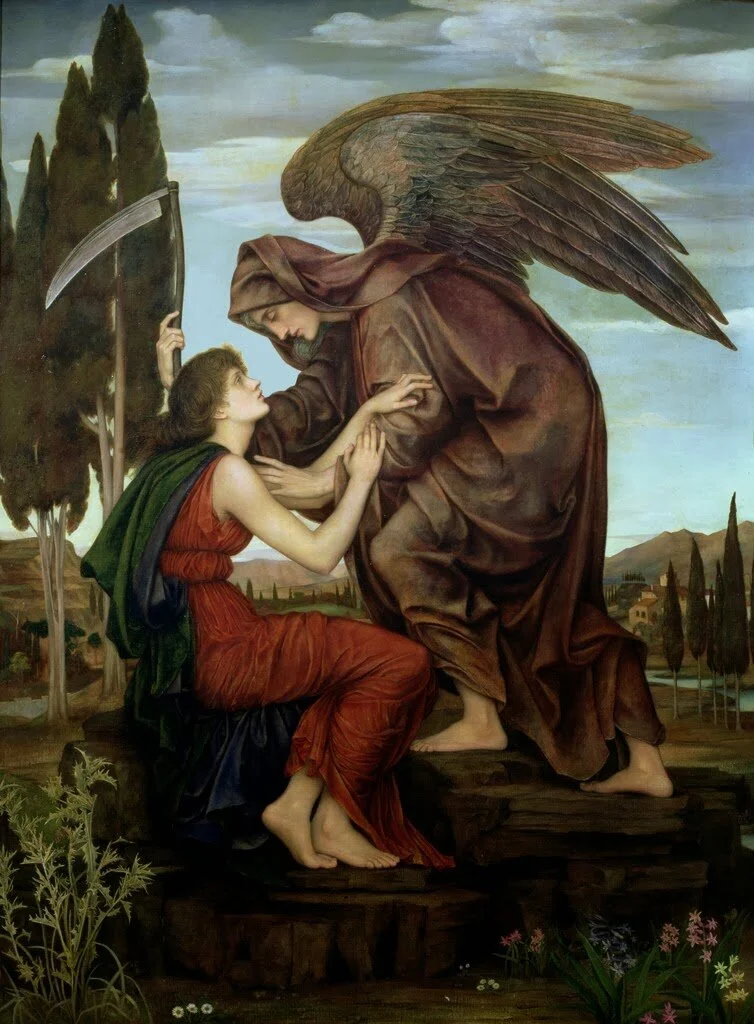
Evelyn de Morgan, The Angel of Death

This is the third and final installment of the trilogy—hence the “cease” of “decease.”  Some critics may think I’ve got the order wrong, as “Defeat,” “Decease,” and “Decomposition” are, in a sense, the final three chapters of anyone’s biography.

But the more subtly observant puzzle connoisseur will notice that the first pun of the first of the series returns as the final pun of the last of the series, giving the whole a pleasingly cyclical form that, in the face of decline and decay and despair, hints hopefully at renewal.


Download this week’s crossword:

137-Decease.puz

137-Decease.pdf

Solve this week’s crossword online:

137 Decease

Novel 137: Beatrice May Butt, Delicia (1879)

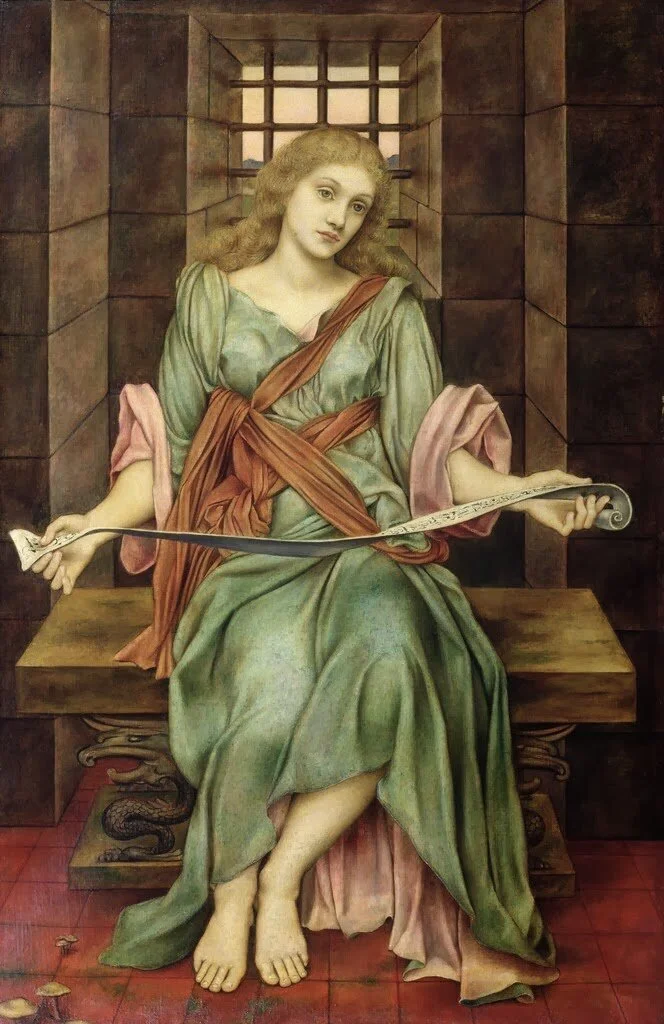
Evelyn de Morgan, The Soul's Prison House

A quiet young woman introduces her best friends to one another, with unexpected consequences.


Here is another novel by Butt (see Novel 045).  It has several vivid characters, and three plots, of which the most prominent is also the best.

“Delicia is one of those womanly portraits that can be drawn only by a high-minded writer. . . .  On the whole, the story will repay the reader’s trouble.”  Athenaeum, July 5, 1879

“That ‘Delicia’ is a good novel nobody who has read it can have the slightest doubt.” It is good because of “the strength, the delicacy, and the freshness of the character-drawing, and . . . the interest of the story. . . .  The Stevens family . . . is really a triumph in its way.  It has all the truth to English domestic life. . . . We have not read so good a novel as ‘Delicia’ this year.” Examiner, July 19, 1879

“Without aspiring to the highest place, it is none the less one of the few books where there is nothing we could wish added or taken away.  This calm sufficiency and graceful tact in proportioning ambition to resources, if not exactly genius, is near akin to it.” Academy, August 30, 1879

Download this week’s novel:
https://archive.org/details/deliciabyauthor00buttgoog/

Crossword 136: Defeat

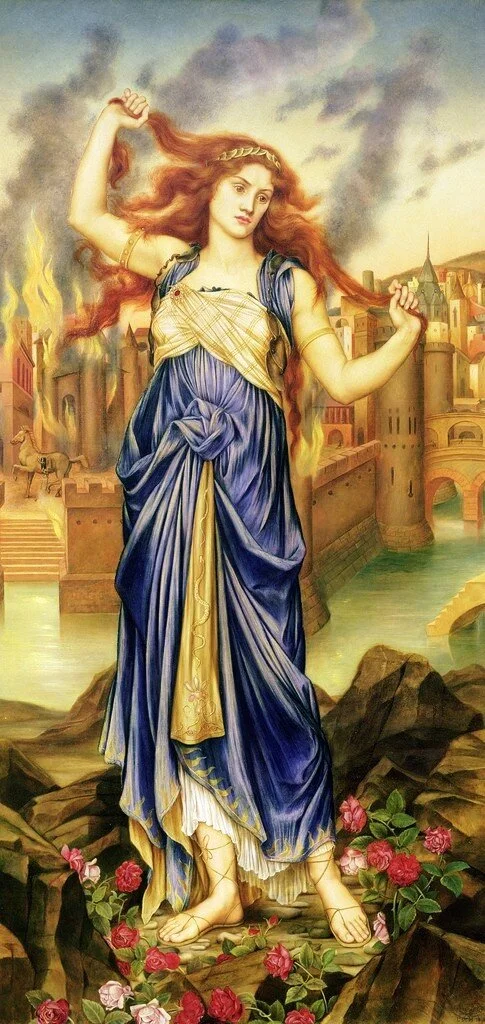
Evelyn de Morgan, Cassandra

Do you ever wonder what common crossword clue/answer combination annoys me the most?  No?  I’ll tell you anyway, even if by doing so I spoil this puzzle’s 1 Across:  it’s UTAH clued as “Jazz site” or “Jazz spot” or “Where to see a jazz group” or “Jazz-lover’s home” or something like that.  We’re thinking music, but it’s actually sports!  We’re thinking a vast and varied genre of music, associated with many of our country’s most talented people and most interesting locations, but it’s actually just a basketball team!  What a painful letdown.  And it’s not as though there were some hidden, surprising resemblance between jazz the music and jazz the basketball team—the latter was simply named for the former. And if the misdirection was ever amusing, after the thousandth iteration it isn’t amusing anymore.  Everybody please stop it!


Download this week’s crossword:

136-Defeat.puz

136-Defeat.pdf

Solve this week’s crossword online:

136 Defeat

Novel 136: Margaret Agnes Paul, De Cressy (1856)

Evelyn de Morgan, Cadmus and Harmonia

An impoverished but virtuous young lady attracts the love of a lord.


Here is another novel by Paul (see Novel 025):  ambivalent characters find themselves entangled in a subtle and apparently intractable conflict—until the author, out of time, or patience, or paper, suddenly resolves it by sending two characters to heaven and a third to South America.

“The persons have much consistency and reality about them; spirit is equable and well sustained throughout.”  Spectator, June 28, 1856

It is “written in an unpretending, pleasing style.”  Saturday Review, July 26, 1856

Download this week’s novel:
https://books.google.com/books?id=Wdq0wgEACAAJ&newbks=1&newbks_redir=0&pg=PP1#v=onepage&q&f=false

Crossword 135: Decomposition

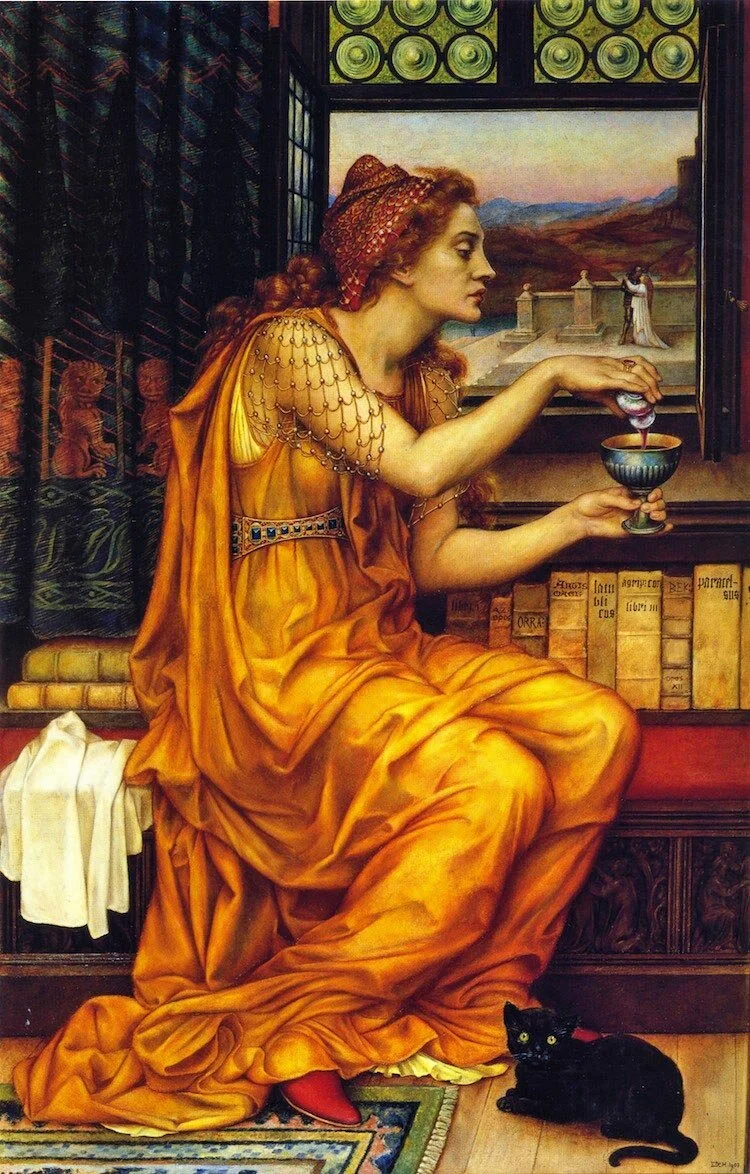
Evelyn De Morgan, The Love Potion

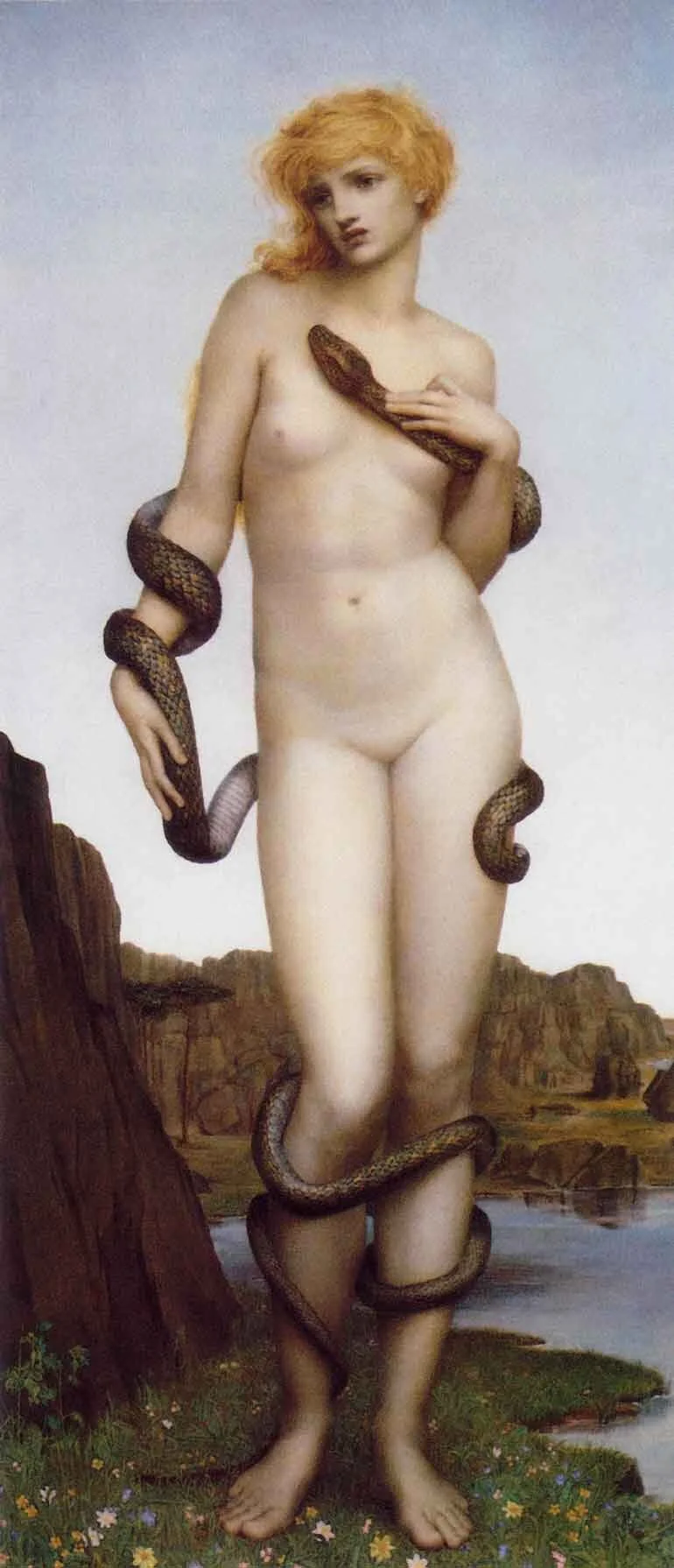
Last Tuesday I quietly embarked on this year’s summer novel / crossword series, a trilogy the recurring feature of which I’ll leave you to detect, or decipher, or deduce, for yourself.  If you’re planning to do this puzzle with young children, you should be warned that it contains not only partial nudity but (what’s even more dangerous to the developing brain) extreme crosswordese. However, nine hilarious theme answers make it all worthwhile.


Download this week’s crossword:

135-Decomposition.puz

135-Decomposition.pdf

Solve this week’s crossword online:

135 Decomposition