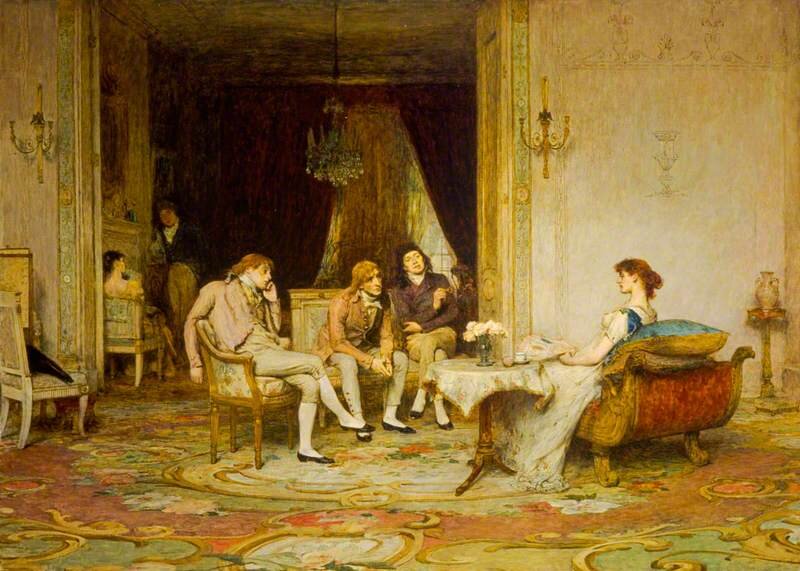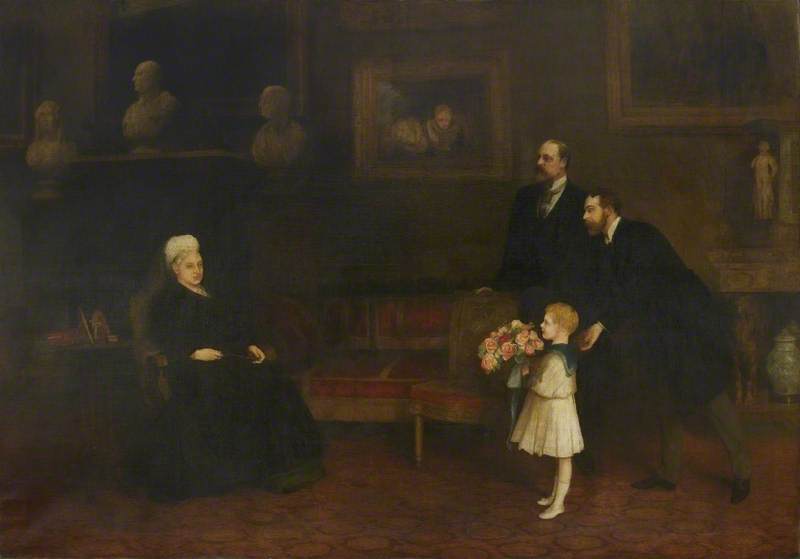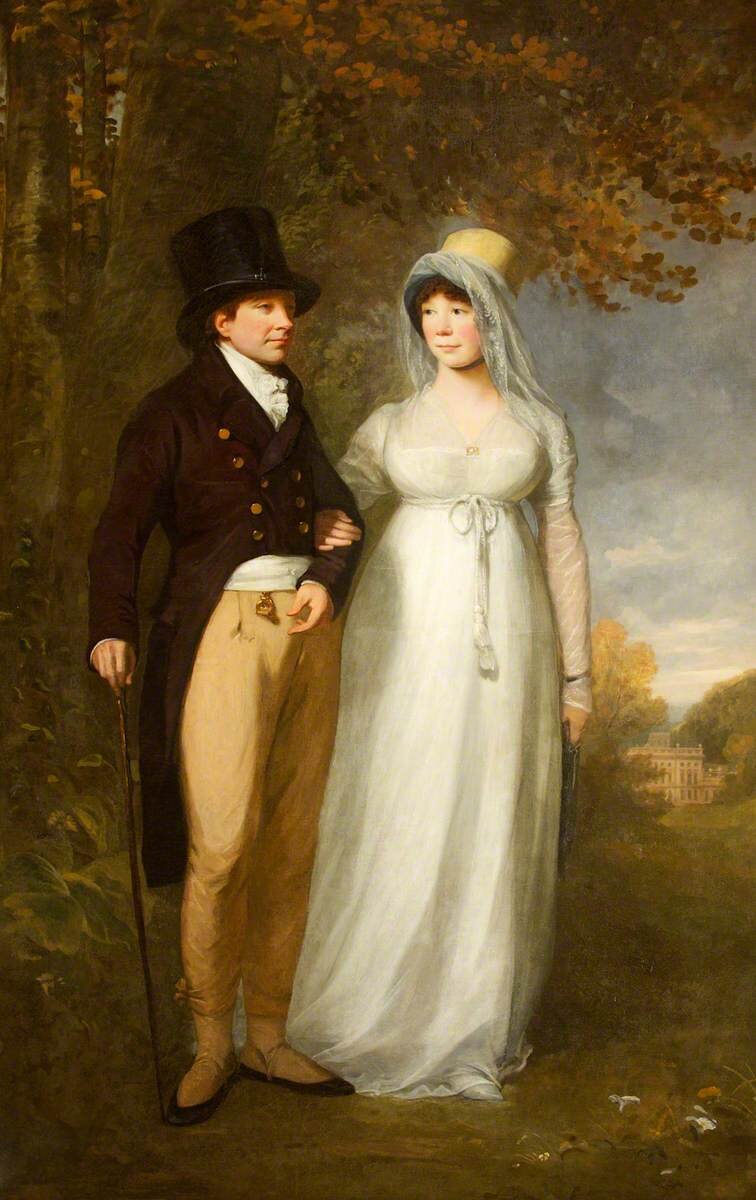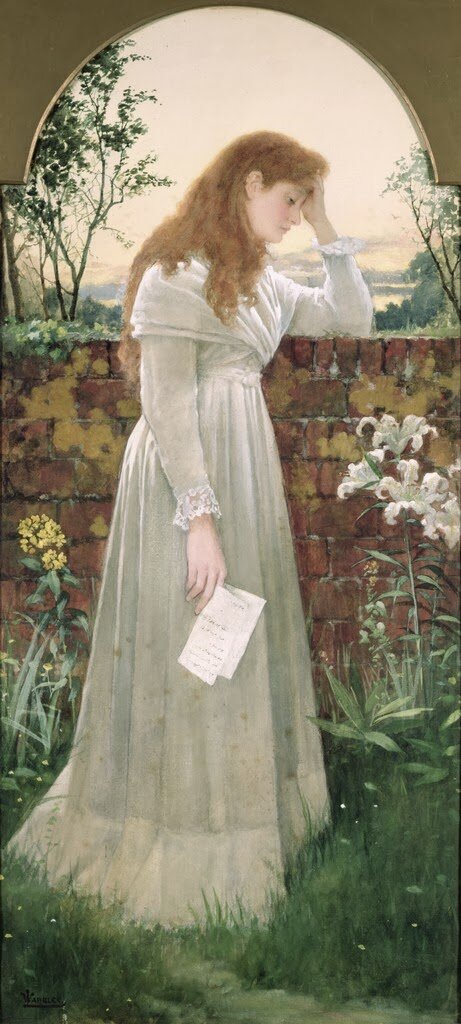
David Alfred Bywaters's Crossword Cavalcade & Fortnightly Victorian Novel Recommender. Every Saturday! Either a new language-torturing puzzle or an old novel by an unjustly neglected Victorian author. Why waste time on other amusements?

Novel 135: William Gilbert, De Profundis (1864)
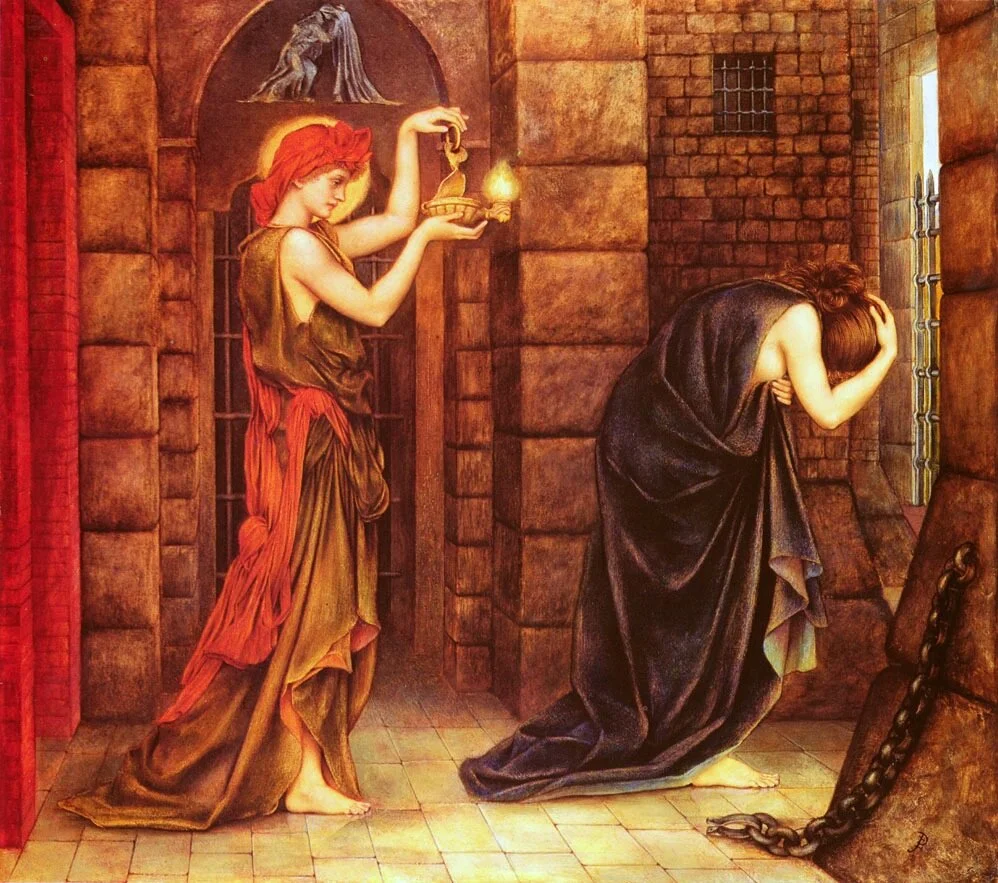
Evelyn De Morgan, Hope in the Prison of Despair

An honest couple do the best they can amid the squalor and vice of the slums.


William Gilbert (1804-1890), father of W.S. Gilbert (of Gilbert & Sullivan), wrote some twelve novels, many, like this one, about the London poor, whose miseries are narrated in a breezy, unsentimental tone, with much wry humor.

“In this story Mr. Gilbert never introduces ‘high life,’ nor people of the better class.  He reveals the mysteries of ‘London labour and the London poor’ in a low metropolitan neighbourhood, and all through the book we get no distinct peeps at any higher social condition.  To interest the general reader in such revelations requires great skill, pathos, and power.  Mr. Gilbert commands them all, and combines with them, in his writing, a deep, true knowledge of human motive and action. . . .  That Mr. Gilbert is a true artist we cannot but admit, for out of the simplest details of low life he produces characters whose very vividness enchains the attention.  He is amongst novelists a realist.  Neither imagination nor caricature influences his portraiture.  Men, women, and children are precisely what he sees them to be, and his vision is correct, his judgment true.”  Manchester Guardian, February 28, 1865

“‘De Profundis’ is an excellently written, unvarnished narrative. . . .  The style well becomes the subject—plain, earnest, unaffected, and with an admirable quaint simplicity of language in relating the most heart-rending details, which is more effective than the most studied artificial effects, as it is perhaps more rarely attained to. . . .  We have never read a story of humble life so well and unaffectedly told as this, and we recommend it as a wholesome contrast to the pictures of vulgar splendour and luxury under which our tables groan.”  Westminster Review, April, 1865

Download this week’s novel:

http://solo.bodleian.ox.ac.uk/permalink/f/89vilt/oxfaleph014418947
Novel 134: Eliza Lynn Linton, My Love! (1881)

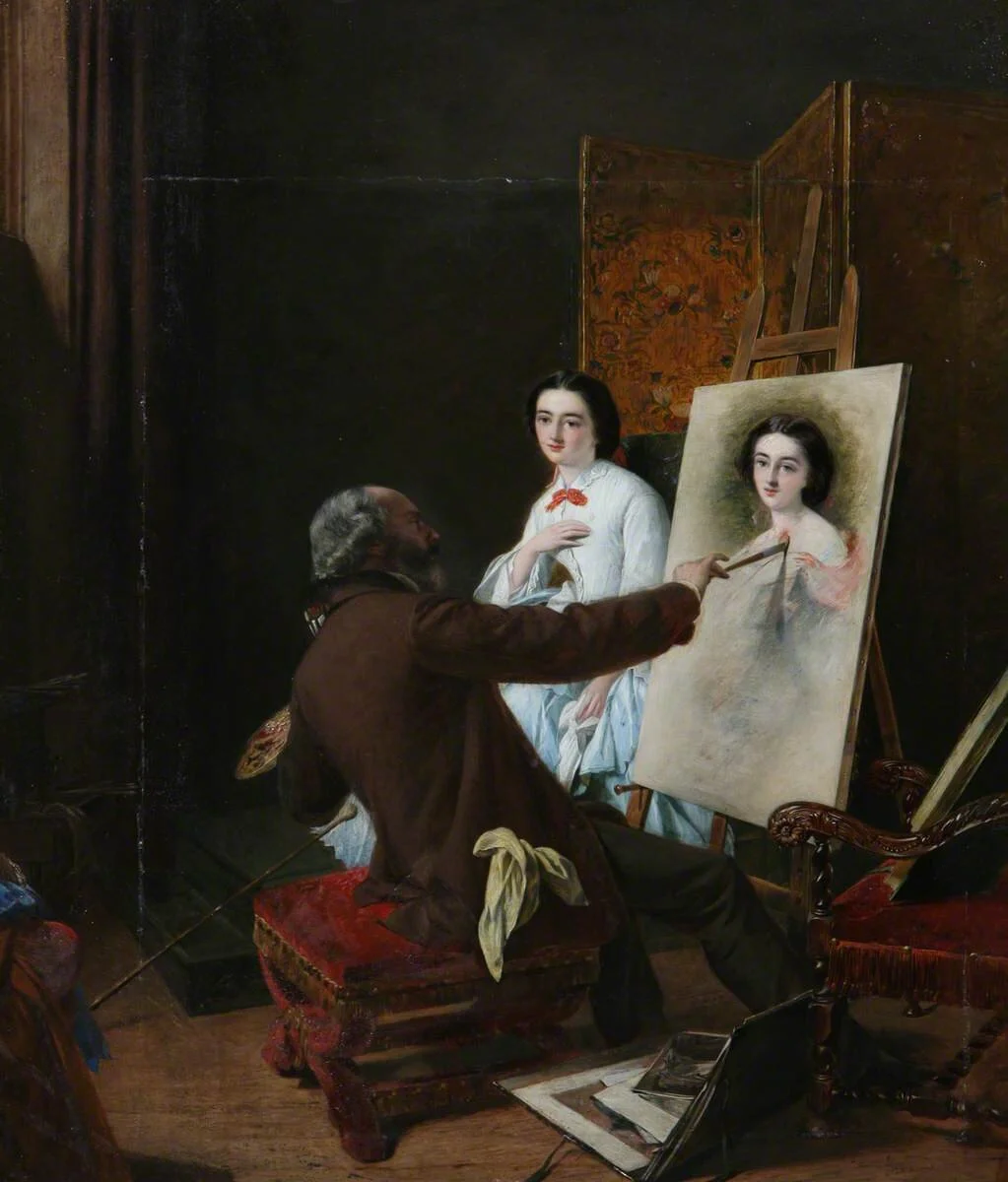
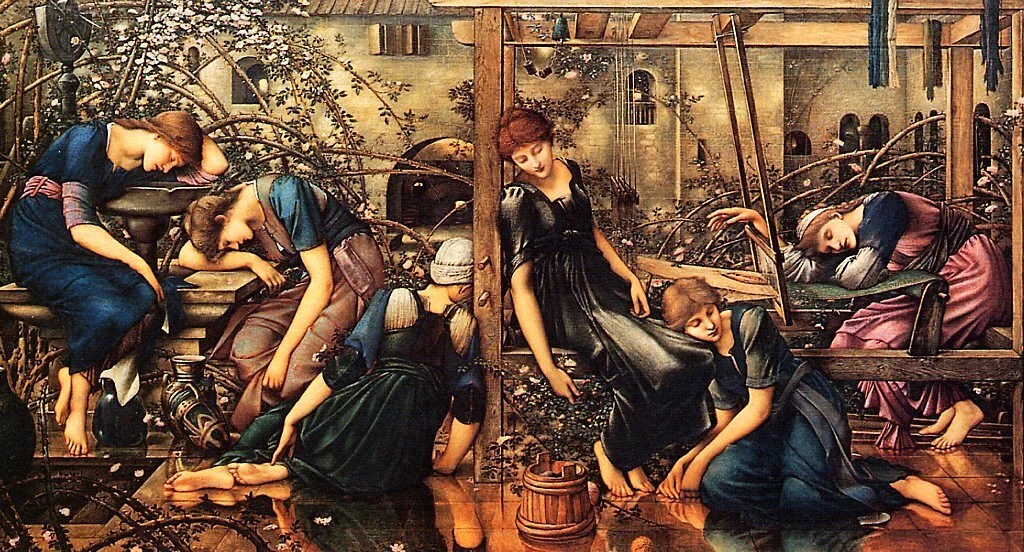
Henry Nelson O’Neil, Painting con Amore

A vain amateur artist-poet and an ill-tempered old lady oppress their young adult children.


Here is another novel by Linton (see Novel 044), with some especially entertaining minor characters, such as the thoroughly modern girl twins Gip and Pip.

“In ‘My Love!’ Mrs. Lynn Linton has devoted herself with much success to the portraiture of some of the baser passions, such as selfishness, meanness, hypocrisy, and ill temper.”  She “is brilliantly clever from first to last, and . . . there is not a dull page in her novel, though there are many that are disagreeable.  She writes brightly, vigorously, and eloquently; she is uncommonly painstaking and earnest; her dialogue is always apt and pointed; and many of her personages . . . are of singular merit and interest.  ‘My Love!’ in fact, is an unusually able and impressive book, its unattractive purpose notwithstanding.”  Athenaeum, July 9, 1881

“My Love is a readable and amusing love story. . . .  It is a tale of love, pure and simple, although the three or more love affairs which run parallel to each other are illustrated or encumbered by a multiplicity of episodes; while a great variety of characters, vigorously sketched, are brought together into active and energetic collaboration.  Mrs. Lynn Linton generally inclines to the grave; but in this novel she is often humorous, and sometimes sprightly, or even comic. . . . Altogether Mrs. Lynn Linton has written an agreeable story; and it is agreeable chiefly because . . . she has always taken some pains to show the more amiable side of her least amiable characters.”  Saturday Review, August 13, 1881

Download this week’s novel:

v.1 https://archive.org/details/mylove__01lint/

v.2 https://archive.org/details/mylove__02lint/

v.3 https://archive.org/details/mylove__03lint/

Crossword 133: Literal Stem-Winding

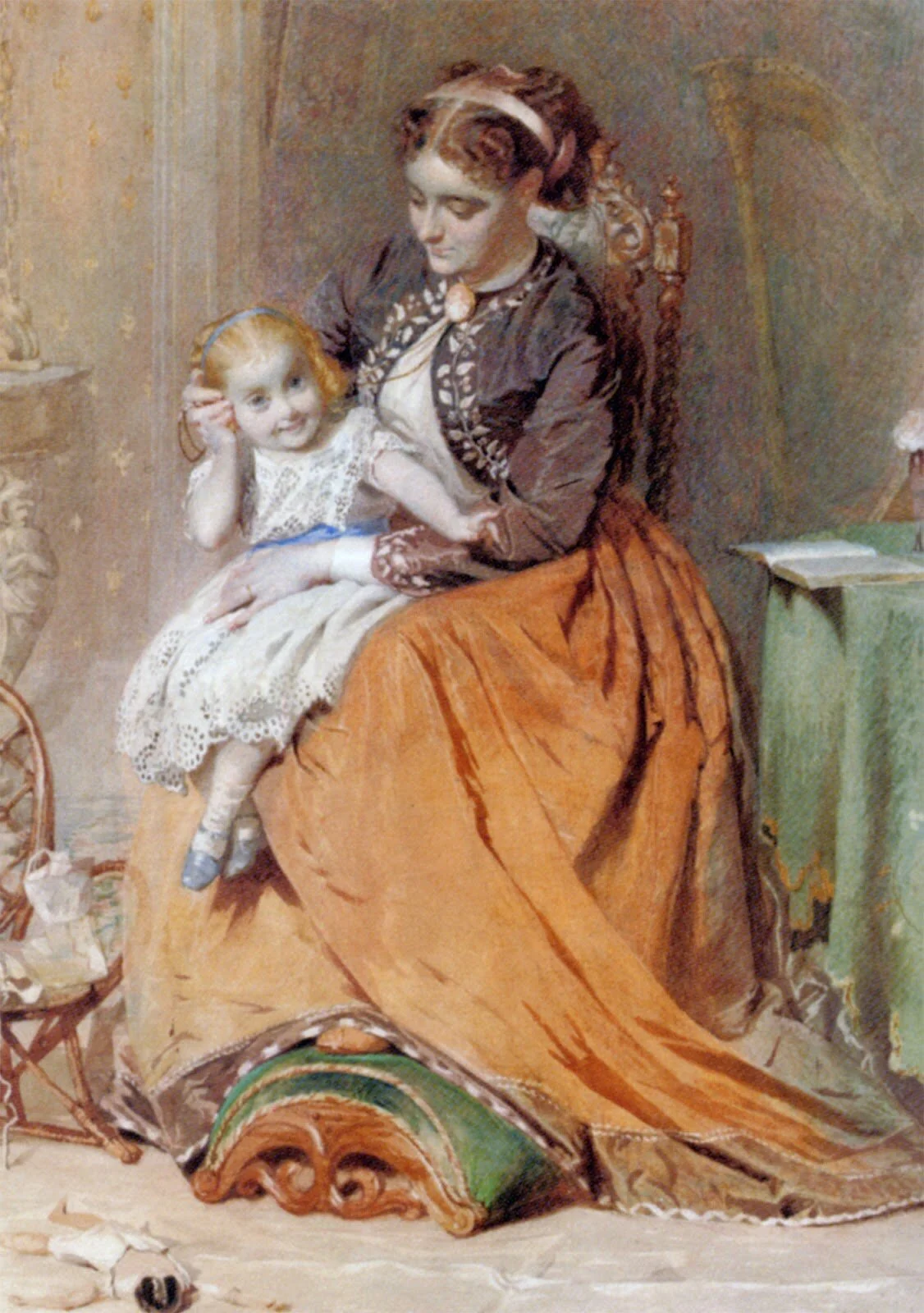
George Elgar Hicks, A girl listening to the ticking of a pocketwatch while sitting on her mother’s lap

As the attached note informs you, to appreciate this puzzle properly you must fill it entirely with lower-case letters, as though you were e.e. cummings.  I’m thinking of taking up the lower case myself and insisting that the world refer to me as “david alfred bywaters.”   The combination of apparent humility (no big letters for itty-bitty little me!) with actual ostentation (I’m not like everybody else!) should prove irresistible.


Download this week’s puzzle:

133-Literal-Stem-Winding.puz

133-Literal-Stem-Winding.pdf

Solve this week’s puzzle online:

133 Literal Stem-Winding

Novel 133: F.F. Montrésor, The Alien (1901)

John Atkinson Grimshaw, A Wet Road by Moonlight, Wharfedale

A mysterious man is claimed by an old woman as the son and heir who died thirty years before.


Frances Frederica Montrésor (1862-1934) wrote a dozen or so novels between 1895 and 1907.  This one has interestingly conflicted characters and (except for an incongruous South American episode) a good plot.

“Cleverly thought out, and full of sympathy and observance, it is a book suited to all kinds and sorts of people.  The interest . . . is never allowed to flag, while the quality of its character drawing gives it a delicate atmospheric beauty by no means common.” Academy, November 9, 1901

This “adds to the sincerity, simplicity, and insight marking her other stories a larger motive and a stronger grasp. . . .  There is a touch of Mrs. Oliphant in the quiet humor, in the detached view and appraisement of ‘the human,’ and in the enduring consciousness of eternal goodness.” New York Times, December 7, 1901

Download this week’s novel:

https://books.google.com/books?id=tZEOAAAAIAAJ&newbks=1&newbks_redir=0&dq=editions%3ASuMAqlVMJGIC&pg=PR3#v=onepage&q&f=false

Crossword 132: Crossed Words

Albert Joseph Moore, Waiting to Cross

Here’s another crossword title that would do for any crossword whatsoever.  It’s the second in a groundbreaking series I began with Crossword 113: “Can You Fill This Out?”   I’m planning several sequels, including “Numbered Clues with Corresponding Answers,” “Across and Down,” and “It's Puzzling!”  And all these titles are, of course, available for use with my blessing to novice constructors.  It’s my way of making a contribution to the common good.


Download this week’s crossword:

132-Crossed-Words.puz

132-Crossed-Words.pdf

Solve this weeks’s crossword online:

132 Crossed Words


Novel 132: Alice Price, A Wilful Young Woman (1886)

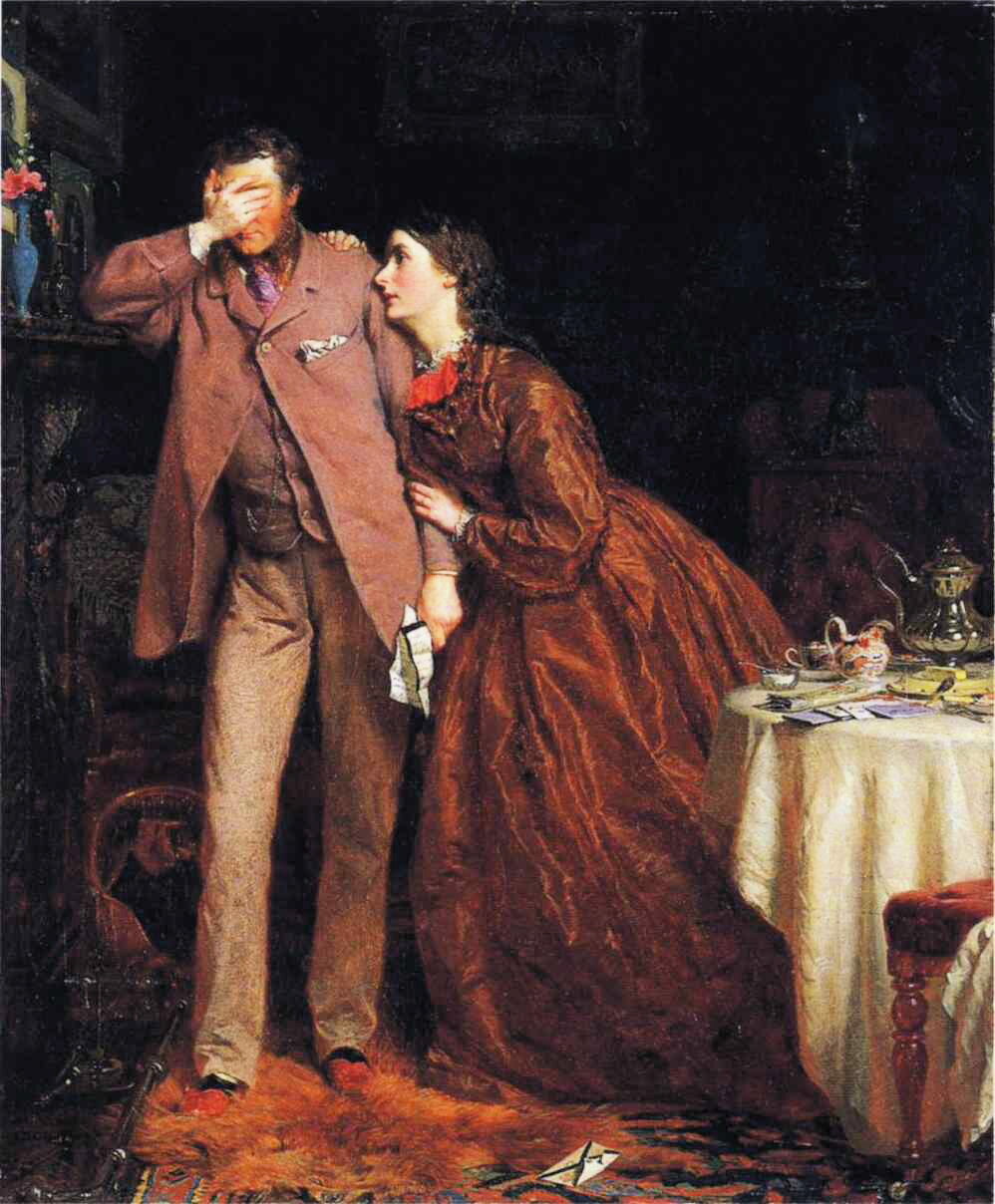
George Elgar Hicks, Woman’s Mission - Companion of Manhood

The virtuous daughter of a country lawyer is scorned by her selfish, worldly mother.


Here is another novel by Alice Price (see Novel 021), much like its predecessor in its engrossing but implausible plot and its well-defined characters.

“A very readable story. . . .  Mrs. Price has drawn her dramatis personae with some power and vigour, and nobody could possibly find this novel tedious.”  Academy, November 20, 1886

“This is an excellent tale, and shows by a conspicuous example, which some of our lady-novelists might profitably note, that it is quite possible to rouse a strong interest in a love-story without even an allusion to unlawful passion. . . .  There are, we think, defects in the plot. . . .   But, on the whole, for sound sense, good feeling and taste, and a style which can be both pathetic and humorous on occasion, this is a book which cannot easily be surpassed.”  Spectator, January 29, 1887

Download this week’s novel:

v.1 https://archive.org/details/wilfulyoungwoman01pric/

v.2 https://archive.org/details/wilfulyoungwoman02pric/

v.3 https://archive.org/details/wilfulyoungwoman03pric/

Crossword 131: Exchange Rate

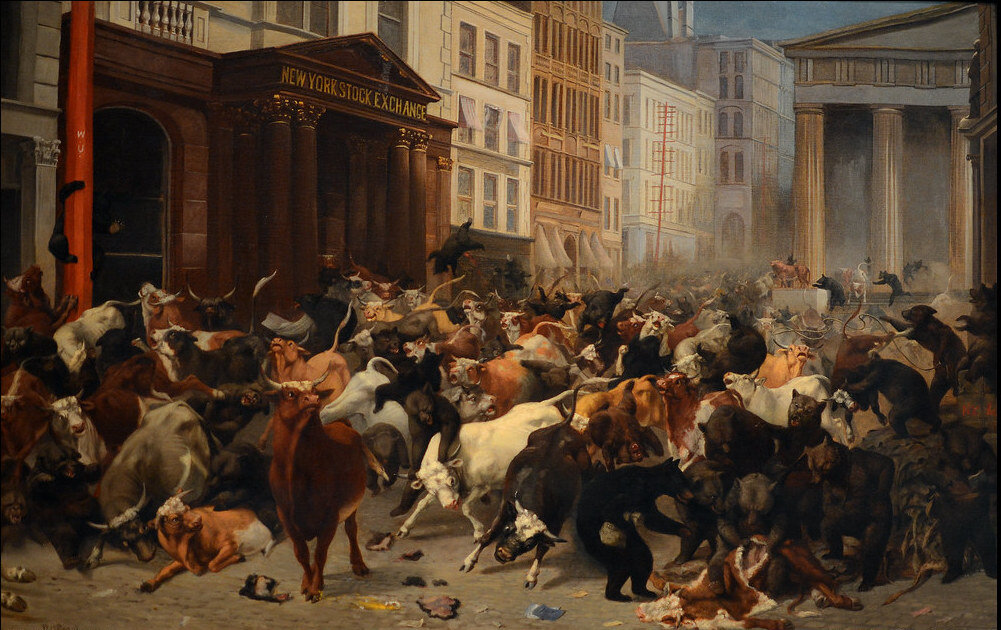
William Holbrook Beard, The Bulls and Bears in the Market

Bankers!  If a dollar is worth a ducat, and I have dollars and want ducats, and I give a banker 1,000, or 1,000,000, dollars, the banker gives me, maybe, 970, or 970,000 ducats, pocketing the odd 30, or 30,000.  And what has the banker done to earn 30,000 dollars, or even 30?  A dollar (or a ducat) or two might cover the banker’s costs—a little time, some storage expenses, some postage  maybe—but why this per-dollar assessment?

It’s a firm rule—one that some economist surely must have formalized somewhere—that in any system with money, the people who handle the money end up with the greatest share.  Business executives, college administrators, bankers—they pocket the cash, while others make the widgets, and teach the classes, and construct the crosswords.

If this troubles you sometimes, if you’re a crossword-solving banker with an uneasy conscience, why not see whether generous donations to crossword-making non-bankers doesn’t have a soothing effect?


Download this week’s crossword:

131-Exchange-Rate.puz

131-Exchange-Rate.pdf

Solve this week’s crossword online:

131 Exchange Rate

Novel 131: Anonymous, Hanworth (1858)

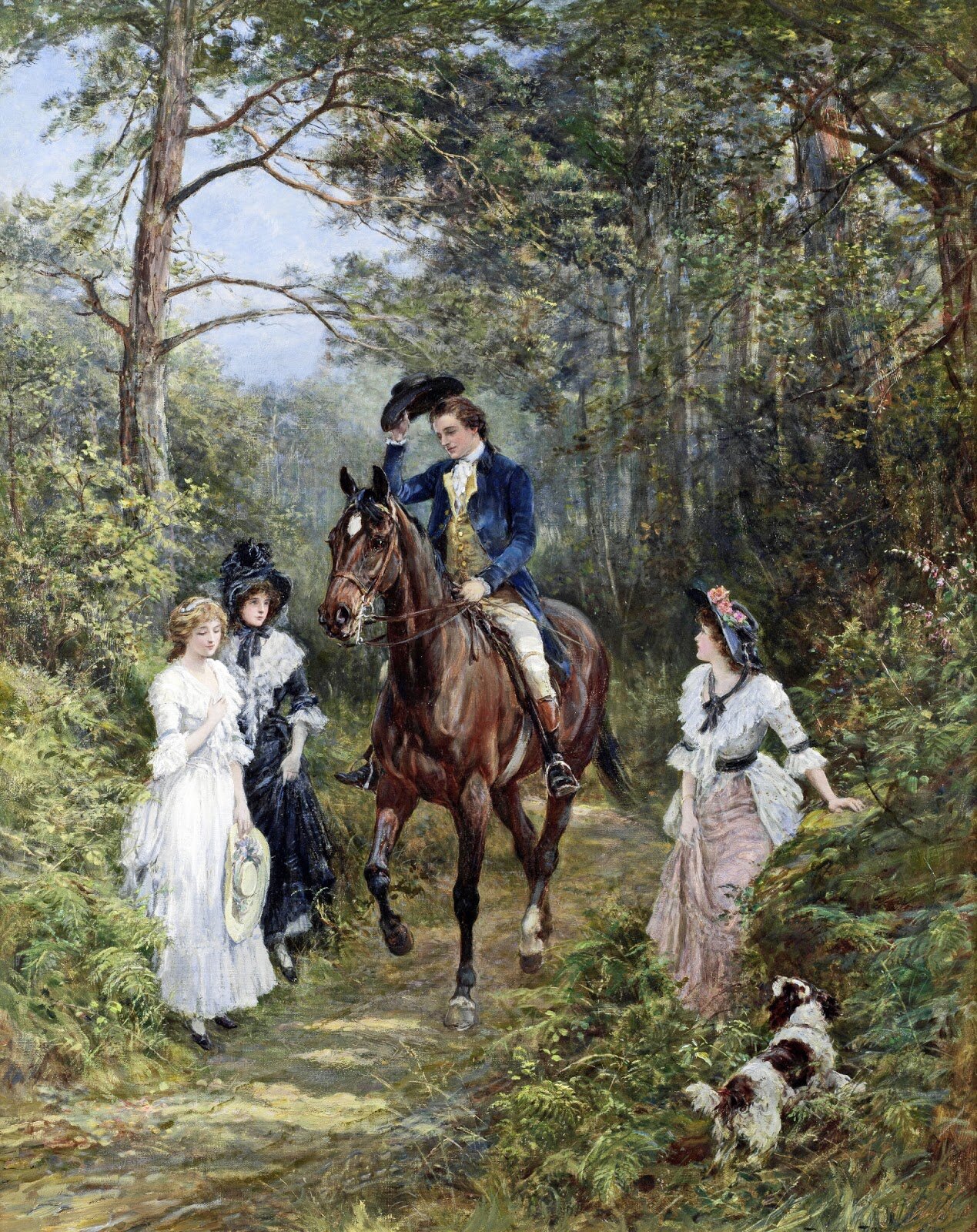
Heywood Hardy, The Meeting in the Forest

A young lady loves a nobleman, whose interest in her friend she misinterprets.


The author of this forgotten novel is identified neither in Fraser’s Magazine, where it was serialized, nor in its separate publication as a book—a pity, because it’s a good one.

“One of the best photographs of English society as it now exists.”  Illustrated Times, October 9, 1858

“It is a pleasant story of society, written with good taste and unquestionable skill.”  Examiner, December 25, 1858

“Unobjectionable pleasantness is a quality which carries books, as it does human beings, quietly and happily through the world, but it does not give room for much discussion. . . .  The girls are like real girls, but there is nothing marked about them.  The nobleman, who is a high-minded love-creating coquet, is not an impossibility.  There is no clever writing, no description of scenery, no boring of any sort. . . .  From beginning to end the story goes on quietly, evenly, and agreeably, showing a considerable power of observing family life, a subdued sense of the ludicrous, and an unusual turn for writing intelligible and consecutive English.”  Saturday Review, January 1, 1859

Download this week’s novel:

https://archive.org/details/hanworthorigpub00hanwgoog/

Crossword 130: Eat Your Vegetables!

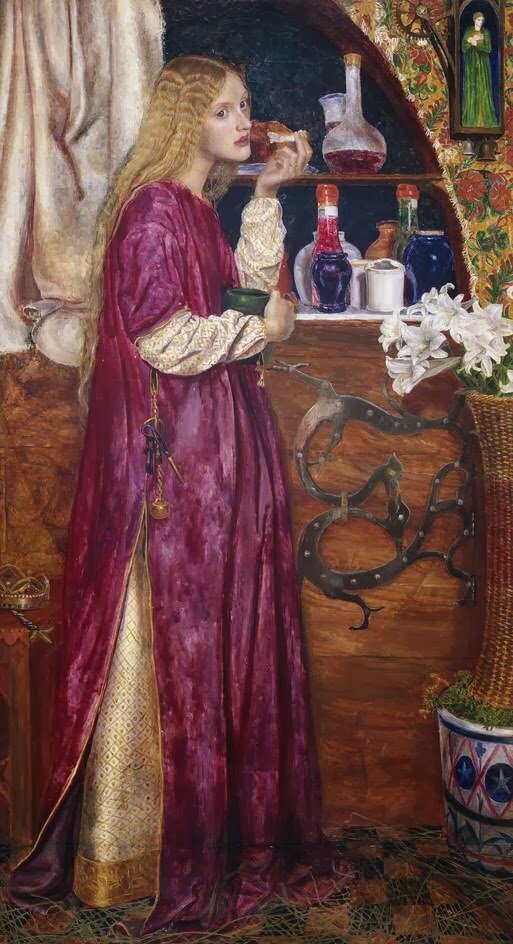
Valentine Cameron Prinsep, The Queen was in the Parlour, Eating Bread and Honey

Many of us more advanced constructors, in addition to expressing our special identities, prefer to exclude from our puzzles bad things (like the NRA) and to fill them instead with good things (like our favorite celebrities), with the purpose of causing solvers to transfer their support from the bad things to the good things.  When I started making crosswords, I didn’t know I had this power over solvers, and I let the odd bad thing slip in, usually for the purpose of making the grid easier to solve; but I’ve learned better—what solvers expect and deserve from me, I’ve come to realize, is not guessable content, but cultural uplift and moral correction.

Now I’m appalled at how many OREOs we constructors routinely allow into our grids, not to mention OLEO (long a source of trans fat), and PIE.  So this puzzle is meant as a corrective; it’s filled with foods that are not only healthy, but trendy too! Those solvers who regulate their diet by crossword answers (have you wondered why you’re eating more fish since solving Crossword 127?) will thank me, decades from now, in their heart-healthy hearts, when, before taking their daily five-mile jogs, they read the obituaries of their Oreo-gobbling, pie-stuffed peers.


Download this week’s crossword:

130-Eat-Your-Vegetables!.puz

130-Eat-Your-Vegetables!.pdf

Solve this week’s crossword online:

130 Eat Your Vegetables!

Novel 130: Robert Buchanan, Foxglove Manor (1884)

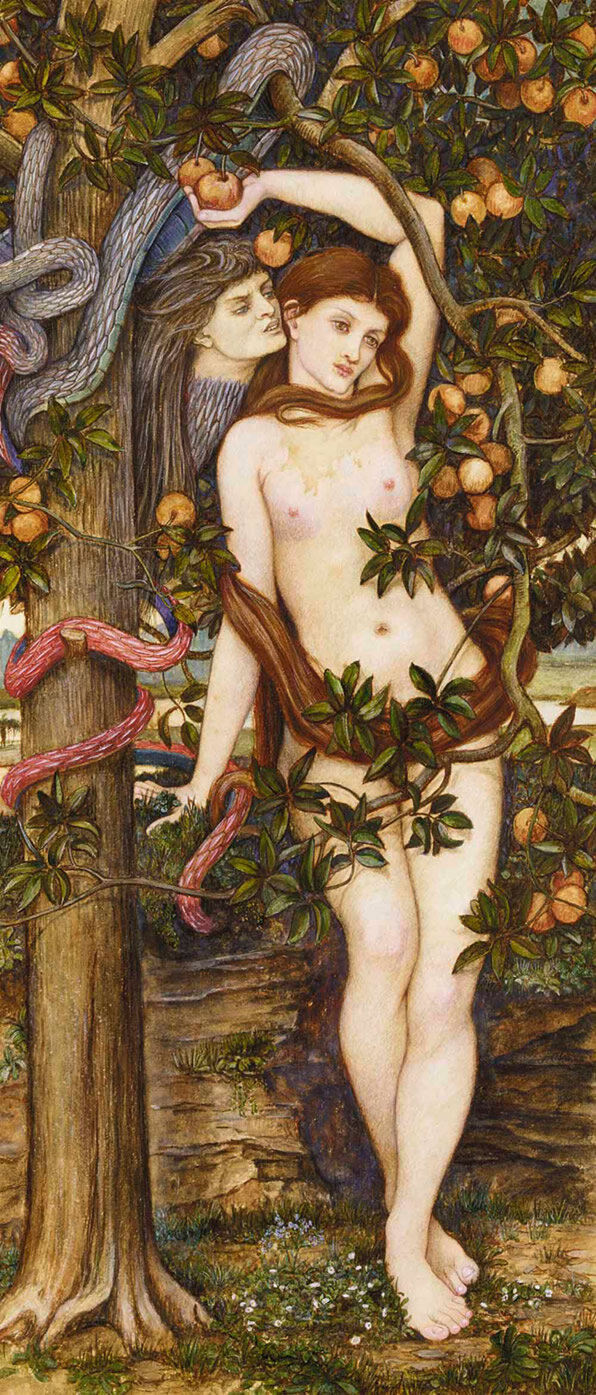
John Roddam Spencer Stanhope, The Temptation of Eve

A charismatic clergyman loves an agnostic squire’s wife.


Well known also as a poet, playwright, and critic, Robert Buchanan (1841-1901) published nearly 30 works of fiction, mostly in the last twenty years of the century. Despite some very silly plot twists at the end, this one provides a convincing portrait of self-deception and depravity.

“A very powerful study.  Mr. Buchanan has firmly grasped the character of a man of a sensuous and even refined imagination, but without moral fibre. . . .  He has drawn the central figure with consummate skill, and told his story with great vigour, directness, and rapidity of narration.” Athenaeum, September 13, 1884

“As a study of morbid anatomy it reaches the highest level to which work of that kind can possibly attain.  From a dramatic point of view there is genius” in the handling of our reaction to the main character.  Graphic, October 4, 1884

“It touches on that mysterious region in which the love of men to God is seen to have a deep and hidden connection with the mutual love of man and woman; and if we cannot pay it what would be the immense tribute of saying that it deals adequately with such a subject, we may at least declare that the attempt is marked by power and by a profound pathos, and associated with nothing unworthy.”  Contemporary Review, 1884

Download this week’s novel:

v.1 https://archive.org/details/foxglovemanornov01buchuoft/

v.2 https://archive.org/details/foxglovemanornov02buchuoft

v.3 https://archive.org/details/foxglovemanornov03buchuoft

Crossword 129: Self-Centered

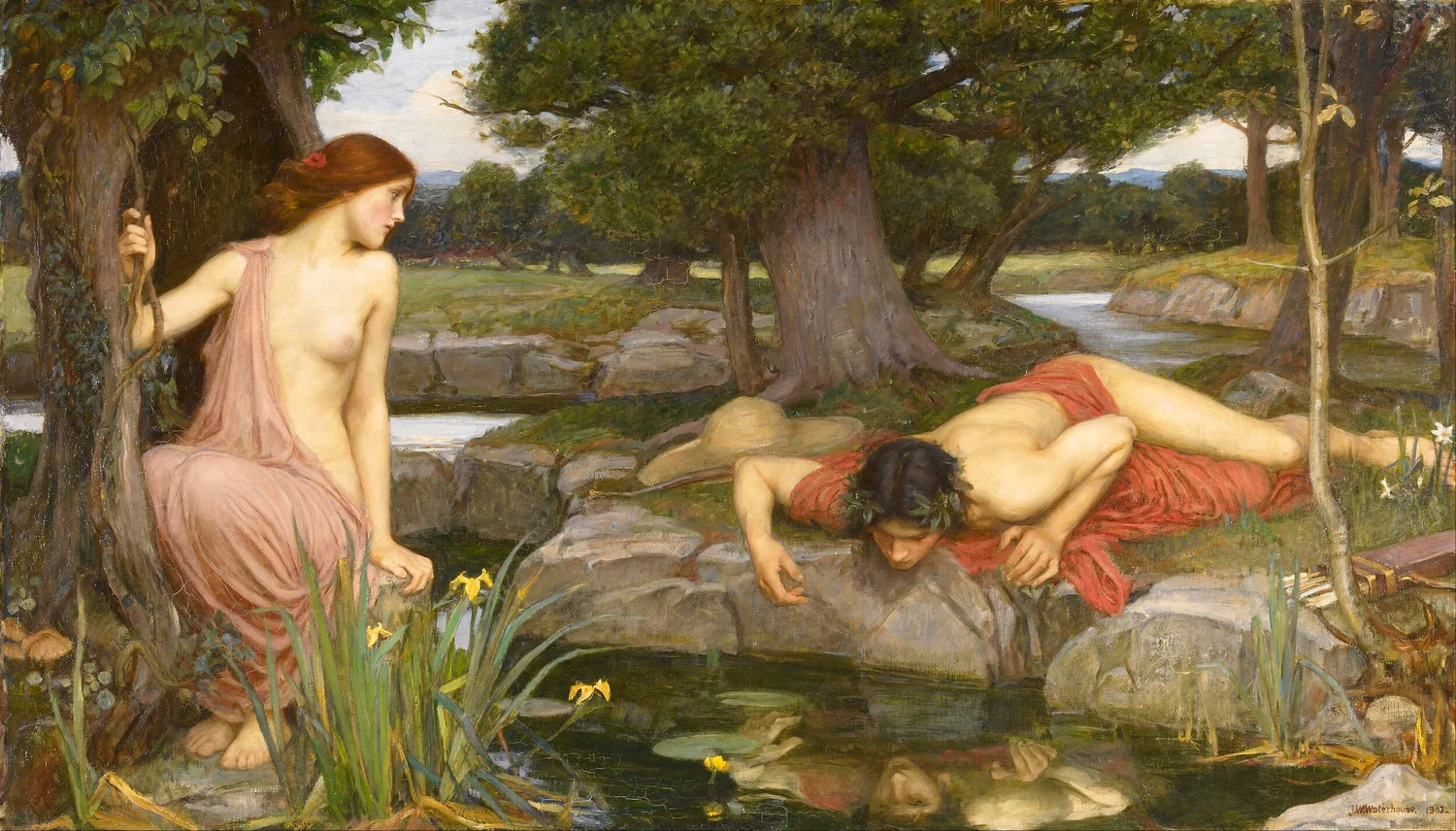
John Waterhouse, Echo and Narcissus

I’ve had it with the New York Times crossword! Also with the Wall Street Journal crossword, and the LA Times, and Universal, and all the independent little web-site crosswords, and in fact everybody’s crosswords but my own!

Why? I find that other people’s crosswords show a troubling disregard for my tastes, and preferences, and interests, and opinions, and areas of expertise. And this, I suspect, is because these crosswords are made by people other than me—or, if made by me, yet edited by people other than me.

So what’s to be done?  I thought of writing an article, or even a daily blog, scolding these various crossword purveyors for their non-me-friendly content.  But then I hit on a simpler solution: from now on, I’ll just do my own crosswords and nobody else’s.  And I recommend that you, gentle solver, take the same principled course:  give up those other crosswords and just do mine; cancel your crossword subscriptions and donate the money to me.  Me.


Download this week’s crossword:

129-Self-Centered.puz

129-Self-Centered.pdf

Solve this week’s crossword online:

129 Self Centered

Novel 129: Bithia Mary Croker, A Family Likeness (1892)

William Daniell, Scene in the Himalayas

In England, a man falls in love with a girl in an old picture, then meets her likeness in an obscure Indian town.


For Croker, see Novel 013 and Novel 073.  Like the latter, this has a vivid Indian setting (“A Sketch in the Himalayas” is its subtitle).

“A cheerful temper is better than much gold, and it is far more contagious.  Such is the thought suggested by the perusal of A Family Likeness. . . .  Mrs. Croker has a style all her own, and has studied her India with map and compass.”  The plot “is as clever in its entanglements as is the prose which narrates it in breezy grace.”  Lippincott’s Monthly Magazine, December 1892

“As a chronicler of Anglo-Indian life, Mrs. Croker occupies a position by herself.  She has her limits, but within these limits rarely fails to achieve success. . . .  It is not that she seeks to extenuate the shortcomings of Anglo-Indian society, but rather that she seems to be constitutionally impelled to look on its brighter side. . . .  Furthermore, she writes most sympathetically of the natives, and with a keen sense of the glories of the Indian landscape.”  Spectator, December 10, 1892

“A Family Likeness is in every way a likeable book, strong in character and incident, brisk in narrative, and not lacking in pleasant humour.”  Academy, December 24, 1892

Download this week’s novel:

v.1 http://access.bl.uk/item/viewer/ark:/81055/vdc_00000004CA82#?c=0&m=0&s=0&cv=8&xywh=-397%2C0%2C3258%2C1960

v.2 http://access.bl.uk/item/viewer/ark:/81055/vdc_00000004CA88#?c=0&m=0&s=0&cv=8&xywh=-613%2C-115%2C3493%2C2102

v.3 https://books.google.com/books?id=whk3AQAAMAAJ&pg=PP9#v=onepage&q&f=false

Crossword 128: Midwestern Adaptations of Classic Novels

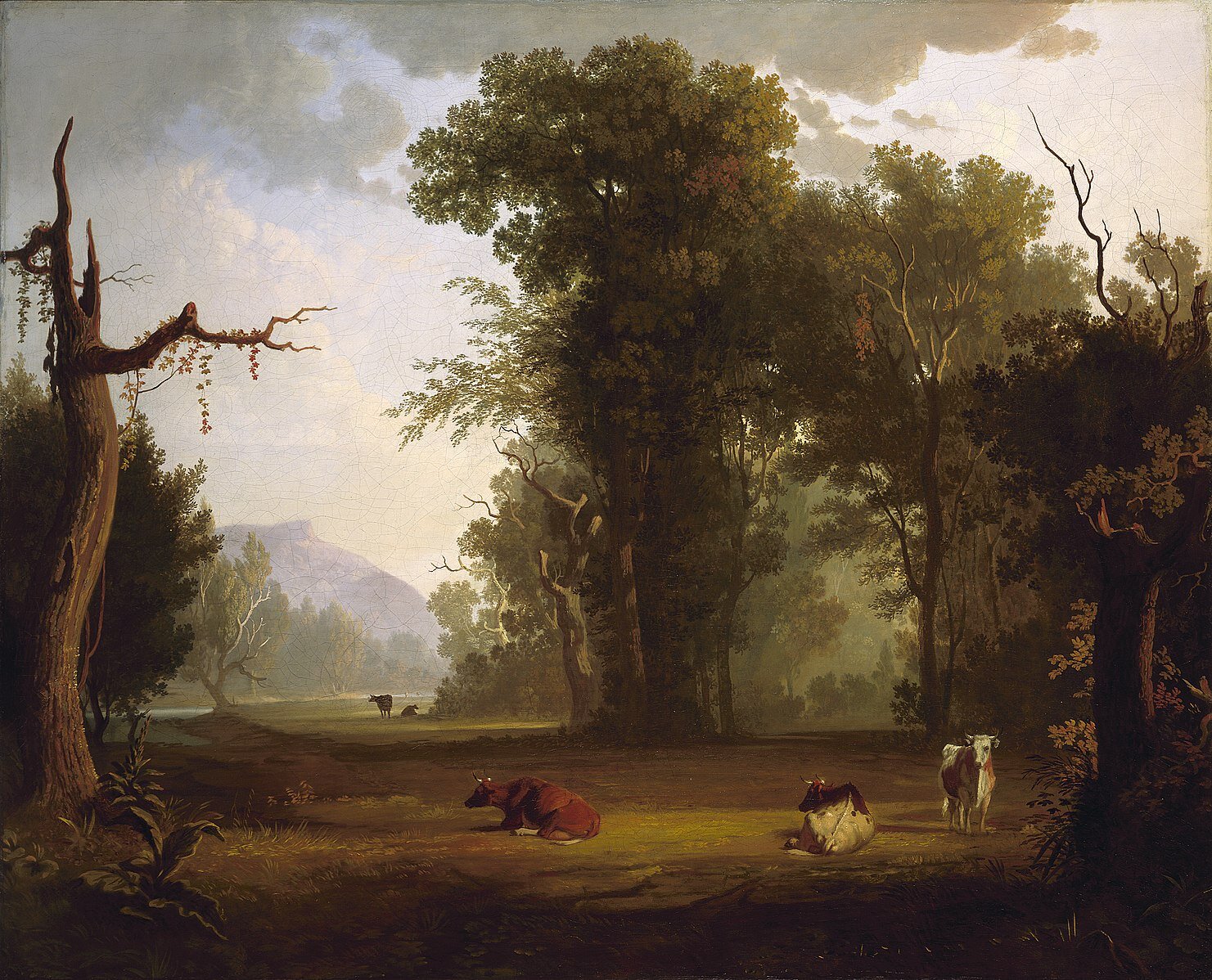
George Caleb Bingham, Landscape with Cattle

When I started making crosswords, I tried to base them on knowledge and experience widely shared by potential solvers. But lately, influenced by trendsetters in the field, I’ve come to understand that my purpose ought rather to be to explore and celebrate myself, my own inner and essential identity.   Now I wish that self were more—I don’t know—trendy, I guess—but what can I do?  I was born this way.

Today’s puzzle, then, is a heartfelt expression of my self—as a reader of novels and a sometime resident of various Midwestern states. If you prefer short stories and come from the South, or poetry and live on the coast, well, too bad.  Go make your own crossword.


Download this week’s crossword:

128-Midwestern-Adaptations-of-Classic Novels.puz

128-Midwestern-Adaptations-of-Classic Novels.pdf

Solve this week’s crossword online:

128 Midwestern Adaptations of Classic Novels

Novel 128: Jean Ingelow, Allerton and Dreux (1851)

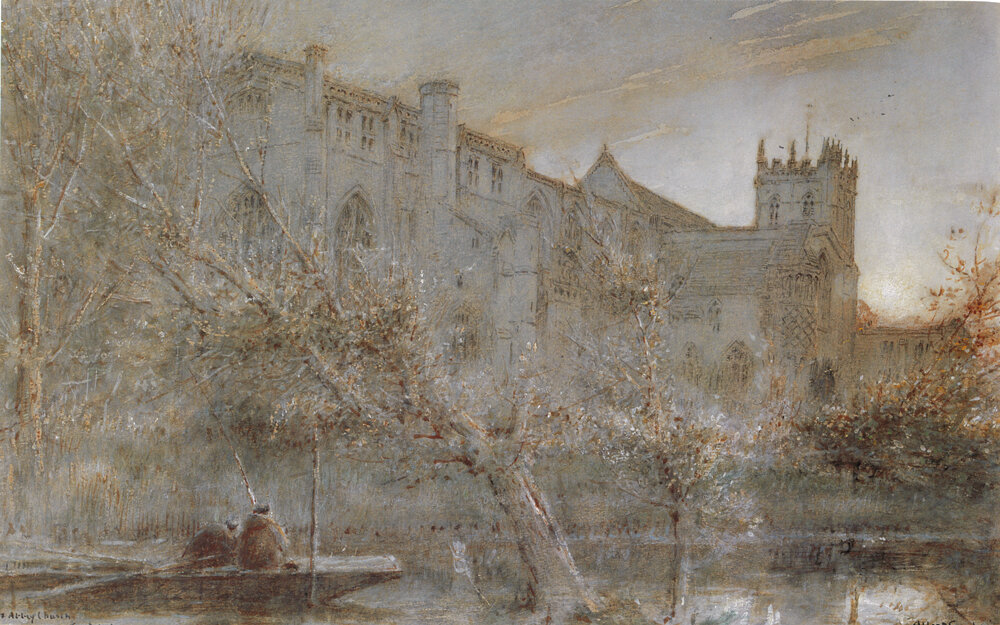
Albert Goodwin, The Abbey Church, Christchurch

Two clergymen, differing in doctrine, become friends.


Jean Ingelow (1820-1897), best known as a poet, wrote a number of short stories and some half a dozen novels.  This, her first, makes up for its rambling, impossible plot with subtle characterization and a polished style.

“Allerton and Dreux . . . has not a little surprised us by the ability manifested in the conception and in the delineation of character.  The author possesses also a considerable fund of humour, which flows from him [sic: the novel was published anonymously] without an effort.” Critic, February 2, 1852

“The story . . . is delightfully told; and, as a religious tale, we have seldom met with one which is throughout more ably written and well sustained.  The dialogue is pointed and lively, and the descriptive parts are extremely good.” English Review, July 1852

Download this week’s novel:

http://solo.bodleian.ox.ac.uk/permalink/f/89vilt/oxfaleph014103993

Crossword 127: There's Something Fishy in Here!

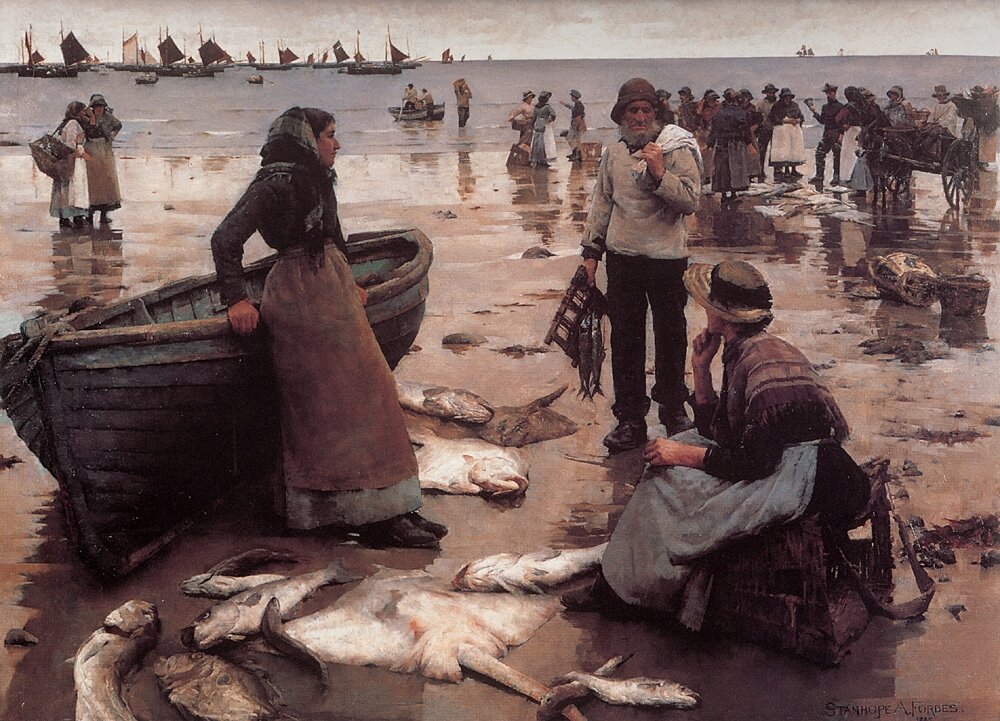
Stanhope Alexander Forbes, A Fish Sale on a Cornish Beach

It has lately come to my attention that the New York Times, despite its prominence as a publisher of crosswords, has published troublingly few crosswords by me—that is, crosswords with themes devised, grids constructed and filled, and clues written by me, in return for which sums of money are paid to me.

I don’t know why this is; I strongly suspect that the editor (who will go unnamed here) has something to do with it.  Anyway, it’s time to take action!  I hereby swear that, until the New York Times publishes another crossword by me, I will not publish another crossword in the New York Times!


Download this week’s crossword:

127-There’s-Something-Fishy-In-Here!.puz

127-There’s-Something-Fishy-In-Here!.pdf

Solve this week’s crossword online:

127 There’s Something Fishy in Here!

Novel 127: David Christie Murray, Val Strange (1882)

Sir William Quiller Orchardson, The Rivals

A man and his best friend love the same woman.


Here is another extravagantly-plotted novel by David Christie Murray (see Novels 009, 068). In addition to the title character, his rival, and his beloved, it features a poor American seeking work in England.  An English critic finds in this character “that great and increasingly rare charm of freshness”; he “would suffice to redeem from insignificance even a book otherwise not noteworthy” (Academy, December 2, 1882).   An American critic condemns him as “the exaggerated Yankee of the stage.” (Independent, March 1, 1883).  You decide.

“A novel of rare merit, showing very considerable mastery of character, with unusual care of construction. . . .  Without ever stooping to be grotesquely sensational,” the author “freely rings all the changes in the passions of love and jealousy, cupidity, despair, and revenge.”  Times, February 8, 1883

“No one who reads the first hundred pages of this novel can for a moment doubt that their writer is a man of strong powers of observation and considerable grasp of character.” British Quarterly, March, 1883

Download this week’s novel:

https://books.google.com/books?id=1XDoxQEACAAJ&dq=1889+christie+murray&hl=en&newbks=1&newbks_redir=0&sa=X&ved=2ahUKEwiJtPuynf_mAhWRl-AKHeouDLIQ6AEwAXoECAkQAQ

Crossword 126: Why? Because I Said So!

Sir William Quiller Orchardson, Four Generations- Queen Victoria and Her Descendants

I want to thank Ralph Bunker for suggesting the title of this puzzle.  It was originally called “Generation Y,” and was inspired, like so many of my puzzles, by petty annoyance.  Is there any journalistic habit more painfully dimwitted than that of attributing essential characteristics to demographic groups?  Baby Boomers do this, and Millennials do that, etc., etc.—and the point is usually that they’re all a bunch of fools, unlike us; or that we’re good people, unlike them.

However, the practice of attributing difficult-to-cross letters to these groups has been a great boon to cruciverbalists.  Where would we be without Xers and GenX?  It’s another instance of what Leibniz, Pope, Voltaire’s Dr. Pangloss, and other such thinkers long ago discovered:  that underlying all the apparent evil of this best of all possible worlds is real, often unsuspected, good.


Download this week’s crossword:

126 Why?-Because-I-Said So!.puz

126 Why?-Because-I-Said So!.pdf

Solve this week’s crossword online:

126 Why?  Because I Said So!

Novel 126: Ellen Pickering, The Quiet Husband (1840)

Thomas Phillips, William Blathwayt IV and His Wife, Frances Scott

A virtuous young lady, raised in luxury but suddenly orphaned and poor, is taken in by her mother’s former lover.


Ellen Pickering (1802-1843) wrote some sixteen novels before her early death.  If you don’t allow yourself to be annoyed by the plot here (especially the tediously mysterious lovers’ misunderstanding), you’ll enjoy the various carefully developed characters placed in striking situations.

“The quick eye and clear intellect to observe, and the ready pen to convey to others in a pleasant manner the impressions received, are the gifts of which Miss Pickering makes such good use.” Literary Gazette, June 6, 1840

“While we object to the story as being rather too improbable, to the dénouement as occurring merely at the author’s arbitrary pleasure, . . . we . . . pronounce the story . . . to be one that rivets the attention; serving also as the vehicle of numberless happy sketches as well as pointed and telling truths.  The lady has an admirable knack at dove-tailing just reflections in the progress of the narrative, and perhaps still more artlessly, to appearance, in the course of close and rapid dialogue.  With what a keen eye does she mark, if not a very wide world of life, at least distinct and important segments in its circle! with what a delicate hand does she delineate character!”  Monthly Review, July, 1840

Download this week’s novel:

http://solo.bodleian.ox.ac.uk/permalink/f/89vilt/oxfaleph014559115

Crossword 125: E Emotion

Walter Langley, Silent Sorrow

Here’s another crossword which, though made like all my crosswords to endure forever, is nonetheless at the same time keenly focused on the present moment.  A few weeks ago I made a puzzle on the topic of the general retreat (by those who can afford it) from the pandemic onto the internet; now here’s another, on that trend’s darker emotional consequences.

Are you indignant at the obscurity of this crossword’s base phrases?  at the randomness of its substitutions?  Are you tempted to compose an angry complaint?  There’s no need!  This crossword includes within itself its own outraged response!  The 15 letters involved in its substitutions (either as replacing or replaced) can be anagrammatically rearranged into the terse but telling phrase, “Hate E Emotion Gag!”


Download this week’s crossword:

125-E-Emotion.puz

125-E-Emotion.pdf

Solve this week’s crossword online:

125 E Emotion