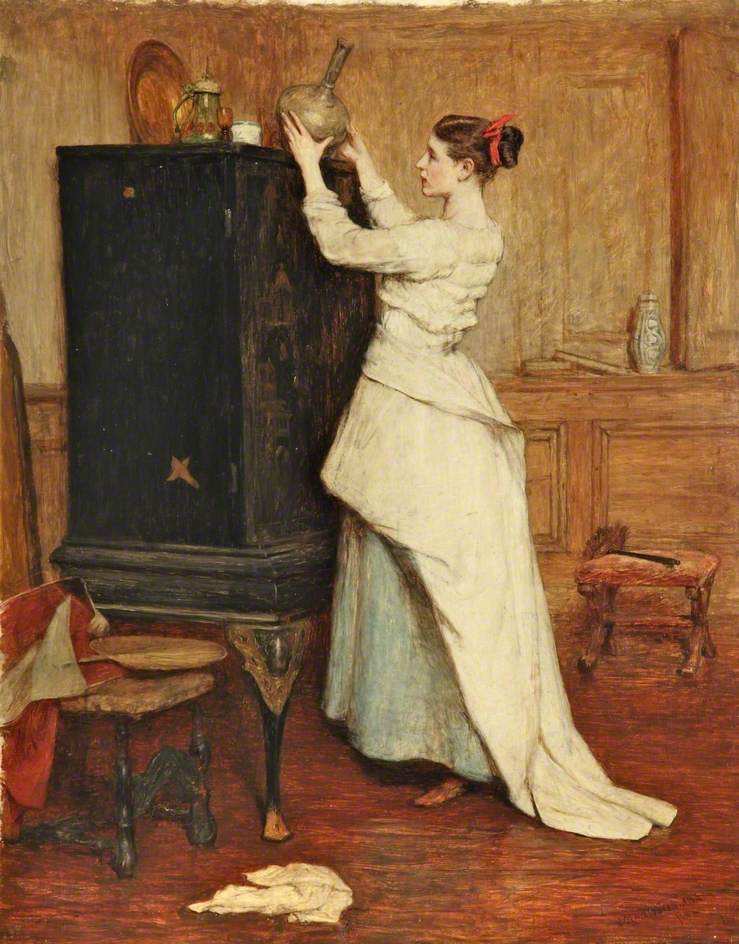
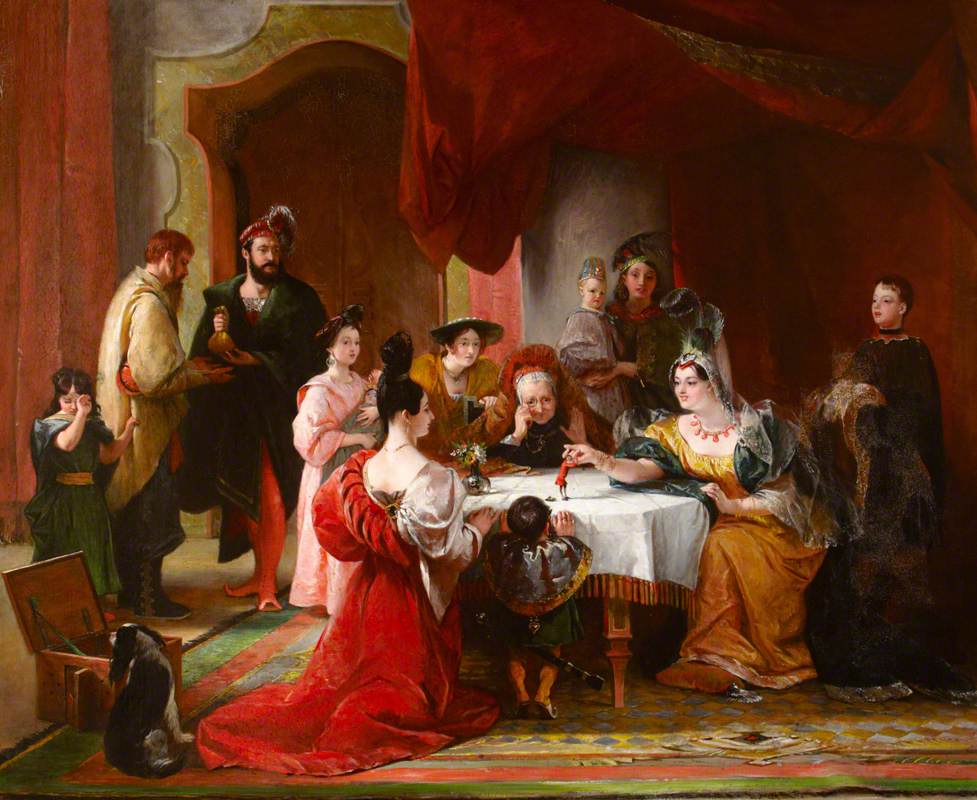
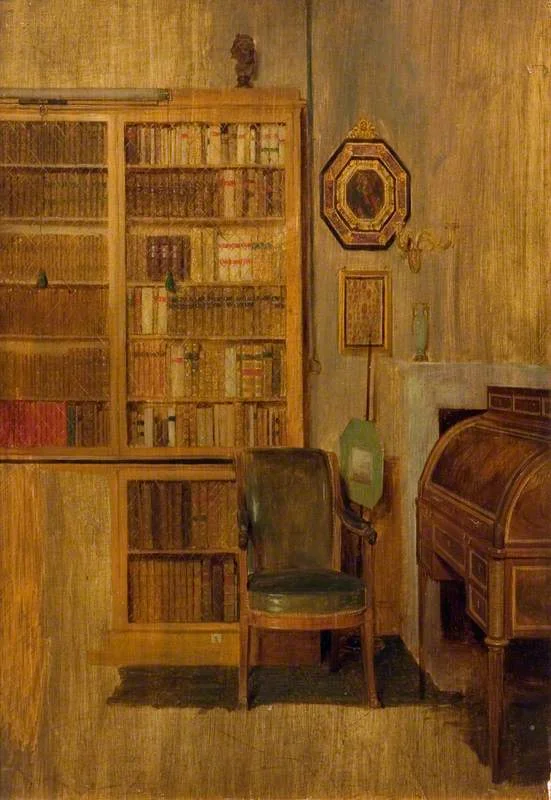
Sir William Quiller Orchardson, The Chinese Cabinet
An orphaned gentlewoman is married and then neglected by her hard-working chemist husband.
Charlotte Elizabeth Riddell (1832-1906) wrote over fifty works of fiction between 1856 and 1900, often set, like this one, among middle-class denizens of London.
“A well-conceived, well-wrought-out story, which has an air of human truth and reality about it which novels do not often possess.” Athenaeum, March 17, 1860.
“A thoroughly good novel” distinguished by “its downright reality”; practical scientists in charge of factories are brought “living before us, in very flesh and blood, not a blotch or stain overlooked.” Spectator, March 31, 1860
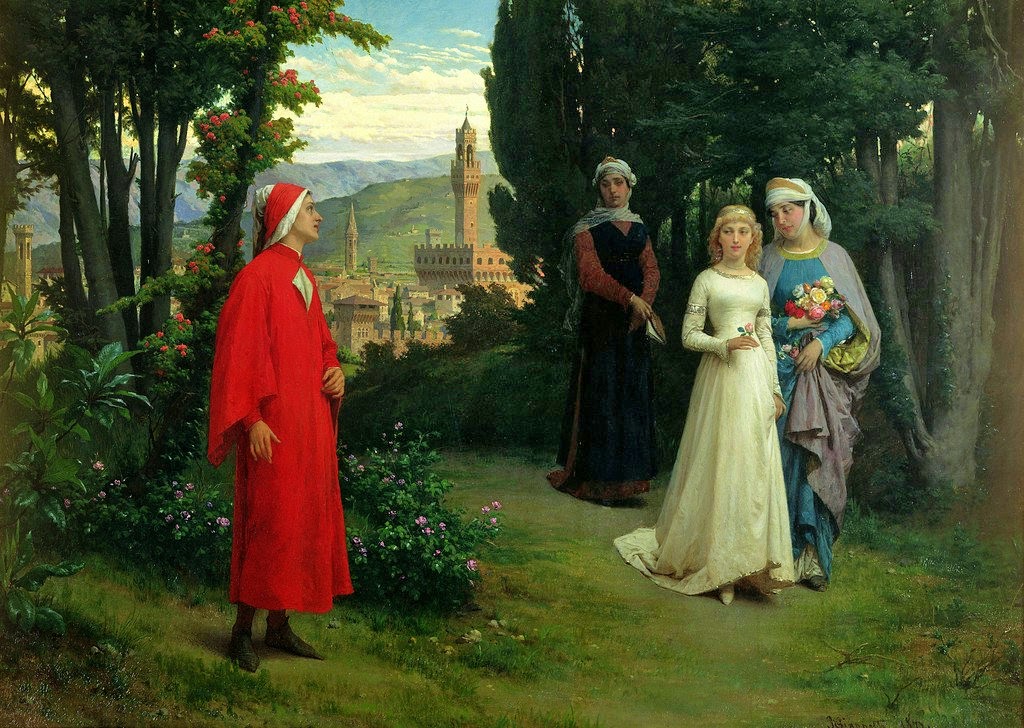
Henry Holiday, First Meeting of Dante and Beatrice
A crossword puzzle, says Aristotle, or Coleridge, or somebody, should create its own alternative world, one in which, though people may not behave as expected, they nonetheless follow an internal logic of their own. I have tried, in my humble way, to obey these strictures, nowhere more than in this present offering.
To test her relatives, an heiress switches identities with her companion.
Anna Harriet Drury (1824-1912) wrote some 16 novels between 1849 and 1891. This one, despite intermittent downpours of religiosity, provides some excellent social comedy.
“It is at once amusing and instructive, genial and healthful. . . . Miss Drury’s style is peculiarly correct and elegant. She writes, indeed, simple, honest, unaffected English, quite refreshing after the artificial semi-barbarous Teutonic gibberish of the day. . . . Miss Drury . . . has a natural dramatic faculty—the power of entering into the feelings of others, and speaking in their persons.” English Review, March 1849
“Her perceptions are lively and keen, and her powers of delineating manners and character might well be compared with those of authors ‘of mark and likelihood.’ Her style is racy, animated, and easy, often pointed and epigrammatic. . . . The story is told in a pleasant and genial spirit; and although pervaded . . . by an earnest religious tone, it is so far from being bilious or melancholic that many a hearty laugh is to be enjoyed at the strokes of humour scattered through its lively pages. If Miss Drury is a serious thinker, . . . she has also a relish for a joke, and a keen perception of the ludicrous.” Morning Chronicle, April 14, 1849
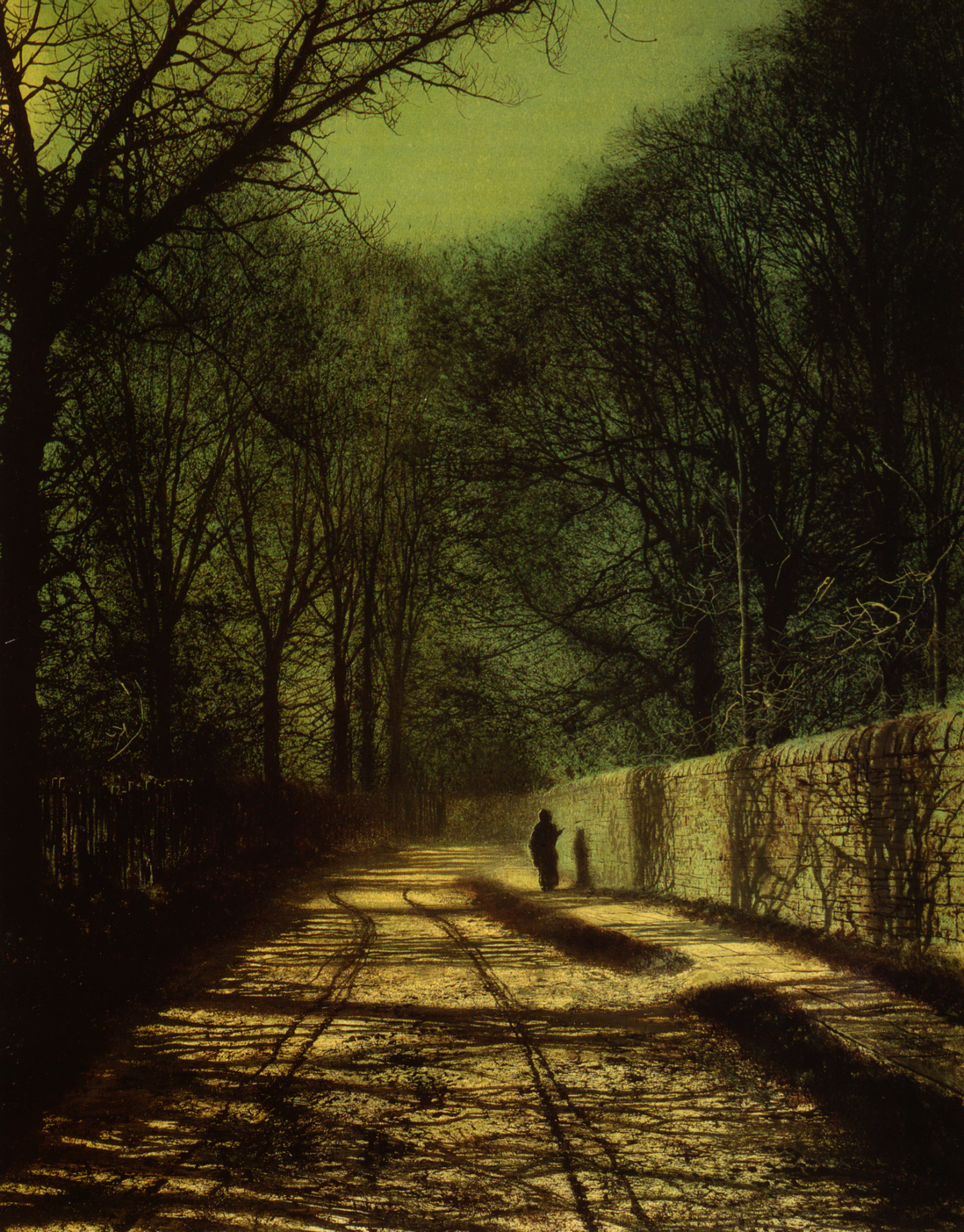
Atkinson Grimshaw, Tree Shadows on the Park Wall, Roundhay Park, Leeds
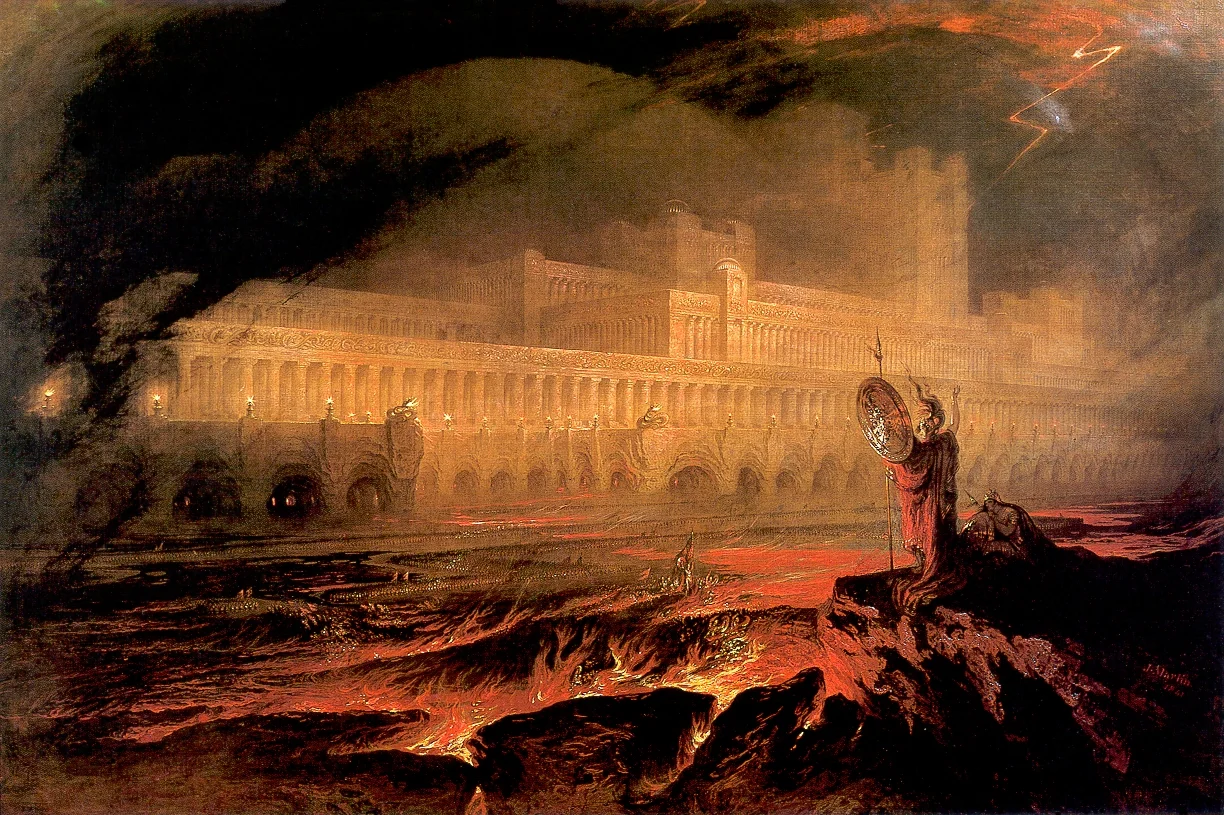
Today, in Connecticut, will be held the Westport Library Crossword Tournament— where, frightened of my shadow, I will not appear. But, through the kind offices of “Bob Kerfuffle” (who also thought up its title) the attached puzzle will appear there, in paper form, and I welcome anyone led here by that means. I couldn’t find any paintings of groundhogs, but I’ve posted a nice one of some shadows. Imagine yourself as seeing them from a groundhog’s point of view.
An aristocratic officer, threatened with disinheritance unless he marries well, is attracted to a mysterious girl.
Here is another, shorter novel by Mrs. Alexander (See Novel001), with an easily guessable but entertaining plot and an interestingly complex heroine.
“In spite of the plot being . . . commonplace, the story runs well in the artistic hands of the author; the characters are definite, the heroine charming, and the result agreeable to the reader.” Athenaeum, April 3, 1875
“The characters . . . are well sketched”; “the story, though slight, is . . . one which from its brightness and play of fancy is sure to please.” Morning Post, June 4, 1875
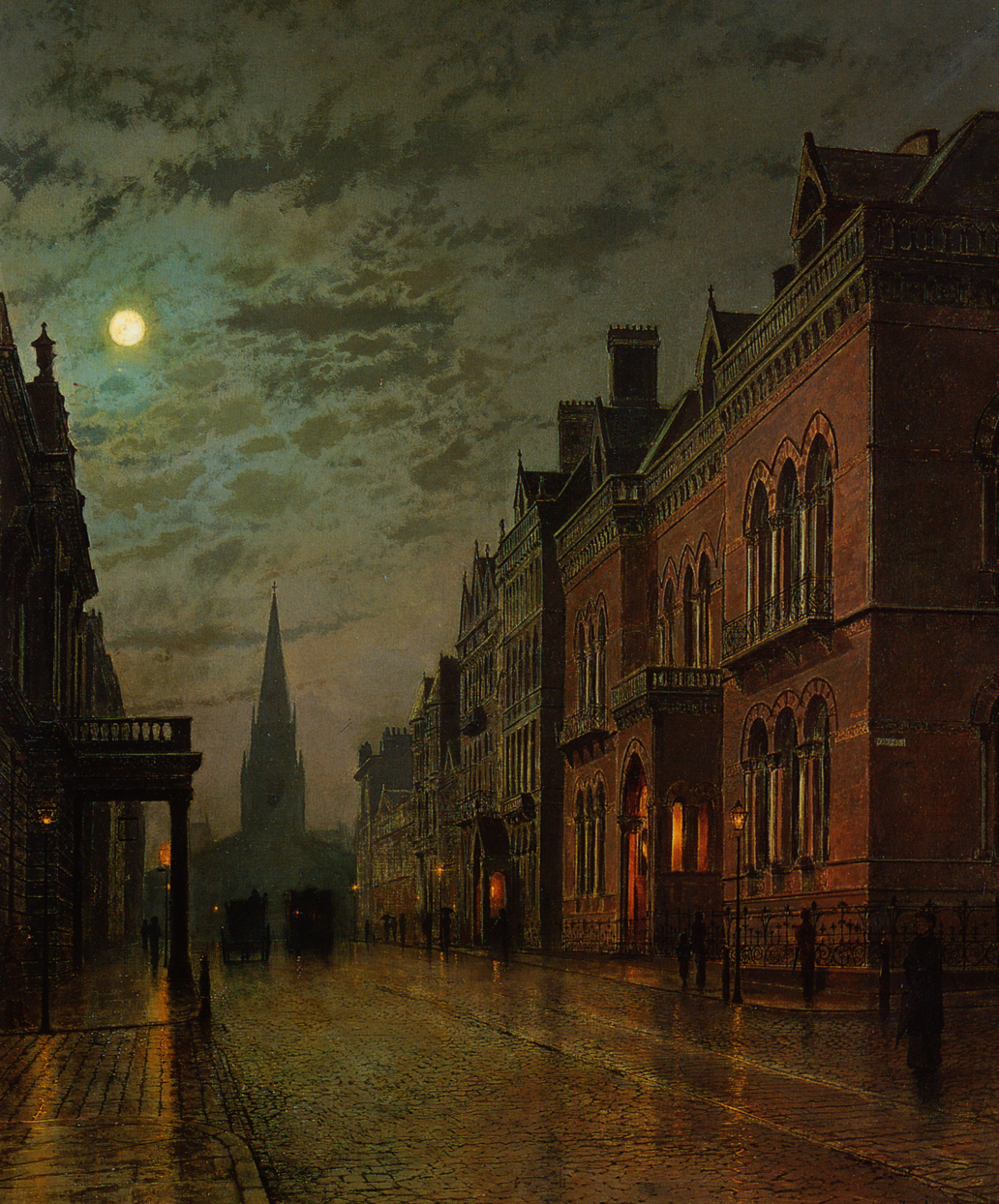
I’m afraid the relation of the title to the puzzle is arguably just a little bit strained here, requiring both a parsing and an unlikely abbreviation. Normally I am all too scrupulous in making titles that simply and exactly delineate the nature of the puzzles to which they are attached. I make an exception today in order to give myself an excuse to haul in another painting by the great Atkinson Grimshaw. Maybe somewhere there’s an alternate art world, into which (if we’re good) we will pass when this earthly life is over—a world in which the fame of Grimshaw is choired by angels, and Picasso is unknown.
A female doctor attempts to establish a practice in a provincial town.
Anne Elliot (1856-1941) wrote 13 novels, of which this was the first, between 1883 and 1903. Like her protagonist here, she was a doctor’s daughter; the novel’s representation of the plight of a Victorian woman seeking a professional career, though somewhat undermined by its dénouement, is vivid and touching.
“A fresh and clever story. . . . Several of the subordinate characters, though little more than sketches, are vividly drawn, and the whole tone of life in a prosperous, but highly Philistine, provincial town is cleverly caught.” Academy, October 20, 1883
“The writer of this novel is manifestly very much in earnest. There is an unmistakeable reality, a ring of genuine passion, in her complaints of the folly and caprice which deny to her heroine her legitimate career.” Spectator, November 10, 1883
Charles Robert Leslie, Gulliver Presented to the Queen of Brobdingnag
Why say in one word what you can just as well say in two, or three, or four, especially if you can thereby come up with 15-letter grid-spanning phrases?
A rising doctor, a beautiful heiress, an impulsive young painter, and a poor city girl are entangled by love and betrayal.
The great M.E. Braddon (see Novel004) was among the most often and unjustly maligned of Victorian novelists. Contemporary critics never tired of blaming her for Lady Audley’s Secret (1862), as the worst consequence of an unhealthy vogue for “sensation novels.” And her improbable plots are easy to mock. At the same time, they are consistently engrossing; while her characters are vivid and often surprisingly complex, her settings evocative, and her style subtle, witty, and exact.
“When our fault-finding is done with we thank Miss Braddon for a treat. Her novels are always agreeable reading and have as much genuine merit as would set up a dozen of her rivals. Her descriptions of Voysey Street and other districts are delightful.” Sunday Times, September 27, 1874
“The real secret of her success is that her people are exactly the same kind of commonplace, everyday folk as we are ourselves, and as our friends are.” Observer, September 27, 1874
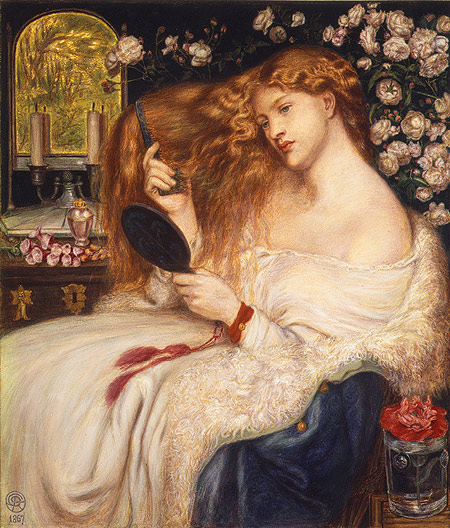
What Darwinian purpose does hair serve? How are the odds of human survival increased by its plentiful presence on the top of the head? Maybe it provides protection from sun and rain and snow? But if so, why do so many men who are deprived of this protection after their first youth successfully breed other men who will be similarly deprived? And why do they meanwhile retain the facial hair that just gets in their food?
Well—it’s another of life’s unsoluble riddles. Crosswords, by contrast, provide only soluble riddles, so console yourself with this one.
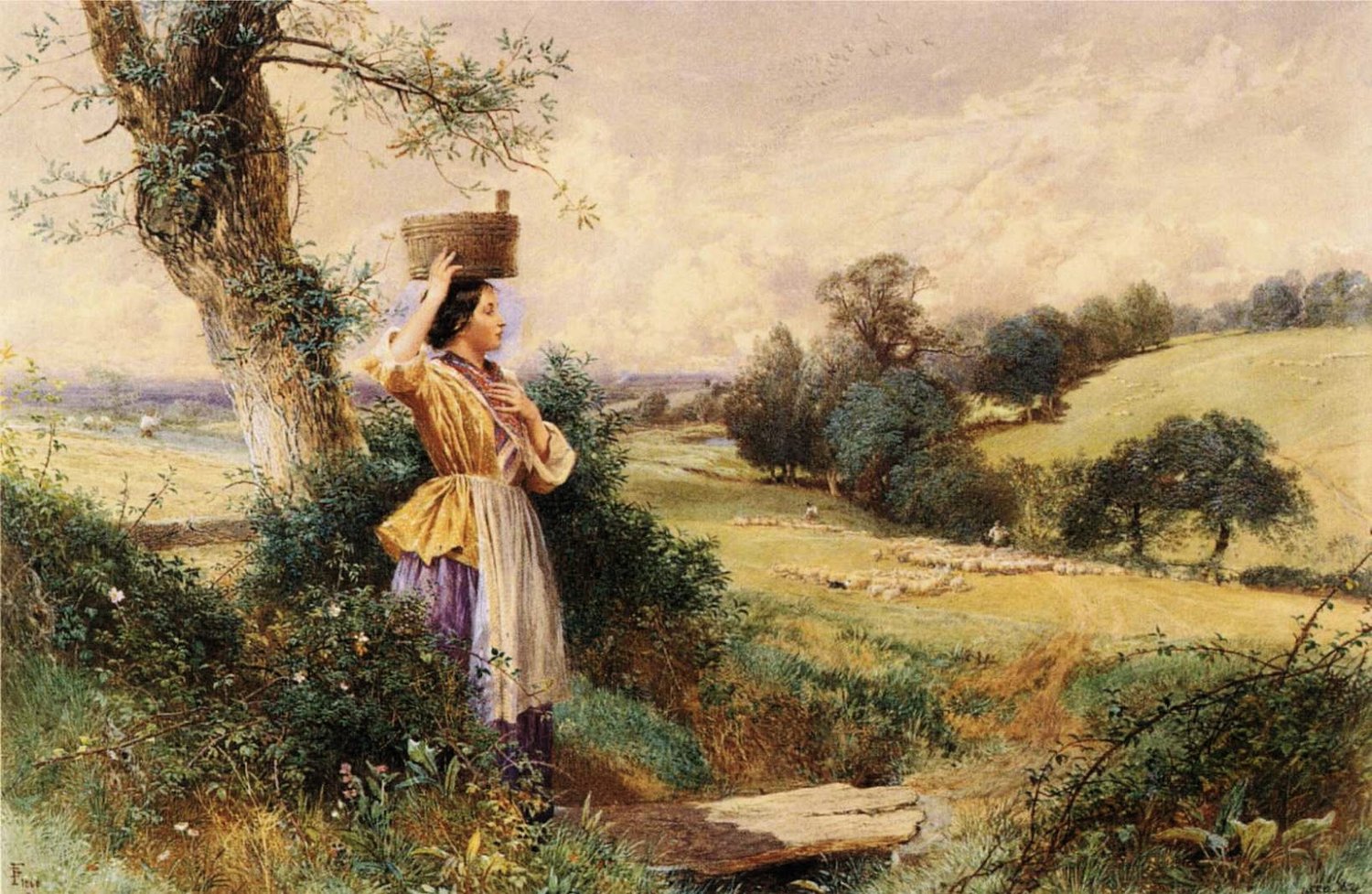
Anne Beale (1816-1900) wrote some twenty novels between 1844 and 1891. This one, set in her native Wales, has vivid characters and an endearingly contrived plot (though the treacle does run a little thick in the last volume).
A “half-pastoral Welsh story”; the plot “may be said perhaps rather to have been well felt than cunningly devised. It is unquestionably interesting, but a quiet sense of what is good and beautiful in life is the chief grace of the tale.” Examiner, October 27, 1860
“An interesting, natural story, written with evident care and pains.” Athenaeum, November 10, 1860
Is it permissible to alter a certain letter in a crossword theme phrase, and yet allow that letter to remain unaltered elsewhere in that very phrase? Will it, as I’ve heard more than once, confuse the solver? Maybe so, if the solver is a primitive computer capable of processing only the simplest “if-then” algorithms and immune to humor. I construct my crosswords, however, for genuine, warm-blooded, passionate human beings! I’m not saying that, if you object to what you think is my inconsistency in the matter of theme-answer-letter alteration, you’re not fully human—but it’s a possibility worth considering.
Justin McCarthy (1830-1912), an important Irish politician as well as a journalist and novelist, published some 25 works of fiction between 1866 and 1901. The contrast here between the attitudes of the husband and wife towards life and each other is particularly well delineated.
“Mr. McCarthy’s language is correct and well chosen: the events of his story bear each its due and proportionate share in working it out; his scene is not over-crowded with characters, and those whom he introduces are reasonable, probable, and consistent with themselves.” Athenaeum, October 10, 1874
“Besides their general truthfulness to nature, there is mostly to be discovered playing round the several characters that lambent flame of humour which is serviceable in lighting up particular traits and idiosyncracies, and setting them clearly in the reader’s eye.” Examiner, October 17, 1874
“A close observer and excellent delineator of character, Mr. McCarthy contrives to combine in his portraits reality and originality, and while he does not disdain to mention trifling incidents and minute but distinctive traits, he never wearies by prolixity.” Morning Post, October 22, 1874
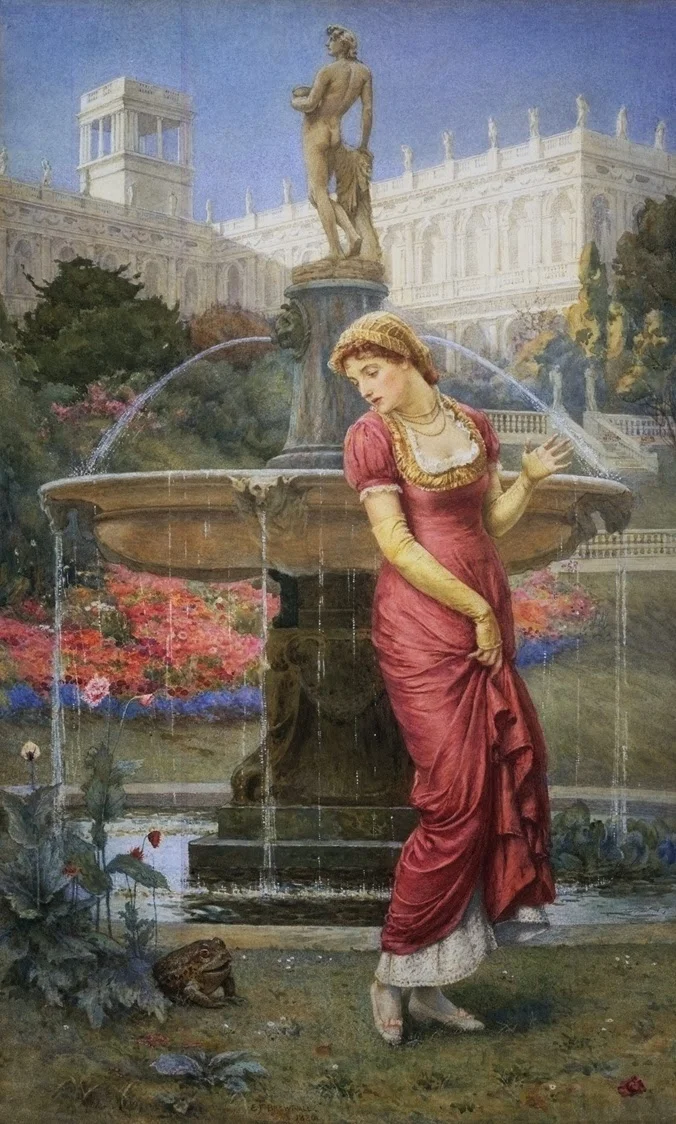
Edward Frederick Brewtnall, The Princess and the Frog Prince
“Oh goodness infinite, goodness immense!,/That all this good of evil shall produce,/And evil turn to good!” you will exclaim, “replete with joy and wonder,” after you finish this puzzle. (See John Milton, Paradise Lost, XII.468-71)
We owe 32 Across to my test-solver, proofreader, and sometime editor “Bob Kerfuffle,” who has also spared me the embarrassment and you the annoyance of many errors of all kinds. He will not permit me to use his real name, preferring to “do good by stealth.” (See Alexander Pope, Epilogue to the Satires of Horace, Dialogue I, l.136)
A middle-aged woman on a visit to a friend meets again the man who loved her in youth.
Nothing is known of Julia Day except that she wrote two novels, of which this was the first. Its unusual lack of conflict is oddly refreshing, its characters—and the society they collectively evoke— vivid and lifelike.
“One of the most cheerful books that we ever read, . . . full of cordiality and comfort and delicate little markings of character.” Athenaeum, November 29, 1851
“As well-knit and compact a story in a small compass as we ever remember to have seen. This tale is a perfect gem in its way, the materials and the workmanship, to employ the chapmen's phrase, being worthy of each other. The events are so perfectly natural, the characters are drawn with such truth and vivacity, and the whole is set before us with such beautiful, unlaboured grace of style, that we are rapidly, but insensibly, carried from the first page to the last, with a feeling at the end, we must acknowledge, of disappointment that we have not more. . . . Though the space be small in which they have to display themselves,” the characters “are painted with a minuteness and finish worthy of a literary velvet Brueghel.” Bentley’s Miscellany, 1852
“A pleasant book, well written, and full of wholesome morality.” American Whig Review, September, 1852
A woman grows up on Michigan’s Mackinac Island, then moves east.
Constance Fenimore Woolson (1840-1894), the grandniece of James Fenimore Cooper, published some six novels. This one shows much variety: regionalist detail at the beginning, social satire in the middle, melodrama (and the Civil War) at the end.
“We venture to say that Anne is one of the most remarkable works of fiction that has appeared for many years. It is remarkable for its own sake—for animation of plot and variety of character; and it is remarkable also as holding a place midway between the old American novel of incident and the modern American novel of analysis.” Academy, July 21, 1882
“The reader is held under the delightful impression, not that he is to find something in the next chapter to reward him, but that every turn and eddy in the stream will be worth his attention. . . . As to characters, they crowd the stage with an assemblage of powerfully-drawn actors, each marked with unmistakable individuality.” Independent, Sept. 7, 1882
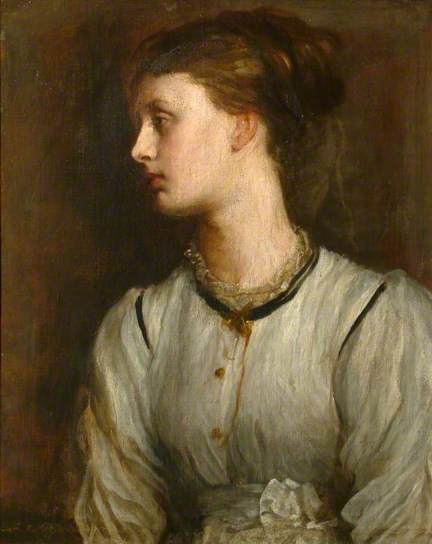
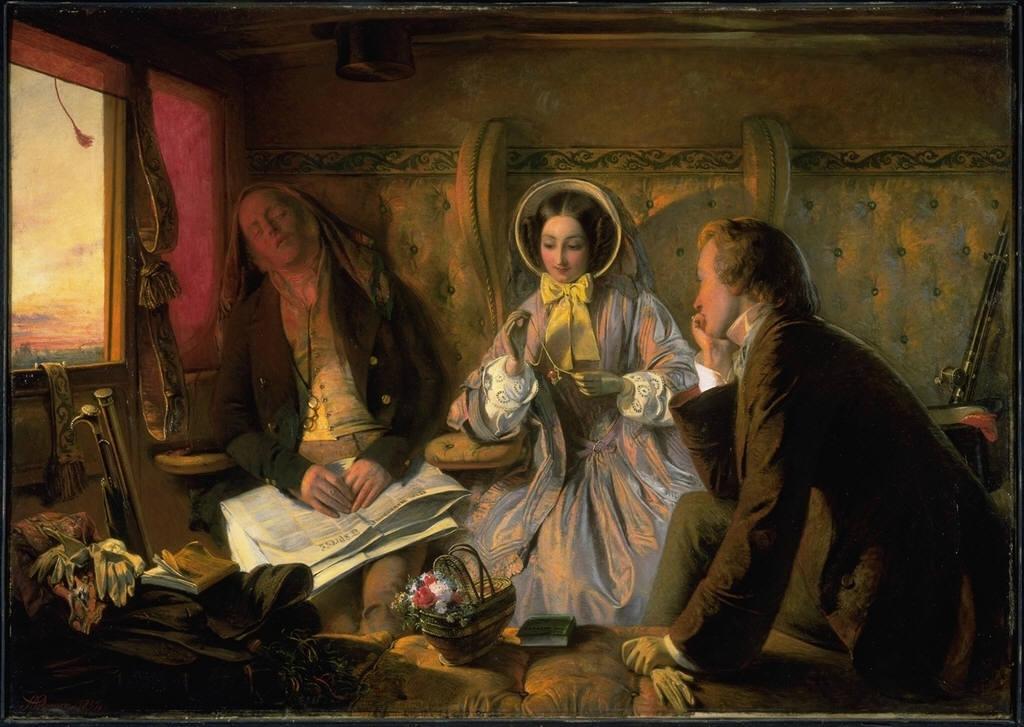
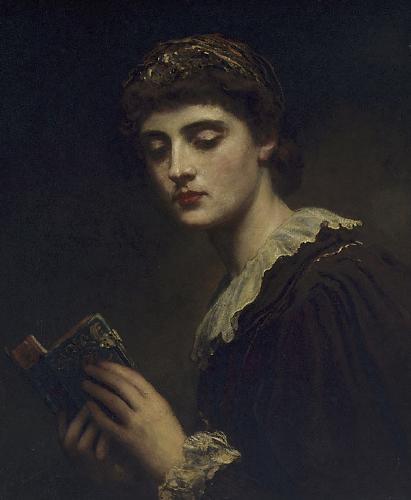
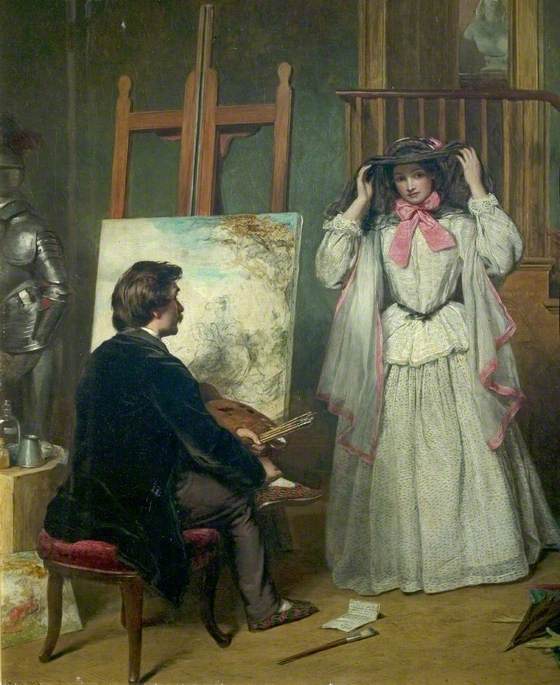
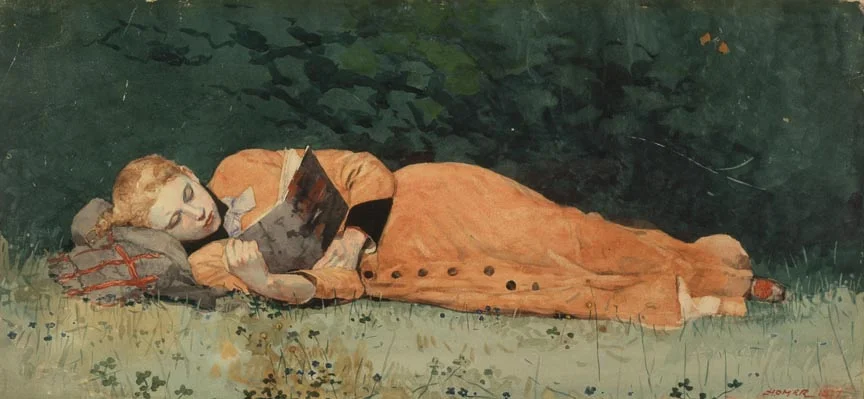
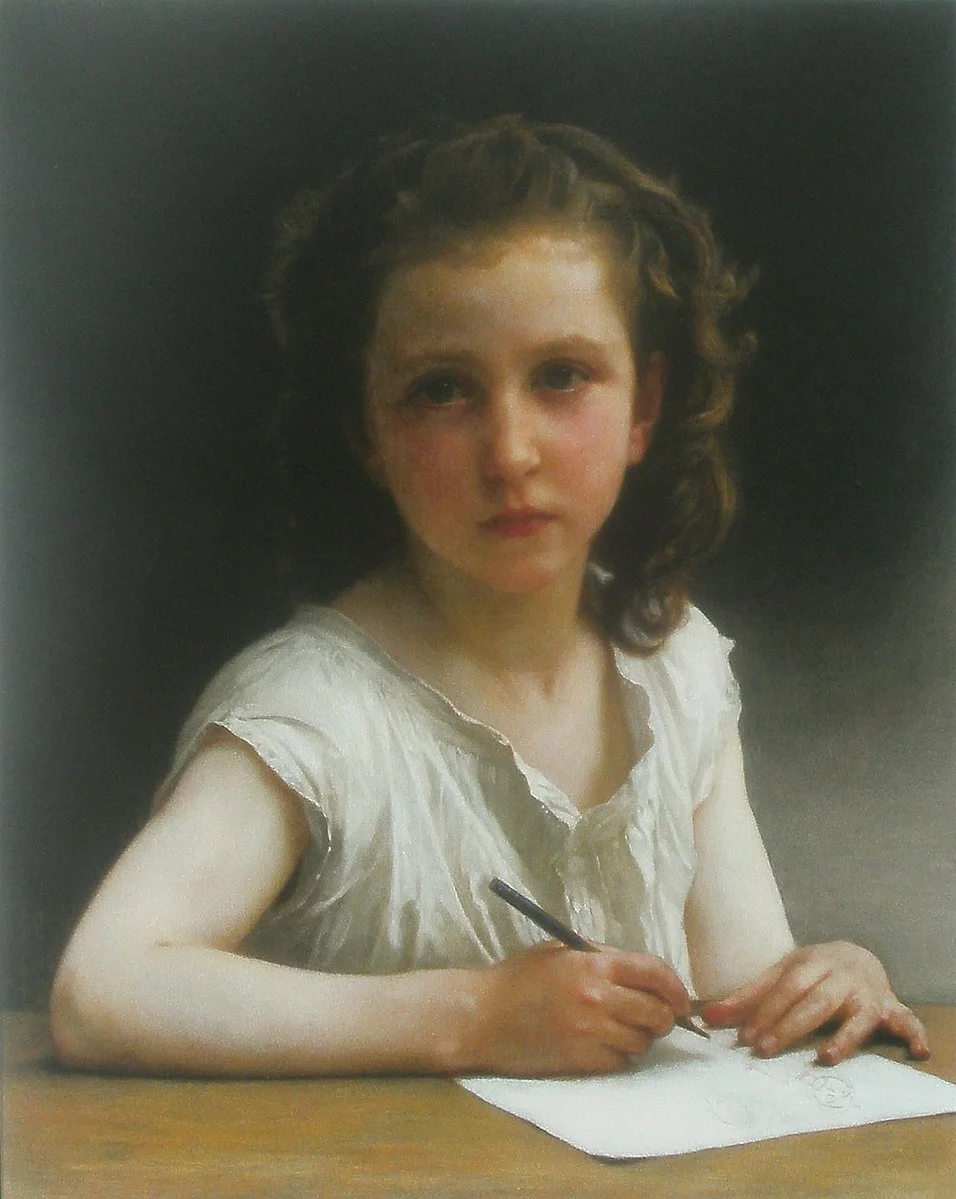
That’s this week’s crossword she’s got there. Judging from the position of her pen and the expression on her face, she’s at 52 Across, and trying desperately to remember what exactly a “ratite” is. She’s seen the word before, maybe in another crossword—but what does it mean? It’s nothing to do with rodents, or rodent-followers, but it is some kind of animal, isn’t it? A “gnu” maybe?
If you attended last August’s Lollapuzzoola tournament, you may have picked up a promotional copy of this very puzzle, which was distributed there on my behalf by my test-solver, editor, and promoter, the inexplicably generous “Bob Kerfuffle.” I was not myself in attendance, as I prefer to cultivate an air of reclusive genius—in the hope of being revered as the J.D. Salinger, the Emily Dickinson of crosswords. Do please try to play along with me in this.
A poor clergyman places himself in a moral quandary.
This is one of the last of Oliphant’s hundred-some novels (for others see Novels007&008). She had been publishing for almost half a century and had come to seem old-fashioned.The Academy’s critic, for example, after confessing a “sneaking fondness” for Oliphant, points out that she “began to write before the days when fiction became an art, and no doubt her conceptions of the possibilities and obligations of her calling are, in comparison with modern lights, limited.” This false perception of the culture of 1849 says a lot about that of 1896. Anyway, old or not, Oliphant provides here a searching analysis of a complex, ambivalent, self-deceived character’s struggles to reconcile the moral with the expedient.
We are “transported by the writer’s easy art into an old-world atmosphere, redolent of the true flavour of a social humour not quite forgotten, but sufficiently removed from the commonplace banalities, the sexual problems, and the topical ingenuities of the day.” Athenaeum, December 19, 1896
Oliphant’s “stories are always characterised by an old-world courtliness and a wonderful sympathy with the thoughts and feelings of old and young alike. Everything she puts her pen to is thoroughly entertaining.” Liverpool Mercury, December 23, 1896
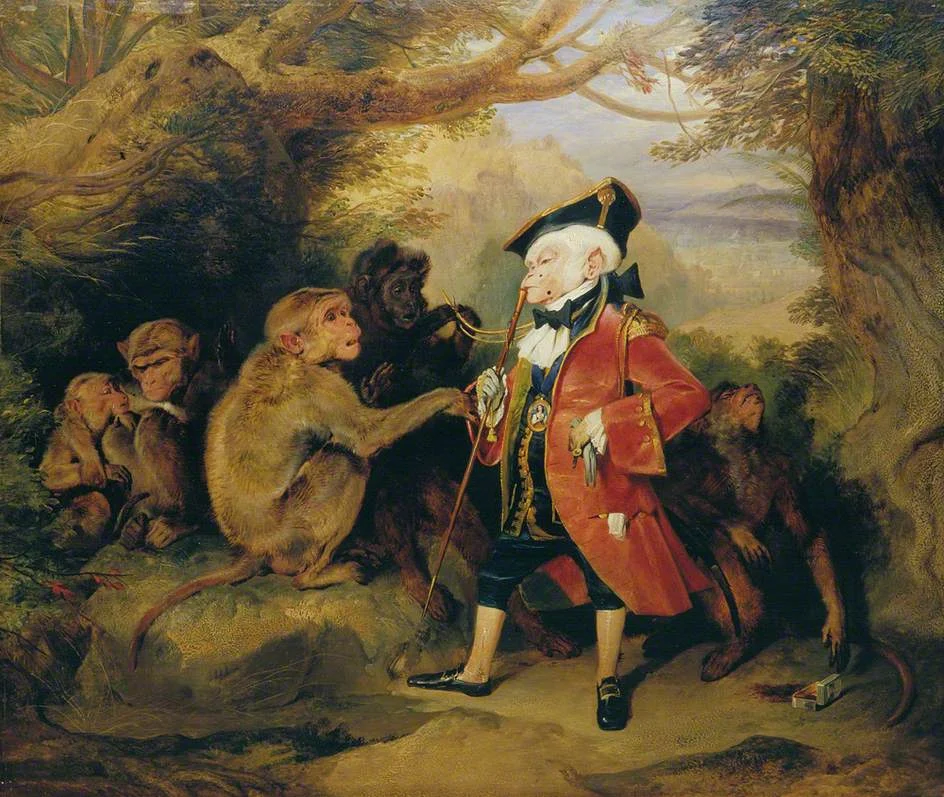
I never construct a puzzle without exhaustive research of its origins and implications. For this puzzle I looked up the etymology of the word “monkey” in the OED. Apparently it derives either from “monk,” on the theory that the unknown coiners of the word found some satirical resemblance between the animal and the religious community member, or from “Moneke,” the name of the son of Martin the Ape in the 1498 Middle Low German classic version of “Reynard the Fox.” Next time you find yourself at a dinner party at which conversation falters, mention these two possibilities: lively debate is certain to ensue.