David Alfred Bywaters's Crossword Cavalcade & Fortnightly Victorian Novel Recommender. Every Saturday! Either a new language-torturing puzzle or an old novel by an unjustly neglected Victorian author. Why waste time on other amusements?

Novel 005: Noell Radecliffe, The Secret History of a Household (1855)
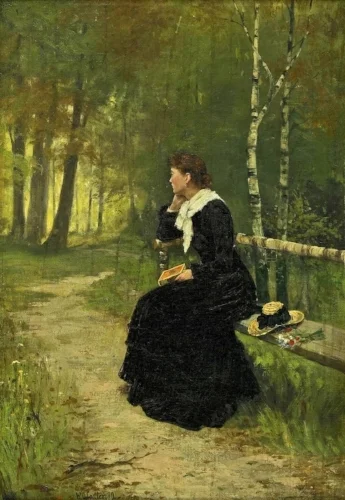
Walter Dendy Sadler, Girl on a Bench

A virtuous wife deals with the appalling misbehavior of her arrogant husband.


Noell Radecliffe published eight novels between 1854 and 1870.  Nothing else is known about her (him?), and yet her (his?) works have great emotional power and psychological subtlety.  In The Secret History of a Household,  she (he?) evokes a nightmarish world where well-meaning innocence is inevitably encompassed and defeated by selfishness and cruelty.

“Every lover of the beautiful and the true in woman will sympathise with the wife.” Morning Post, February 15, 1855

“With much talent, and the power to interest and carry along the reader, it is as bad and pernicious a book as we ever read. . . .  There is a total want of all faculty to discriminate between right and wrong.” Athenaeum, March 17, 1855

“This work evinces no diminution of [Radecliffe’s] power of delineation and . . . faculty of invention. . . .  Of the general portraiture we must say that it is strong—rather strong than flattering; and of the general tone of the pictures of genteel life, that it is dark—more dark than pleasing.” Morning Chronicle, April 4, 1855

Download this week’s novel:
http://access.bl.uk/item/viewer/ark:/81055/vdc_0000000433CE

Novel 004: M.E. Braddon, The Doctor's Wife (1864)

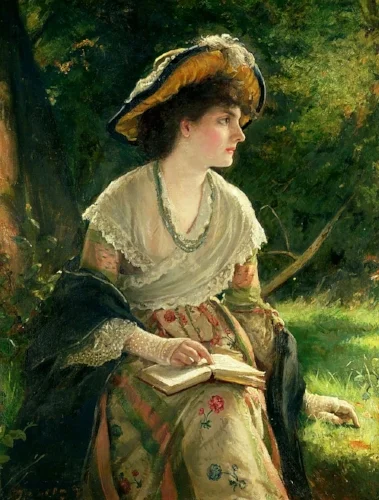
Robert James Gordon, Woman Reading

A young woman, addled by overindulgence in novels, marries a good but unimaginative doctor.


Mary Elizabeth Braddon (1835-1915) wrote over 60 novels between 1861 and 1900.  In The Doctor’s Wife she reflects wittily and ruefully on her craft and its effects.

“Miss Braddon has displayed quite unexpected power, that she can create a female character ordinary and yet bizarre, analyze her emotions with delicate skill, and display her action in incidents each of which is a surprise, yet on reflection is pronounced by the reader accurate and natural.” Spectator, October 22, 1864

“Isabel’s is an original character, and it is excellently drawn.” London Review, October 22, 1864

The heroine’s character is “wholly consistent from first to last, and artistically true to the type of human nature which the novelist has set herself to portray.” Saturday Review, November 5, 1864

Download this week’s novel:

   v.1 https://books.google.com/books?id=BkPQAAAAMAAJ

   v.2 https://books.google.com/books?id=B0TQAAAAMAAJ

  v.3 https://books.google.com/books?id=RUTQAAAAMAAJ

“Stereotyped” 1 vol. ed. (Archive.org)

https://archive.org/details/doctorswifenovel00braduoft

Novel 003: Charlotte Yonge, Heartsease (1854)

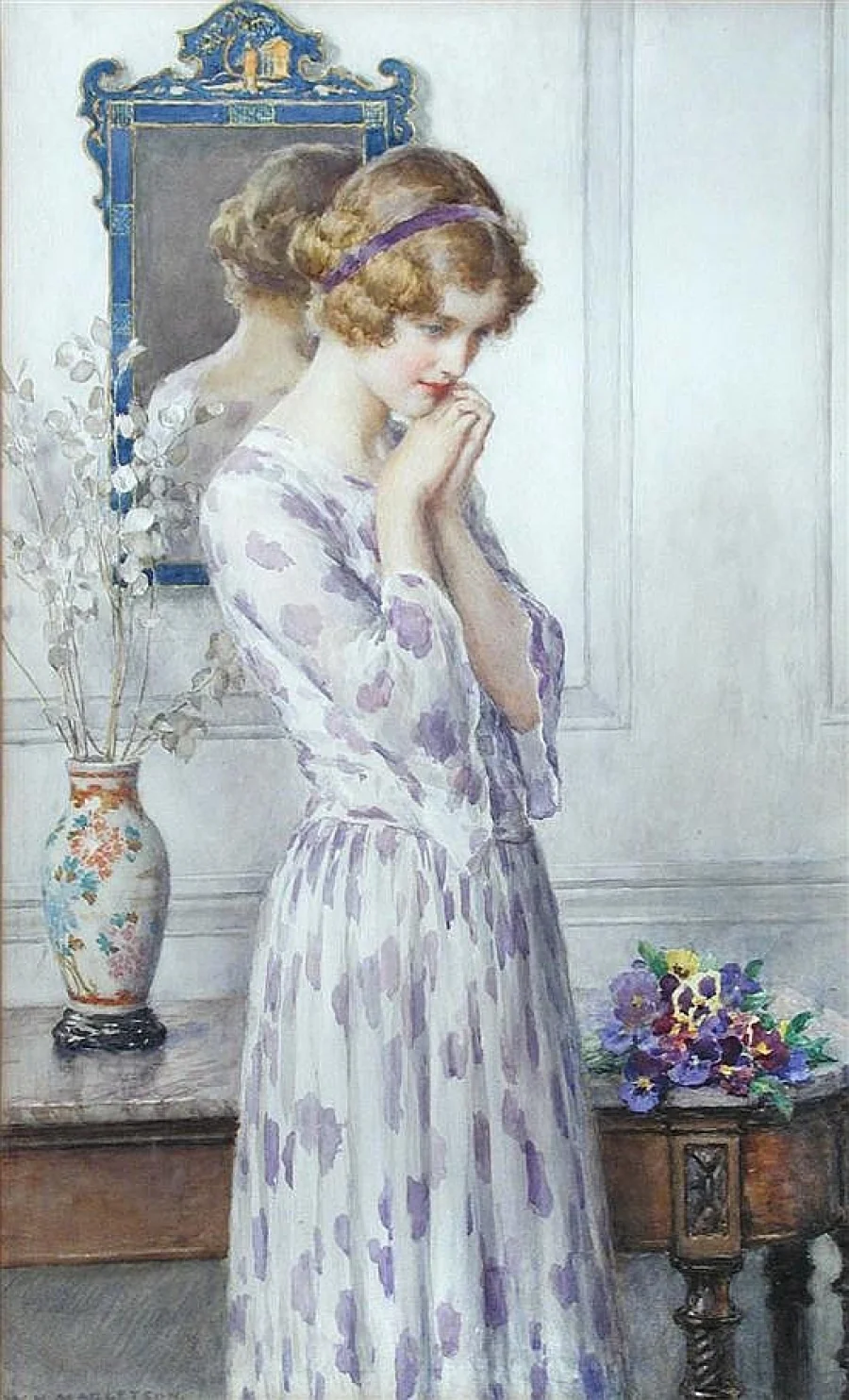
William Henry Margetson, Lady with Pansies

A naive young girl marries into a difficult family and wins her way by her virtue.


Charlotte Yonge (1823-1901) wrote some 60 novels between 1844 and 1900.  No novelist has ever created characters more lifelike, original, and fully individualized than Yonge’s.

“One of the loveliest, sweetest, and most attractive creations that ever sprung to life at the poet’s bidding.” Fraser’s Magazine, November, 1854

“There is ... minute etching of incident and character, and every page repays the reader, by disclosing some trait of interest essential to the development of the story.  The interest lies chiefly in the details of the daily life and daily trials of the different characters.  These are drawn with considerable vigour.... ‘Heartsease’ is the most true looking story we have read for a long time.” Athenaeum, November 18, 1854

“The characters are exceedingly well drawn and distinguished... The book, although not of the intense kind, bears evidence of very keen observation, and very true and careful thought, and as a work of art, must rank very high.” Putnam’s, February 1855

Download this week’s novel (in the 1885 ed.—other editions, but not the first, are also available at archive.org):

https://archive.org/details/heartseasebrothe00yong

Novel 002: W.E Norris, No New Thing (1883)

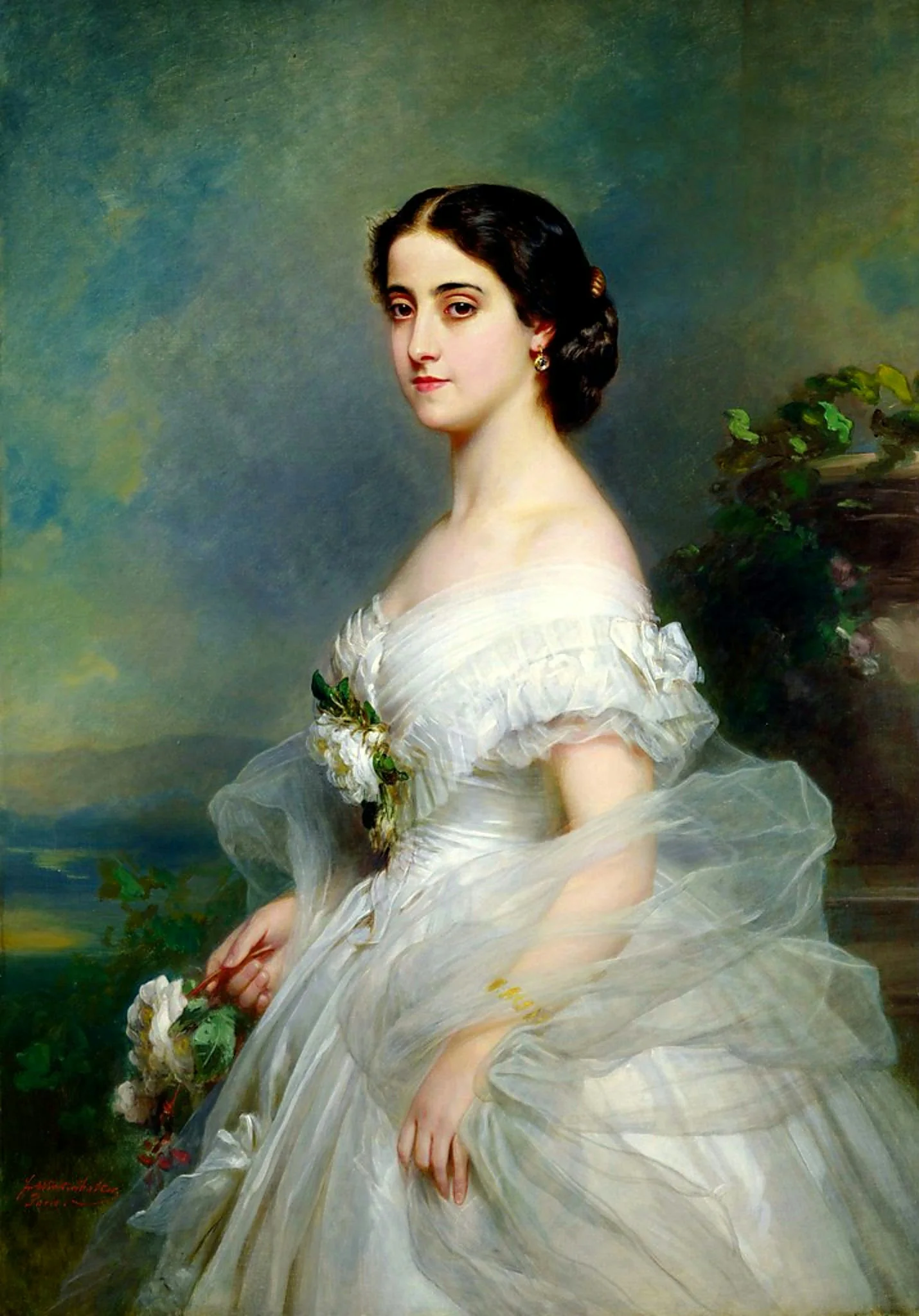
Franz Xaver Winterhalter - Adelina Patti
Franz Xaver Winterhalter - Adelina Patti

A half-Italian orphan, raised by a wealthy English widow on her country estate, misbehaves.


W.E. Norris (1847-1925) wrote over 40 novels between 1877 and 1925. No New Thing is a  romantic comedy in a witty style, with a surprisingly sympathetic portrait of a contemptible young man. The critical comparisons to Anthony Trollope are apt.

“In the Trollopian vein . . . is Mr. Norris’s patient way of letting his characters reveal themselves as the circumstances permit.  But whoever may be Mr. Norris’s masters in fiction . . . No New Thing is as thoroughly fresh and original a novel as has been published for a long time.  The plot has been constructed with great care, and the writer shows much insight into human nature, and a turn for satire.” Academy, May 19, 1883

“He has caught Trollope’s genial manner in drawing people as they are—men and women who are, on the whole, content with life as they find it, who are not always analyzing their emotions nor craving for a ‘higher synthesis.’  Mr. Norris reminds one of Trollope also in his way of discussing a situation by a series of questions in the form of the argument which would probably have been gone through by the persons whose course of action is to be considered.  In humour and gentle pathos Mr. Norris shows resemblances to Trollope. . . .  Perhaps the best character in the book is a young man who has many talents and no application, who is completely selfish and always agreeable, and who has a redeeming point in a sort of emotional affectionateness.”Athenaeum, May 26, 1883

“As a piece of style, this novel is wholly exceptional; it is careful, clear, and polished, yet always graceful and easy.  To read such writing is a pleasure.”British Quarterly Review, July 1883

Download this week’s novel:

     v.1: https://archive.org/details/nonewthing01norr

     v.2: https://archive.org/details/nonewthing02norr

     v. 3: https://archive.org/details/nonewthing0norr

Crossword 001: "It's an Upset!"

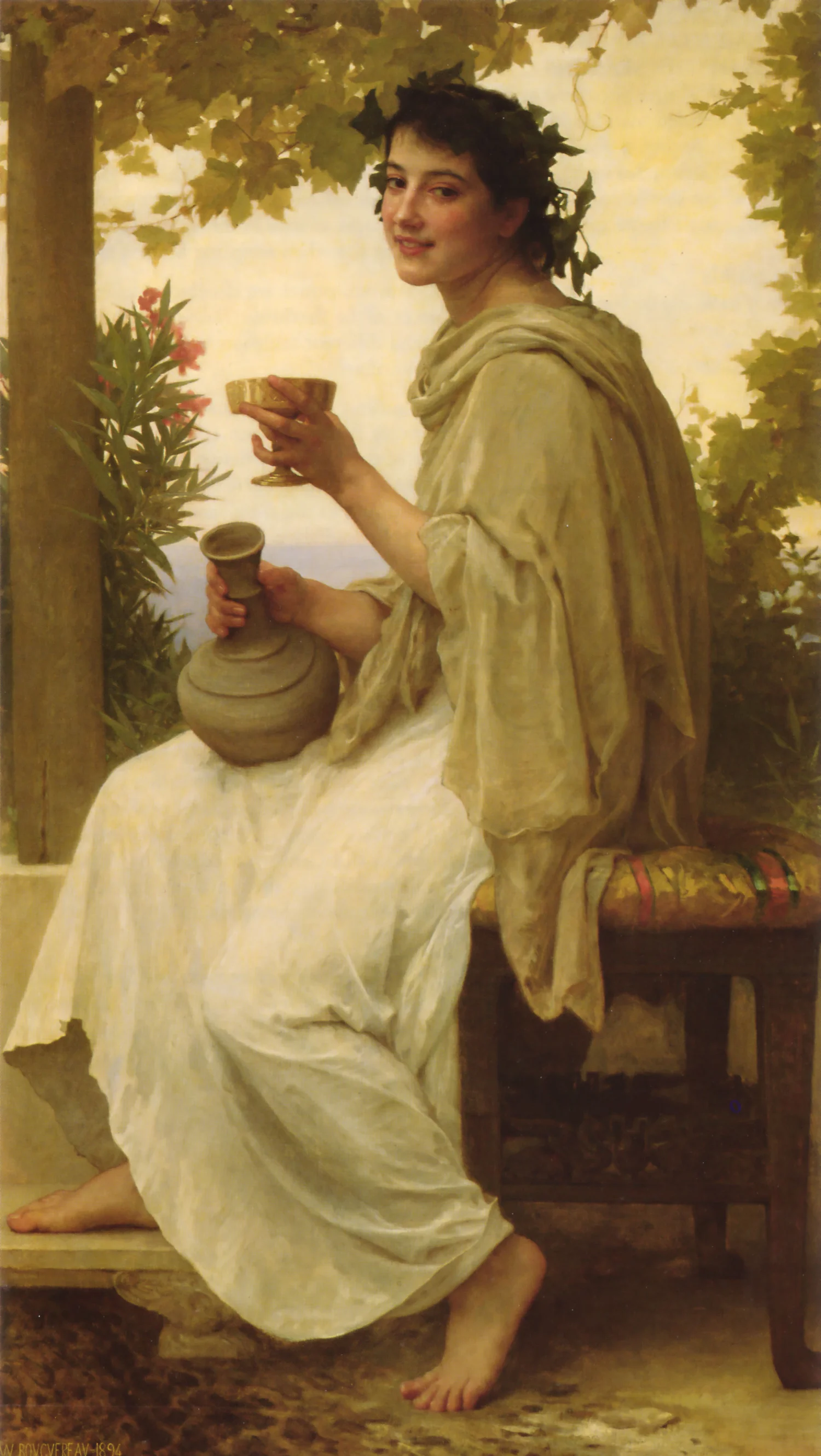
William-Adolphe Bouguereau, Bacchante  (see 67 Across)
William-Adolphe Bouguereau, Bacchante (see 67 Across)

I post this puzzle, “It’s an Upset,” to celebrate the fact that my website is now “up.”  Fitting, isn’t it?  If you persevere in visiting my website, you will find that I am distinguished by nothing so much as my acute sense of the fitting—my command of nuance—my exquisite tact.  Tell your friends!


Download this week's crossword:

001 It's an Upset.puz

001 It's an Upset.pdf

Solve this week’s crossword online:

001 It’s an Upset (online)

Novel 001: Mrs. Alexander, The Wooing O't (1873)

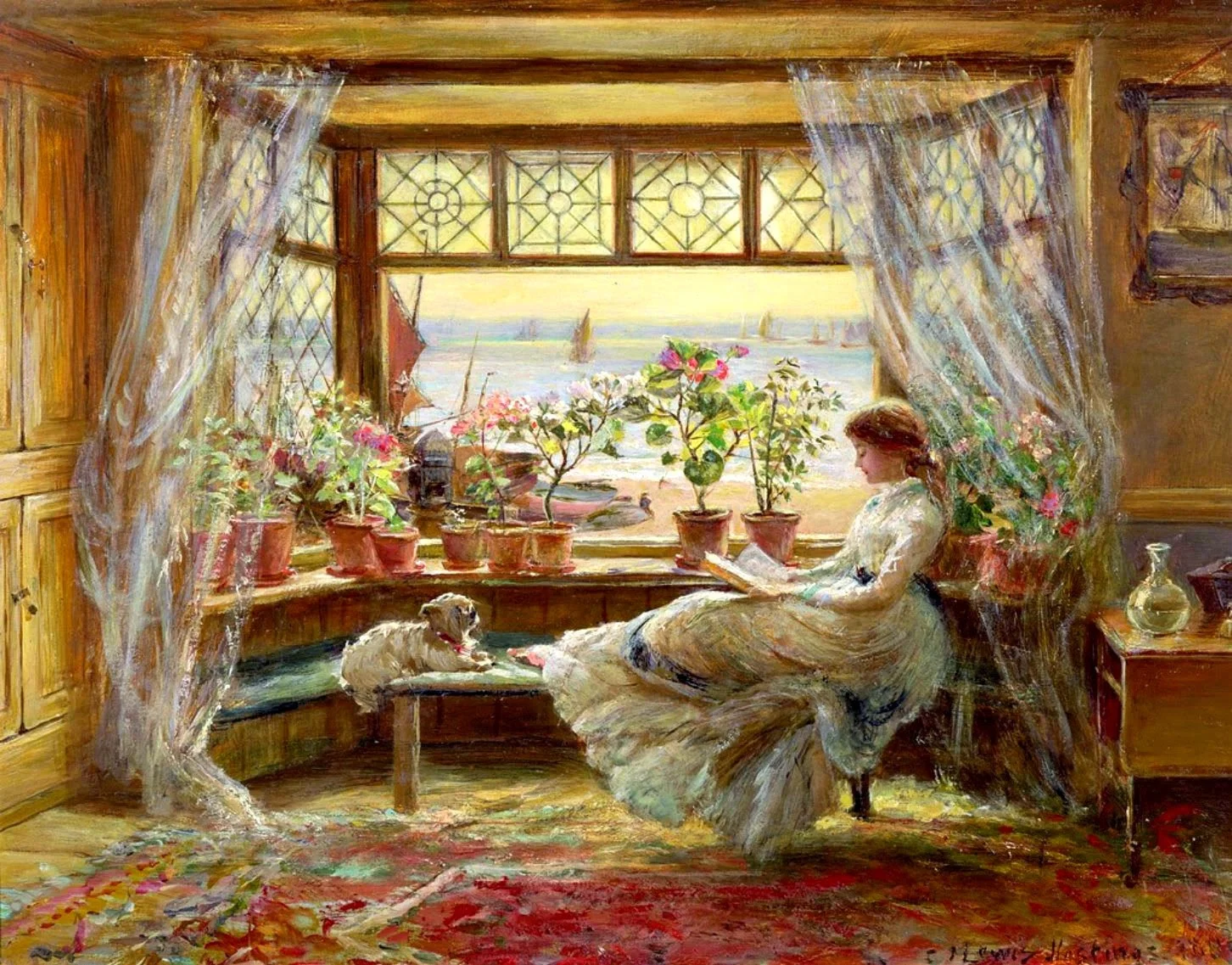
Charles James Lewis, Reading by the Window

A virtuous young lady, orphaned and poor, agrees to become the salaried companion of a worldly woman traveling to Paris.


Mrs. Alexander (1825-1902), born Annie French (her pen name was derived from the first name of her husband, Alexander Hector) wrote over 60 novels between 1854 and 1902.The Wooing O’t, despite its self-consciously traditional plot (the title comes from the mocking chorus of Robert Burns’s comic song “Duncan Gray”), represents social conflict and emotional ambivalence with rare skill.

“Marvelously successful in painting a most repulsive gallery of unmitigated vulgarians, both in the London chemist’s shop in which she launches her heroine, and in the second-rate Parisian circle, in which she accomplishes her introduction to what is called fashionable society.” Athenaeum, September 27, 1873

“The book has a pleasant vivacity and movement, and the worldly, frivolous people who flit about in it are all agreeable, like people one meets at a garden-party, and never cares to meet again, but who chat easily as they eat ices and knock croquet-balls about.”  Spectator, October 11, 1873

“The whole character of Maggie is very tenderly touched and very clearly conceived.  In so far as she is concerned, The Wooing O’t has the merit of originality.  She is flesh and blood, and stands out solidly. . . .  Not a line about her is exaggerated.”Saturday Review, November 8, 1873

“There is nothing very startling about the plot, no desperate passions or mysterious relationships, nor do any of the characters bring themselves within the range of the criminal law.  But the interest is sustained, the conversations natural, and the characters well drawn.”North American Review, April 1874

Download this week’s novel:

First Edition (1873), British Library

     v.1: http://access.bl.uk/item/viewer/ark:/81055/vdc_000000044496

     v.2: http://access.bl.uk/item/viewer/ark:/81055/vdc_00000004449C

     v. 3: http://access.bl.uk/item/viewer/ark:/81055/vdc_0000000444A2

Eighth Edition (1890), Archive.org

https://archive.org/details/wooingotnovel00alexrich