David Alfred Bywaters's Crossword Cavalcade & Fortnightly Victorian Novel Recommender. Every Saturday! Either a new language-torturing puzzle or an old novel by an unjustly neglected Victorian author. Why waste time on other amusements?

Novel 325: Agnes Catherine Maitland, Rhoda (1885)
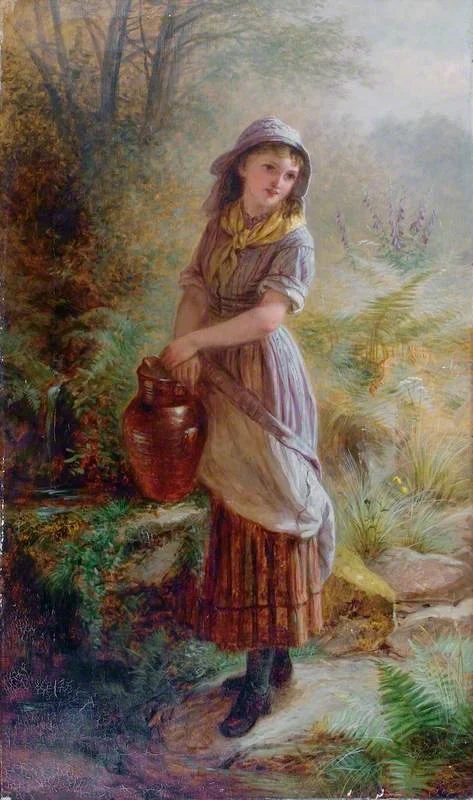
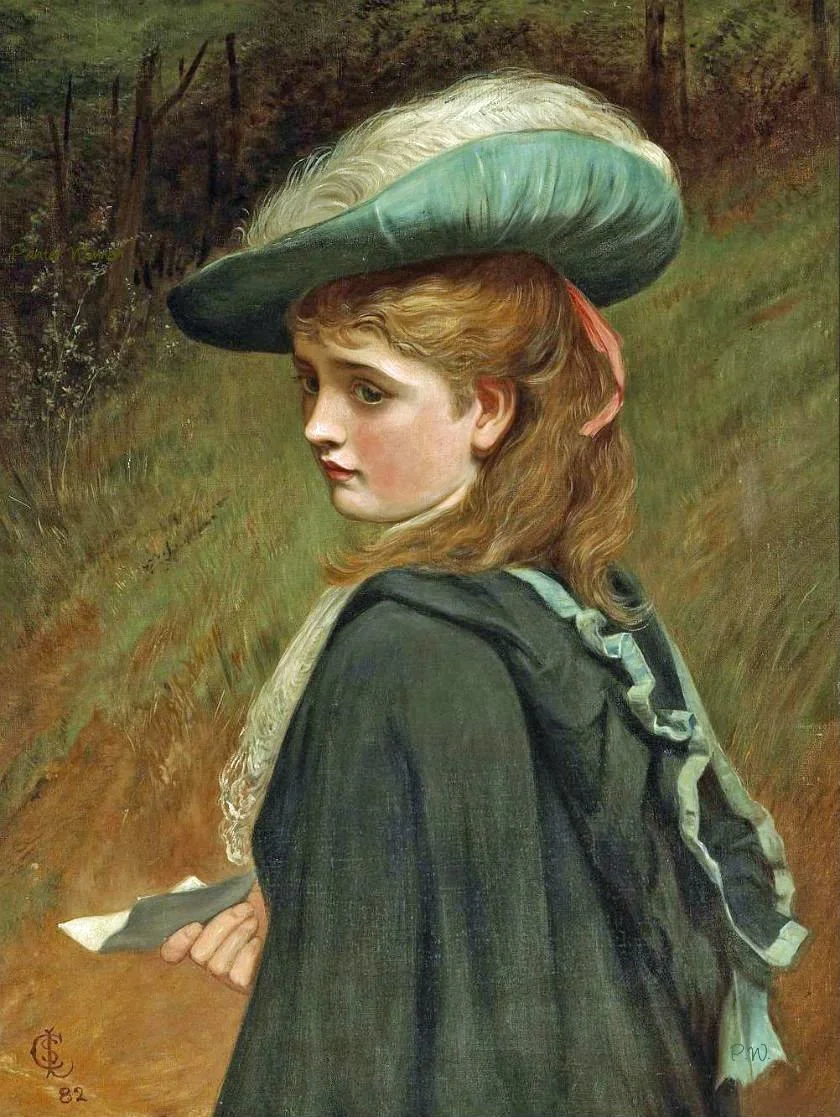
Jane Maria Bowkett, Girl at a Well

A mother adopts a child so as to conceal his right to inherit an estate to which her own son seems heir-apparent.


In 1889, Agnes Catherine Maitland (1849-1906) became principal at Somerville College, one of the first Oxford colleges for women.  Before that time she wrote a few novels, beginning in 1875, including this one.

After “somewhat conventional opening chapters . . . we find ourselves in the midst of a set of very real personages, drawn with a light but sympathetic touch. . . .  In point of style the author is far in advance of the rambling method so frequent amongst female writers.”  Athenaeum, November 21, 1885.

“A readable and, from the literary point of view, rather superior novel with a conventional plot.” Spectator, December 5, 1885.

Download this fortnight’s novel:

https://solo.bodleian.ox.ac.uk/permalink/44OXF_INST/35n82s/alma990143693230107026

(Right-click (or control-click, if you have a Mac) on the “view digitized copy” links to download the novel’s three volumes in pdf form)
Crossword 324: Fashion Shoots

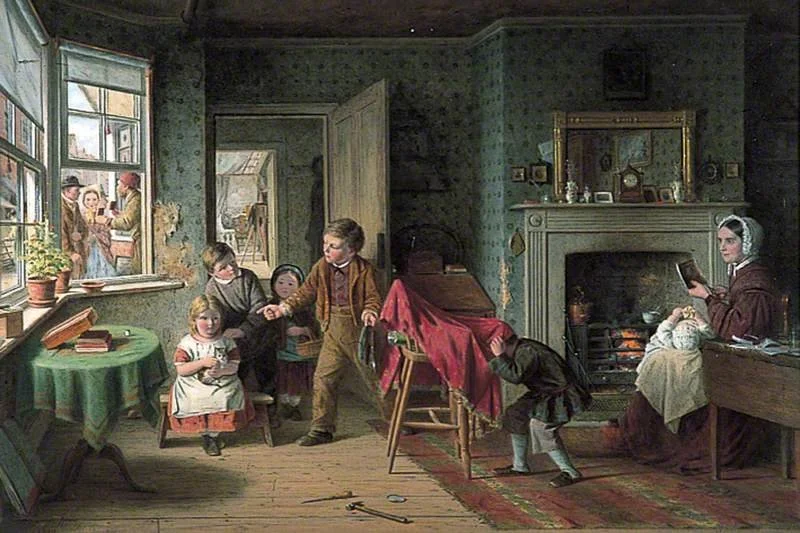
Frederick Daniel Hardy, The Young Photographers

We like to keep up with the fashions here at David Alfred Bywaters’s Crossword Cavalcade and Fortnightly Victorian Novel Recommender.  When people started wearing their hats backwards, we wore our hats backwards.  And then when people started wearing them forwards again, so did we.  This helps us feel like we’re a part of something bigger and stronger than our sad individual selves crawling around a comfortless world pointlessly and alone. Have you seen our new polo shirts?


Download this fortnight’s crossword:

324-Fashion-Shoots.puz

324-Fashion-Shoots.pdf

Solve this fortnight’s crossword online:

324 Fashion Shoots

Novel 324: Annie E. Wickham, Loveday (1896)

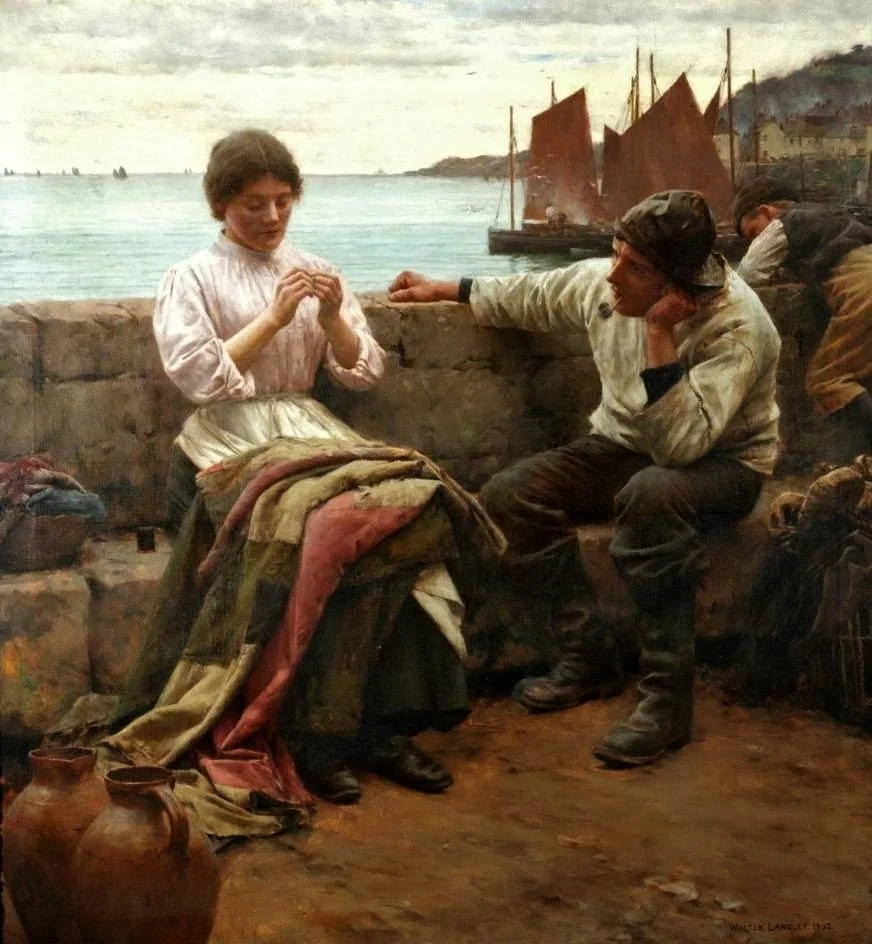
Walter Langley, A Cornish Idyll

A Cornish farmer rescues from shipwreck a man of dubious antecedents, along with his daughter and niece.


Annie E. Wickham published two novels, both in 1896.  Nothing else appears to be known about her.

The novel has “much originality” and “one of the most fascinating scoundrels who have ever appeared in fiction.”  Spectator, April 4, 1896

It “has charm—charm of manner, of matter.  It is above all things fresh.” Athenaeum, April 4, 1896

Download this fortnight’s novel:

https://books.google.com/books?id=Ea1-twjyXJoC&newbks=1&newbks_redir=0&dq=loveday%20wickham&pg=PP11#v=onepage&q=loveday%20wickham&f=false

Crossword 323: Nonconfrontation

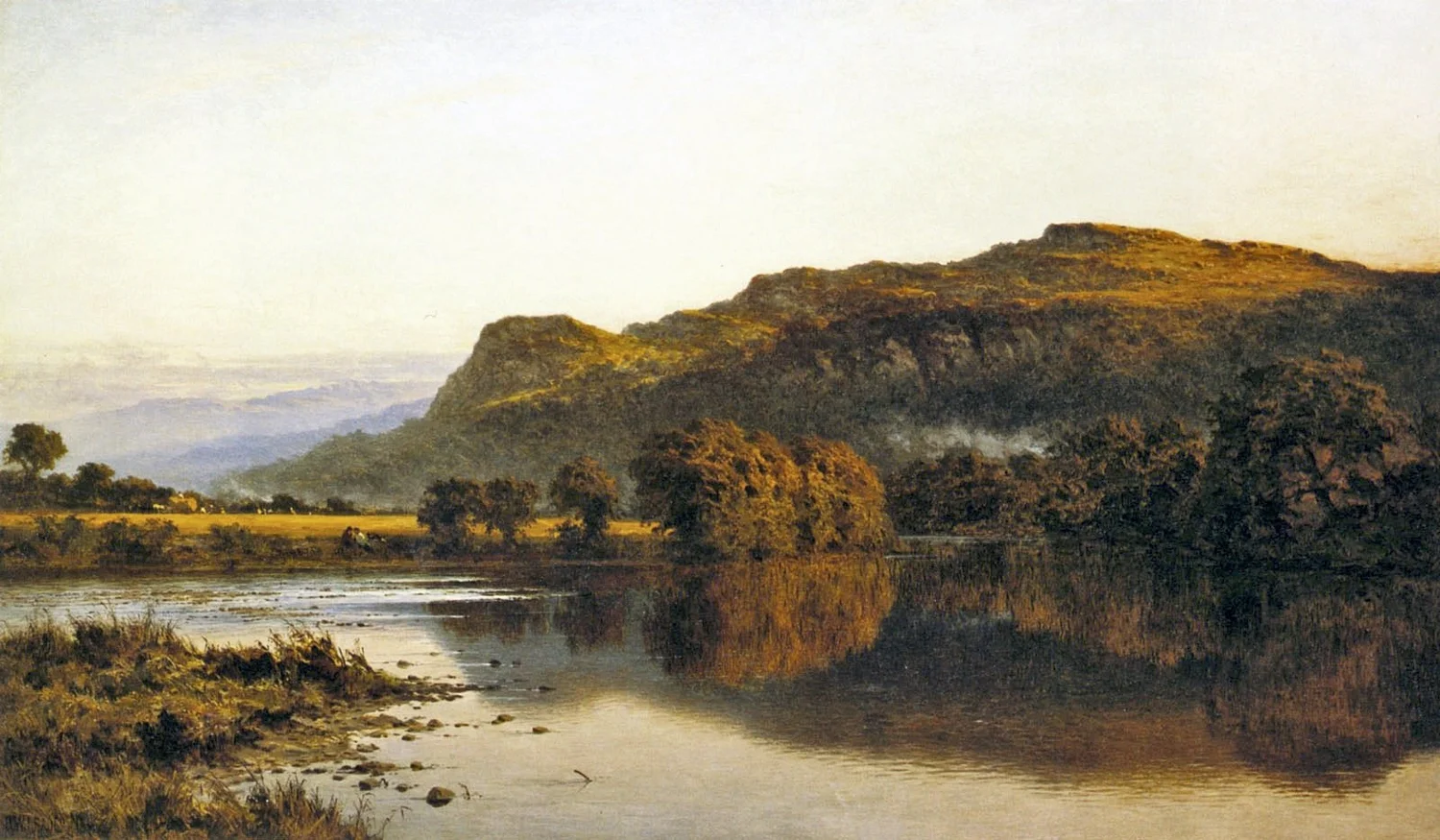
Benjamin Leader, Where Peaceful Waters Glide

Let’s not fight about it.  You’re right.  Or if you’re not, it’s not important.  What’s important is getting along.  And we’d get along just fine if it weren’t for your wrong opinions and bad taste.  So just stop arguing and do the puzzle.


Download this fortnight’s crossword:

323 Nonconfrontation.puz

323-Nonconfrontation.pdf

Solve this fortnight’s crossword online:

323 Nonconfrontation

Novel 323: Sarah Doudney, When We Two Parted (1885)

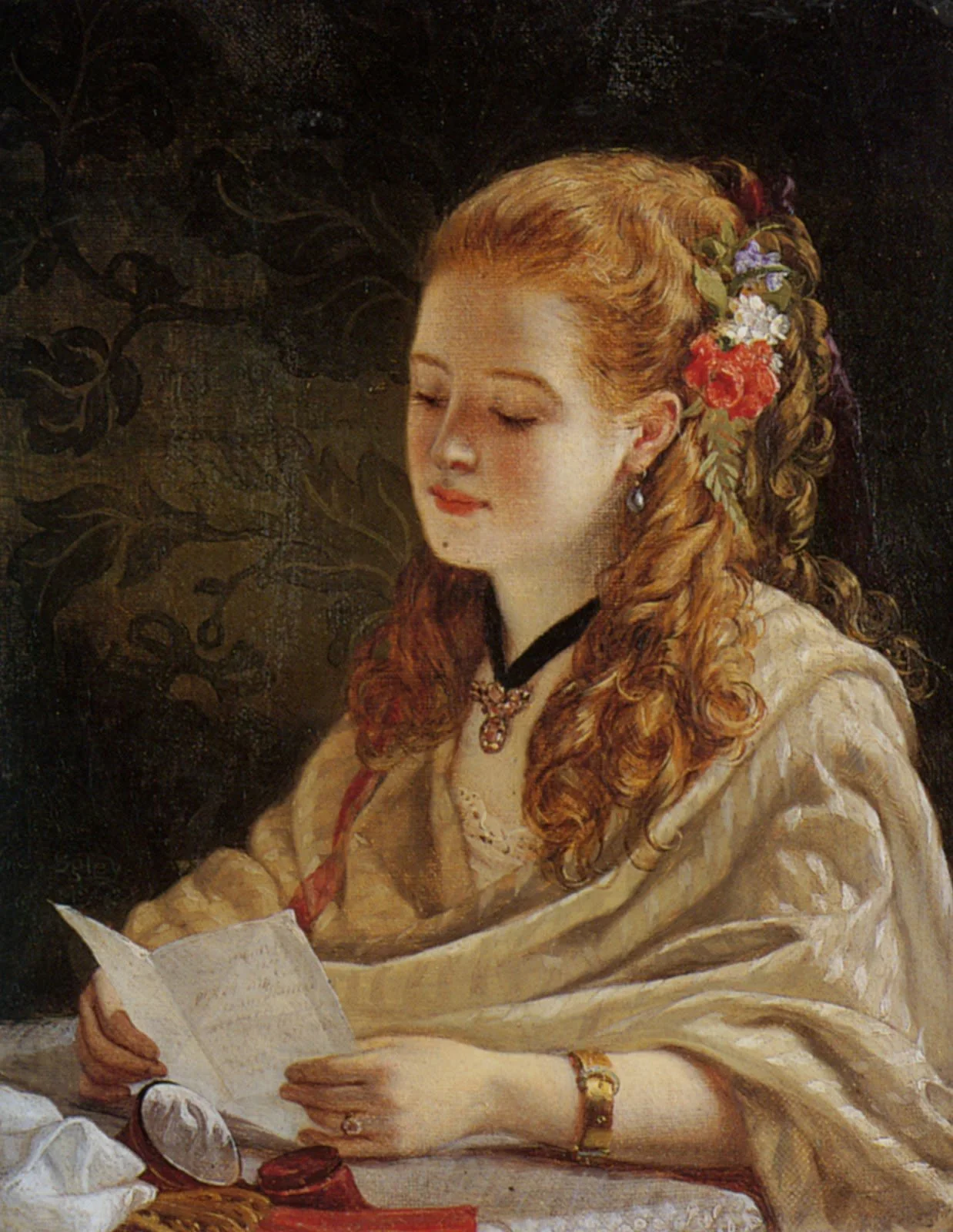
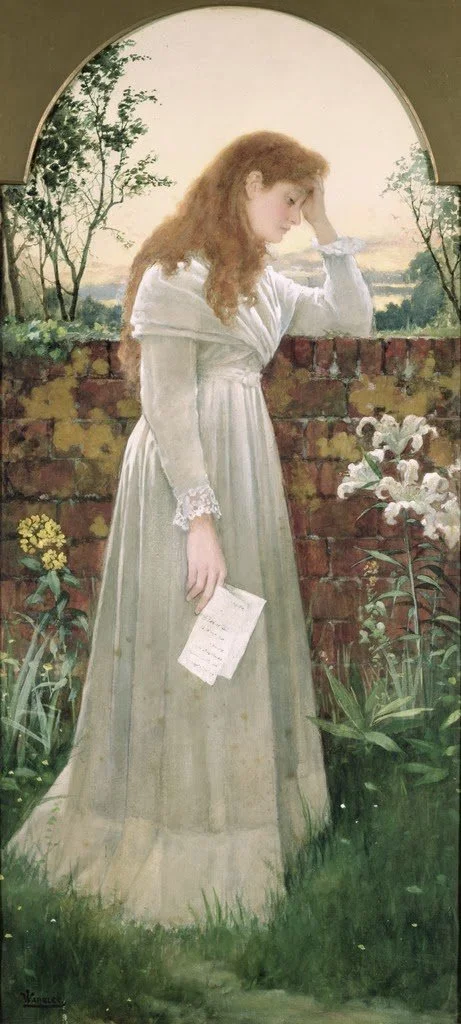
William Maw Egley, The Letter

A selfish heiress resents a beautiful former friend; meanwhile, a puritanical girl falls in love with a worldly actor.


Sarah Doudney (1841-1926) wrote poems and hymns as well as over fifty novels between 1871 and 1906, many of them pious works for girls.

“Shrewd sayings in a sententious form are scattered thickly throughout these pages, and prove the author to be a close but kindly student of humanity. She possesses, moreover, a vein of quiet humour which emerges pleasantly at times, as well as an artistic restraint which spares the reader unnecessary details. ‘When We Two Parted’ is a pleasant story of the conventional order.”  Athenaeum, March 28, 1885

“The lazy life of a small country town, where it is ‘always afternoon,’ is described with ease, and, if events are rare, the reader hardly recognizes the want of them. . . . Miss Doudney writes in a pleasant style. . . The book has a liberality of thought and treatment not common to works of this class.” Saturday Review, April 11, 1885

A (somewhat) contrasting view:

“The only fault to be found with When We Two Parted is that it is too much of a good thing.”  Academy, March 21, 1885

Download this fortnight’s novel:

The only digitized copy of today’s novel that I have found was once accessible from the British Library.  But in October 2023, the British Library was shut down as a result of a ransomware attack, and now, after 16 months, its Victorian novel collection remains inaccessible; many links on my site do not work in consequence.  I hope someday the collection returns; meanwhile, I trust nobody will mind if I post some British Library pdfs to an online storage drive, and links to said drive on this website, like this one, to today’s novel:

https://drive.google.com/file/d/1-n6YVdUjZQHjNqRX9ZiSEvX2EpfEriXu/view?usp=share_link

Crossword 322: Trash Bin

Ernest Normand, Evil Sought

Here is yet another in my series of crosswords exploring the dark side of the human condition (see, for example,  Crosswords 112, 114, 115, 224, 306), the filth and misery that other crossword constructors never come near.  Why don’t they, I wonder?  Is it that they are afraid—afraid, perhaps of the darkness within themselves, lurking just beneath their facile self-regard, their bourgeois pieties?


Download this fortnight’s crossword:

322-Trash-Bin.puz

322-Trash-Bin.pdf

Solve this fortnight’s crossword online:

322 Trash Bin

Novel 322: Walter Raymond, Taken at his Word (1892)

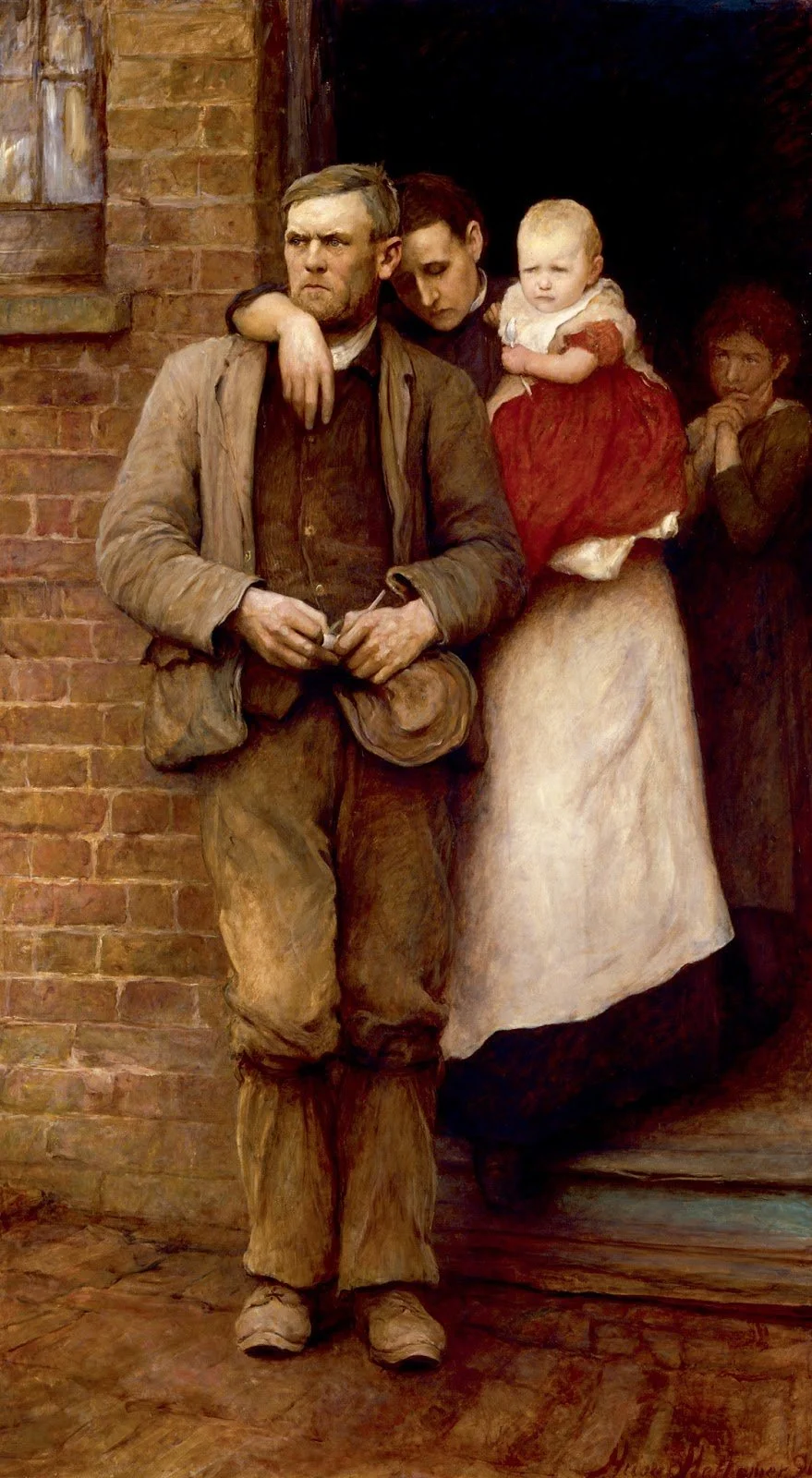
Hubert von Herkomer, On Strike

On a whim, a young man impersonates a manufacturer’s long-lost son.


Walter Raymond (1852-1930) was a glove manufacturer as well as a novelist; he wrote some thirteen novels between 1888 and 1926.

The society of a provincial town is “described with a brisk humour by no means common”; “It has true drawing of human nature.  It shows circumstances acting on character, and character modifying and modulating into growth.” Saturday Review, May 21, 1892

It “has substantial merits which render its defects of comparatively little consequence. . . .; the book, as a whole, is well worth reading.” Academy, June 4, 1892

A contrasting view:

“It rarely happens that the reader is introduced to such an unlovely collection of characters”; but the author “displays an ingenuity that prompts one to hope he may yet exercise his talents on a less repulsive theme.”  Athenaeum, August 6, 1892

Download this fortnight’s novel:

https://solo.bodleian.ox.ac.uk/permalink/44OXF_INST/35n82s/alma990148036800107026 ((Right-click (or control-click, if you have a Mac) on the “view digitized copy” links to download the novel’s three volumes in pdf form))

Crossword 321: Er, Er, What Was I Saying?

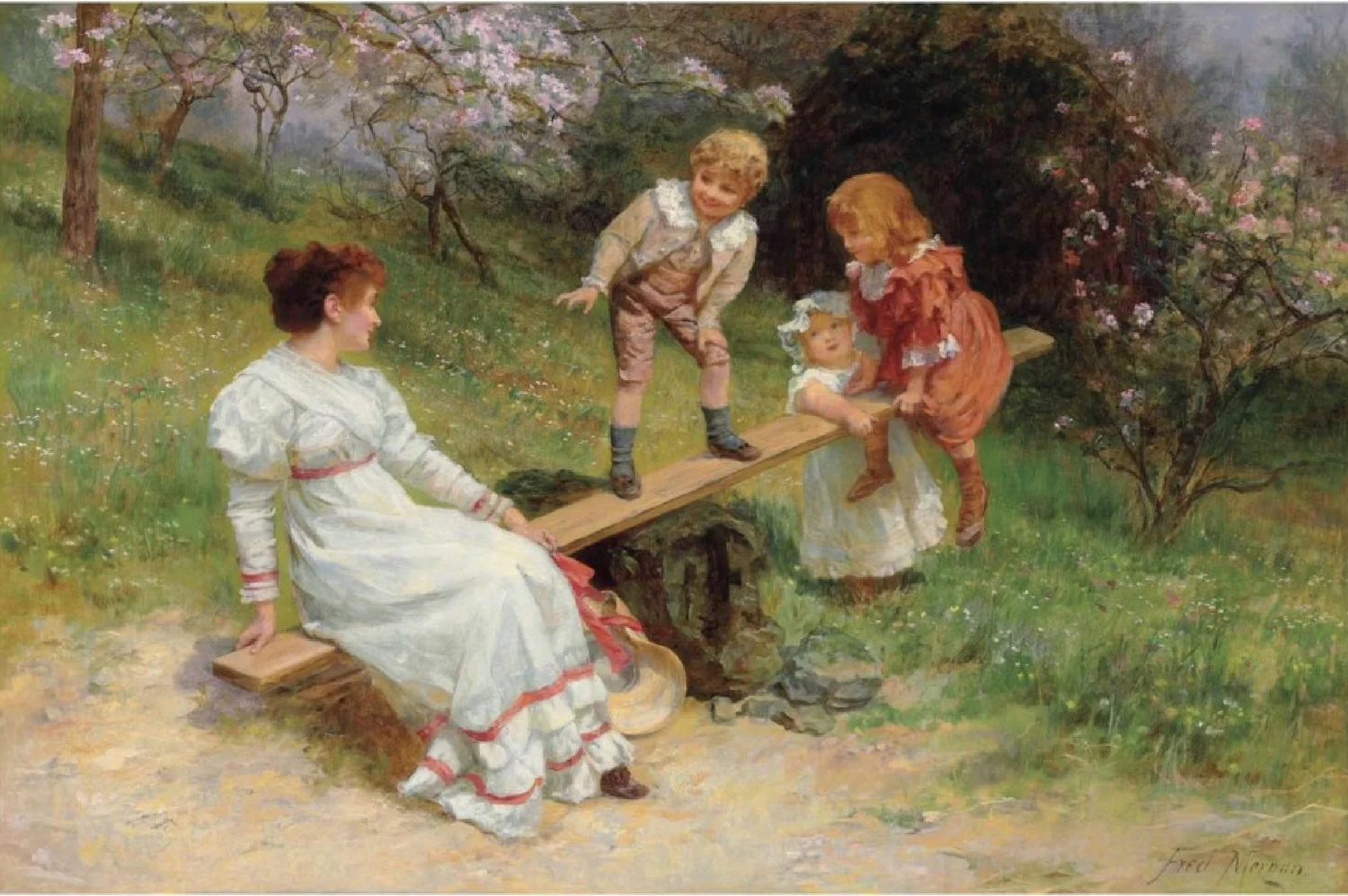
Frederick Morgan, The Teeter-Totter

I was saying something, I think, and it must have been something about crosswords, because this is where I introduce my fortnightly crosswords—but what?  Was it about the power of crosswords to do something?  Bend the arc of history toward justice maybe?  No, no, that was something else.  Cognitive function—that’s it.  Crosswords help maintain or even improve cognitive function in aging adults.  Studies have shown.  I’m pretty sure I read that somewhere.  Or did studies show that crosswords failed to improve cognitive function?  Or, actually, weren’t there also some studies that showed a correlation between crosswords and the arc of history?  I think I read about those too somewhere, maybe in the New York Times, or was it The New Yorker?  I’ve got to look those up.  If I could only find my glasses. . .


Download this fortnight’s crossword:

321 Er,-Er,-What-Was-I-Saying?.puz

321 Er,-Er,-What-Was-I-Saying?.pdf

Solve this fortnight’s crossword online:

321 Er, Er, What Was I Saying?

Novel 321: Arabella Kenealy, Molly and Her Man of War (1893)

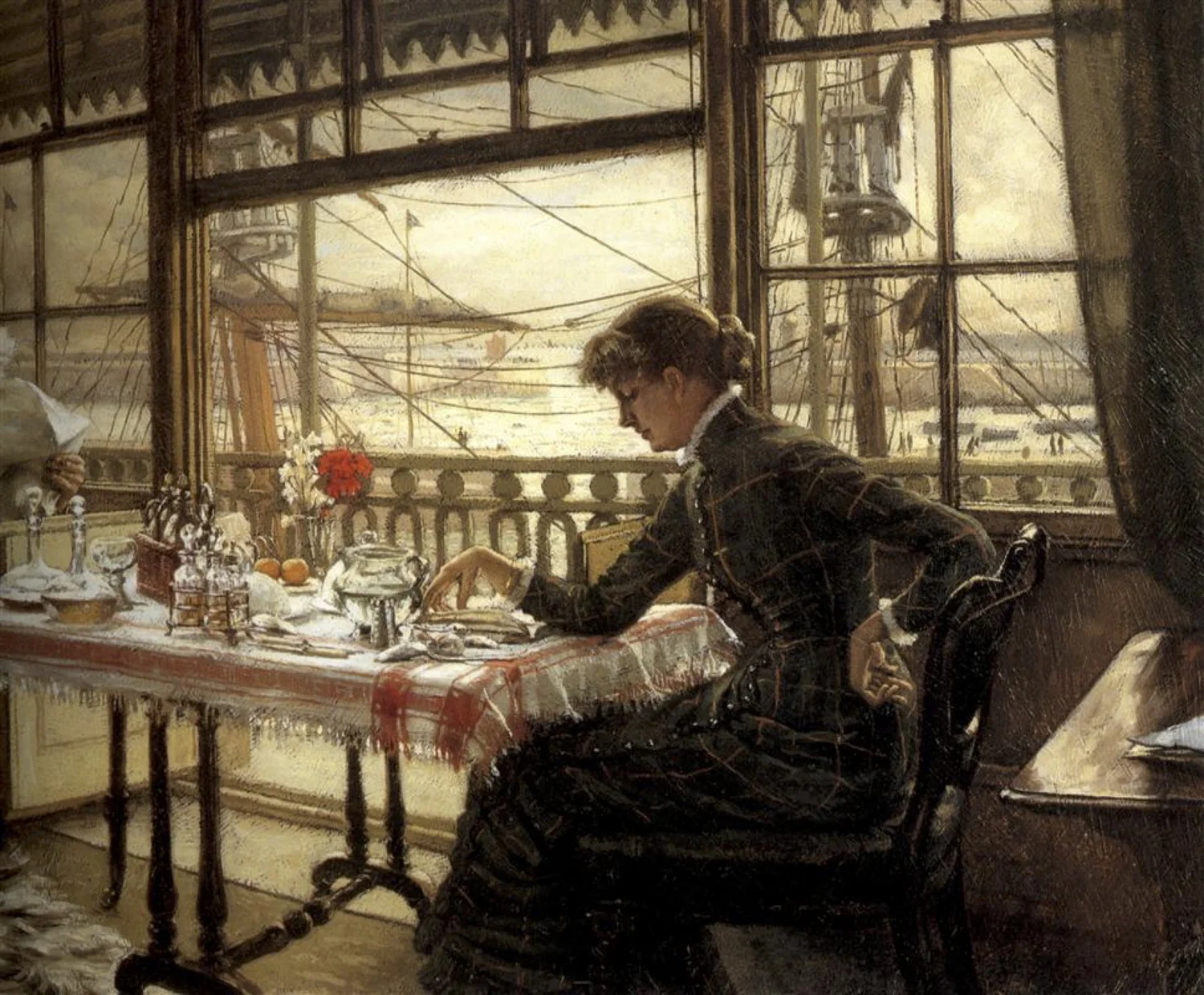
James Jacques Joseph Tissot, Room Overlooking the Harbour

Two cousins tour Italy on a yacht; one falls in love with an American sailor.


Arabella Kenealy (1859-1938) wrote some 25 novels between 1893 and 1917, many with feminist implications.

“A spirit of audacious flippancy and rather determined light-heartedness informs the thing and keeps it moving.” Athenaeum, February 10, 1894

“Rollicking fun and humour enliven every page of Miss Kenealy’s book. . . .  Miss Kenealy is a daring satirist; sometimes she is a savage one. . . .  The story is an antidote for the ‘blues.’”  Academy, March 3, 1894

Download this fortnight’s novel:

https://books.google.com/books?id=1ofH6LavXXUC&newbks=1&newbks_redir=0&dq=kenealy%2C%20molly%20and%20her%20man%20of%20war&pg=PA26#v=onepage&q&f=false

Crossword 320: Overworked Abbreviations

Charles Sillem Lidderdale, The Letter

Where would crossword constructors be without abbreviations?  How many themes would have to be discarded if it weren’t for EEO and EOE? And the AAA and the ABA and the ACA and the ADA and the BBA and the BBB and the BBC?  Indignant solvers may complain that they’ve never seen a screen referred to as an SCR, that SSRs aren’t much talked about anymore, that SPR is not a season they’ve encountered outside of a crossword, that an STR is not and has never been an orchestra section, or a narrow maritime passageway, or a stock unit, or a riverboat, or a soft-shell clam.  And they have a point.  But what they don’t consider is just what these guessable letters may have spared them in the way of unguessable jargon, or trivia, or slang.  This puzzle is a grateful tribute to the hard-working, much-abused abbreviations that have got us all out of more than one tight cruciverbal corner with minimal semantic damage.


Download this fortnight’s crossword:

320-Overworked-Abbreviations.puz

320-Overworked-Abbreviations.pdf

Solve this fortnight’s crossword online:

320 Overworked Abbreviations

Novel 320: Adeline Sergeant, Seventy Times Seven (1888)

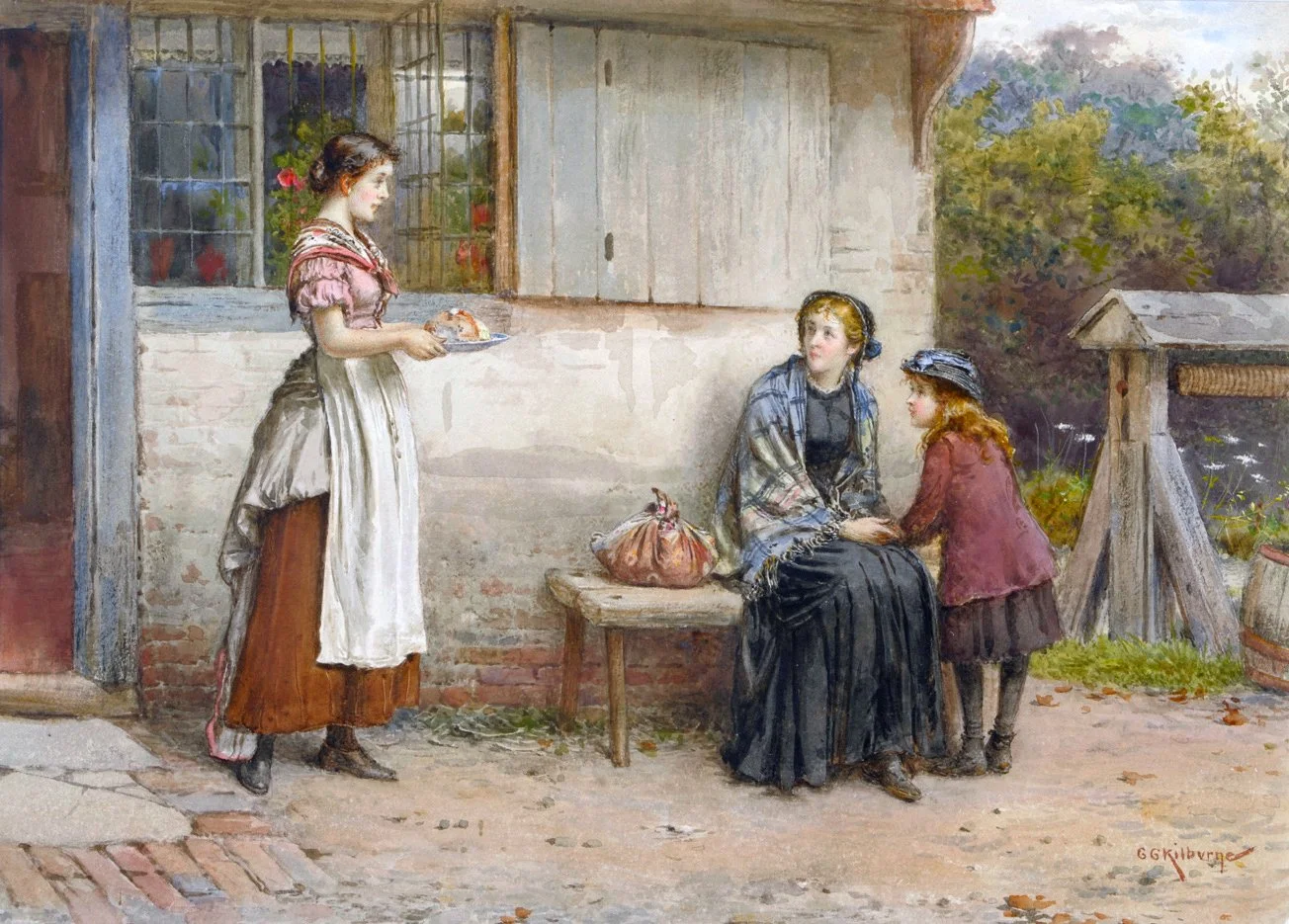
George Goodwin Kilburne, Charity

On the eve of her marriage, a woman discovers her fiancé’s discreditable past.


Adeline Sergeant (1851-1904) published some ninety novels during a twenty-one-year career, of which this was fifth.

“We have not read lately a more enjoyable novel of incident than Seventy times Seven. It is such a treat when an author has the wit to construct an effective plot and to work it out simply, without worrying the reader with immaterial side-issues and jejune reflections; and that is what Mrs. Sergeant has done.” Academy, June 2, 1888

The account of the two main characters “gradual approach to each other is told with a fine exquisiteness of imaginative realisation”; it “is from first to last a beautiful and satisfying story.”  Spectator, August 25, 1888

A contrasting view:

“There is a half-heartedness about Miss Sergeant’s handling of the apparatus of sensationalism which borders dangerously on the ridiculous. . . .  Miss Sergeant is not yet at home in the novel of incident.”  Athenaeum, May 5, 1888

Download this fortnight’s novel:

v.1 https://archive.org/details/seventytimesseve01serg

v.2 https://archive.org/details/seventytimesseve02serg

v.3 https://archive.org/details/seventytimesseve03serg

Crossword 319: Undeletion

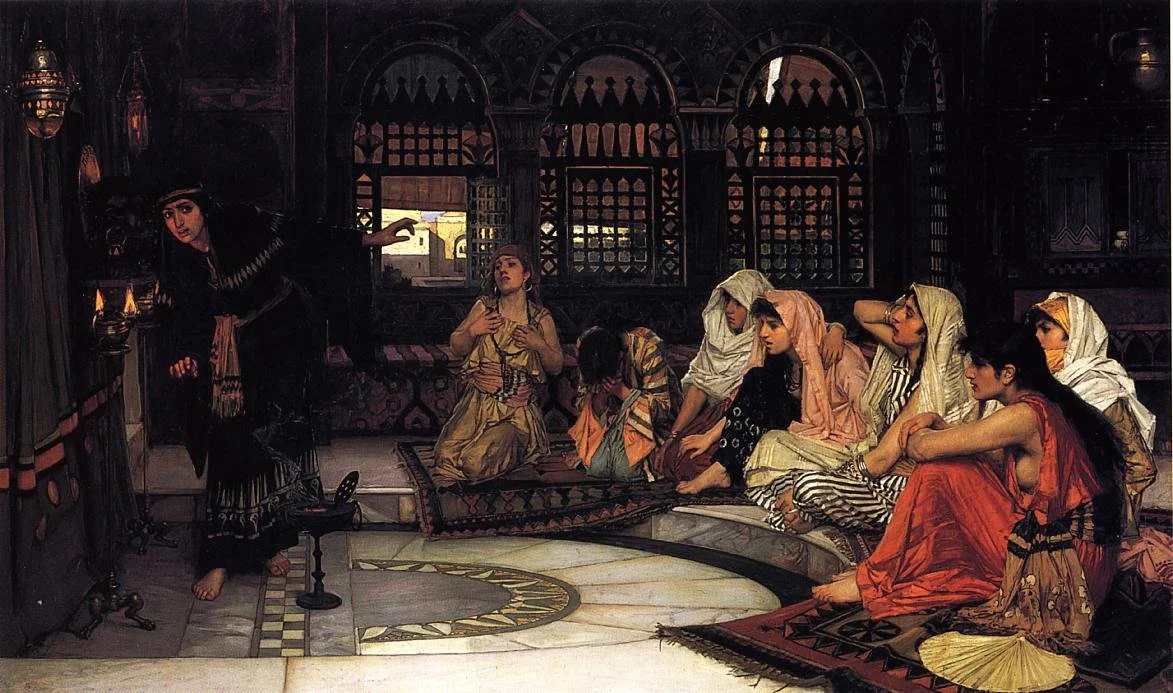
John William Waterhouse, Consulting the Oracle

To undelete a thing is to put that thing back in, but . . . what if the thing deleted were the syllable “un”?  Think about it!  The mind reels!  Doesn’t the word then refer simultaneously to an act and its opposite?  And doesn’t the resulting aporia call in question the very possibility of meaning outside the infinite play of signification?

I think I’m on the verge of a crucial insight here, one that will forever change the way we think about thinking, and write about writing about writing.  I’ll set it all out in a treatise as soon as I can find the time; meanwhile I’ve embodied it in this crossword.  Solve it and join me on the forefront of post-philosophical inquiry.


Download this fortnight’s crossword:

319-Undeletion.puz

319-Undeletion.pdf

Solve this fortnight’s crossword online:

319 Undeletion

Novel 319: James Brinsley Richards, The Duke’s Marriage (1885)

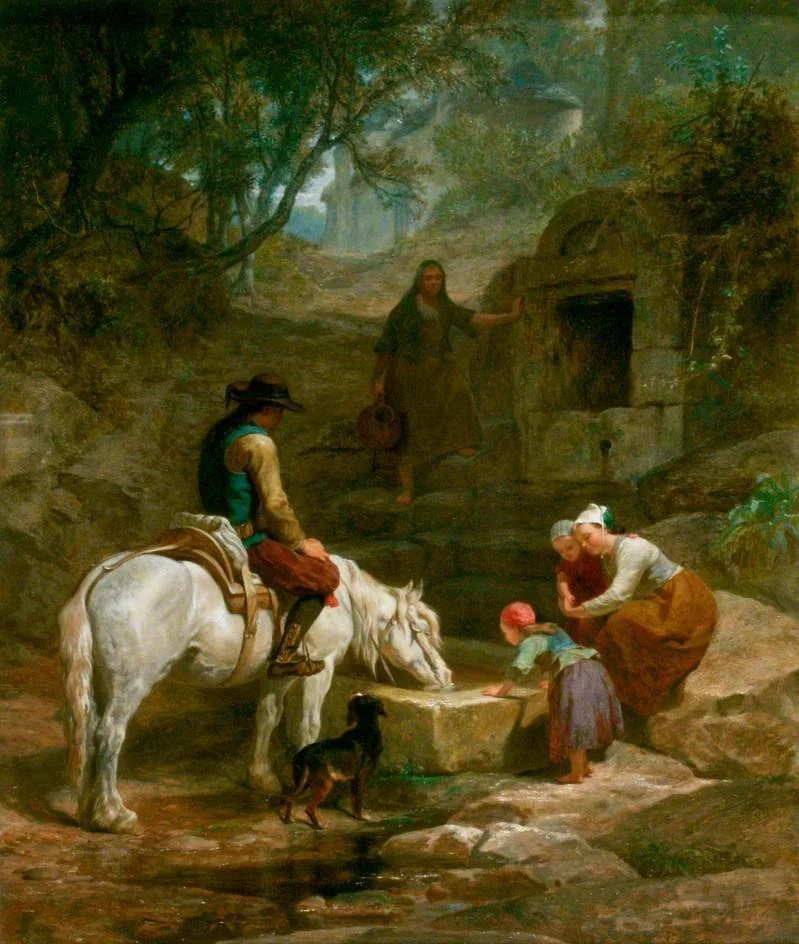
Frederick Goodall, The Drinking Trough, A Scene in Brittany

Amid the Franco-Prussian war, a young Englishwoman is engaged to a French duke.


James Brinsley Richards (1846-1892), originally named Reginald Temple S.C. Grenville Nugent Grenville-Murray, was the son of Eustace Clare Grenville Murray, who was the illegitimate son of Richard Temple-Nugent-Brydges-Chandos-Grenville, 2nd Duke of Buckingham and Chandos.  He wrote three novels, of which this was the first.


“The Duke’s Marriage introduces us to a new writer of fiction, and to one—a rarity since the death of Mr. Anthony Trollope—who actually requires the whole of his three volumes to do justice to himself and his characters.  It is full of life and humour.” Academy, January 30, 1886

“A clever and original story told with plenty of life and spirit and an abundance of epigram.” Athenaeum, February 6, 1886

“If the anonymous author of this work be a novice, a brilliant career as a novelist ought to lie before him. The plot is full of unexpected complications without being melodramatic, and the characters skilfully grouped and strongly individualized.”  Dublin Review, April 1886

Download this fortnight’s novel:

v.1 https://archive.org/details/dukesmarriage01rich

v.2 https://archive.org/details/dukesmarriage02rich

v.3 https://archive.org/details/dukesmarriage03rich

Crossword 318: The Morning After

Henrietta Rae, Songs of the Morning

It’s a 1972 Academy-Award-winning song!  It’s a Supreme-Court-case-worthy pill!  It’s an episode of the 60s British spy series “The Avengers” (but after Diana Rigg left)!  It’s also a 1937 song that didn’t win any awards, and (I’m consulting Wikipedia here) three other songs, and six record albums, and a radio show, and a web series.  Isn’t it time it was a crossword puzzle?  I’ve tried to fill this void while learning from the mistakes of the mornings-after of the past.  I hope my “Morning After” does not quite sink to the banality of the award-winning song.  I’m pretty sure it can’t be accused of arousing the heated political conflicts of the pill. And I have included Diana Rigg!


Download this fortnight’s crossword:

318-The-Morning-After.puz

318-The-Morning-After.pdf

Solve this fortnight’s crossword online:

318 The Morning After

Novel 318: Lady Florence Bell, The Arbiter (1901)

Walter Langley, Silent Sorrow

A man is forced to sacrifice either his career or his wife’s happiness.


Lady Florence Bell (1851-1930) wrote only a few novels late in the Victorian period; this one features an interesting dilemma and vivid characters.

“In spite . . .  of a flavour of improbability, the story is brightly written and full of that sort of incident which goes home to the English novel-reader. . . .  The characters are all clearly drawn society people of a typical sort.”  Manchester Guardian, November 13, 1901

“Mrs. Hugh Bell combines an original plot with a very clever study of some of those cross-relations and duties of family life to which she has given so much critical attention.  Her story has also the charm of the unexpected. . . .  There is a quiet, but very pleasant, readableness about the whole of this novel.” Spectator, December 7, 1901

Download this fortnight’s novel:

https://archive.org/details/thearbiteranovel24794gut
(These are links to text files, which you can download in a variety of formats.)

Crossword 317: Five Times Nine

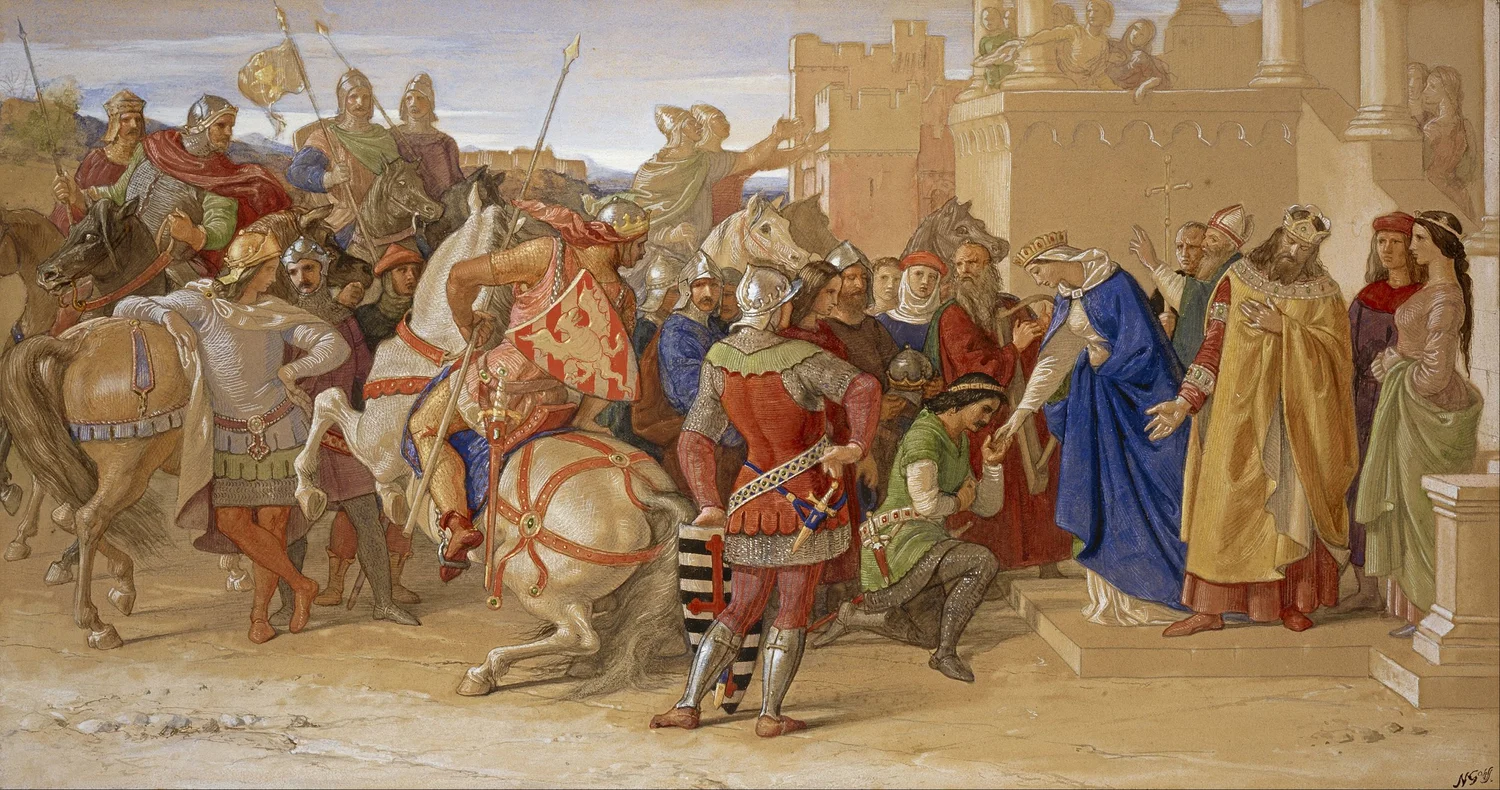
William Dyce, Piety—The Knights of the Round Table about to Depart in Quest of the Holy Grail

This is the first of a projected series of 81 puzzles honoring the multiplication table, which I intend to publish as a mnemonic aid for grade-school students.  After that I’ll honor the periodic table of elements with a series of 118 or 119, depending on whether ununennium is discovered in the meantime.  And then, concluding my table series series, I’ll honor the Knights of the Round Table:  Sir Lancelot, Sir Gawain, Sir Galahad, Sir Bagdemagus, Sir Segwarides, Sir Gumret le petit, Sir Bleoberis de Ganis, Sir. . . well, according to one medieval source, there were 1600 of them; and their table, allowing each knight three feet of space (which, given the armor involved, is not particularly generous), must have taken up over 42 acres.  Since their puzzles, posted at the rate of one per fortnight, will take up over 60 years, I may have to omit a few.


Download this fortnight’s crossword:

317 Five-Times-Nine.puz

317 Five-Times-Nine.pdf

Solve this fortnight’s crossword online:

317 Five Times Nine

Novel 317: Rev. Albert Eubule Evans, Pastor and Prelate (1892)

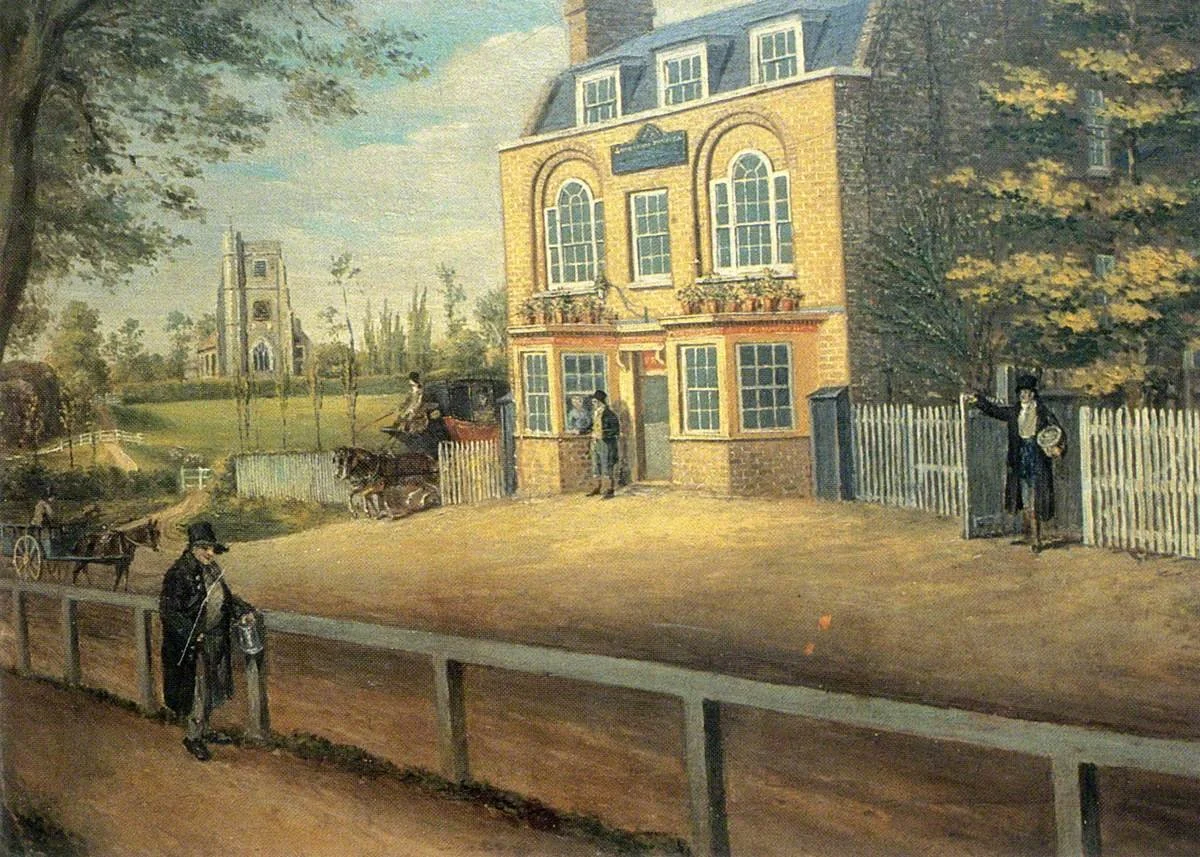
George Scharf, View of the “Three Compasses” Inn and St Mary’s Church, Hornsey High Street

In an obscure and charmless town, a clergyman is falsely accused and ostracized.


The Rev. Albert Eubule Evans, a Church of England clergyman, published some 14 novels between 1870 and 1894.  For didactic novels he used his own name; for popular novels like this one he used the pseudonym Roy Tellet.  Despite its forbidding title it provides an entertaining coincidence-laden plot and much amusing social satire.

“It is one of the best novels of the year, full of stir and diversity of interest, and with a sufficiently curious and original plot to satisfy and please even those most familiar with the resources of the tale-writer in producing careers strangely embarrassed by crime or error, and yielding situations marvellously tragical and awakening the keenest sympathies. ‘Roy Tellet’s’ is a strong hand, which wields the brush with singular and versatile power, and furnishes brilliant and startling, and never unpleasing, effects.”  Irish Times, March 10, 1892

“Pastor and Prelate is not a book that goes at all out of its way to be clever: its style, its incidents, and its characters are for the most part usual enough; but they are ‘intensely’ usual—that is to say, they are not in the least ordinary. A misguided person might for a little think that they were this. . . . But if he be not hopelessly misguided. . . . it will become pleasingly evident to him that . . . the handling of all these things is not ordinary at all. . . .  ‘Roy Tellet’ knows his craft, knows how to write a novel, and has written one. . . .  All the people are alive, the writing without being pretentious is crisp and individual, and the whole thing is good.”  Academy, May 14, 1892

Download this fortnight’s novel:

v.1 https://books.google.com/books?id=j6M_AAAAYAAJ&newbks=1&newbks_redir=0&dq=evans%20pastor%20prelate&pg=PA3#v=onepage&q&f=false

v.2 https://books.google.com/books?id=SqM_AAAAYAAJ&newbks=1&newbks_redir=0&dq=evans%20pastor%20prelate&pg=PA3#v=onepage&q&f=false

Crossword 316: Facing Uncertainties

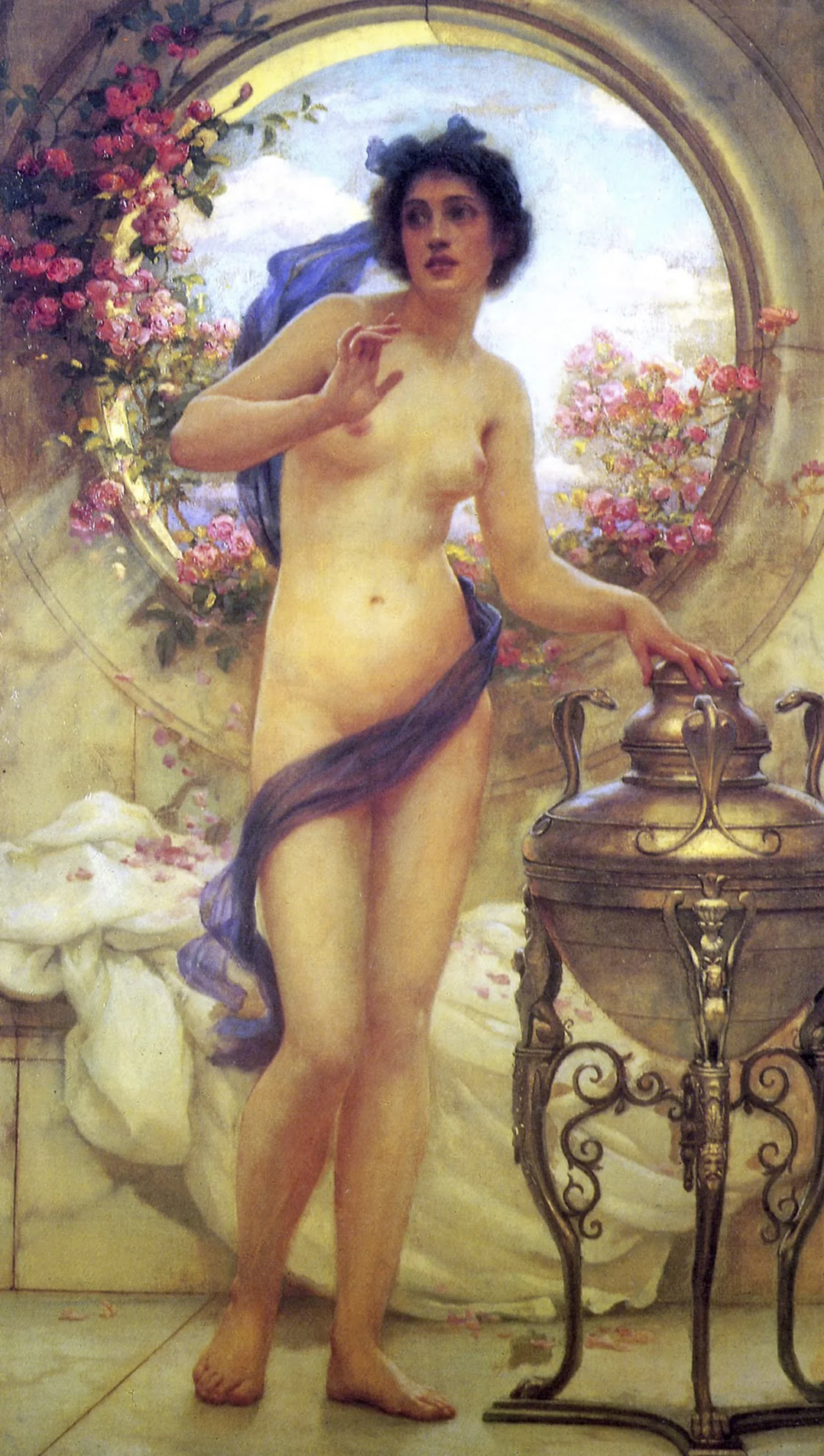
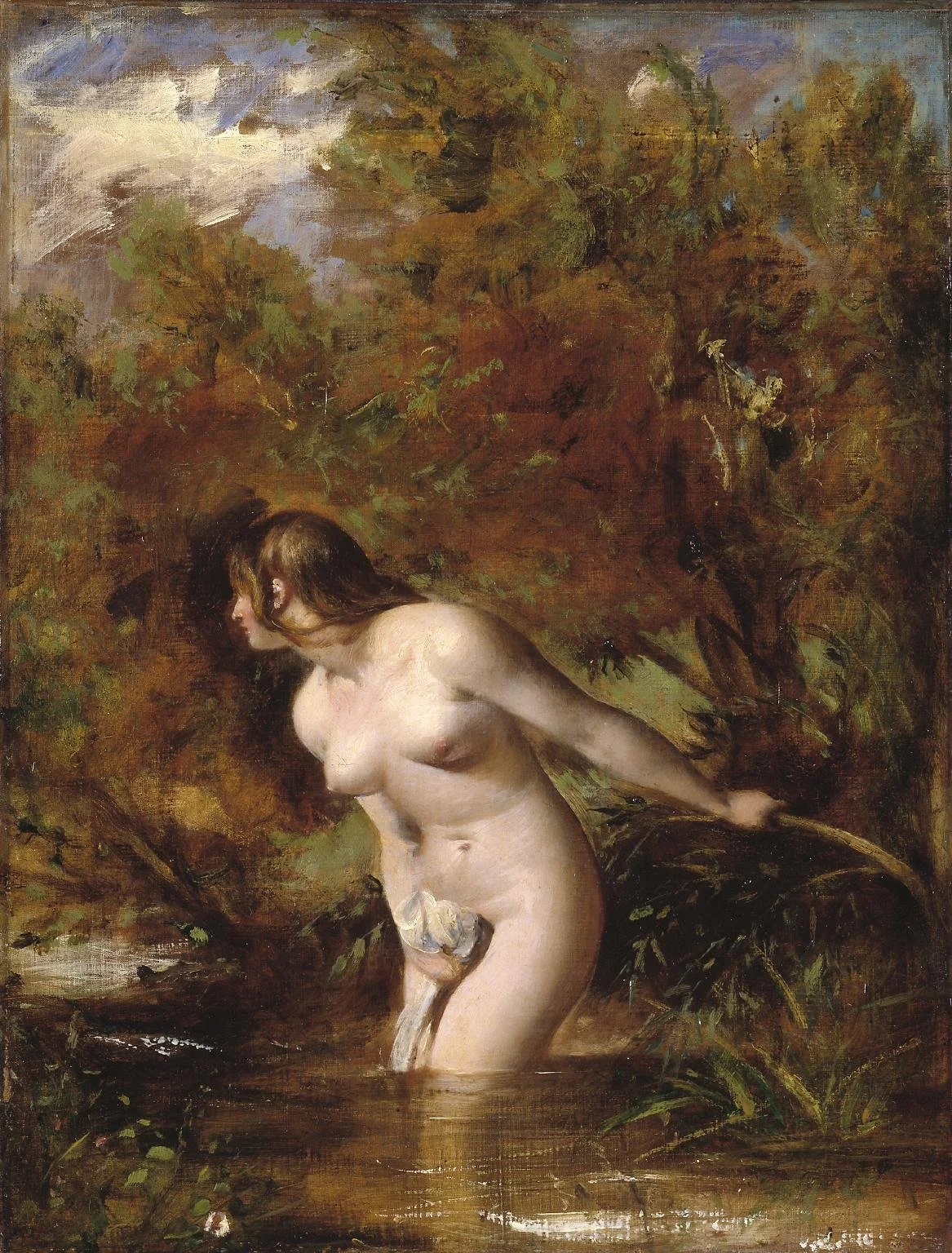
William Etty, Musidora: The Bather “At the Doubtful Breeze Alarmed”

Facing uncertainties is, of course, inevitably a part of life.  Will we live to extreme old age or succumb all too soon to accident or disease?  Will our crosswords be hailed by a grateful world, or neglected through ignorance, prejudice, and bad taste?  In any case, we must hope for the best and do our duty, as I do every week on this website.


Download this fortnight’s crossword:

316-Facing-Uncertainties.puz

316-Facing-Uncertainties.pdf

Solve this fortnight’s crossword online:

316 Facing Uncertainties

Novel 316: Mrs. Alfred Sidgwick, A Splendid Cousin (1892)

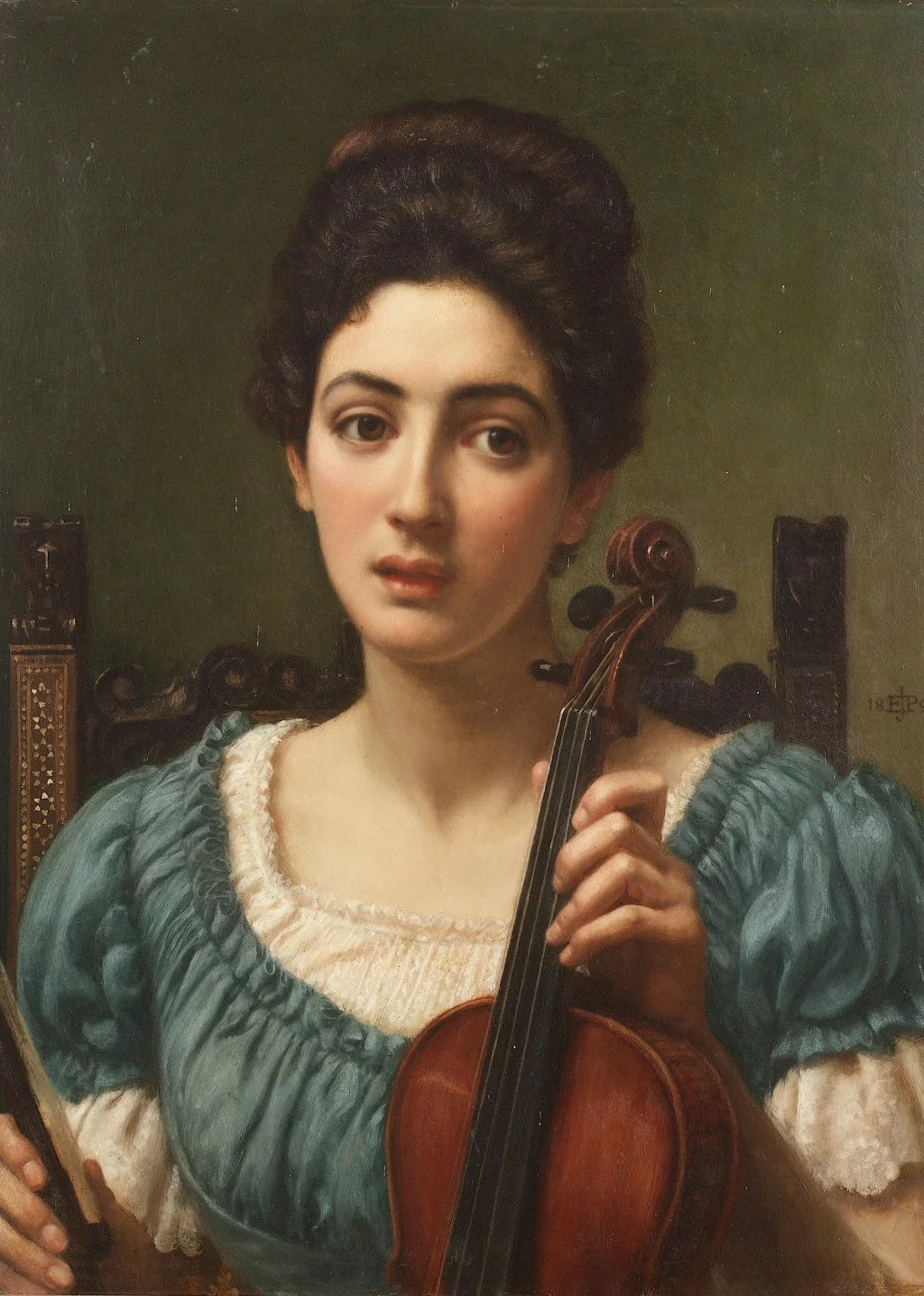
Edward John Poynter,  The Violinist
Edward John Poynter, The Violinist

A self-involved would-be musician bedevils her cousin’s life.


Here is another novel by Sidgwick, for whom see Novels 082, 142, 200 and 258.

The title character is “an exaggeration” but “near enough . . . to a reality of the present day to be worth satirizing.”  Bookman, January 1892

“It is a sombre tragedy, told with a simplicity and directness which heightens its effect. The obvious criticism that might be made is that all the characters are slightly exaggerated. . . . But this exaggeration, which would be a defect in a more elaborate book, really adds to the vividness of this short sketch; too much care bestowed on fine distinctions of light and shade would have weakened the strength and distinctness of the rapid impression so admirably given.”  Athenaeum, January 14, 1892

A contrasting view:

“Ibsen-and-water.” Academy, January 21, 1892

Download this fortnight’s novel:

https://books.google.com/books?id=r2E1AQAAMAAJ&newbks=1&newbks_redir=0&dq=splendid%20cousin&pg=PA3#v=onepage&q&f=false