“One of the most ingenious of crimes is detailed in The Danvers Jewels, and the secret is well kept until the end; then it is brought home in a manner that will surprise the reader. . . . a study of really considerable interest” Academy, September 3, 1887
“Those who read the little sensational novel called ‘The Danvers Jewels,’ when it came out two years ago, must certainly have done so with pleasure.” Athenaeum, November 9, 1889
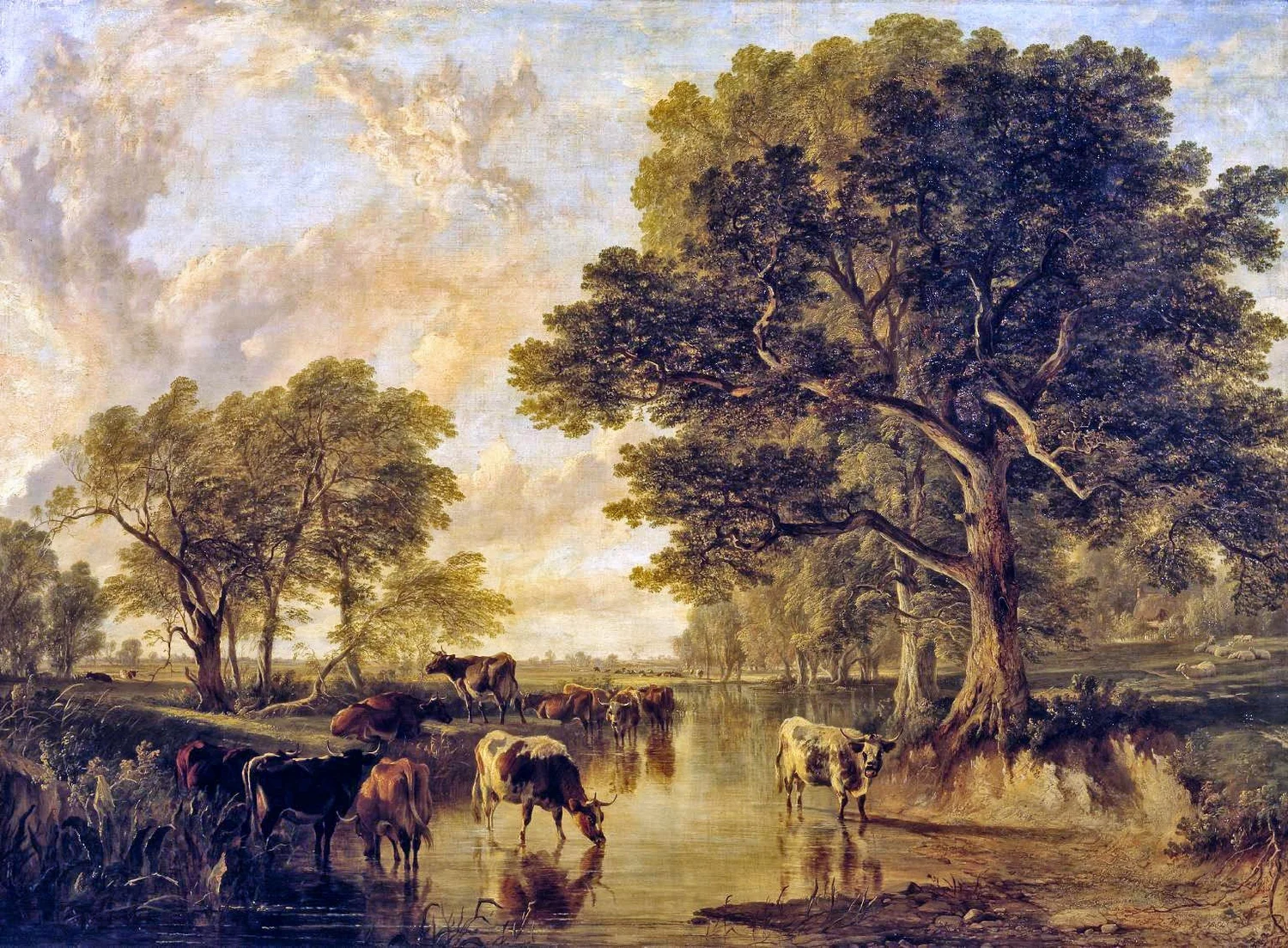
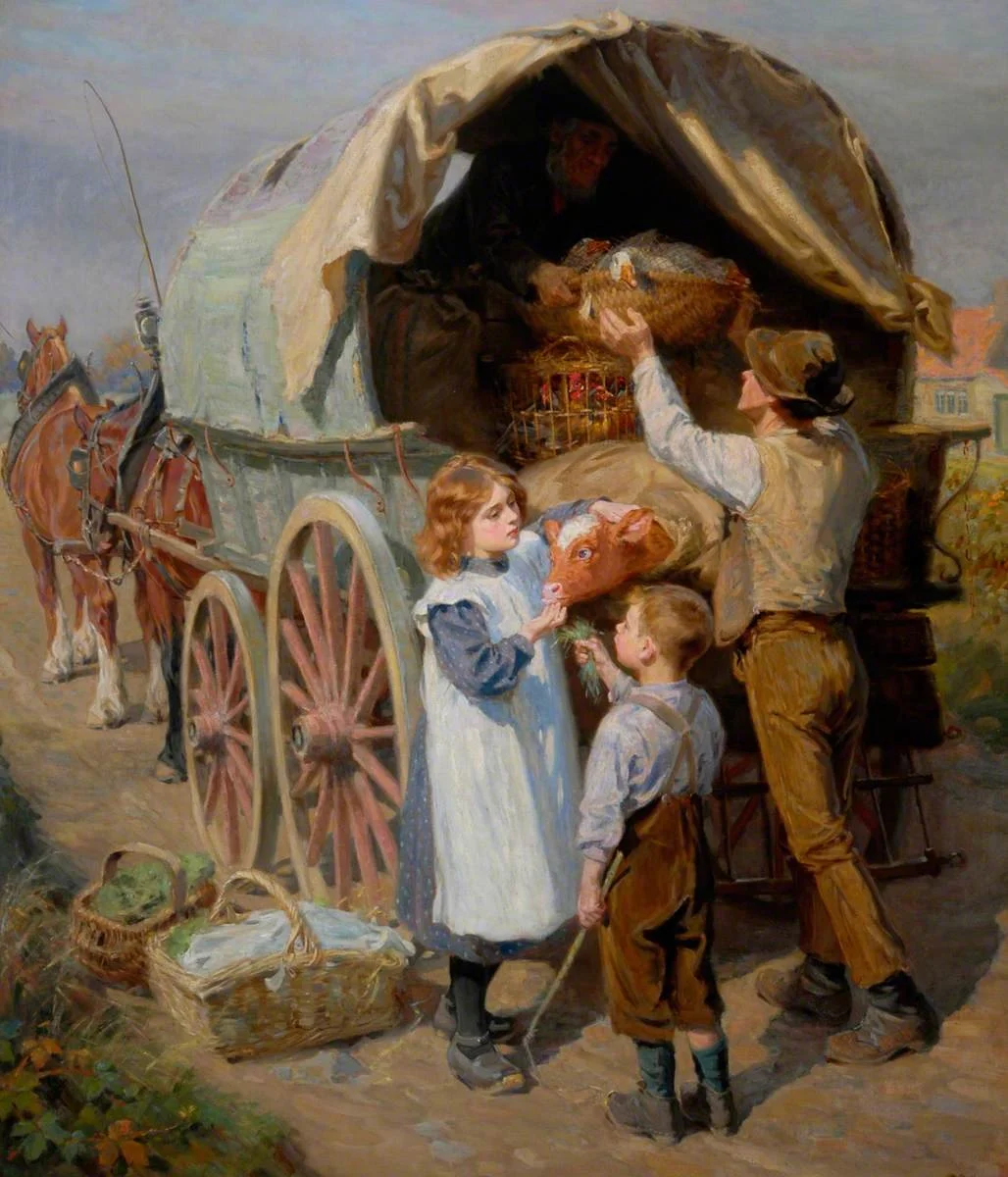
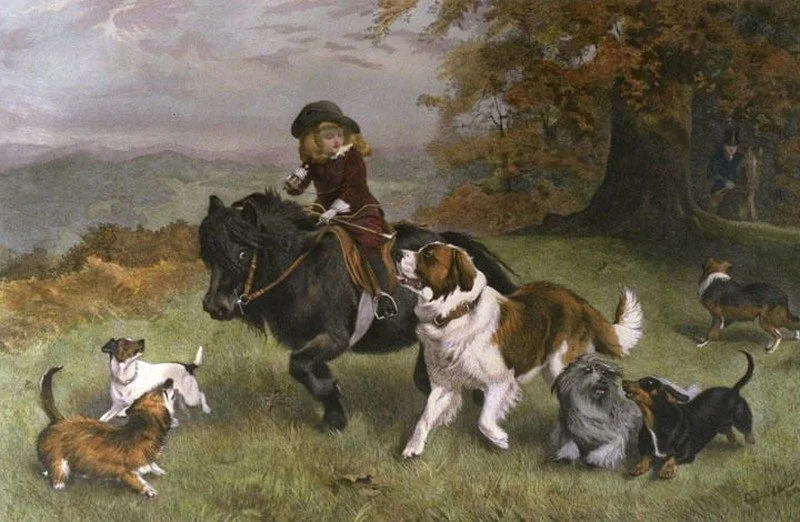
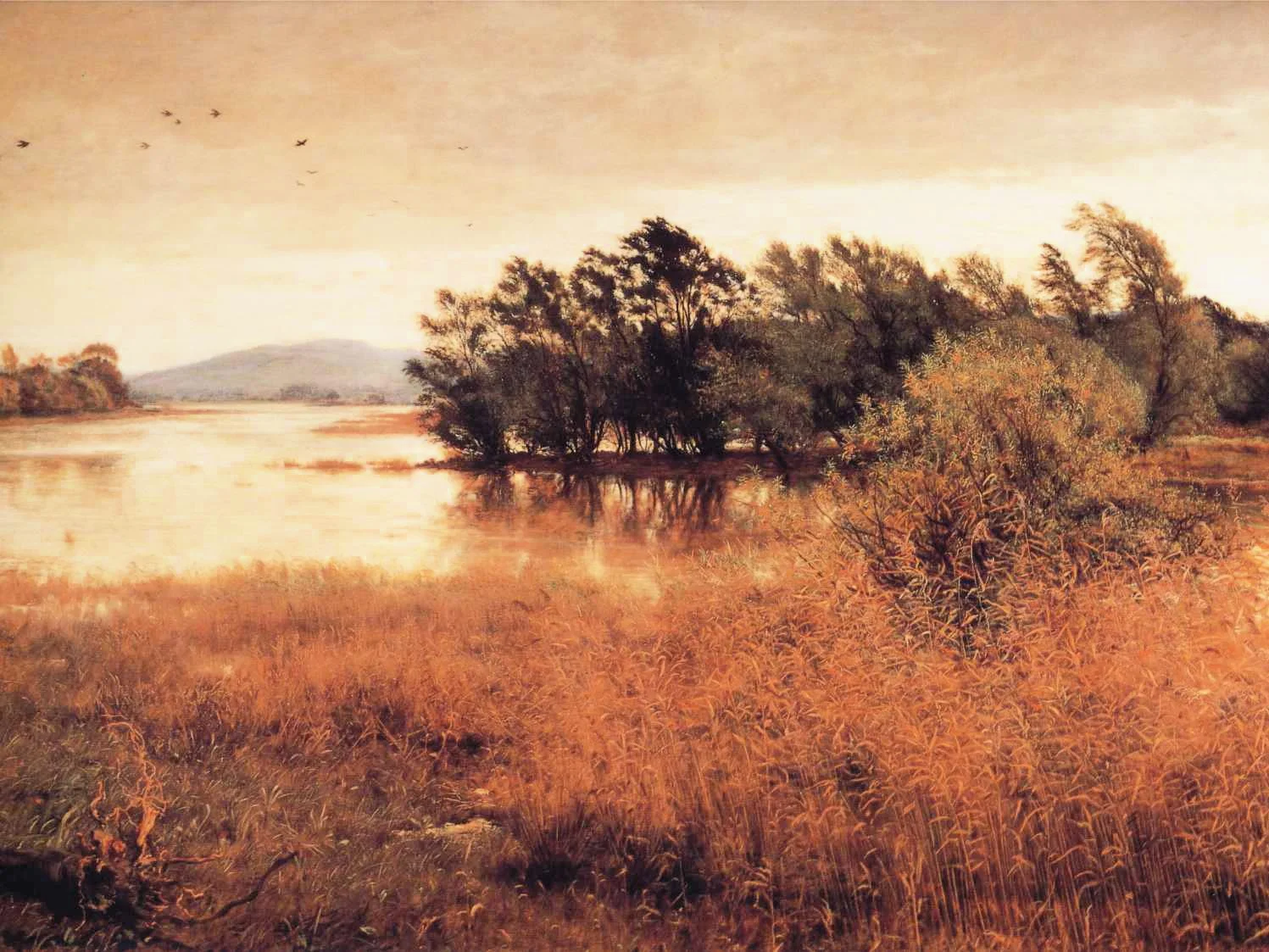
Frederick Richard Lee and Thomas Sidney Cooper, Evening in the Meadows
In my remarks on my last puzzle I had occasion to mention my alienation from alienation; today I recommend a better reaction to a sense of personal difference and exclusion: adaptation. It’s what allows us individually to survive and collectively to evolve. If you don’t fit in, if you’re different from other people, change! Nonconformists, mavericks, contrarians—who needs them? Join the herd! And if that herd is stampeding over a cliff, you’ll live a little longer by stampeding with it than by falling beneath it, and die maybe a little less unpleasantly.
A virtuous young lady is driven by poverty to do wrong.
This is the seventh novel I have recommended by the great “Mrs. Alexander.” For the others, see myindexof works by recommended authors.
The characters are “finely sketched and delicately discriminated,” the dialogue “delightfully human and individually characteristic.” Saturday Review, August 10, 1889
“The story takes form and colour as it proceeds, and the characters impress us gradually with their force in the only natural manner.” Athenaeum, August 10, 1889
The author, “one of the most capable producers of . . . circulating-library fiction” has “never done anything better.” Spectator, August 31, 1889
Do you feel like everybody else is part of something from which you alone have been excluded? Well, everybody else feels just the same way—everybody else, that is, except me, because I’m not like everybody else.
A twice-divorced woman schemes to regain social respectability.
Frances Charles Philips (1849-1921) was an army officer and a barrister before becoming a novelist; he wrote some 28 works of fiction, of which this was the first.
“Mr. Philips’s story is a work of art, and, being much superior to the rough sketches of an average novelist, it discharges the true function of every work of art by representing things as they actually are, and teaching the observer to discriminate between appearances and realities.” Saturday Review, March 6, 1886
A contrasting view:
“As in a Looking-Glass is an essentially bad book. I wish it had not been necessary to say this, as it is written with much sprightliness. . . . The novel is vulgar and disgusting, and, in some respects, worse than any of M. Zola’s; but, in the present temper of the novel-reading public, it will probably be read all the more on that account.” Academy, September 19, 1885
Are you feeling sad again, depressive solver? Is your advice ignored? Are your merits unrecognized? Is all your love in vain? I remember feeling that way myself once, years ago, before I became a fabulously successful, universally adored crossword constructor. In particular I remember one day, when I was driving sorrowfully down a rural highway, barely holding back the tears of self-pity, I happened to pass an enormous trailer full of pigs, crammed ruthlessly together, hopelessly confused, mortally terrified—with good reason, as they were headed, no doubt, to the slaughterhouse—and I thought, what do I have to complain about? Today’s puzzle is a memento of that moment of insight. Stop whining and solve it.
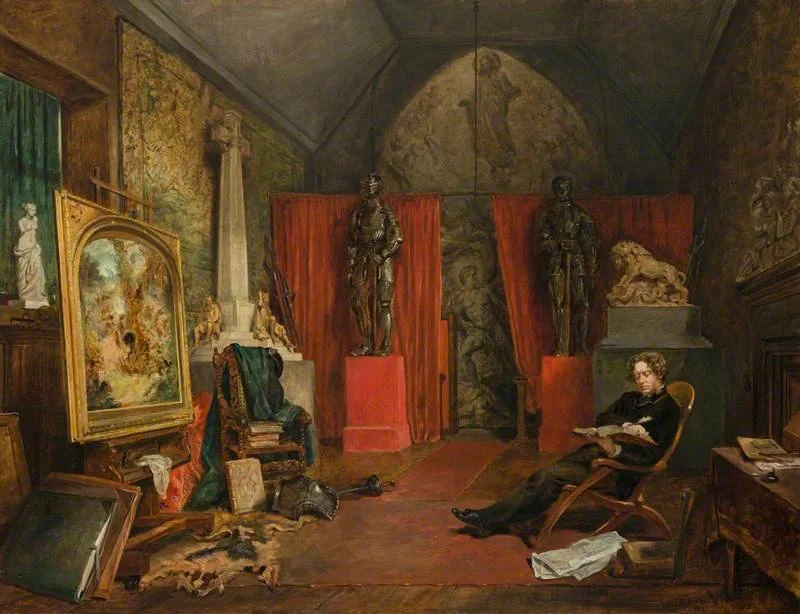
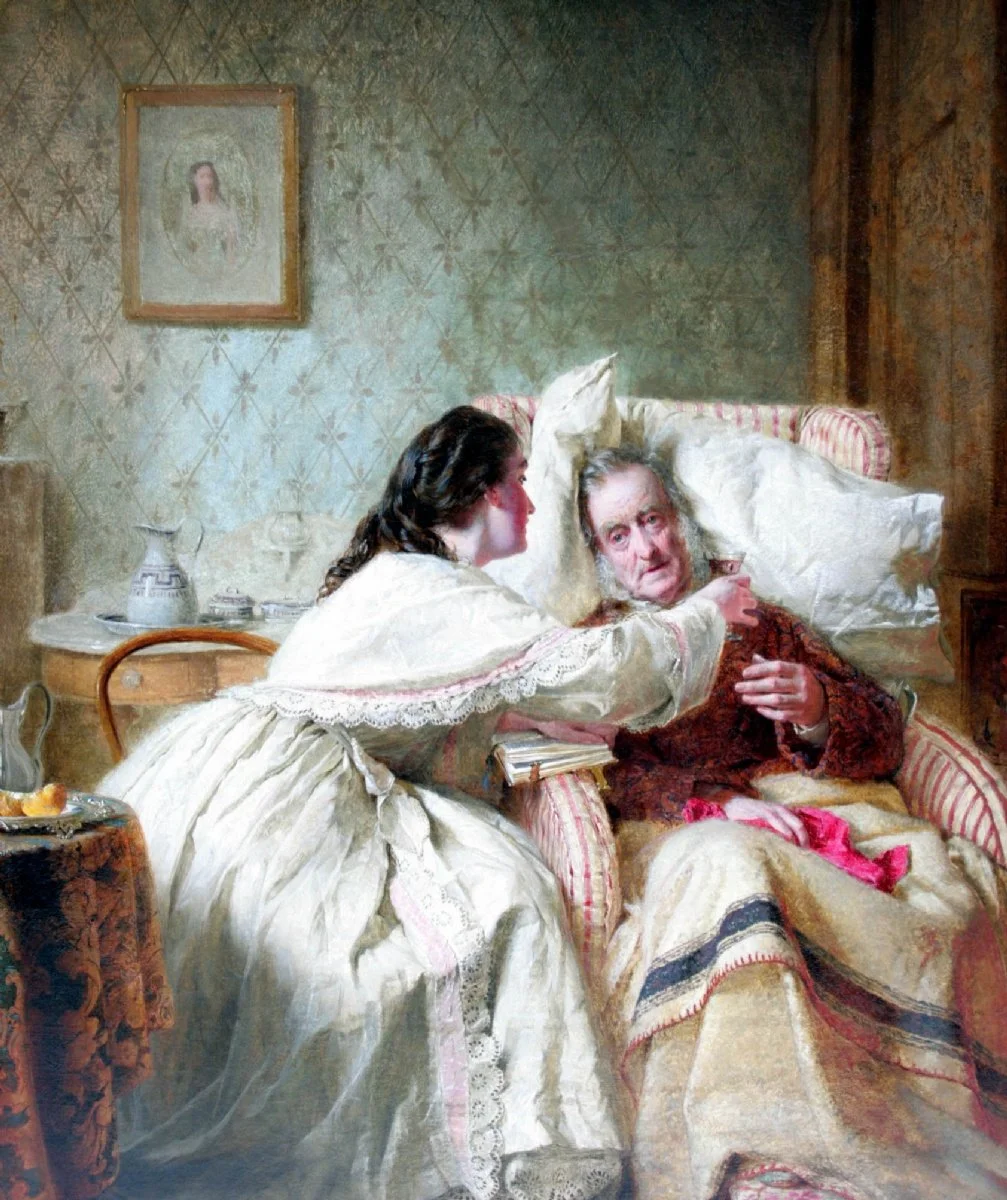
John Ballantyne, Sir Joseph Noel Paton, Artist (Shown in his Studio)
Four sisters, nearly bankrupt at the death of their father, set up a photography shop.
Amy Levy (1861-1889) wrote only three novels before her early death by suicide. This level-headed, good-natured account of four young women’s struggle against adversity would not lead one to expect such a fate for its author.
“Miss Levy’s story is bright and fresh; there is a dash of originality in the idea and plenty of spirit in its execution”; it is “told with both humour and pathos.” Athenaeum, October 27, 1888
“There is a quality of ‘liveness’ in the book, a faculty of dialogue, and some scraps and bits of character drawing here and there, which carry the reader pleasantly through for the present, and give good promise for the future.” Academy, November 19, 1888
On March 26, 1665, Samuel Pepys, the great English diarist, recorded that he had lately enjoyed an unusually long spell of good health and wondered what had caused it. Three possibilities occurred to him: the possession of a rabbit’s foot (an excellent “preservative against wind”), the avoidance of sleeping on his back (which tended to make his “water the next morning . . . very hot”), or the “taking of a pill of turpentine every morning.” Now, as a confirmed disbeliever in conventional medicine, as in all things based on reason and logic, I’ve tried each of these remedies myself, without however noticing much good effect, though the last of them may have had something to do with the state of mind in which I thought up today’s puzzle.
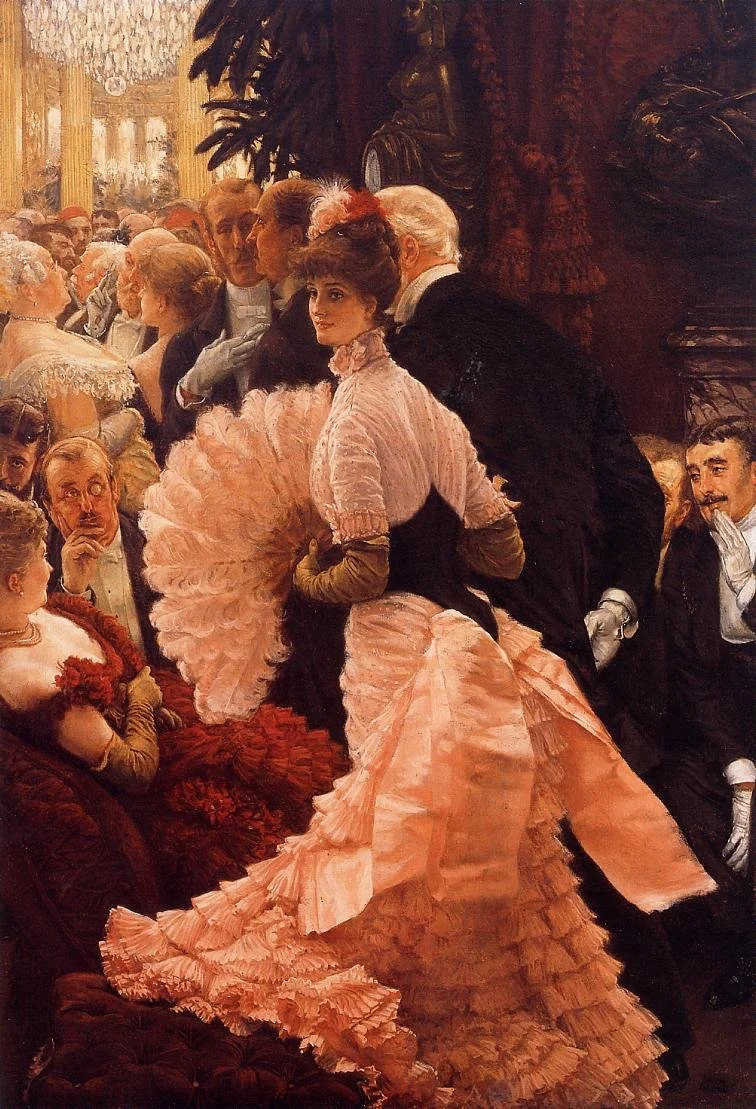
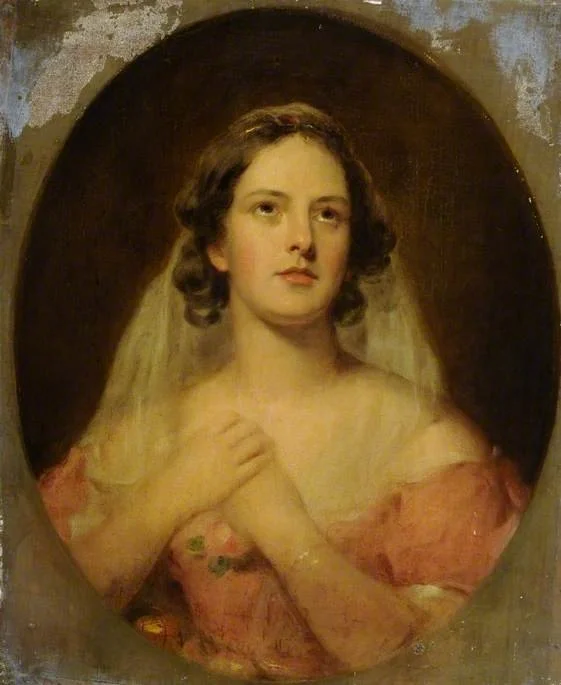
Abbott H. Thayer, Head of a Woman with Fur-Lined hood
A young American woman confuses her ideals with her social ambitions.
Here is another novel by Grant, for whom seeNovel 257.
Grant “presents a drama of life; he marshals a variety of characters, each original and vital; his central figure is a unique creation, drawn with the unfaltering hand of a master. The reader will rejoice in what is distinctly a new book, as full of freshness as of vigor.” New York Times, May 19, 1900
“The book . . . has completely conquered us. It has triumphed both over our prejudices and over our purpose. Not only that, but a very careful reading of it compels us at the outset to say that no American writer for many years has wrought out a work of fiction so full of meaning, so admirable in its literary quality, and so large and comprehensive in its scope as this book of Mr. Grant’s. We came to scoff, but we have remained to praise; and Unleavened Bread deserves not only all the praise that we shall give it, but a much more exhaustive and critical consideration than any that is possible to us in these pages at the present time. Mr. Grant’s novel has certain qualities about it which are rarely found in anything that resembles an harmonious combination. In the first place, it is a most accurate and adequate study of character. In the second place, it is a most interesting story, one which compels you to read it to the end and then to read it once again, in order to revert to certain passages and episodes of which the full significance is not clearly understood at the time of the first reading. Again, it is almost the only novel that we know of which can be called American in the true sense of that word. . . . Unleavened Bread has the rare merit of growing more and more absorbingly interesting as it nears the end. No casual review can do justice to the admirable skill which Mr. Grant has shown in the development and conduct of the story, nor can we give an adequate idea of the point, the keenness and the pungency with which he has hit off a thousand little things, each of which, in itself, is of no particular importance, but all of which when taken together make the book a marvellous picture of American life today. The social part of it and the political part of it deserve equal praise; and while the local colour—whether the scene be Benham or New York or Washington—is perfect, the story as a whole is free from localism and is absolutely national.” Bookman, July 1900.
A contrasting view:
“The book leaves a painful impression. It is a powerful attack on what Judge Grant takes to be the shallow intellectual culture of the ‘new woman,’ with her catchwords of supposed progress, but the need of such a book is not apparent. Selma is neither natural nor typical of anything. The best that we can say of the book is that ‘Unleavened Bread’ will be talked about.” Chicago Daily Tribune, May 19, 1900
Three hundred! It’s an important number. There are three hundred days in the year, if you don’t count the other sixty-five or so. There were three hundred Spartans at the Battle of Thermopylae. Three hundred years ago today, J.S. Bach’s St. John’s Passion had its debut. In 300 A.D., Micheon (as Wikipedia informs us) became the ruler of the Korean kingdom of Goguryeo, and Li Shou, future emperor of the Cheng Han dynasty, was born. And so today, in honor of Li Shou, and Micheon, and St. John, and J.S. Bach, and all those fearless Spartans, I post my 300th crossword.
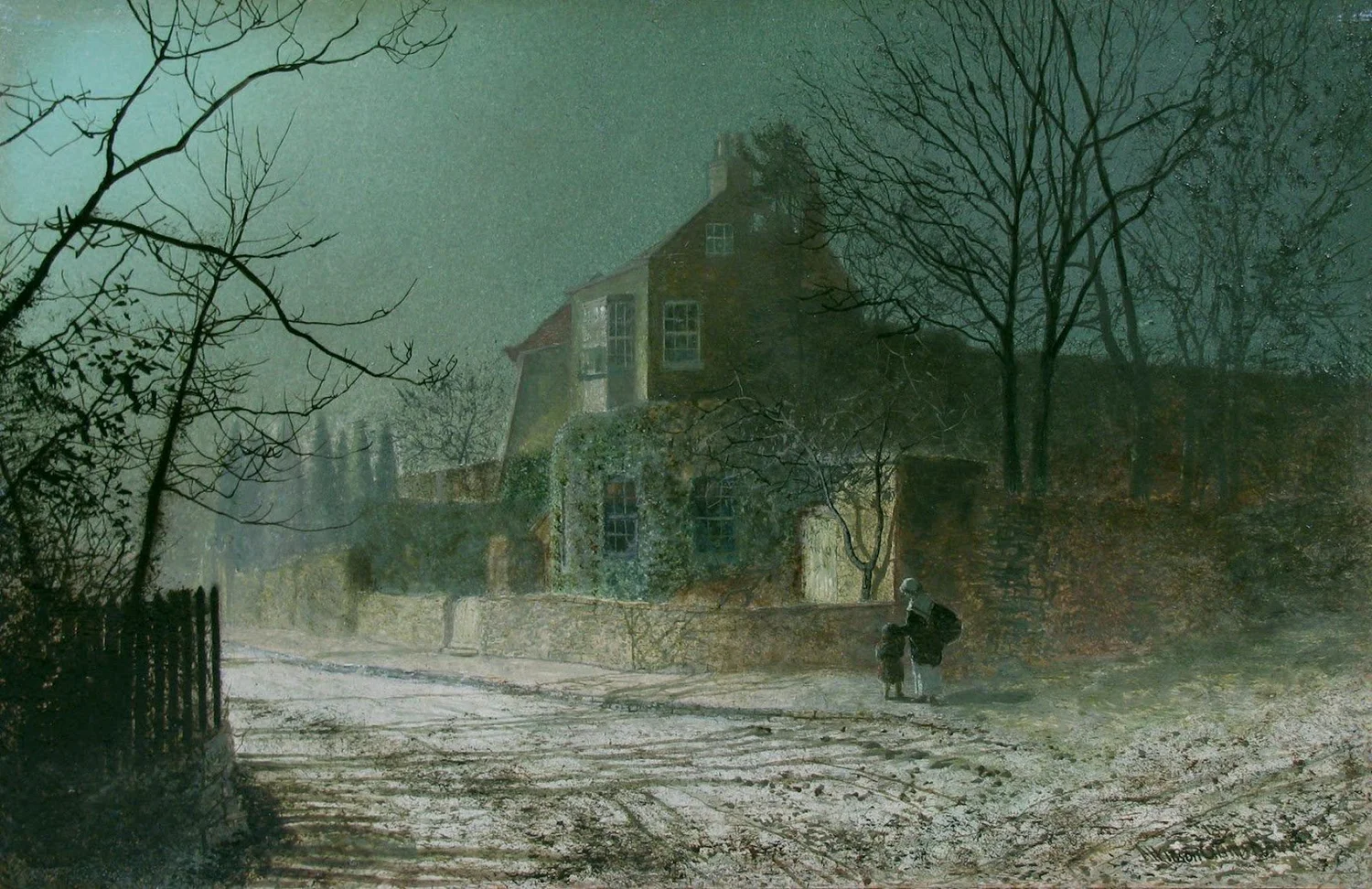
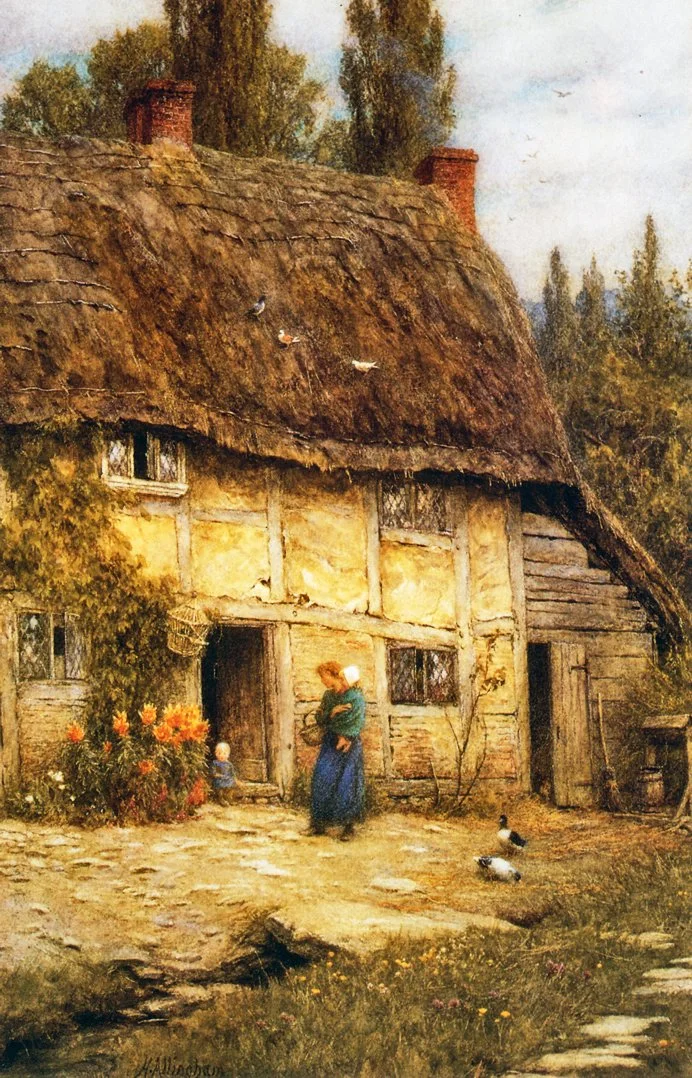
Helen Allingham, Thatched Cottage, West Horsley, Surrey
A cosmopolitan young man inherits a country estate, then has to deal with his older nephew, whose boyish charm and speculative ventures cause trouble.
Here is yet another novel by Norris, for whom see Novels002,054,104,156,209, and260.
“The story is excellent, the characters stand firmly upon their feet, and the style has that combination of smoothness and vigour which is so difficult to achieve and so charming when achieved; . . . one of the cleverest and brightest novels of the season.” Spectator, November 24, 1888
“Mr. Andrew Lang, in a recent number of the Contemporary Review made a remark to the effect that Mr. W. E. Norris was—if I may use an advertising phrase—an ‘excellent substitute’ for Thackeray. Such a comparison is meant to be complimentary, but it is apt to be damaging. Mr. Norris is not Thackeray, but he is himself, and our plain duty is to be grateful for the mercies of the present without casting a regretful glance at the mercies of the past. . . . There is not a conventional or clumsily-drawn portrait in the book, even supernumeraries . . . being finished to the finger-tips. . . . In happy little bits of phrasing The Rogue is very rich . . . When the book-maker of the future compiles a volume of the ‘Wit and Wisdom of W.E. Norris,’ he will find The Rogue a happy hunting-ground.” Academy, November 24, 1888
N.B. The above links are, for the present, inoperable, because the British Library’s website has not yet recovered from a criminal attack. Meanwhile, a downloadable version of the novel, in its complete form, is, apparently, otherwise unavailable. Google Books offers volume 1 of the 2-volume Tauchnitz edition here:
A site called Hathi Trust offers downloadable pdfs only to members of elite institutions, though the texts inolved are and have long been in the public domain. I am excluded; probably you are too. But we can page through the novel online here:
The whole situation neatly illustrates a sad internet irony: in order to block criminals, web sites put in place elaborate security barriers that block honest users—but don’t block criminals.
Here’s another six-pack of heady, refreshing theme entries, cold-filtered and beechwood-aged as usual. Given their intoxicating wit, you might want to share them with a friend, or space their consumption over two or three days, just to be safe.
A selfish scholar uses his daughter as an assistant, neglecting her happiness.
For Lucas Malet (the pseudonym of Mary St. Leger Kingsley Harrison), seeNovel 28.
It has “finish and delicacy of workmanship”; it “does not aim very high; but it is such a perfect piece of execution, and works out with so fine a touch all that it does aim at, that it would require us to go back to Miss Austen to find anything that better deserved the praise of fine form, fine grouping, fine colouring, humorous delineation, and precision of design.” Spectator, June 9, 1888
“A study of characters rather than a plot, and exhibits considerable graphic faculty. The author sees her personages clearly, and sets them vividly before us.” It is “not only a good piece of work, but has the note of distinction.” Academy, July 7, 1888
An alternative view:
It “opens extremely well, and the reader’s disappointment is all the greater when he finds it gradually dwindle into a tale in the manner of Mr. [Henry] James” with “no story” and “extremely uninteresting” characters. Athenaeum, June 16, 1888
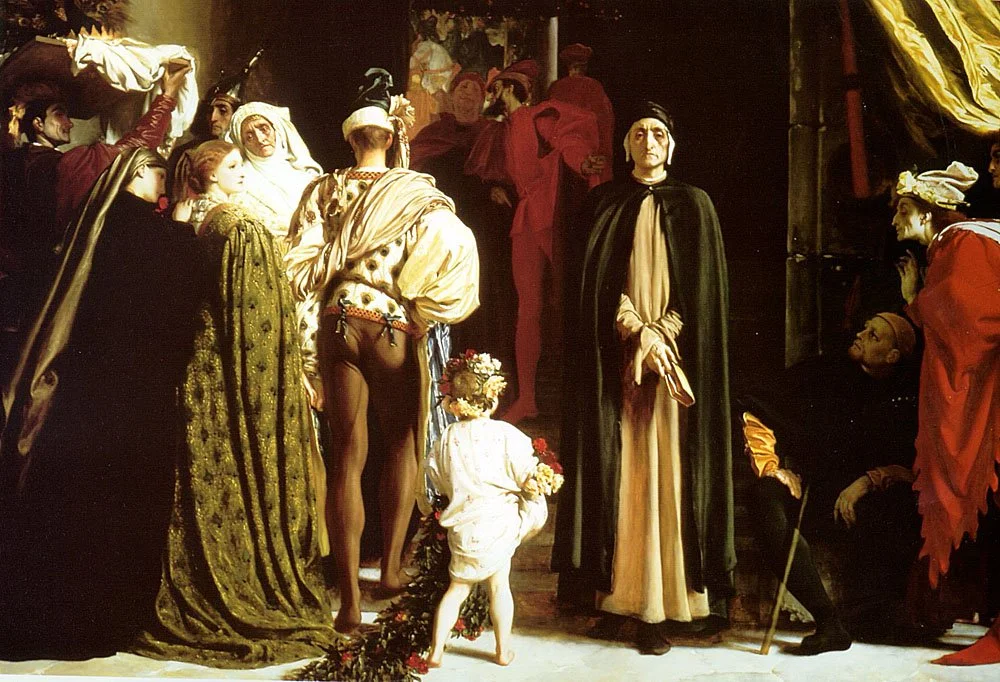
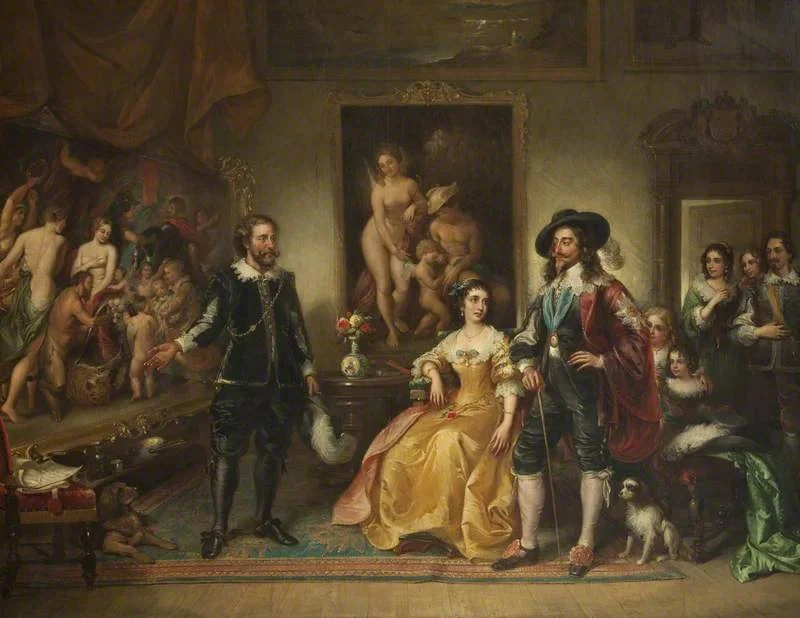
Ambrosini Jérôme (a.k.a. James Parker), Rubens Presenting His Picture 'Peace and War' to Charles I
I’ve always wanted to have it both ways—to work a little and make a lot, to eat or drink what I please and remain healthy nonetheless, to treat others ill and be treated well by those others. But I can’t, according to the proverb—except in a crossword.
Here is another entirely excellent novel by the unjustly unsung Glaister, for whom seeNovel 106.
A “ladylike novelette. . . . On the whole, the tone of this little story is high, and its literary merit is not small.” Athenaeum, August 23, 1879
“The story of an unhappy love, which the writer contrives to tell without leaving a painful impression.” Spectator, March 20, 1879
A (somewhat) contrasting view:
“Carefully and loyally as A Constant Woman is written, its main thread is of coarsest fibre. . . . It is not that the story is coarse or unreal in tone, for it describes a narrow and commonplace phase of life with fidelity and even force. . . . The characters, too, are natural enough. . . . But we entirely fail to discover what peculiarly high or healthy inspiration the youthful mind can draw from this fount of straitlaced villainy and genteel sharp practice. . . . When The Constant Woman is put into young miss’s hands it is high time to hunt for Not Wisely, but Too Well, beneath her pillow.” Academy, August 16, 1880
That’s right, relax! Take it easy! Keep your shirt on! Cool off! Kick back! Lighten up! Simmer down! We’re just crossin’ some words and keepin’ it real! God forbid anyone should suppose that, because of our proclivity for making complex linguistic structures, we mean thereby to pretend to some off-putting level of literary or intellectual proficiency. We’re just chillin’.
A dowager viscountess takes up two young ladies for the London season.
Mary A. Lewis (1849-1915) wrote one novel, this one; though her inexperience may show in her pleasantly naive tendency to favor us with miscellaneous and sometimes irrelevant reflections, she seems otherwise confident and assured, with interesting characters and a good plot.
“A slight, but very pleasantly readable, society novel, describing a pair of well-contrasted young ladies . . . The various characters are fairly, though lightly, sketched in.” Academy, May 21, 1881
“On the whole, for a story of its calibre, the tale of the two pretty girls is not badly told.” Athenaeum, June 4, 1881
“The story is . . . neither complicated nor extraordinarily exciting, but it is pleasant, cheerful, and readable, and it contains both agreeable conversations and natural sketches of character.” Saturday Review, June 18, 1881
I was going to use this title for one of those fun puzzles in which the theme answers are two-word phrases, each word of which begins with each of two letters—but they’re so hard to make! After hours of meditation, I managed to think of “rubber bullet,” “rex begonia,” “retail banking,” and “rock bottom.” But then I couldn’t think of a fifth, and it turned out these four were all different lengths, so that I couldn’t fit them in a grid. So I just gave up and made this puzzle instead.
A parvenu family rents an old estate while its owner lives on a nearby farm.
A. M. Monro wrote four novels between 1886 and 1901. Nothing else appears to be known about her (?), despite her impressive ability to create characters and represent their interactions clearly and sympathetically.
“The theme is brightly and sympathetically handled, and the relations” between characters “are drawn with real charm and genuine feeling.” Athenaeum, May 5, 1888
“A delightfully fresh and interesting story.” Academy, May 26, 1888
“A simple, pleasing tale” in “well-written English.” Saturday Review, June 9, 1888
Alas, the British Libraries’ collection remains unavailable. Until it returns, I will make this novel available myself, divided into three parts to accommodate Squarespace’s file-size limits:
As I’ve said before, we grow all our own food here at David Alfred Bywaters’s Crossword Cavalcade and Fortnightly Victorian Novel Recommender, and we grow it organically, using locally-sourced, handmade tools. How, you wonder, do we keep the pests away without pesticides? It’s simple. Following a hint from Frances Hodgson Burnett, we hide our plants in a secret garden, where the pests can’t find them. It’s one of this website’s many world-improving innovations, which we offer, like our crosswords and our novel recommendations, free of charge.