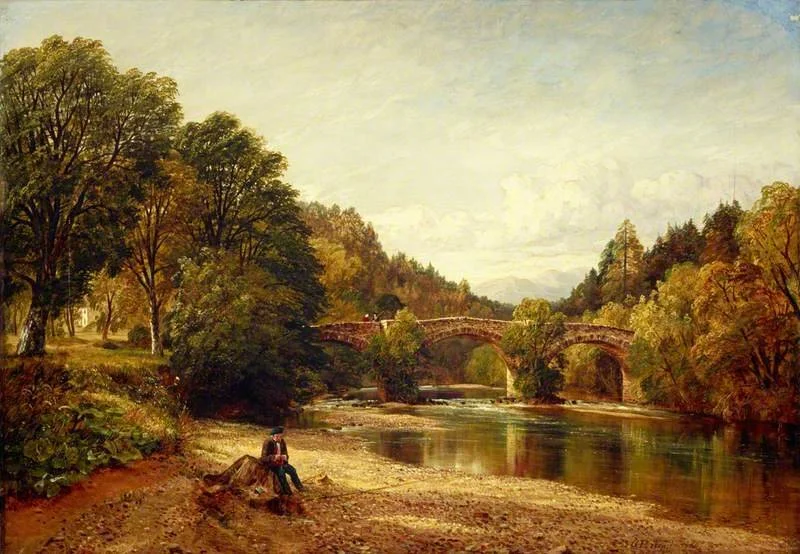
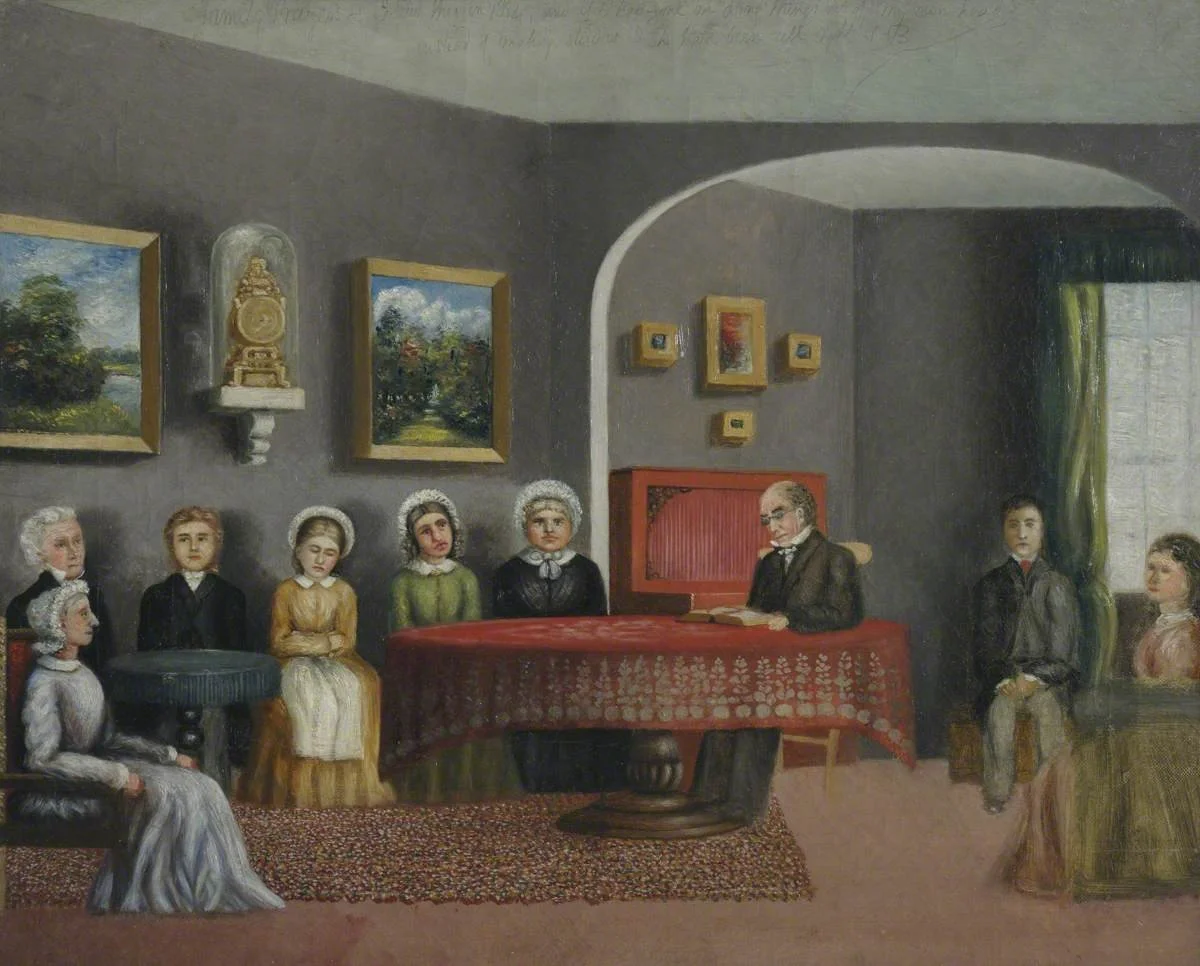
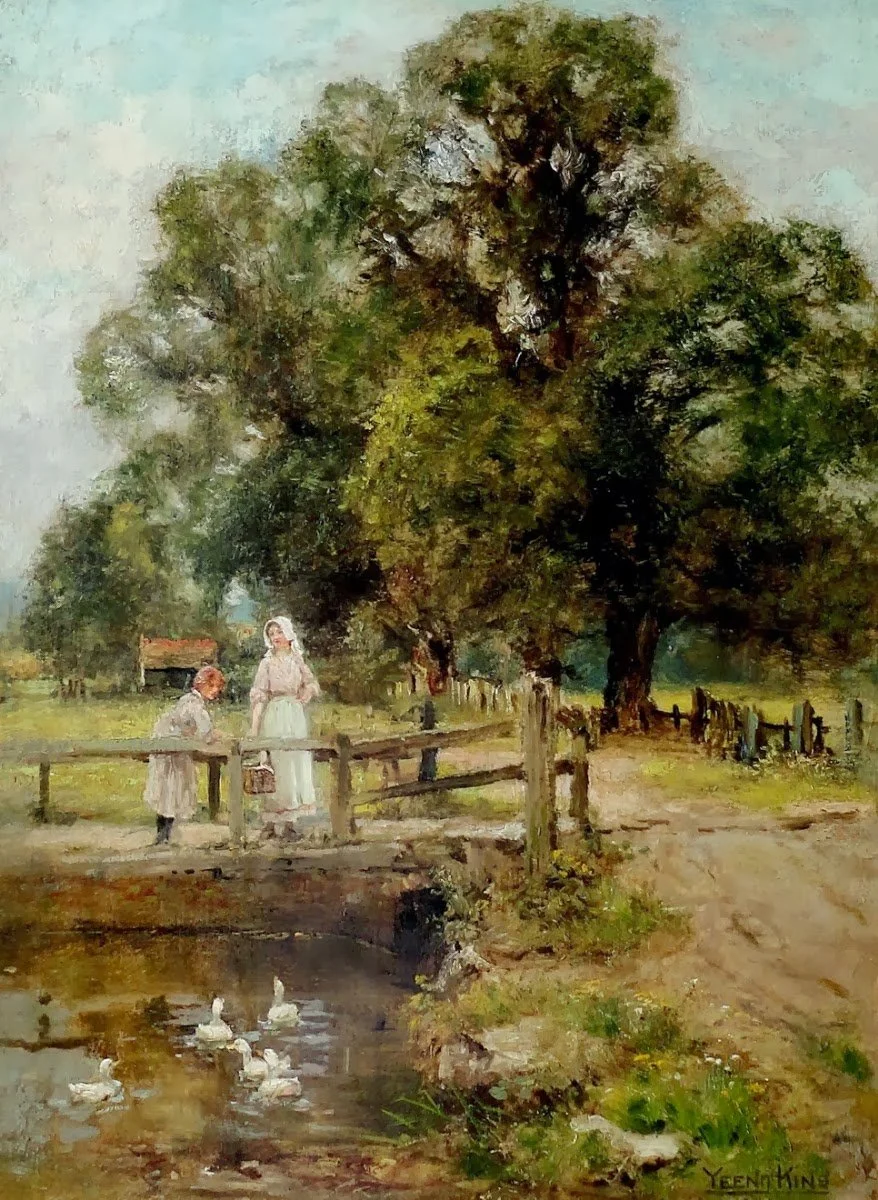
Various families interact in a picturesque Scottish village.
Nothing appears to be certainly known of Elizabeth Taylor except that she wrote two novels, this and Blindpits (1868), and a collection of stories, Jack and Mrs. Brown (1883).
“We have not seen very many novels this season that we should be inclined to rank above it.” Athenaeum, July 19, 1873
The author “has the . . . faculty . . . of making a small circle engrossingly interesting” and is unique in her “peculiar form of humour, and the neatness with which she puts a situation or a problem. . . . The constructive skill of the story is remarkable.” Spectator, August 2, 1873
“She knows Scotch character with that completeness of intuitive comprehension which unerringly catches what to others would seem insignificant traits, and makes them henceforth typical. Seldom have we read a more sufficient piece of work. There is no pretence, no aim at high things; and yet out of the ordinary hum-drum life of a Scottish hamlet a sort of quiet tragedy gradually develops itself. . . . The author is par excellence a humorist, and, like George Eliot, conceives of incident as something dependent on and developed out of character rather than otherwise. It is not to be expected that she should drive the sensationalists out of the field; but it is something that we have such healthy testimony as this against sensationalism in life and in art.” British Quarterly Review, October, 1873
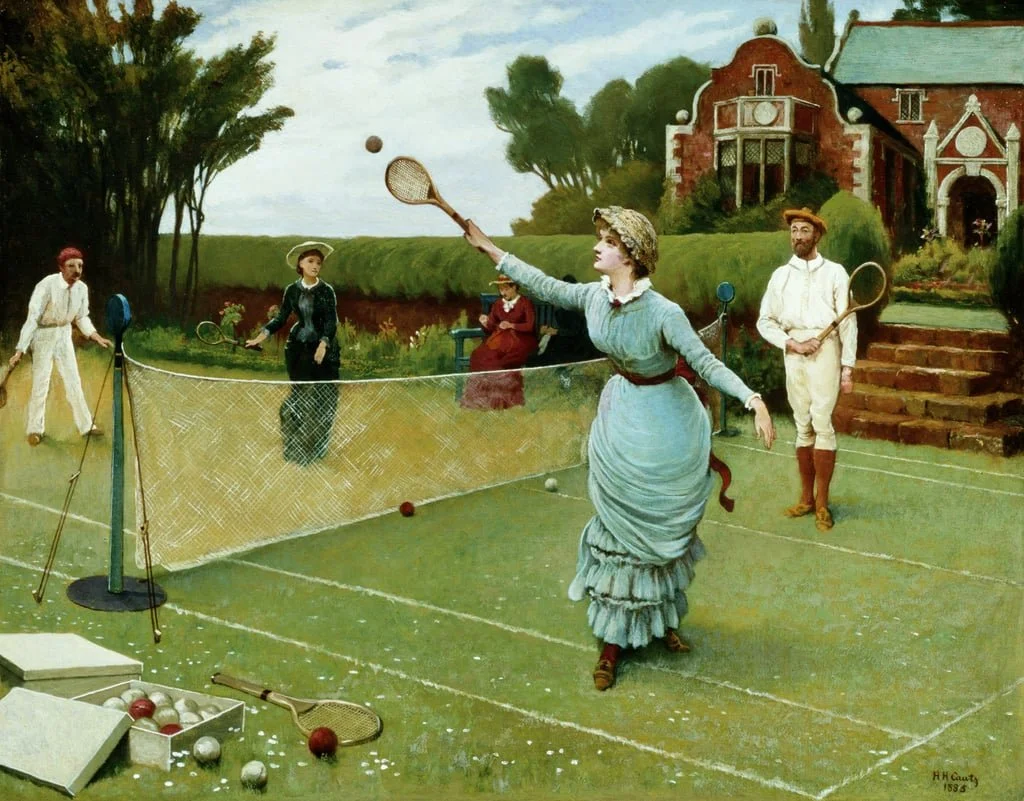
Have you ever tried to play “tennis,” gentle solver? I did once, in an eighth-grade gym class. Apparently you’re supposed to chase after a small bouncing ball, and when you reach it, you’re supposed, with a tool made of a mesh stretched tightly across an oval frame and attached to a handle, a “racket,” to hit that ball at an angle and with a force that will direct it across a net into a defined space, from which an opposing player may hit it back to you. I tried to do this not just once but several times, but I was never able to make the racket and the ball meet in the same location in space and time, much less direct the ball anywhere at all. And yet I have seen people who seem otherwise to enjoy no exceptional physical abilities engaged in this game. Some even indulge in a variant called “mixed doubles,” in which, while chasing and hitting the ball, you are simultaneously called upon not to collide with someone else who shares your side of the net.
I’d like to conclude here, as a profound insight, that “mixed doubles” is somehow an apt metaphor for life. But in fact I can’t see much resemblance. If life resembles any sort of ball game, it’s the one where you sit on a platform above a tank of water, until someone throws a ball that activates a lever releasing the platform and sending you into the tank. Except, if it were truly like life, the platform would be automatically activated at random intervals, and the tank would be full of sharks.
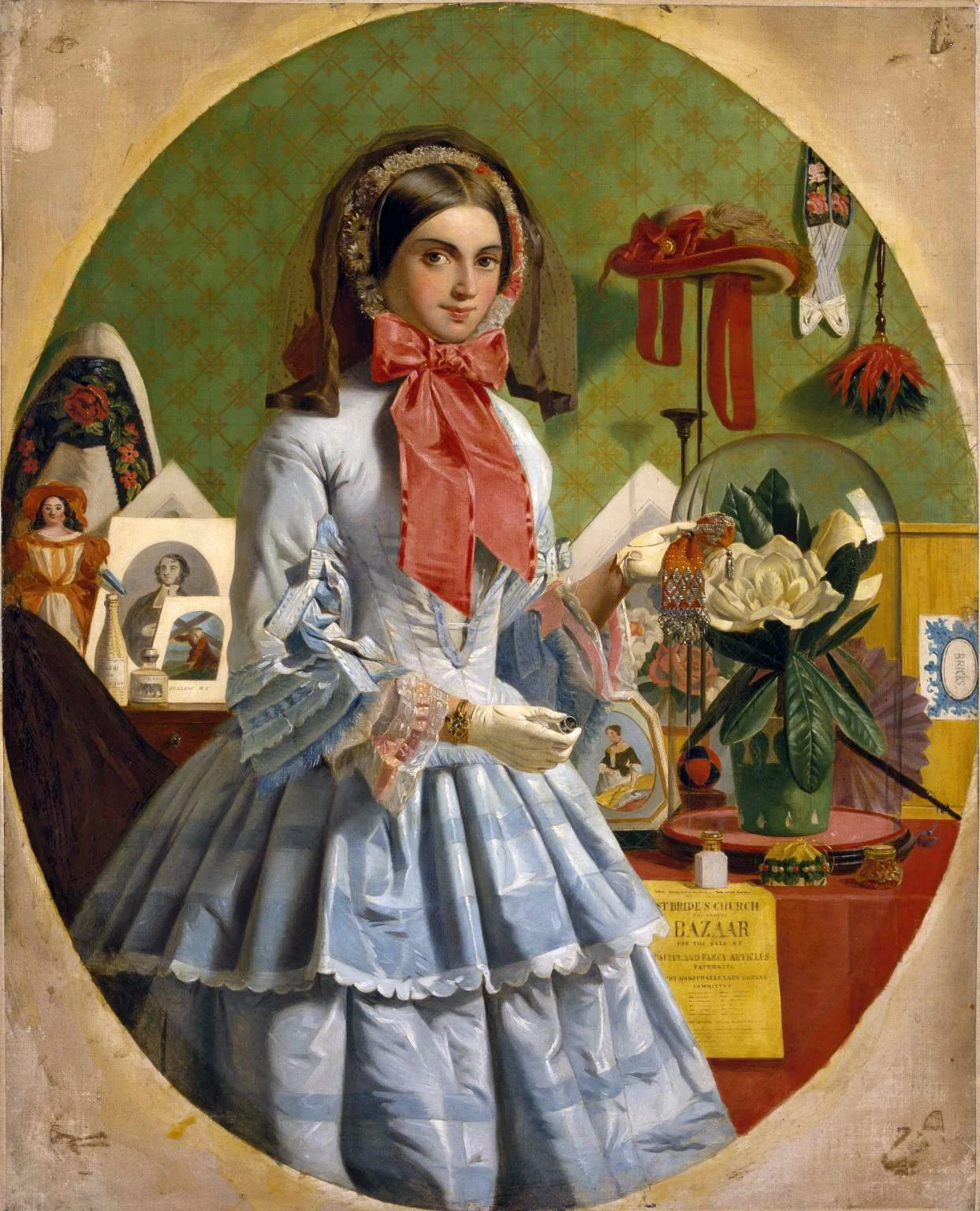
A clever, witty, sensitive, but unlovely young woman is mistreated at home and in society.
The anonymous author of this novel (so careful of her anonymity that she negotiated with a publisher through newspaper advertisements) apparently wrote only one other novel, Poor Nellie, which appeared four years later. This one combines a relentless, despairing commentary on human nature with a tireless sense of fun.
“This singular book deals with that religion and morality of mediocrity which were adopted, like other fashions, by the last generation of London society at its most fashionable, most vacuous, most profoundly vulgar epoch. . . . Never before has this degraded phase of life been so powerfully and minutely analysed, because never before with such bitter experience or in a spirit so forgiving and so charitable. . . . This genuine, if not faultess, book introduces us to a writer who has keenness, observation, good sense, real sentiment, and singular pathos—one who can both feel and think and write.” Academy, March 24, 1883
“It is . . . a work of great ability, by one who observes keenly and at the same time sees deeply into character. She has the power of presenting real people. Description and analysis have not made them inert bundles of qualities and defects—the lay figures which often stand for human nature in the work of even the better sort of novelists. . . . . The trivial life is passed chiefy at a dull country house. So dull is the house, and so lively is the author’s picture of it, that the reader feels oppressed by it himself, and is therefore ready to give to the heroine that warm sympathy which a skilful writer must always try to get.” Athenaeum, March 31, 1883
“The story is anything but ‘trivial,’ and the writer is gifted with an unusual share of wit and perspicacity. The deep melancholy that pervades the book is relieved here and there by keen flashes of satire on the foibles and follies of modern English society. The picture is cleverly drawn, and not overcharged.” Westminster Review, July 1883
“If the reader is inclined to doubt the proposition that novel writing is becoming every day more difficult and less interesting, let him consult his own mind, and see how many novels proper among the hundreds that have been published within the last five years, and which deal in any way with every day contemporary life, have excited his profound interest. The present writer can at the moment recall but two—one was called ‘My Trivial Life and Misfortunes,’ by an unknown author, and the other, ‘The Story of a South African Farm,’ by Ralph Iron. But then neither of these books if examined into would be found to be a novel such as the ordinary writer produces once or twice a year. Both of them are written from within, and not from without; both convey the impression of being the outward and visible result of inward personal suffering on the part of the writer, for in each the key-note is a note of pain. Differing widely from the ordinary run of manufactured books, they owe their chief interest to a certain atmosphere of spiritual intensity, which could not in all probability be even approximately reproduced.” H. Rider Haggard, “About Fiction,” in Contemporary Review, February 1887
I had this great idea for a puzzle called “Change Holders,” featuring celebrity names with words like “cent” and “dime” and “nickel” and “quarter” hidden in the middle. So I found Dominick Elwes, the English portrait painter who eloped with an heiress in 1957, and Jacen Tan, the Singaporean film director, and Cristoforo di Messisbugo, the chef to the dukes of Ferrara, but then I began to have some doubts as to whether these particular celebrities, though household names in my household, were known to the hip young demographic I’m going for. Also “quarter” had me stymied. But I didn’t want to abandon the title, having gone to all the trouble of thinking it up, so I made this puzzle instead.
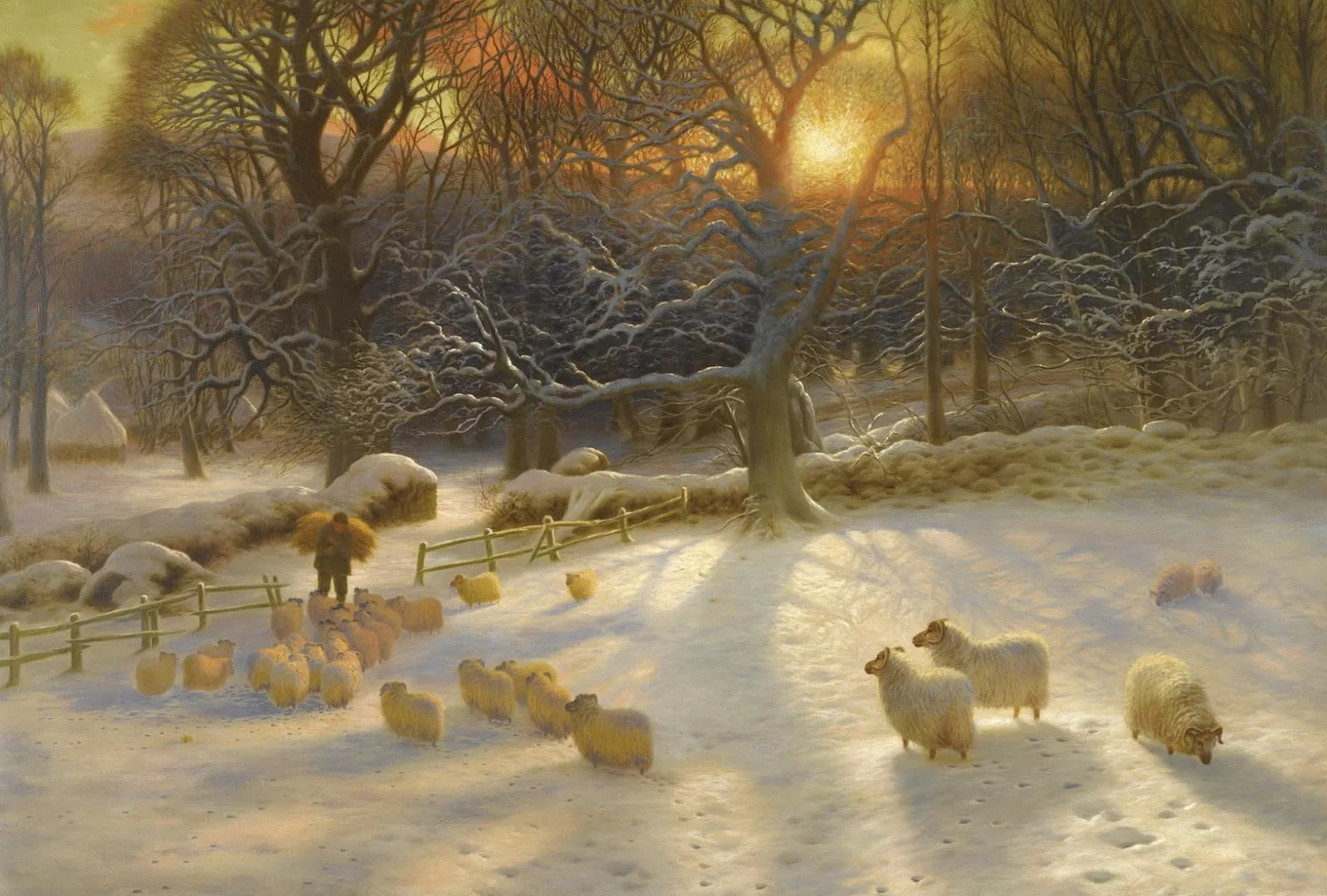
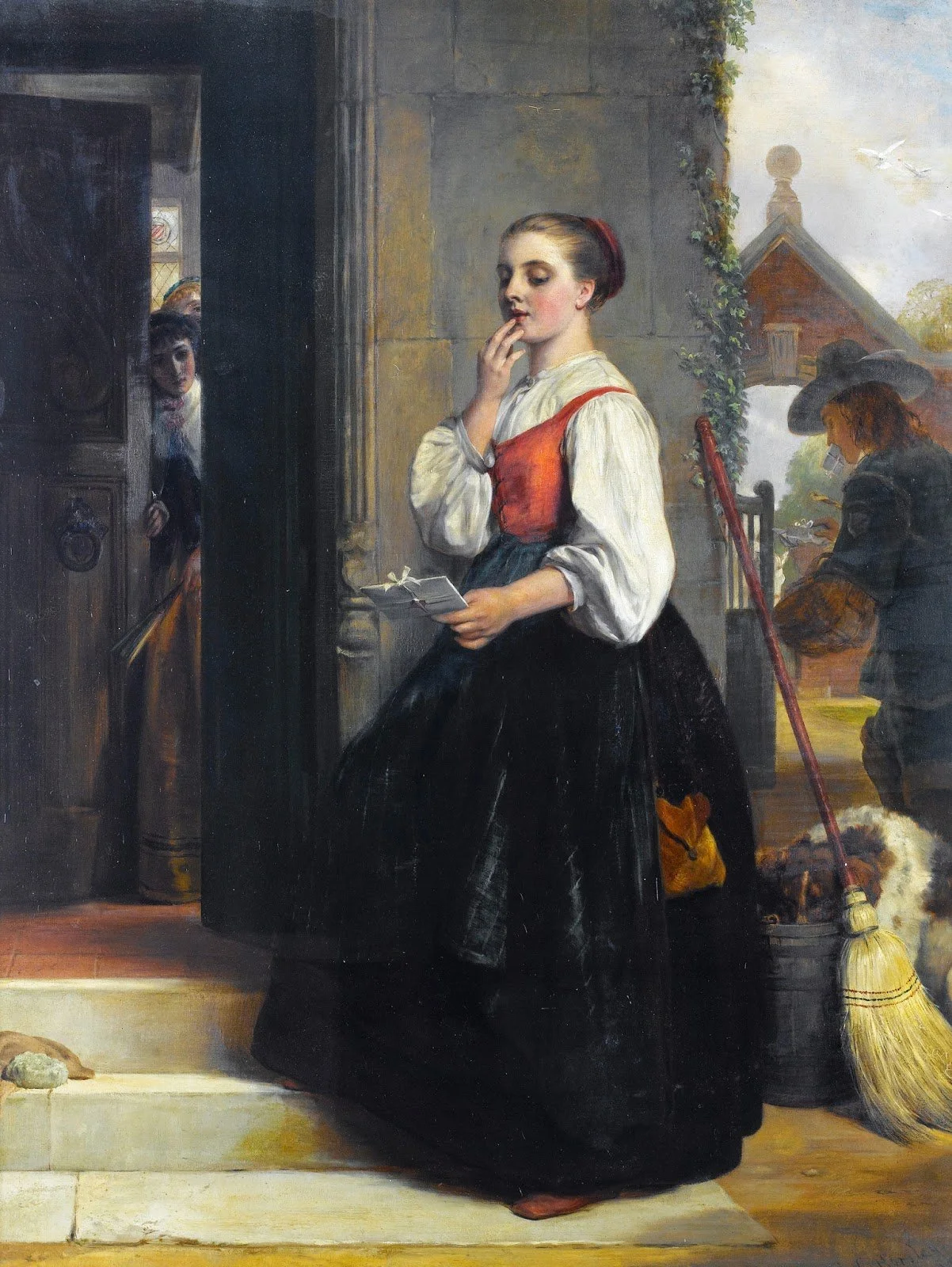
A virtuous young lady flees from her persecutors in London to a fisherman’s cottage on the island of Sark.
Hesba Stretton (1832-1911), née Sarah Smith, wrote over sixty works of fiction, most of them children’s books which, despite their evangelical purpose, were immensely popular: Jessica’s First Prayer (1866) sold well over a million copies. Her odd pen-name was made up of the first initials of her own and her four siblings’ names, and the name of a Shropshire village.
“The best novel of the week. . . . In descriptive writing the authoress must be given a high place, and there is a good deal of life in the story.” Athenaeum, February 15, 1873
“A fascinating story, which scarcely flags in interest from the first page to the last”; it is “not a great book” but “we are ready to confess that since the publication of ‘Jane Eyre,’ we can hardly remember a novel which has excited in us a more continuously absorbing interest.” British Quarterly Review, April 1873
“This is a tale of unusual merit and interest. . . . Everything about The Doctor’s Dilemma is worthy of praise. The tone of feeling is sound and wholesome, the story interesting, and the characters drawn with much force and distinctness.” Spectator, July 5, 1873
NB: The British Library’s website remains unavailable, affecting the links above and many others on this site. Someday, we hope, it will return. Meanwhile: a one-volume American edition is available here:
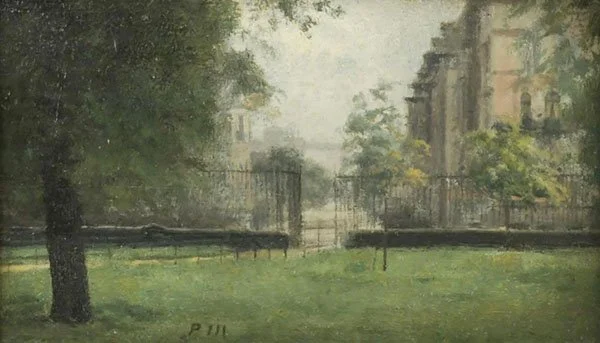
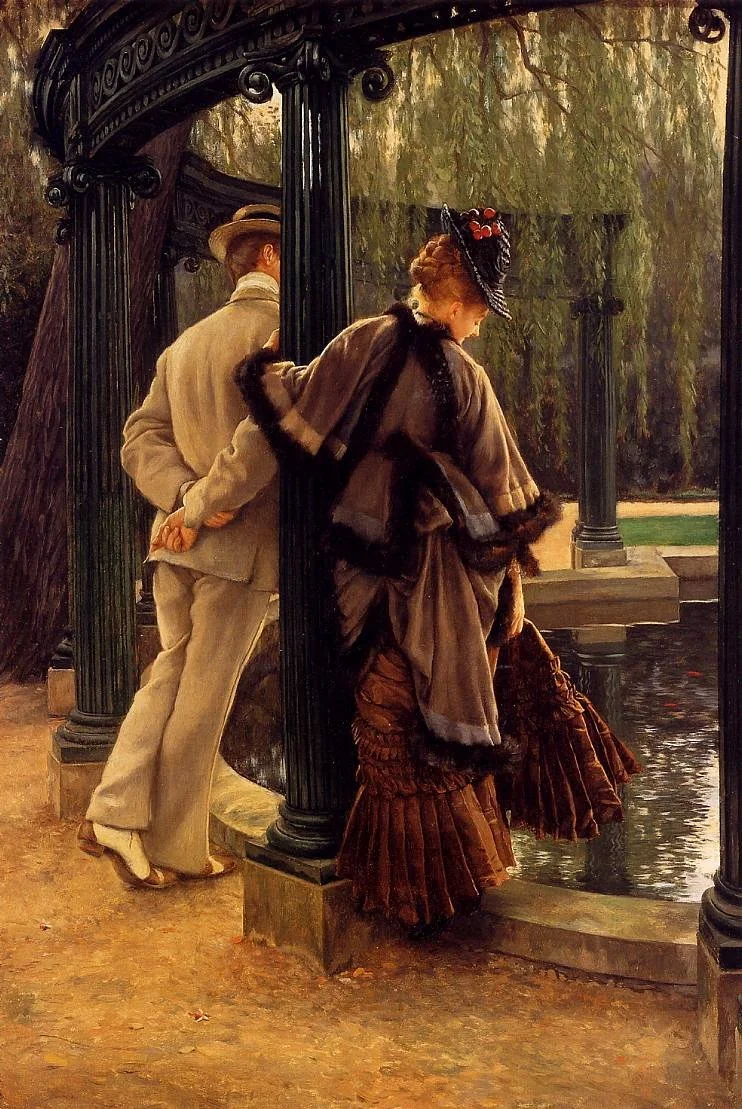
Paul Fordyce Maitland, The Bayswater Road from Kensington Gardens
A cultivated and ambitious young lady seeks her place in the world.
Leonora Blanche Lang, née Alleyne (1851-1933) wrote only this one novel; however, she was largely responsible for the series of twelve collections of fairy tales (the Blue Fairy Book and its variously-colored successors) edited by her husband and fellow novelist, Andrew Lang. This novel, like the fairy book translations, displays her quiet wit and polished style.
“The only draw back to its universal circulation that we can perceive is that” it lacks the pleasure “which seems to consist in seeing how people in fiction live in a manner which is neither the reader’s manner nor that of any human beings who ever breathed the vital air. If this latter delight does chiefly move any man or woman, let him or her by no means read Mrs. Lang. Neither let him read her if he wants bad taste or bad manners or bad French . . . or bad morals. Neither let him read her if he cannot see a joke, for here be many jokes; neither if he wants passions ‘grand, epic, homicidal,’ for here, though the feeling shown is quite natural and human, it is by no means always or often in altitudes. This is, we admit, warning off a very considerable clientele, and it is possible that Mrs. Lang may be the reverse of grateful to us. But ruat cælum. We have not in the least exaggerated the pleasure and pastime which the book is pretty certain to give to people of good breeding, reasonably wide interests, good taste, and a slight inclination to the humorous view of life. It is a pity, perhaps, that some of the things here are not enshrined in a more durable setting; for the book is deliberately, and almost provokingly, ephemeral in design. But this design is so closely connected with what is best in it, with its pleasant fashion of daffing the world aside and bidding it pass, that it is almost illogical to grumble. In fact, a very determined moralist with a sense of humour (supposing there to be such a person) might detect a moral in the slightness with which the book is put together. Into these regions, however, it is not necessary to enter; and all that is necessary is once more to express thanks to Mrs. Lang for this agreeable entertainment, in which she has chosen to make the figures come like shadows and so depart. There is something remarkably lifelike in your shadow; and, save in quite exceptional circumstances, he is one of the most agreeable of companions.” Saturday Review, June 14, 1884
“The plot may be regarded as disappointing by some readers; but, whatever the story loses in that respect, it more than makes up for by caustic cleverness in writing. We get a series of pictures rather than a consecutive narrative. Its real interest lies in the writer’s charming style and power of saying good things. . . . In fact, these Dissolving Views are very vivid and very entertaining while they last.” Academy, June 21, 1884
At present, the British Library’s website has been, oh so sadly, taken offline because of a ransomware attack, rendering a great many links on this website temporarily useless. Until it returns, one may download the American reprint here:
That’s right—I’m fed up! I’m fed up, for example, with politics, which is actually just an effect of tribalism, which is in turn just an effect of human nature, which is itself just an effect of nature in general, which is after all just an effect of whatever mysterious process created everything for whatever mysterious purpose. So I’ll just do a crossword.
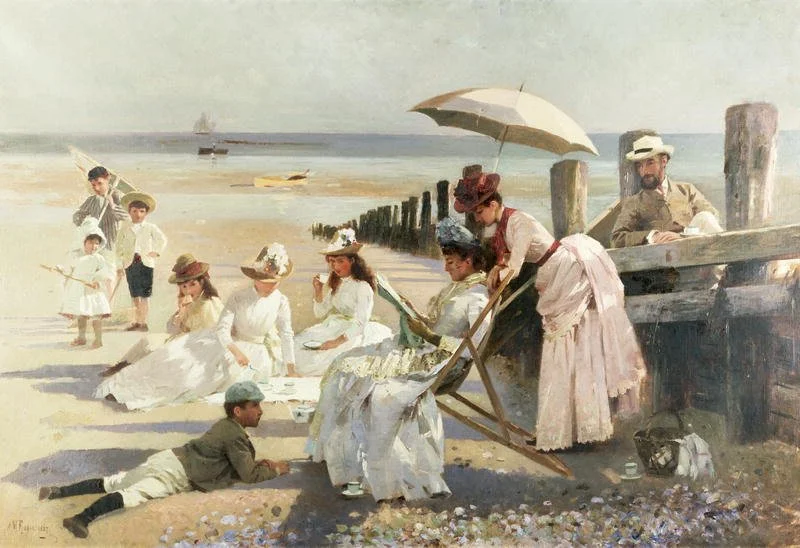
Alexander Mark Rossi, On the Shores of Bognor Regis
A newly married woman goes to live with her army officer husband’s straight-laced family.
Menella Bute Smedley (1820-1877), cousin of Frank Smedley (seeNovel 048), wrote eight novels between 1849 and 1868; this one features sharply delineated characters in a quiet domestic scene.
“There is no doubt that ‘Linnet’s Trial’ will find many admirers; it is a well-sustained story, and the characters are elaborated with a firm hand, and evidences of a perception at once keen and clear. . . . The volumes are beautifully printed on delicate cream-tinted paper.” Art Journal, April 1864
“A pretty, well-written story. . . . The conversations are lively and clever, and the incidents sufficiently interesting.” Athenaeum, June 18, 1864
“A very interesting story. The discrimination of character is really remarkable, and quite without visible effort. . . . It may be recommended for the youngest of young ladies.” Spectator, September 3, 1864
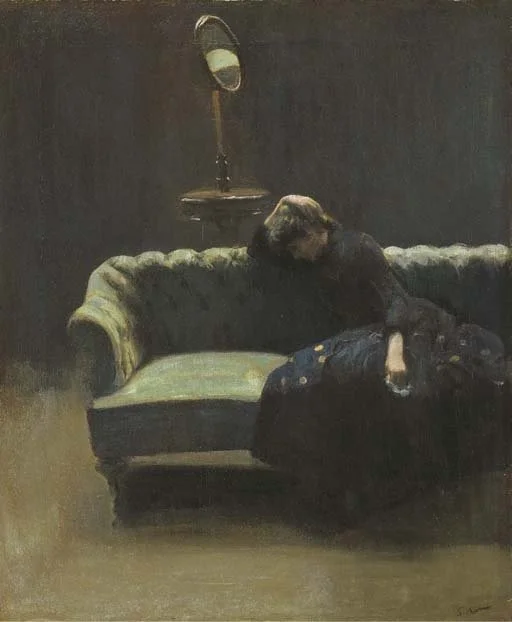
Walter Sickert, The Acting Manager or Rehearsal: The End of the Act
This web site now concludes its sixth year. Is it time for us to bring it to a close? We might; but we can’t decide what to do with our protagonist “David Alfred Bywaters.” Should we have him marry the princess and live happily ever after? Die in a shoot-out with rival crossword constructors? Maybe we’ll just have him wake up and discover that it was all a crazy dream.
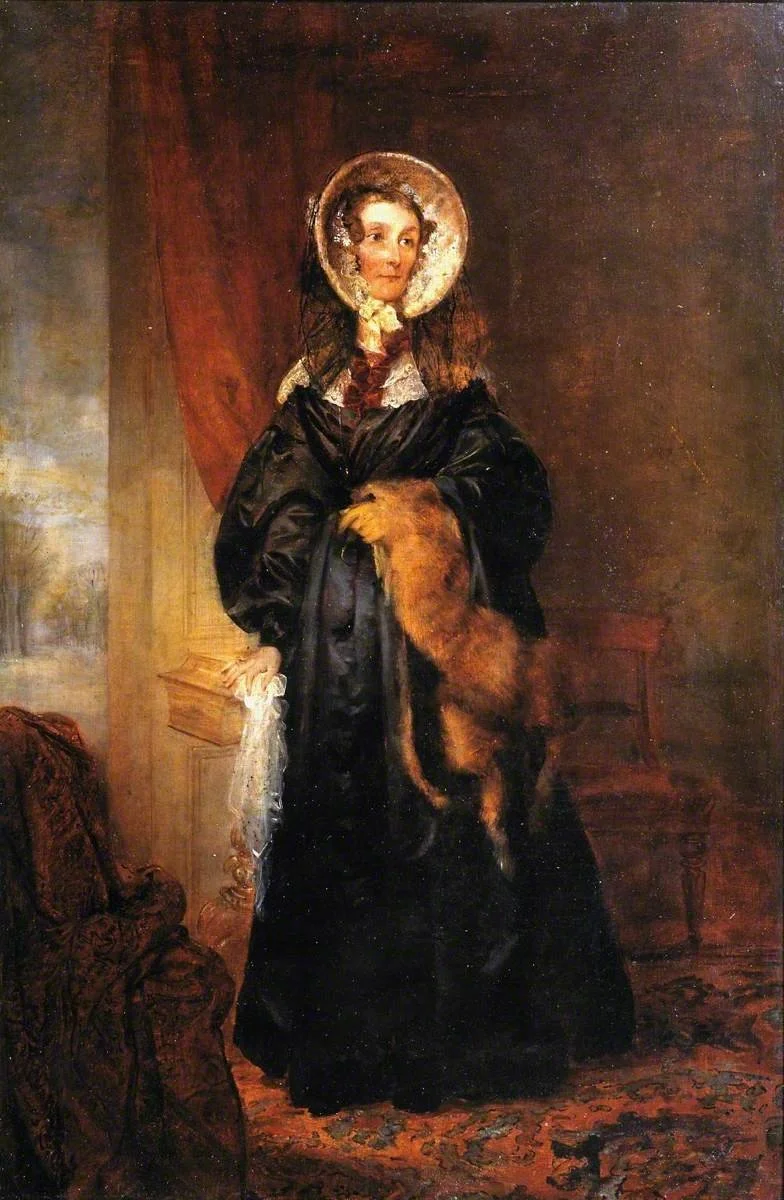
George Frederick Watts, Miss Mary Kirkpatrick Brunton
A retired merchant, wanting an aristocratic wife and a seat in parliament, tries advertising for both in the newspapers.
Here is the second novel by Henry Milton, Anthony Trollope’s uncle (for the first seeNovel 031). I have now recommended at least one novel for each of the 64 years of Victoria’s reign.
It “bears about as much resemblance to life as the broadest farce; but when the improbability is got over, the farce is ludicrous enough. The writing is vigorous and straightforward.” Spectator, January 18, 1845
“The principal characters are cleverly drawn, and the natural course of their progress in life is dramatic, though simple and unforced into striking situations. The course runs easy; the descriptions of men, manners, and things, are the result of sensible observation; and the interest of the whole tale leads the reader on to the end with sufficient effect. . . . Some of the humorous scenes are ludicrous enough, but rather overdone.” Literary Gazette, January 25, 1845
“The story is skilfully developed, . . . the characters are in general well and cleverly individualised. There are several passages in the work that cannot fail to leave on the reader a strong sense of narrative power in the author.” New Monthly Magazine, February, 1845
“Bating an evil propensity to exaggerate, Lady Cecilia Farrencourt is excellently written; and in spite of it, we must not scruple to confess that the book has not a little amused us. The heroine . . . is cleverly drawn; there is a lively, spirited, easy tone in the writing; a great deal of good sense and good-nature; a nice perception of the ludicrous; and perhaps some excuse for even the broadest passages of caricature, in a prevailing abundance of animal spirits.” Examiner, February 8, 1845
Here at David Alfred Bywaters’s Crossword Cavalcade and Fortnightly Victorian Novel Recommender we always conform our dress to the eternal and universal rules of etiquette. We wear morning coats, evening gowns, dinner jackets, party frocks, top hats, white ties, and tails—whatever is appropriate to the time of day, the season of the year, the nature of the occasion, etc. Never, ever do we wear “tees,” cropped or otherwise. But our consumer research department advises us that we need to appeal to a broader demographic—to the vile habits, undeveloped tastes, uninformed opinions, and appalling manners of the vulgar multitude. So today’s puzzle includes allusions not only to the informal dress but also to various of the other things—musical, literary, etc.—which that multitude is said to enjoy.
“Mr. Aïdé’s forte lies in character. Among all . . . there is not one which is exaggerated on the one hand or indistinct on the other”; the novel shows his “knowledge of the world, and his sympathy with the more hidden qualities and feelings of human nature. . . . When, united with this delicate observation and this power of drawing character, there is a clear and incisive style, we have much for which to be grateful in these days of false psychology and questionable grammar.” Saturday Review, April 22, 1871
“An admirable little miniature painting, with no dreary padding; one of the most taking little stories we have read for many months past.” Spectator, May 6, 1871
A contrasting view:
“It indicates no great fertility of imagination, nor any remarkable insight into character. If it has few merits, its demerits are also trifling.” Athenaeum, April 15, 1871
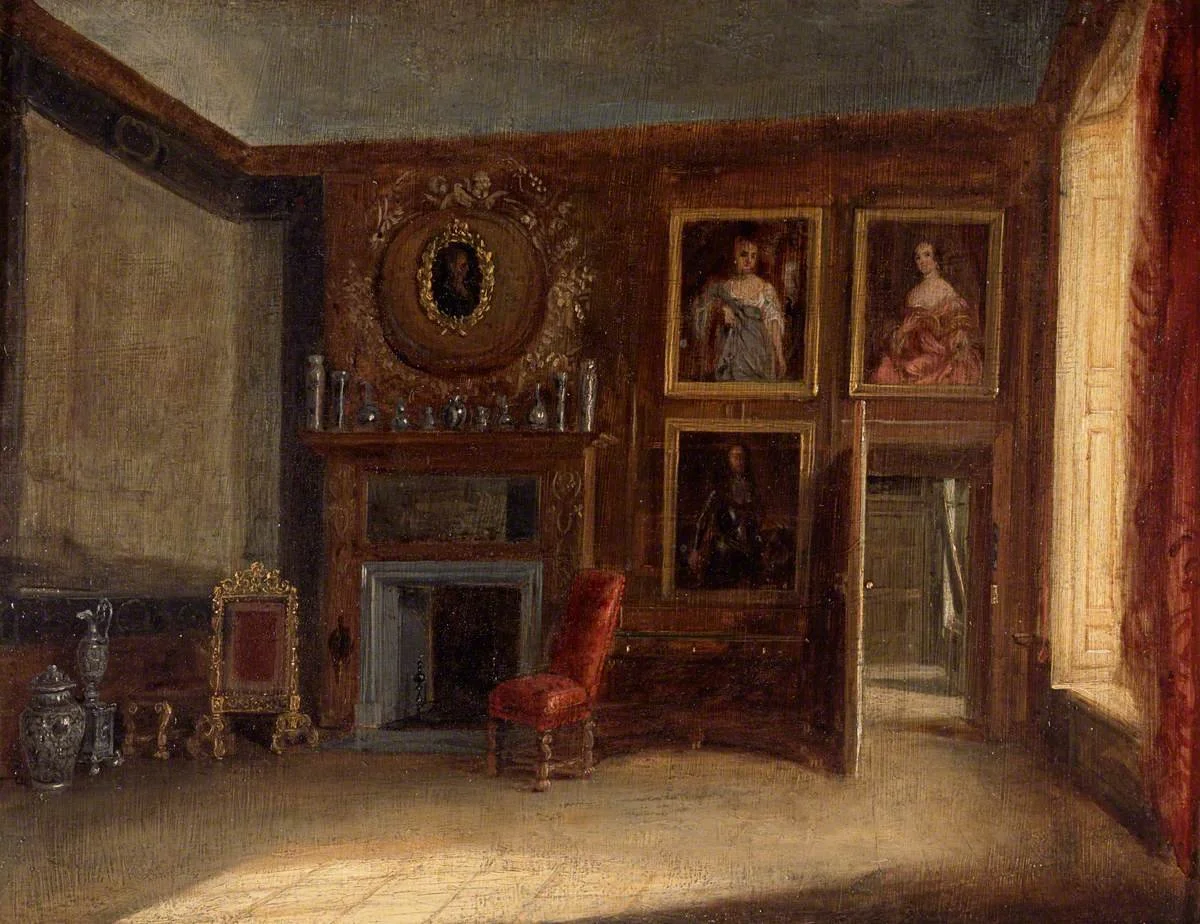
Charles Robert Leslie, The Queen's Private Bedchamber, Hampton Court Palace
Digital privacy is a matter of great public concern these days, and here at David Alfred Bywaters’s Crossword Cavalcade and Fortnightly Victorian Novel Recommender we take it very seriously—both your privacy and our own. No doubt various commercial entities would be bidding against each other for our web site data if we put it on the market—but we never have, and we never will. If we happen to learn something about you, the solver, we instantly and completely forget it. As for ourselves, if we need to buy something online, we set up a burner account and pay in crypto-currency; but mostly we buy things in person, using small bills and fake beards. And of course we operate under an assumed identity from an undisclosed location marked only by the electrified razor wire that surrounds it.
A virtuous young lady’s cousin breaks their engagement to marry an adventuress.
This is the second of this anonymous author’s novels (the first, Broomhill, had appeared three years earlier). Despite some period clichés (e.g., the ideal clergyman who, after final exhortations to his family, expires with a heaven-witnessing smile), it represents some delightfully bad marriages.
“With greater powers of writing and more knowledge of life than usually belongs to the circulating library novel, Married Women is essentially of that class. . . . The scenes, though not wanting in power or spirit, possess that faded air which characterizes general imitation. But there is the main thing in a novel—a well-varied story, told with sufficient rapidity, relieved by secondary fortunes without complex involution, and if not reminding one of the actual yet rarely outraging probability. It is a book for the reader rather than the critic; though better adapted to the main end of writing, that of pleasing the class of readers for whom it is designed, than some fictions of a more vaulting ambition.” Spectator, March 10 1855
“We have read this novel ourselves with much pleasure, and we have no doubt that many others will do the same. If rigidly criticized, the story will be found straggling:—it concerns too many people, who are all independent of each other, and do not work together to produce unity of result. But, notwithstanding this, the book is extremely interesting, and, what is more, the tendency is healthy and unexceptionable. The characters are well and firmly drawn. . . . Some of the scenes evince quiet power and force of delineation, without ambitious straining after effect.” Athenaeum, March 17, 1855
A contrasting view:
“Milk-and-water triviality. . . . We suppose there is still a public for novels like this among the clients of circulating libraries in provincial towns; and, after all, an interest in such feeble creations is better than blank ennui or indulgence in acrid gossip.” Westminster Review, July 1855
Like most of my puzzles, this one began with a single phrase I thought amusing (in this case, 39 Across). After finding four more phrases that followed the pattern of the first, and constructing and filling a grid, I discovered, to my dismay (through Matt Ginsberg’s sadly discontinued clue database, which I use to avoid forever replicating the same clues for the same answers), that one of my theme answers had already been clued not once but twice, in 2009 by Matt Jones, and in 2021 by Gary Larson.
Now, why must other people always be getting in my way? I used to enjoy doing crosswords; but ever since I took up constructing them, I find I can’t complete a themed puzzle without saying to myself either “What a bad theme, compared to the themes I produce at fortnightly intervals; what a shame!” or “What a good theme; I’m sure I’d have thought of it eventually and done it even better, but now here it is already done; what a shame!”
Anyway, though I replaced the shopworn theme answer with a bright new one, I cannot deny that two puzzles with roughly the same theme have preceded this one into the world. But what then? Was Michelangelo’s David preceded by no other statues of David? Was Raphael the first to paint a Madonna?
Johann Hermann Carmiencke, Poughkeepsie Iron Works (Bech’s Furnace)
A virtuous young lady moves into a Hudson River town after years in Germany.
Charlotte Dunning Wood, born in 1858 or 1859 in Poughkeepsie, New York, wrote two novels and various stories before marrying Edward Linn Morse (the youngest son of Samuel F.B. Morse, inventor of the code that bears his name) in 1888. She died in 1898.
“For an entertaining summer story, Upon a Cast, by Charlotte Dunning, may be recommended. The name is meaningless, but the story is effectively told. Society life in a fashionable town on the Hudson . . . , the embarrassment of one fair maid with two unfortunate lovers . . . form the subject matter of the book, which is agreeably free from dark and treasonable shadows. Miss Dunning deserves special praise for the ease and naturalness of her narrative.” Jewish Messenger, July 3, 1885
“A very bright American story. . . . The characters . . . are described with a trenchant and familiar pen. The characters are well drawn and though the incidents are ordinary ones, they are handled with skill. It is a very pleasant and entertaining book.” Texas Siftings, July 11, 1885
“Bright and brisk; its story is sufficient, to say the least; its people are pleasant, well bred, well educated, clever; and its dialogue, which is abundant, is admirable and to the point.” Saturday Review, April 17, 1886
A (somewhat) contrasting view:
“An unusually bright and pretty story, without being remarkable for either power or originality.” Portland Daily Press, July 8, 1885
“Senior,” as a euphemism for “old,” has been around for many years—as least since the senior citizens of the present day were junior citizens. Indeed, the very fact that the term hasn’t had an update in such a long time is, I suspect, a consequence of the unspoken ageism that permeates our society. We need a new word or phrase that means “old,” but lacks the pejorative associations with wrinkles, hair loss, jowls, etc. that “senior” now inevitably evokes. Unyoung? Ripe? Temporally enriched? Durable? Not yet dead? Well, I leave it to the online influencers whose coinages appear regularly in all the major crossword venues. Meanwhile, before “senior” dies out, I hasten to post this puzzle.
“A good story, and of a kind that demands a hearty welcome. . . . It is admirably written, in a style that combines ease and carefulness, and it is as refined and elevated as it is clever.” Spectator, April 13, 1878
“There is much skill in Mrs. Paul’s method of bringing together the different threads of her narrative and keeping her reader’s attention upon a plot which has enough and not too much ramification, while it contains no incident which does not bear upon the progress of the story.” Examiner, May 18, 1878
“This cannot be called a powerful novel, but it is a good one: thoughtful, well-written, and marked by a reticence, here and there, which speaks volumes for the culture and fine feeling of the author.” Contemporary Review, September, 1878
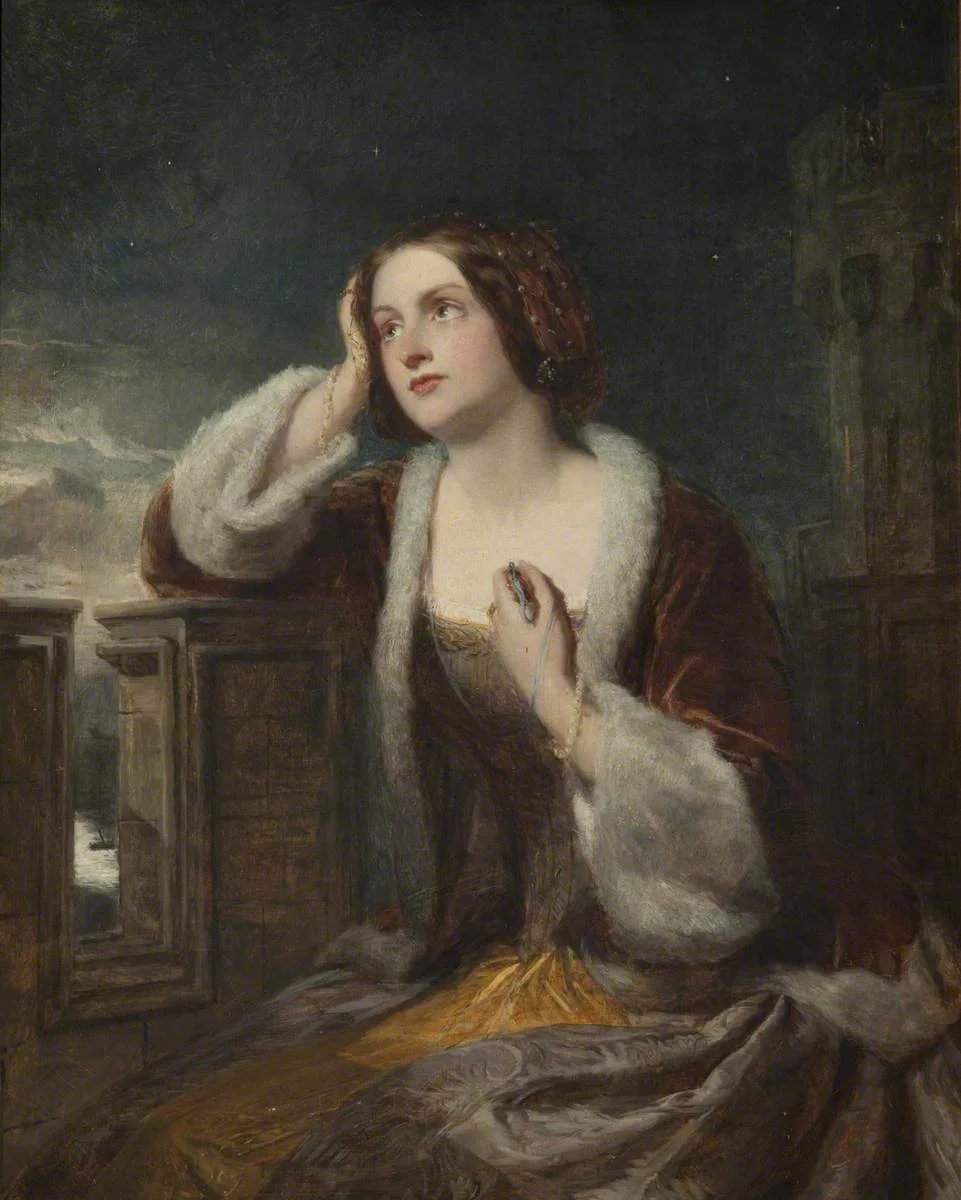
William Powell Frith, Catherine Seyton Looking from the Battlements at Loch Leven Castle
Do you find, disconsolate solver, that when you address yourself hopefully to a new crossword, expecting a little harmless recreation, perhaps some amusing wordplay, you are faced instead, whether you move down or across, with slang you’ve never used, movies you’ve never seen, brands you’ve never bought, songs you’ve never heard? The problem is that you’ve been looking for crosswords in all the wrong places! Here is where you belong, where the “wrong places” are really just silly, happy, friendly puns that just want the very best for you and yours.